For One Another: Alumnus Helps Coordinate Nationwide Charity Efforts
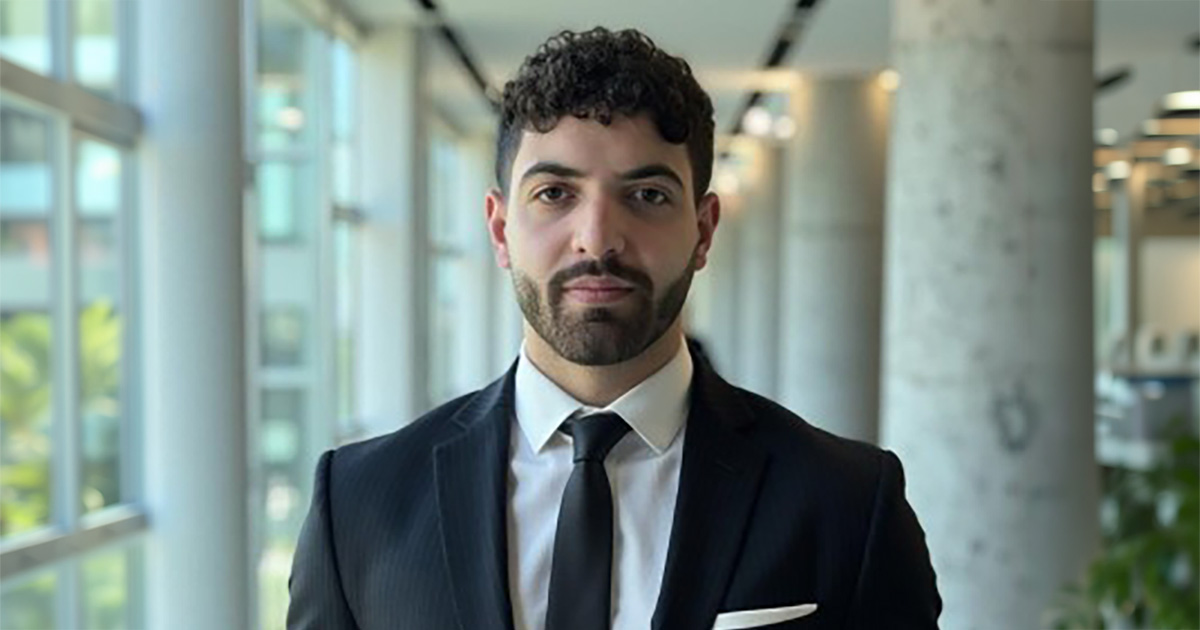
Created by Adam Abou Zeid (BS’ 25), “Laba3ed” emerges as a hub for relief efforts during the most recent conflict.
When the war in Lebanon escalated in 2024 and thousands were displaced, many found themselves without shelter or basic necessities. It quickly became evident that the country was woefully unprepared to adequately respond to the crisis, leaving communities to rely on one another for support.
Amid this reality, Adam Abou Zeid (BS ‘25) decided to take matters into his own hands. A Computer Science undergraduate at the School of Arts and Sciences (SoAS) at the time, he recognized that while there was plenty of goodwill and generosity among the Lebanese, coordination and access to information were in short supply.
This insight led to the creation of Laba3ed, meaning “for one another.” Abou Zeid envisioned an online platform with a simple yet effective model: Individuals in need could post requests, and those willing and able to help could respond directly. By bridging this institutional gap, Laba3ed fostered a space for spontaneous, grassroots charity.
The idea quickly gained traction in the fertile soil of a country beset by crises. What began, in Abou Zeid’s own words, as “a website without a registered domain name” evolved into a fully realized dream. He dedicated himself to developing his brainchild, ultimately making it his capstone project. As its momentum and popularity grew, he assembled a team to expand its digital infrastructure, improve marketing efforts, and even integrate an AI assistant.
By the time the conflict reignited last month, Laba3ed had grown into a well-established force for change, one that was ready to enable more people to lend each other a helping hand. The platform emerged as a locus for direct humanitarian aid, facilitating access to food, shelter, clothing, medicine, and other essential needs by connecting individuals asking for assistance with donors across various regions and types of support. The team worked tirelessly to verify requests, amplify them through social media, and secure donations for cases whose needs remained unmet. Laba3ed exemplified Lebanese solidarity and resilience.
Although Abou Zeid started out alone, many individuals and institutions were instrumental in helping him bring his vision to life, including his alma mater. Faculty mentors such as Associate Professors Ramzi Haraty and Samer Habre from SoAS’ Department of Mathematics and Computer Science helped shape the mindset that enabled him to build Laba3ed. The department’s Chairperson Leila Issa also provided assistance in terms of reach and visibility, as did Assistant Professor Lina Kreidie from the Department of Communication, Mobility and Identity.
A recipient of a US Middle East Partnership Initiative (MEPI) – Tomorrow’s Leaders Gender Scholarship during his third year at LAU, Abou Zeid expressed gratitude to US-MEPI. He also thanked Computer Engineering Professor Wissam Fawaz and numerous professionals in Lebanon’s tech sector for their invaluable contributions. Together, they helped transform Laba3ed into one of the nation’s most impactful charitable platforms.
To date, the platform has processed more than 150 requests, catering to 2000+ individual assistance seekers and donors. While Laba3ed has proven vital to many during times of conflict, its founder envisions a broader, long-term role. “People always need help,” he noted, expressing his ambition for the website to evolve into a nexus for all types of humanitarian and environmental initiatives in the country. He hopes that one day, it will serve to coordinate between NGOs to avoid overlap, optimize resource use, and maximize coverage.
In a message to LAU students and fellow dreamers, Abou Zeid offered this advice: “Don’t wait for stability to start working, especially in a country that constantly tests you. Lebanon may be unpredictable, but that’s exactly what makes your ability to build, adapt, and solve problems so powerful. You don’t need everything to begin, you just need to take the first step and stay consistent. Your ideas matter. And even here—especially here—they can go further than you think.”


