LAU Hacks Debuts with Real-World Health Solutions
Students build AI tools that reduce the likelihood of patients’ readmission to hospitals.
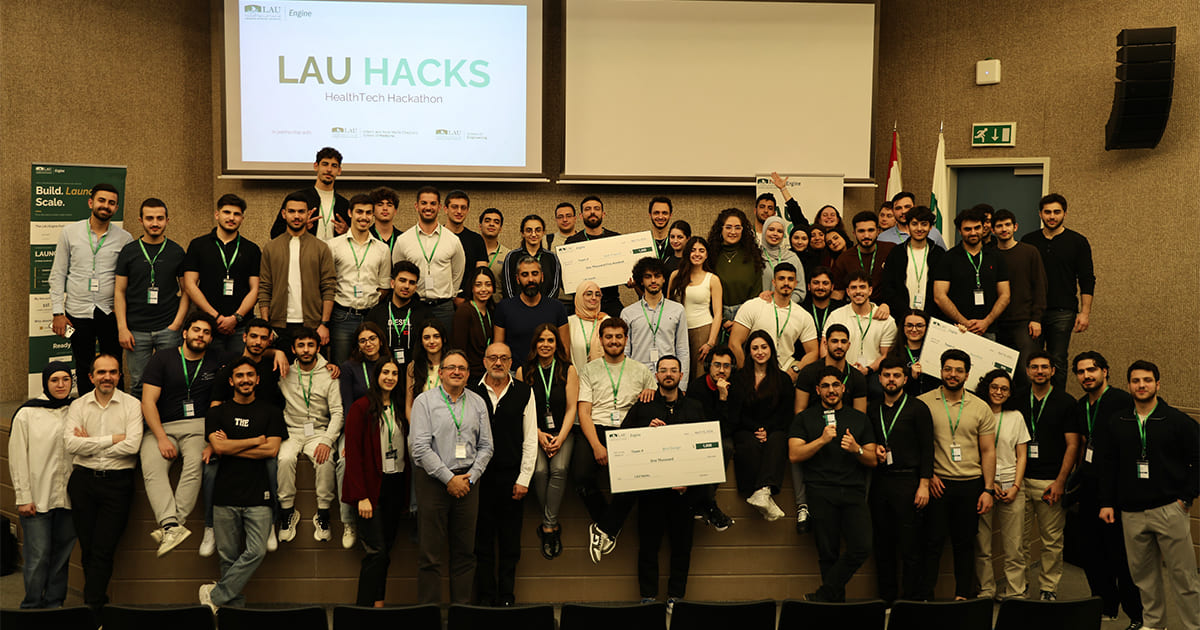
Open to students of diverse fields and universities across Lebanon, the inaugural edition of LAU Hacks saw the participation of more than 100 students who flocked to the Byblos campus to tackle the challenge of designing deployable solutions that address a pressing healthcare challenge: hospital readmissions. The event was organized by LAU Engine in collaboration with the LAU Gilbert and Rose-Marie Chagoury School of Medicine and the School of Engineering on April 16, 2026.
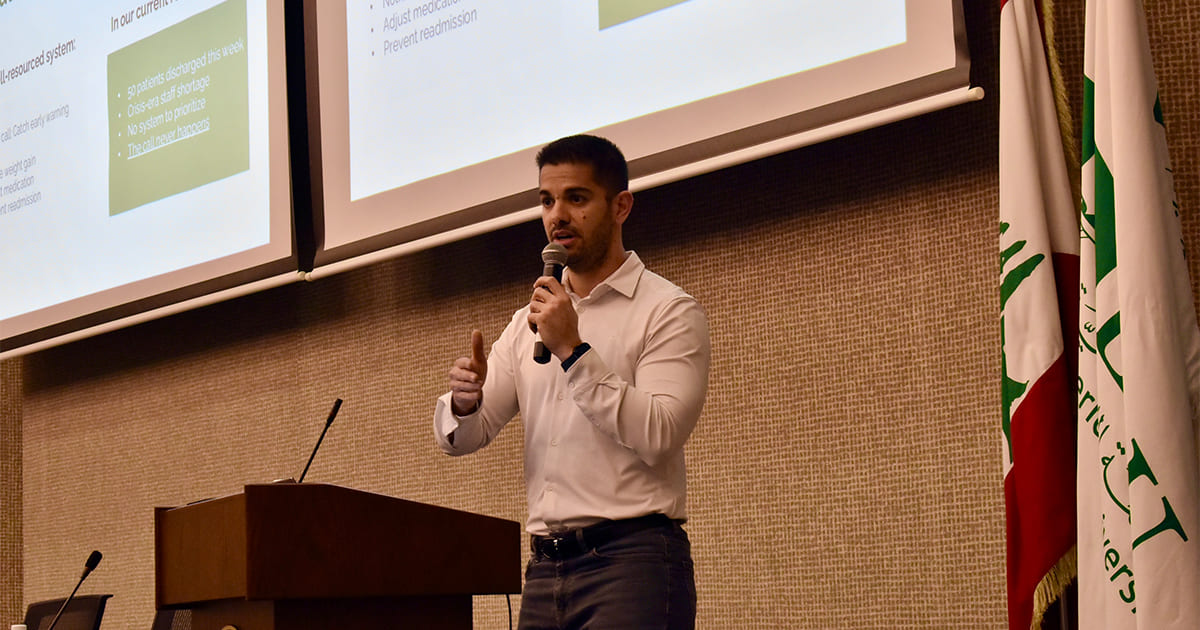
In his opening remarks, Assistant Professor and LAU Engine Director Evan Fakhoury emphasized the real-world stakes at the center of the challenge. Addressing participants, he said, “What you build today will be implemented at our LAU medical centers,” reinforcing that the hackathon was focused on practical solutions rather than theory.
In turn, Dr. Sola Aoun Bahous, dean of the LAU School of Medicine, stressed that challenges of this scale cannot be addressed in isolation. She highlighted “togetherness” as the driving force behind the initiative, bringing students from different disciplines into one space to collaborate and develop meaningful solutions.
This collaborative approach responds to a persistent gap in care. Many patients return within 30 days of discharge, often in worse condition. With ongoing staffing shortages and more than 50 patients discharged weekly, care coordinators lack a reliable way to identify which patients require the most urgent follow-up.
Over the course of eight hours, teams designed AI-powered functional prototypes that predict readmission risk, generate personalized follow-up plans, and present key information to doctors in a clear, efficient format without adding to their workload.
To guide development, the challenge was structured around three core requirements: predicting which discharged patients are most likely to be readmitted using available hospital data and assigning risk scores; automating follow-ups at key intervals (day 3, 7, and 14) to monitor symptoms and medication adherence in high-risk cases; and presenting key patient insights through a simple tool that supports quick clinical decisions without adding workload.
Mentorship was integrated throughout the build sessions, where faculty from the School of Engineering and Dr. Daniel Mahfoud, acting chair of the Department of Medical Imaging at the School of Medicine took turns to offer feedback and lead participants into a final pitching competition and concluding with an awards ceremony. Winners received AI credits, prizes, and the opportunity to present their ideas in a Shark Tank–style format at incubators.
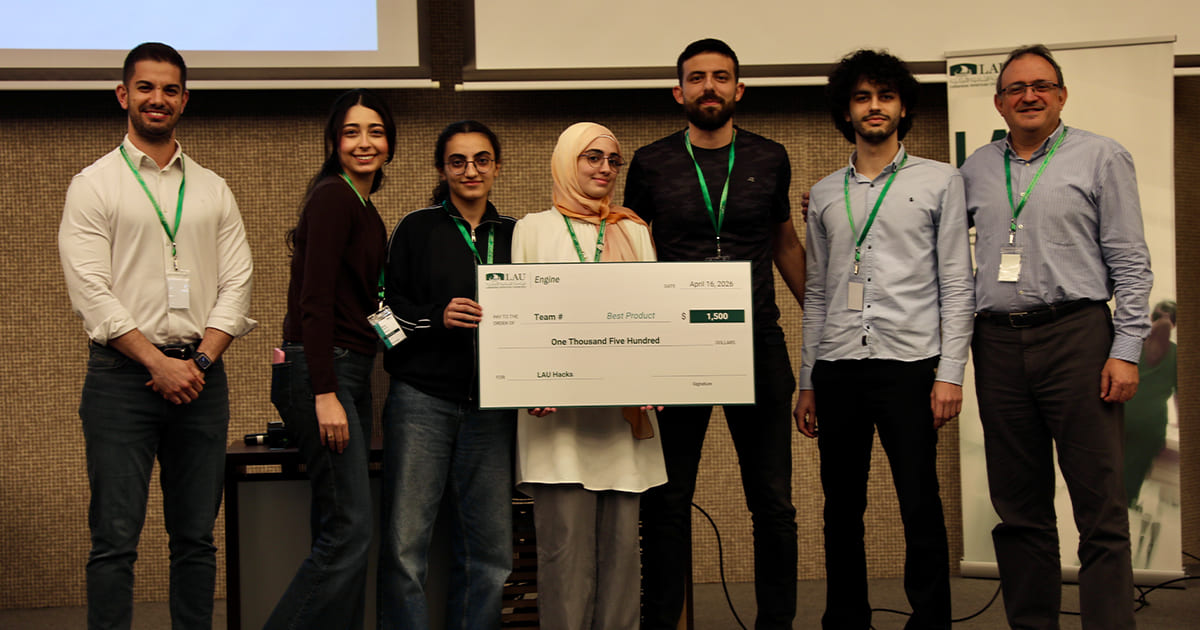
The Best Product award worth $1,500 went to CATLAB, whose team included Batoul Hariri, an LAU medical student pursuing a minor in bioinformatics; LAU business student Zein Fayad; LAU computer engineering student Riwa Al Houssari; LAU graphic design student Nancy Hajj-Ali, and Abdelrahman Hachem, a network engineering student from Conservatoire national des arts et métiers (CNAM)-Liban.
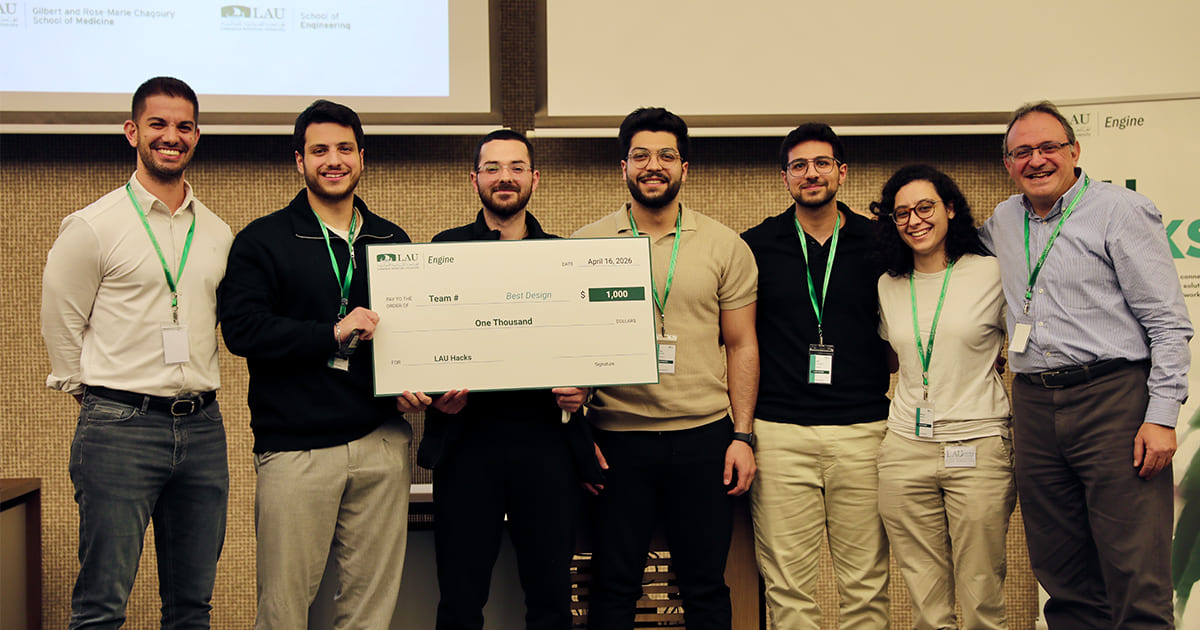
The Best Design award of $1,000 was awarded to Togetherness, with team members Yaghi Moghnie, Rawane Bahous, Fadi Jaramani, and Guy Nafeh, all LAU medical students, alongside Marc Hebbo from the LAU School of Arts and Sciences.
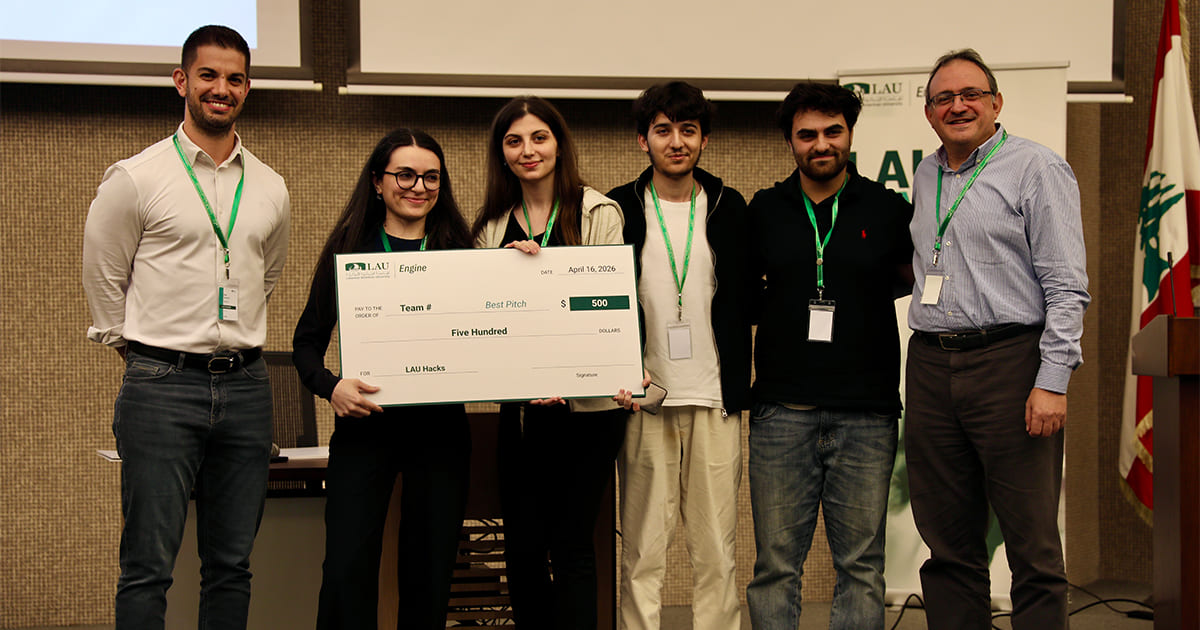
SinoNode secured the Best Pitch award of $500, with a team composed of LAU business students Kris Noun, Rachel Hamieh and Ali Hamieh, in addition to LAU medical student Mia Nour Noun.


