Pharmacy Students on the Frontlines of Care
Guided by the LAU School of Pharmacy’s faculty and staff, pharmacy students across all years of study take proactive roles in a range of humanitarian missions.
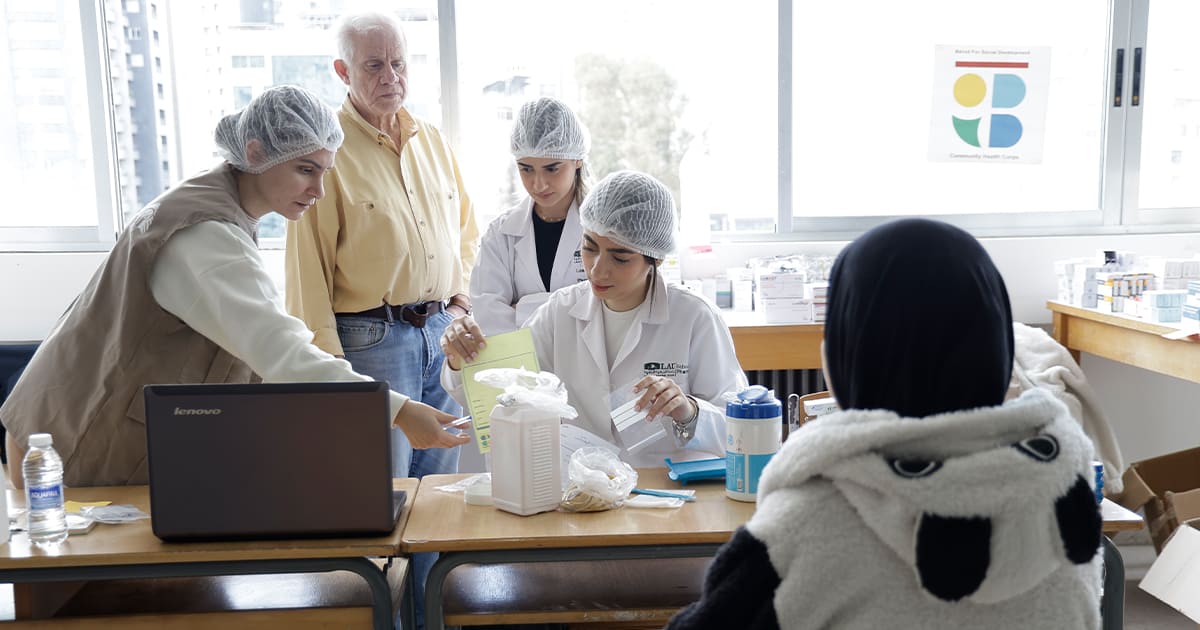
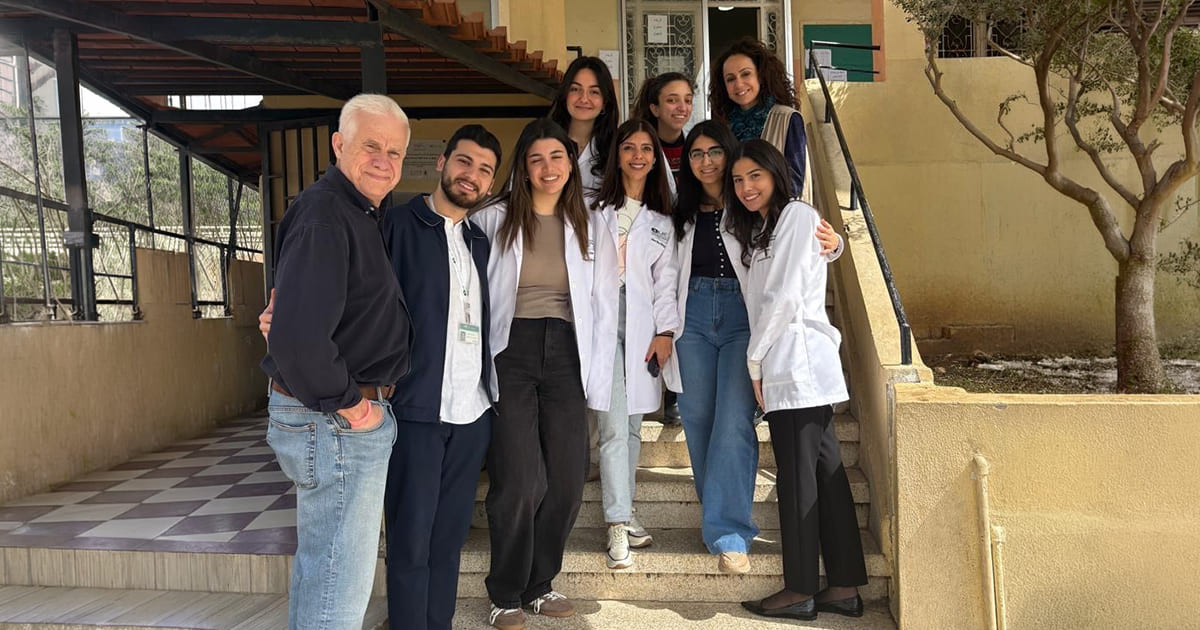
As the war has displaced thousands across the country, students at the LAU School of Pharmacy proved that the responsibility to act does not have to wait for them to graduate. Through volunteering initiatives and participation in the LAU Mobile Clinic missions, these students have stepped beyond the classroom to support relief efforts for war-affected populations, embodying the vital role pharmacists and other healthcare professionals play in protecting public health in times of crisis.
To help guide students through these challenges, the school introduced a document titled Student Expectations During Crisis, outlining the shared responsibility and expectations student pharmacists should uphold, including compassion, professional sensitivity, ethical conduct, and continued professional growth.
“We wanted to reinforce the values and responsibilities expected of future pharmacists, especially during times of crisis,” said Dean Naser Alsharif. Together with Clinical Assistant Professor Aline Bou Maroun and Clinical Associate Professor Maya Zeineddine, he noted that the students’ actions throughout the war embodied the very principles the document sought to promote, demonstrating accountability, professionalism, and service.
For Professional Year 4 (P4) student Abdo El Hayek, P3 students Marily Diab and Chloe Abou Fadel, as well as P2 students Marie Ange Abi Chedid, Jennifer Rahme and Maria Al Andary, this commitment took shape through a structured, student-led donation drive developed with faculty support via the school’s co-curricular activities committee.
The drive began with a faculty visit, including Dr. Bou Maroun and Dean AlSharif, who also joined the team during the medication distribution and patient education visit, to a public school in Fidar, where displaced families were sheltering.
“After assessing their needs, we launched a fundraising campaign and worked with local pharmacies to secure discounts to maximize the support we could provide,” said El Hayek.
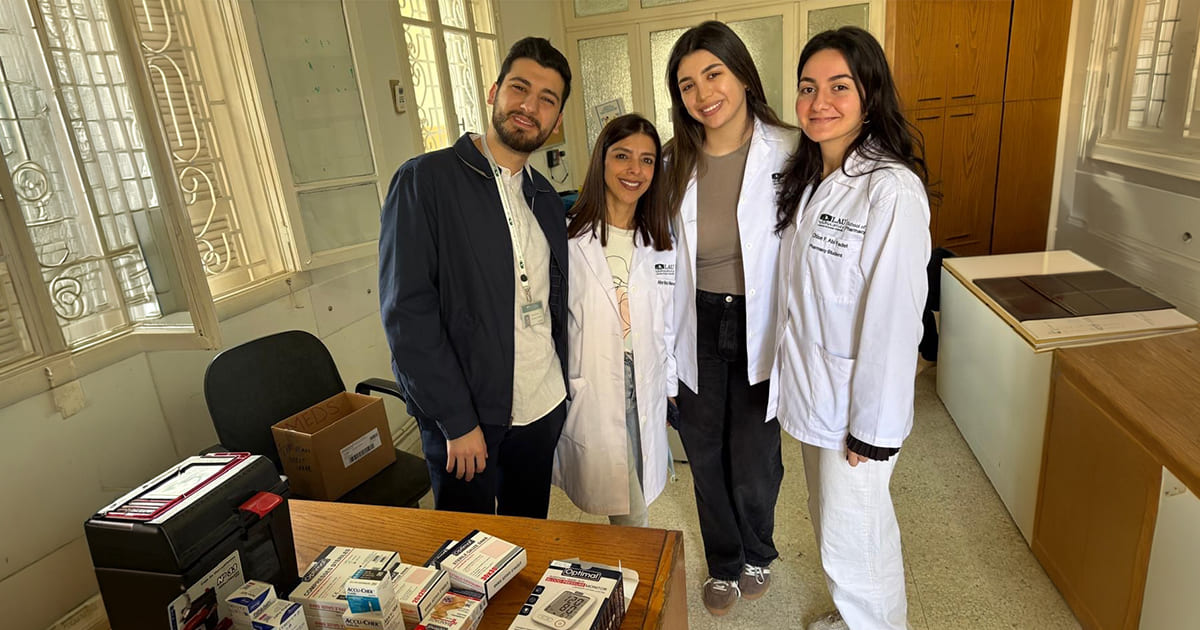
Within a week, the team raised enough to provide a one-month supply of medications and basic medical equipment for around 20 patients with chronic conditions. The final phase—patient counseling—revealed the urgency of their work. “It was heartbreaking to see that some patients were taking half doses just to make their medication last longer,” explained El Hayek. “That’s extremely dangerous, especially for conditions like heart disease or seizures.”
“We’re not just dispensing,” he added. “We’re educating, preventing complications, and sometimes even saving lives.”
For pre-pharmacy student Youssef Zoukra, participating in the mobile clinic stemmed from a strong sense of responsibility. “The reason I joined the pharmacy program is that I want to serve,” he said. “I felt the need to give back to my community, especially now, when not everyone can afford their medication or medical visits.”
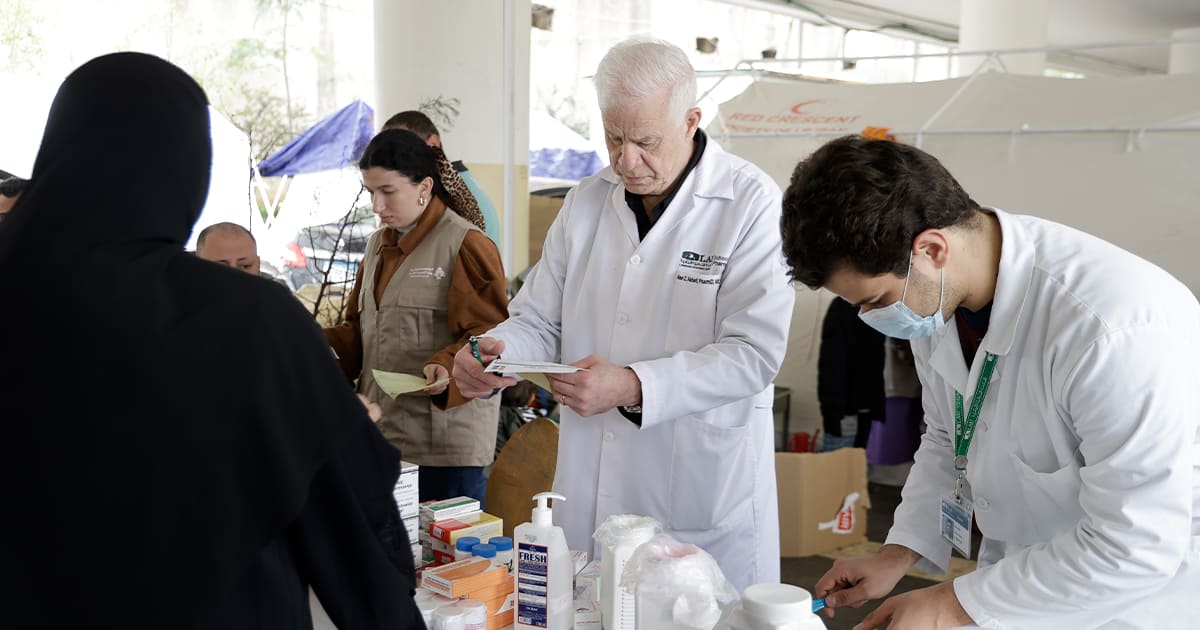
On the ground, he supported prescription dispensing and managed workflow in high-demand settings. “You may expect 10 patients and end up seeing 200,” he explained. “That’s why it’s important for us as pharmacy students to step in—because one or two people alone cannot handle that workload.”
The experience also strengthened the link between theory and practice. “Sometimes a prescription might seem off,” said Zoukra. “It’s important to think critically and use what we learned to make sure the patient is receiving the right treatment.”
Similarly, P3 students Lea Nakhle and Joya Mrad participated in mobile clinic missions at a public school in Beirut hosting displaced families. “We were receiving prescriptions, dispensing medications, and counseling each patient,” they said. “Most of them didn’t know what the medications were for.”
The experience left a lasting impression on the students. They reflected on how grateful people were and how even a simple act of care and support could make a meaningful difference in bringing comfort and smiles to their faces.
Beyond clinical work, the students took part in a grassroots initiative supporting families through food aid. “We prepared around 25 boxes, one per family,” they explained. “Each student contributed a few items, and together we made it happen.”
Lea Makarem, who also volunteered alongside Dr. Zeineddine during a mobile clinic mission, highlighted the practical nature of the experience. “It was good practice, which I’m very glad I got to experience because patients would come with a prescription for a medication and we would have to find the generic form instantly,” she said.
She also emphasized the strong link between coursework and field experience. “With Dr. Zeineddine, our therapeutics course instructor, we had recently covered many chapters that related to the cases we encountered,” she explained. “It was very interesting to be able to recall what we learned in class and apply it in real life.”
For El Hayek, the experience reshaped his understanding of the profession. “Pharmacists are most needed where patients lack access and health literacy,” he said. “Not just in stable environments.”
Youssef echoed this sense of purpose. “Even if it’s just for a few hours,” he said, “being there can make a difference.”
Together, their stories reflect a shared commitment to service—one that extends pharmacy practice beyond traditional boundaries and into the heart of communities most in need.


