Alumna and Designer Diana Ghandour Showcases Work at Art Paris
Beirut designer Diana Ghandour (BArch ’01) unveils a new sculptural furniture collection at the prestigious contemporary fair in Paris.
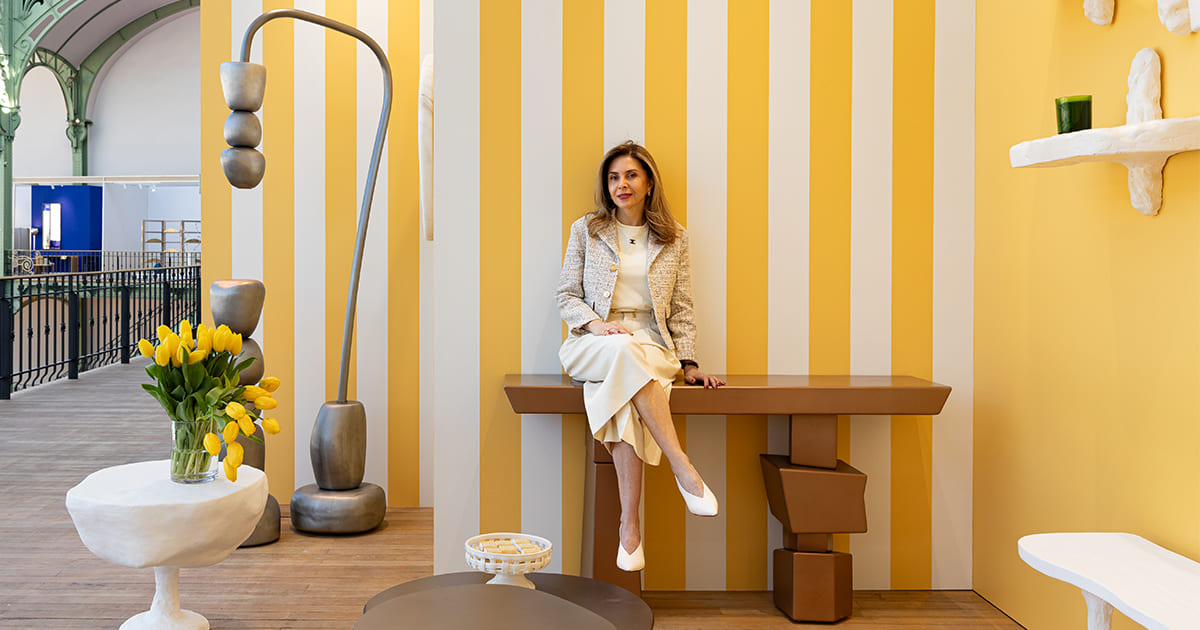
Lebanese designer and LAU alumna Diana Ghandour (BArch ’01) has long approached interiors as spaces that tell stories—where architecture, objects and materials come together to shape atmosphere and emotion.
This April, she brought that sensibility to the international stage, unveiling a sculptural furniture collection at Art Paris, one of Europe’s top modern and contemporary art events, held from April 9–12 beneath the iconic glass nave of the Grand Palais. The annual gathering convened over 160 global galleries alongside artists whose work explored ideas shaping today’s creative landscape, encouraging cultural exchange across regions, practices and disciplines.
As Ghandour launches her new body of work, she reflects on the journey that led her here, from her formative years at LAU to building a design practice rooted in identity, resilience and cross-cultural collaboration.
How did the opportunity to exhibit at Art Paris come about, and what does participating in one of Europe’s leading contemporary art fairs represent at this stage of your career?
I was selected to exhibit at Art Paris at the Grand Palais following a connection initiated through my social media account and website after We Design Beirut, where I participated both as a committee member and a designer. One of the furniture pieces I presented there left a strong impression, which led to the opportunity to develop and showcase my furniture line in Paris. I have been working intensively on this collection over the past three months, and it was launched exclusively at Art Paris. Exhibiting in this fair at this stage of my career is a significant milestone and an important step toward broader international exposure.
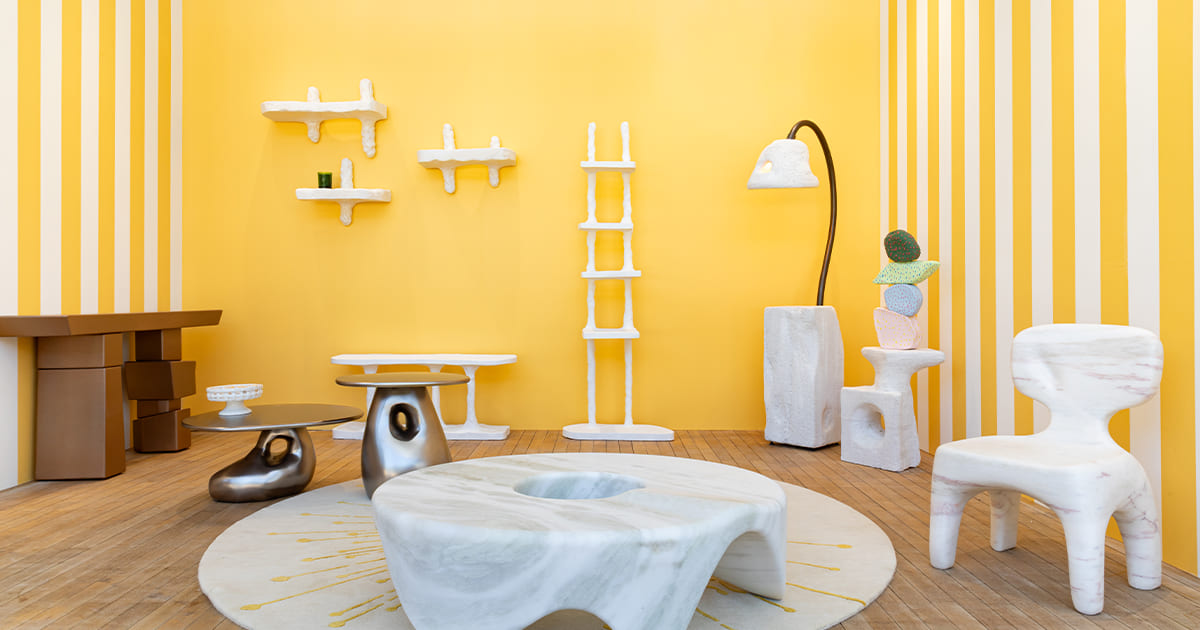
Your presentation at Art Paris brings together sculptural furniture pieces in dialogue with those of the French designer Frédéric Imbert. How did this dual-city identity shape the Paris–Beirut scenography at Art Paris?
Frédéric Imbert and I met two years ago and, through a mutual design process, developed a curated dialogue of furniture pieces between Beirut and Paris. From this collaboration, I selected three pieces to further develop within my collection, complementing them with 11 additional works from my studio. The scenography at Art Paris reflects this exchange—a conversation between cultures, craftsmanship and artistic sensibilities rooted in both cities. As an interior architect deeply engaged with materiality, fluidity and form, my approach explores movement, balance and emotion, so that each piece embodies both structural precision and expressive depth.
You describe your work as sculptural furniture in motion. What does this mean in practice, and how does this approach shape the way your pieces engage with the broader themes of language, reparation, and sustainability within the exhibition?
Sculptural furniture in motion refers to its fluid, organic forms that suggest movement and emotional presence. I create rounded, dynamic pieces rooted in ideas of love, connection and protection, blending influences from art and fashion through thoughtful material contrasts. Within the exhibition, this approach supports themes of reparation and sustainability, emphasizing craftsmanship, durability and meaningful material dialogue.
Looking back on your career, what have been some of the key challenges you encountered, and how did they contribute to shaping your practice and perspective as a designer?
One of the key challenges has been distinguishing myself in a highly competitive field filled with exceptionally talented and aspiring designers. Establishing a clear identity and remaining authentic to my vision required resilience, consistency and continuous refinement of my craft. Another challenge was expanding internationally and navigating diverse cultural contexts, which demanded adaptability and strong technical precision. Ultimately, these experiences strengthened my perspective, sharpened my design language, and shaped a practice grounded in confidence, discipline, and a deep understanding of both emotional and functional space.
How did your studies in Interior Architecture at LAU shape your design thinking and professional path? Is there a particular moment or experience that stands out in retrospect?
LAU played a defining role in shaping my design thinking and professional path. The five-year program provided me with a strong conceptual and technical foundation. It also deepened my interest in psychology and the creation of wellbeing-driven spaces. During that time, I began sharing my work through my Instagram account, Whatshipp, which became an extension of my design voice and connected me to a wider audience. The combination of academic rigor, psychological insight, and early digital exposure gave me the structure, confidence and clarity that continue to guide my practice today.
What advice would you offer current LAU students who aspire to pursue careers in design, furniture, or the broader creative industries?
My advice is to remain patient, persistent, and open to evolution. I began developing this collection after more than 20 years in my career, which is a reminder that it is never too late to embark on a new creative chapter. Growth in the creative industries requires both discipline and courage—the discipline to master your craft and the courage to continually redefine yourself. Today, I am proud to have four talented and hardworking LAU alumni in my bureau, which reflects the strength of the university’s training and community. Most importantly, stay connected to your roots while aspiring to international standards, allowing your identity to become your strongest and most authentic design language.
Finally, what would you like fellow LAU alumni—and visitors encountering your work at Art Paris—to take away from this exhibition?
I hope they leave with a sense of pride and possibility. This exhibition reflects how dedication, cultural identity, and continuous growth can position Lebanese creativity within a meaningful international dialogue. Above all, I hope the work resonates emotionally, reminding viewers of the power of design to connect people and cultures.


