LAU Researchers Contribute to Multi-Institutional Study on Toxic Metals in Pet Foods
A recent study co-authored by interdisciplinary LAU faculty members suggests that pets in Lebanon and the UAE may face health risks due to elevated levels of toxic metals in their food.
Most pet owners are not fully aware of what their pets consume daily. While product labels focus on nutrients and flavors, they rarely reveal the presence of potentially harmful chemicals that can contaminate pet foods during farming, shipping, processing or storage. When a cat or dog consumes the same product every day, even low-level contaminants can accumulate and pose health risks due to repeated exposure.
In a study titled “Pet food safety at risk? Investigating toxic metal contamination in Lebanon and the UAE” published in the Royal Society of Chemistry journal, a team of LAU researchers examined whether toxic metals are present in pet foods sold in Lebanon and the UAE.
The team was led by Dr. Elias Akoury, associate professor at the School of Arts and Sciences (SoAS), and included Dr. Hussein F. Hassan, professor of food science and technology; Dr. Fatima Haydous, post-doctoral researcher, both at SoAS; and Dr. Hani Dimassi, professor and chair of the Department of Pharmaceutical Sciences at the LAU School of Pharmacy. The project was funded by the LAU President’s Intramural Research Fund and the Office of Research and Sponsored Programs at Abu Dhabi University (ADU). It brought together research partners from ADU, Professor Nisreen Alwan, and the University of Balamand, Professor Mireille Serhan.
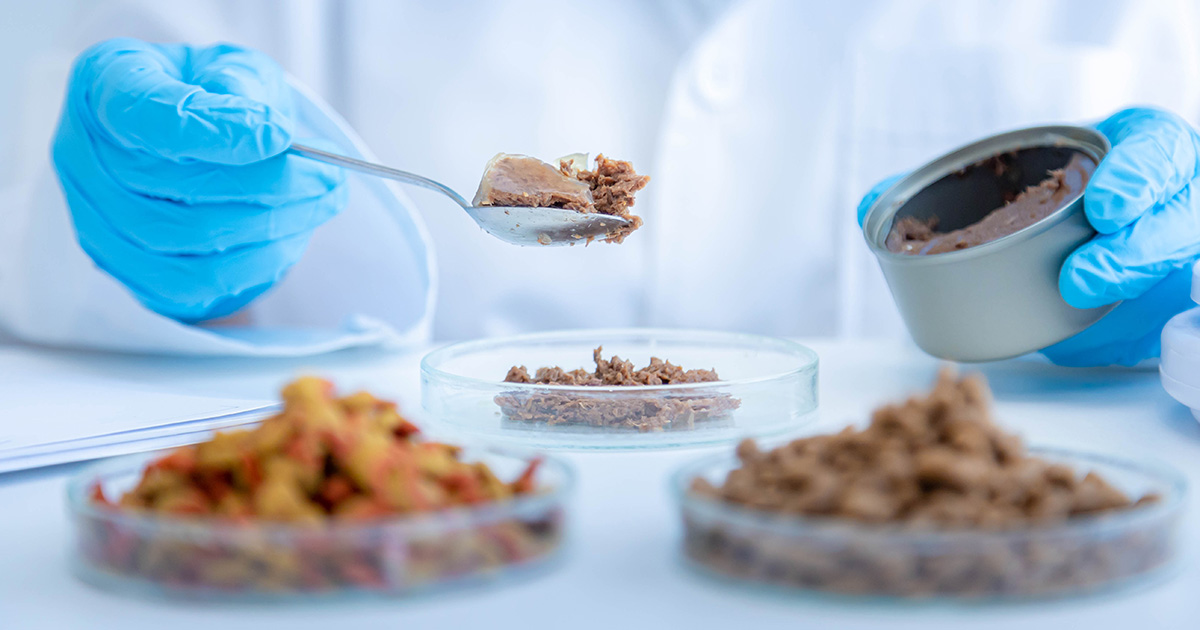
The team conducted a market screening and collected 196 stock-keeping units, 75 from Lebanon and 121 from the UAE, covering both wet and dry products and both cat and dog formulas. Using advanced analytical techniques, they measured nine potentially toxic metals and compared results across food type (dry or wet), animal type (cat or dog) and country of origin, applying standard statistical tests to identify significant differences.
The results revealed notable variations in the type of food analyzed. Dry pet food contained higher concentrations of several metals, whereas wet food had higher cadmium levels. Comparing cat and dog foods, the team found significant differences for multiple metals, with cat food showing higher cadmium levels on average.
Cadmium, noted Dr. Akoury, “poses potential toxicity risks due to its accumulation in kidneys and liver, although most concentrations observed suggest risk is more likely associated with long-term exposure rather than immediate poisoning.”
Mercury levels also varied, but the difference between cat and dog foods was not consistently significant, suggesting that spikes may be driven by specific products rather than entire categories. Dr. Akoury added that the presence of mercury “is particularly concerning because it is a well-established neurotoxin that can affect kidney and nervous system function in animals with chronic exposure.”
Geographic patterns reflected that the differences were more about the type of food rather than its content. The Lebanese market sample was predominantly dry food (70.7 percent), while the UAE sample was mostly wet food (76.9 percent). Since dry food carried higher levels for most metals measured, this likely explains why higher levels were seen in the Lebanese market samples. Additionally, the UAE market sample was heavily weighted toward cat food (80.2 percent), which showed higher levels of cadmium.
The researchers also examined whether metal content varied based on the country of manufacture. Overall, products from developed versus developing countries did not differ significantly in metal levels, challenging the common assumption that origin predicts safety.
“Risk reduction requires both industry and consumer actions,” emphasized Dr. Akoury. For pet owners, he recommended “rotating pet food types, avoiding excessive reliance on fish-based diets, and following veterinary nutritional guidance can reduce cumulative exposure.”
To browse more scholarly output by the LAU community, visit our open-access digital archive, the Lebanese American University Repository (LAUR).


