Iconic Civil War Photograph Joins LAU’s Permanent Library Collection
A powerful image by photographer Maher Attar finds a permanent home at LAU Libraries, preserving a vital piece of Lebanon’s collective memory for future generations.
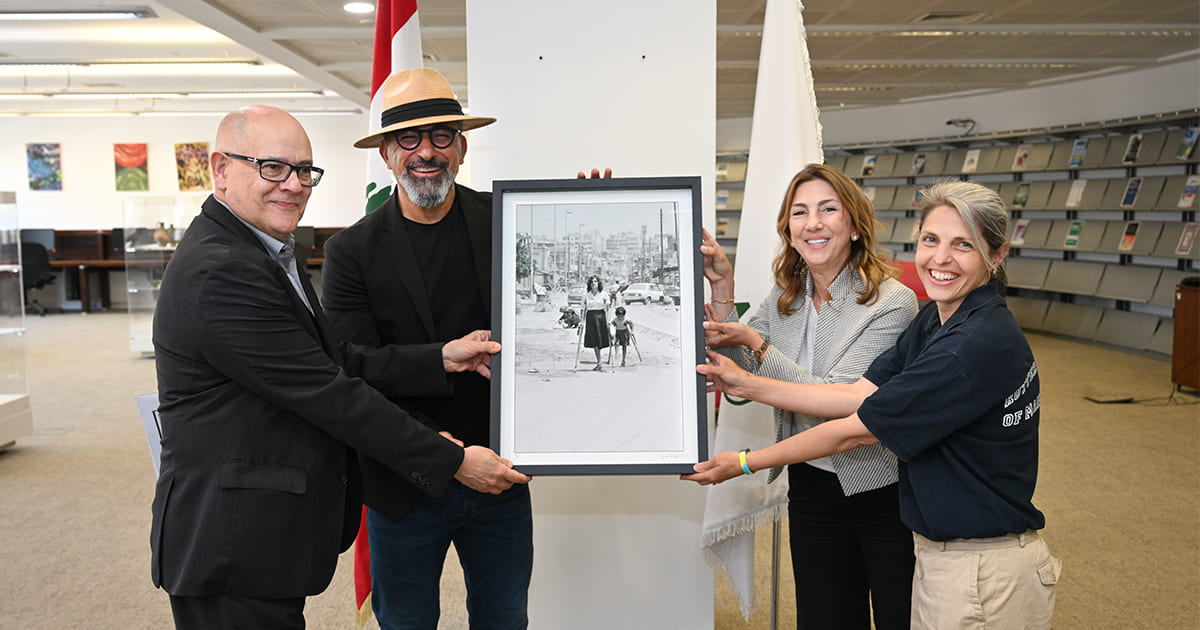
On June 2, the Institute of Art in the Arab World (IAAW) at the School of Architecture and Design (SArD) hosted an event at the Riyad Nassar Library on the Beirut campus, celebrating the donation of Lebanese photographer Maher Attar’s iconic 1985 photograph to its permanent collection. One of only six prints of the scene captured four decades ago, the photograph stands as a lasting testament to Lebanon’s history and resilience.
The image, which became one of the defining visual symbols of the war and featured on the front page of The New York Times, depicts a one-legged woman walking with her injured daughter through the devastation of Beirut during a temporary ceasefire.
Dean Elie Haddad highlighted the importance of displaying the photograph in the Riyad Nassar Library.
“The library is turning into a cultural forum,” he said. “It’s not just for books, but also a place for the arts, music, and dialogue. This photograph will be here, hopefully, for many years to come, contributing to our cultural landscape and collective memory.”
Welcoming the guests, Dr. Yasmine Nachabe Taan, professor at SArD and director of the IAAW, underscored the significance of the donation at a time when Lebanon continues to navigate political, social, and regional challenges.
“By placing this photograph in the library, we hope that it will invite generations of students to reflect on the realities and consequences of war and to recognize the importance of unity in the face of adversity,” she said. “Remembering the war is essential—to learn from it and to work toward a more just and peaceful future.”
She thanked Attar for entrusting the institute with what she described as an important gift that contributes to preserving Lebanon’s cultural memory and promoting dialogue across generations.
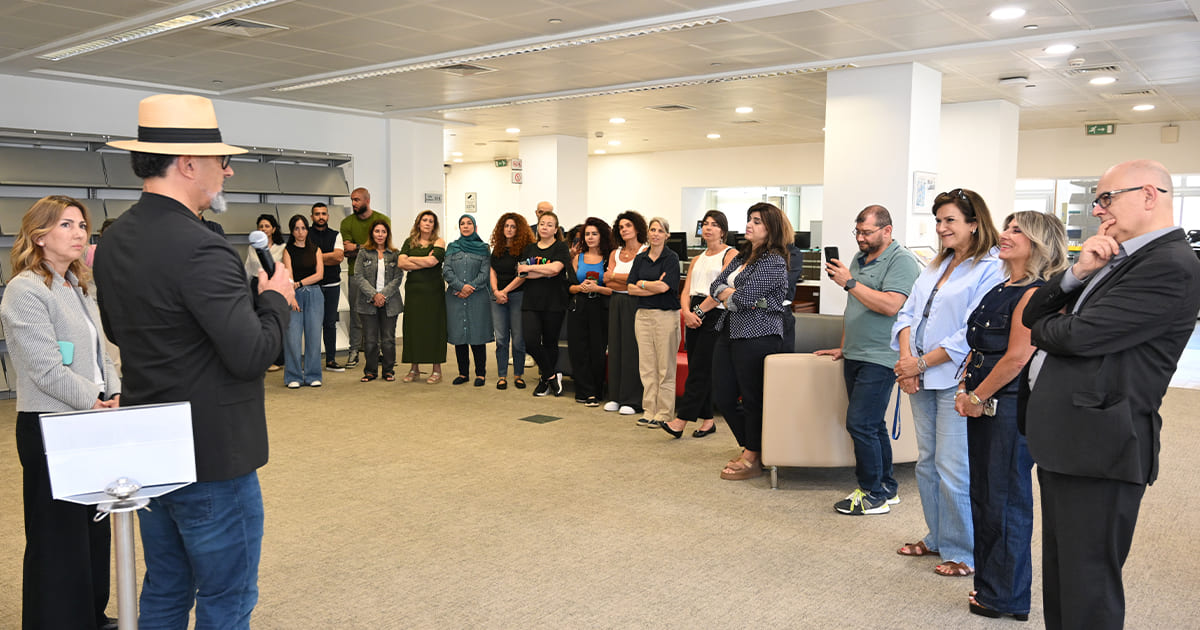
For Attar, the photograph represents both a defining moment in his career and a deeply personal journey that continued long after the shutter was released.
“I took this image when I was 23 years old,” he recalled. “Today I am 63, and one day I will be gone, but she will remain—fixed in that moment forever.” He was honored to see the photograph housed at the LAU library, he added, where it can be “viewed by younger generations and take its place in history.”
The event concluded with a reception attended by faculty, staff, students, and guests, marking not only the donation of a historic photograph but also the role of art in preserving memory, encouraging reflection, and connecting generations through shared experiences.


