Beyond Labor Rights: LAU Study Sheds Light on Migrant Domestic Workers’ Mental Health
A recent LAU study highlights how the Kafala system affects not only workers’ legal and economic security, but also their mental wellbeing.
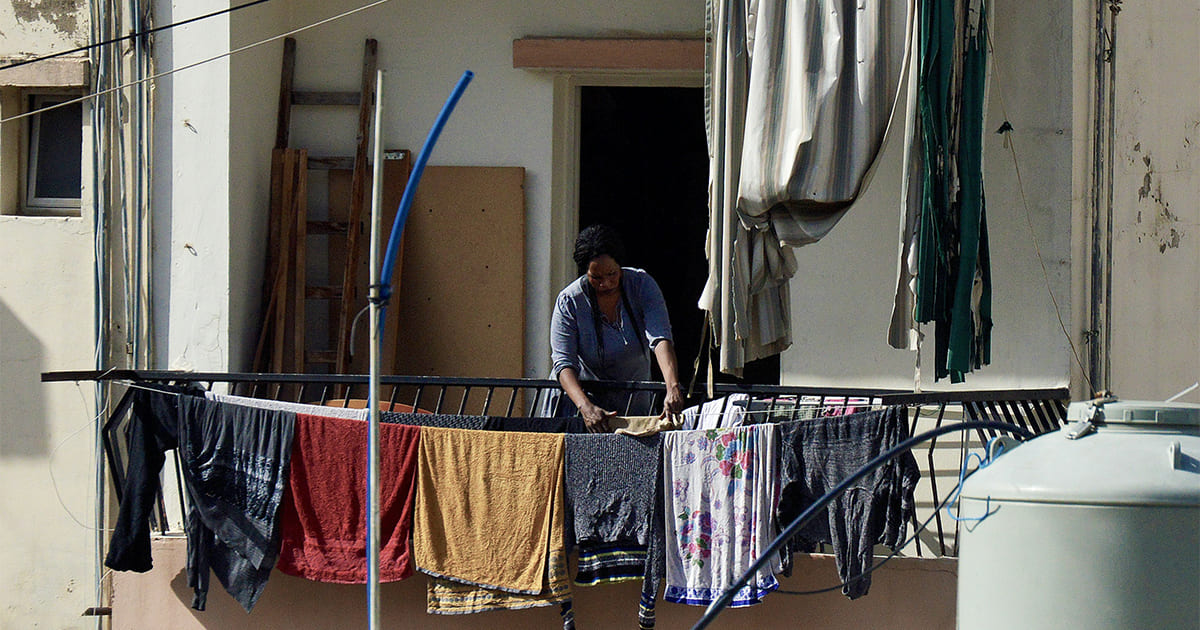
For thousands of migrant domestic workers in Lebanon, work, housing, legal status, and personal safety are often tied to one employer. Migrant domestic workers are frequently discussed as workers in need of legal protection, but less often as people whose emotional wellbeing is shaped by control, isolation, racism, and repeated crises.
This is the focus of “Intersecting oppressions and mental distress: Migrant domestic workers under the Kafala system in Lebanon,” published in Migration Studies.
In the study, Dr. Jasmin Lilian Diab, assistant professor of Migration Studies and director of the Institute for Migration Studies at the School of Arts and Sciences, along with co-author Rhea Al Riachi (MA ’23), investigates how the different forms of oppression under Kafala affect the mental health of migrant domestic workers and how they were exacerbated by the Beirut port explosion.
The study drew on 47 in-depth interviews with migrant domestic workers of diverse nationalities, as well as 15 interviews with professionals and advocates working on migration, labor rights, and mental health. The researchers went beyond standard ethical protocols and used a trauma-informed approach, taking into consideration the participants’ dignity, safety, and already limited emotional resources.
“One of the greatest challenges involved ensuring participants’ safety and comfort while discussing highly sensitive experiences related to abuse, discrimination, and psychological distress,” said Dr. Diab.
Many of them, particularly those with irregular legal status, feared repercussions from employers, immigration authorities, or recruitment agencies, she explained. This made trust-building central to the research process and required close collaboration with community organizations that already had relationships with migrant communities.
The study found that mental distress was rooted in the structure of the Kafala system itself. Workers’ residency status depends on their employers, making it impossible to escape abusive conditions or seek help without fear of retaliation. Participants described being unable to move freely, feeling isolated, losing access to their documents, and remaining silent because they needed to send money home.
Social attitudes added to these pressures. Racism, xenophobia, and the low status assigned to domestic work shaped how workers were treated in homes, clinics, and aid settings. Employing the concept of intersectionality, which refers to the overlapping effects of inequalities, the study shows how gender, race, class, and legal precarity together contribute to the workers’ distress.
Lebanon’s crises, especially the Beirut port explosion, magnified these vulnerabilities. Some participants described being excluded from shelters or aid because support was not designed with migrant domestic workers in mind. Others struggled to access mental health services because of language barriers, limited mobility, fear of being reported, or lack of services outside Beirut.
The study identifies consistent themes across interviews, including legal dependency, employer control, isolation, exclusion from services, lack of trust in institutions, and crisis-related trauma.
Though the workers endured with the help of migrant-led organizations, grassroots migrant groups, and humanitarian providers, or resorted to religious practices, friendships, and vocational skills, the study is careful not to present these coping mechanisms as a substitute for reform, which entails improving the legal and social conditions.
Future research should look beyond mental health to examine how the Kafala system affects physical health, access to justice, family separation, social belonging, and the long-term experiences of aging and retirement after years of domestic labor, noted Dr. Diab. Furthermore, migrant workers’ agency, resistance, and community-building need to be understood.
“Much of the existing literature understandably focuses on exploitation and harm,” she said, “but workers also establish support networks, engage in advocacy, create artistic and religious spaces of healing, and negotiate dignity under extremely difficult circumstances.”
In light of its findings, the study calls for a shift in how Lebanon addresses migrant domestic work. Mental health support must be multilingual, culturally responsive, decentralized, and trauma-informed. But services alone are not enough. “Our findings suggest that reform efforts must go beyond incremental changes and address the structural foundations of the Kafala system itself,” said Dr. Diab.
The most urgent priority is the full inclusion of migrant domestic workers under Lebanon’s labor law, with enforceable protections related to wages, working hours, mobility, days off, occupational safety, and access to legal recourse. Reforms should also guarantee workers’ right to change employers without risking their residency status, ending the dependency at the heart of the sponsorship model.
“Legal reforms alone are insufficient without robust implementation, accountability for employers and recruitment agencies, and sustained investment in migrant-led organizations that have long filled gaps left by formal institutions,” concluded Dr. Diab.
To browse more scholarly output by the LAU community, visit our open-access digital archive, the Lebanese American University Repository (LAUR).


