LAU Teams Secure Top Honors at National Engineering Competition
Innovative solutions developed by LAU students demonstrate how classroom learning can be transformed into technologies that address real-world challenges.
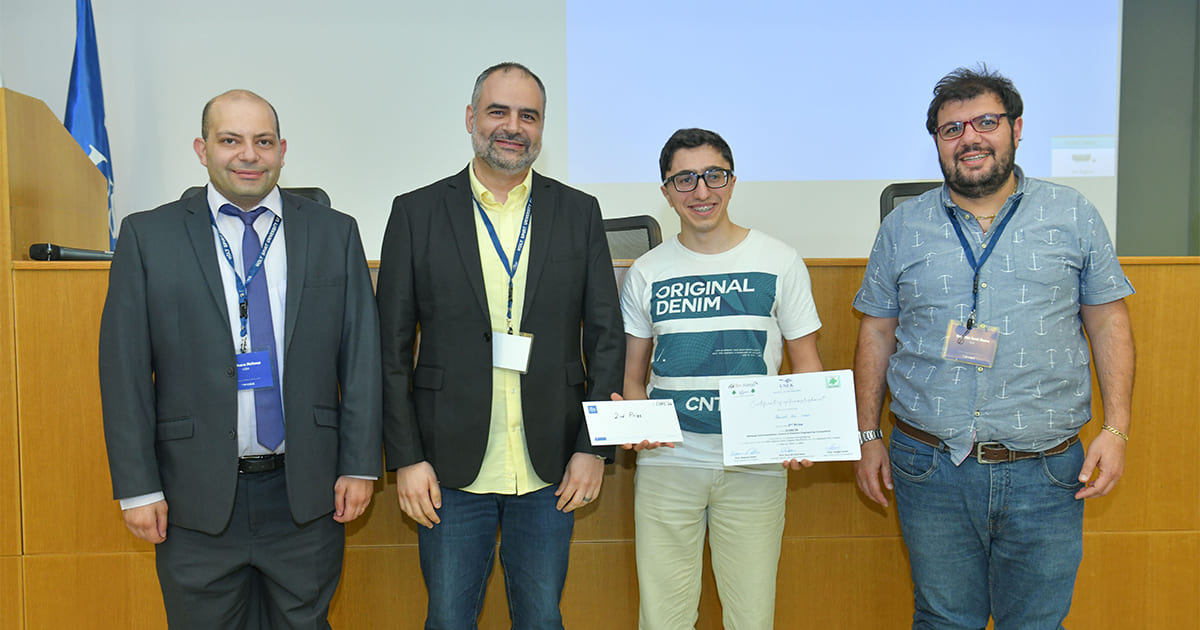
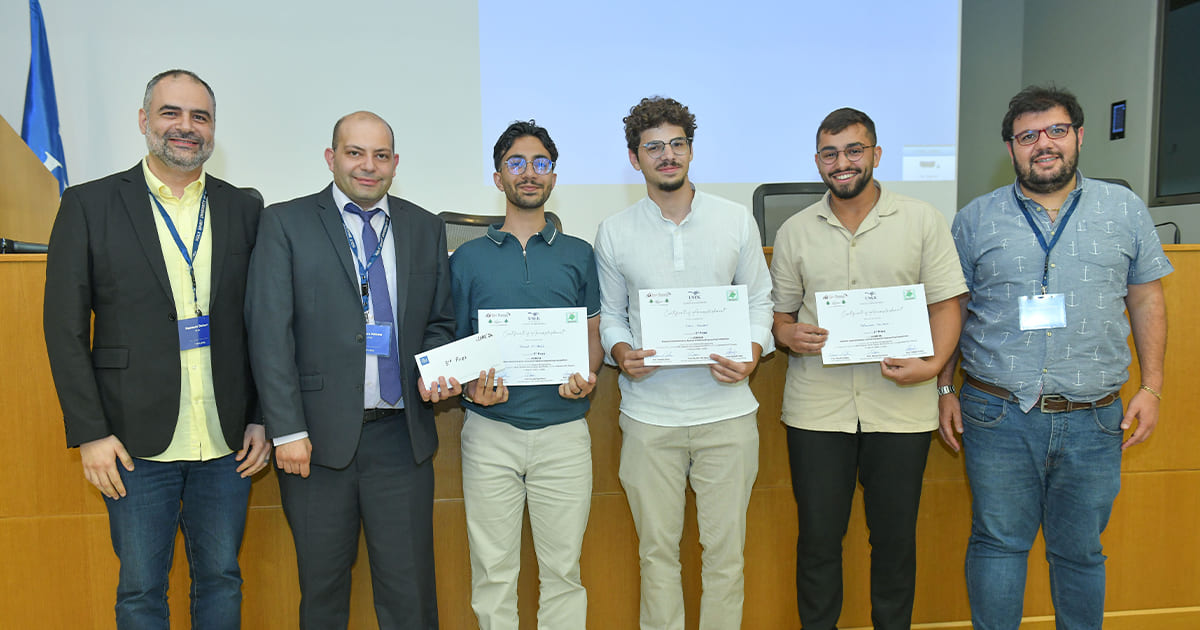
Student engineers from the LAU School of Engineering have secured second- and third-place finishes at the annual Instrumentation, Control, and Robotics Engineering Competition (iCORE) 2026, held at the Holy Spirit University of Kaslik.
The competition on May 22, 2026, brought together 13 teams of engineering students from universities across Lebanon to showcase projects that apply instrumentation, control systems, robotics, and emerging technologies to real-world challenges. The inaugural competition was hosted by LAU in 2025, making this year’s victories a continuation of the university’s strong presence in a growing national platform for innovation.
Team H.A.L.C. BionicTech earned second place for developing a bionic hand, built in strict accordance with industry standards, designed for individuals with transradial (below-elbow) amputations. The customizable device combines affordability, functionality, and ease of maintenance in a lightweight solution tailored to each user’s needs. The inspiration behind the project stemmed from a pressing reality facing many Lebanese families.
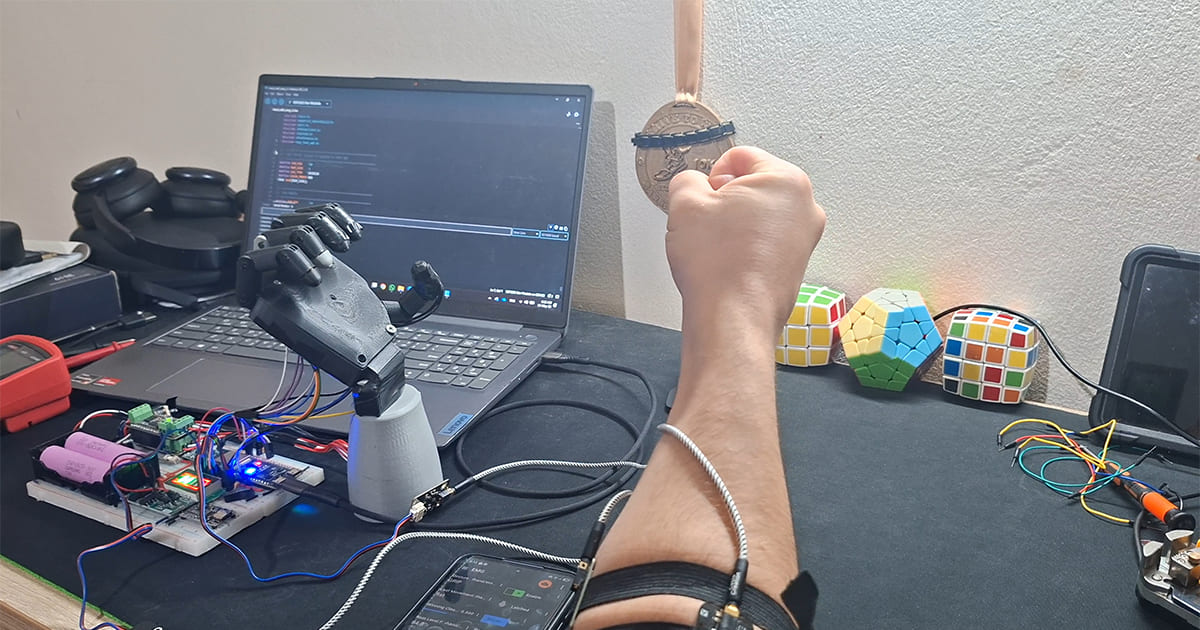
“Following the recent war in Lebanon, it was devastating to see so many people left with lost limbs,” said team representative Charbel Abi Saad. “Beyond the immense physical and psychological burden, the reality is that the vast majority of amputees cannot afford commercial, high-end prosthetics. Our goal was to offer these individuals a cost-effective, dignified second chance through a device built specifically for the people who need it most.”
Built using 3D-printing technology, the hand weighs less than 500 grams, responds to muscle contractions in under 200 milliseconds, and provides up to 10 hours of battery life. The team also developed a smartphone application that allows users to monitor performance and customize hand movements while incorporating safety mechanisms and compliance with international medical-device standards.
For Abi Saad, developing a reliable prosthetic system required the team to overcome several technical challenges, particularly the limited datasets available for training their machine-learning model to adapt to different users’ muscle activity patterns.
“To overcome this, we engineered an automated calibration protocol into the device’s startup sequence,” explained Abi Saad. “The algorithm dynamically adapts to each user, giving us a highly stable working prototype.” The project also drew on concepts from the Mechatronics System Design course, particularly fuzzy logic control systems, which helped the team create smoother human-machine interaction.
“The concept instantly clicked for us because it fundamentally mimics human reasoning,” he added. “Participating in iCORE forced us to step out of the lab mindset and view our work through the eyes of the outside world. It reminded us that the ultimate purpose of engineering is to solve tangible problems and move humanity forward.”
Abi Saad acknowledged their Final Year Project supervisor, Associate Professor Harag Margossian, whose continuous support, accessibility, and guidance helped steer the team in the right engineering direction. He also highlighted the open-door policy of the LAU engineering faculty and the accessibility of the lab facilities, which provided the workspace, tools, and troubleshooting support needed to bring the project to completion.
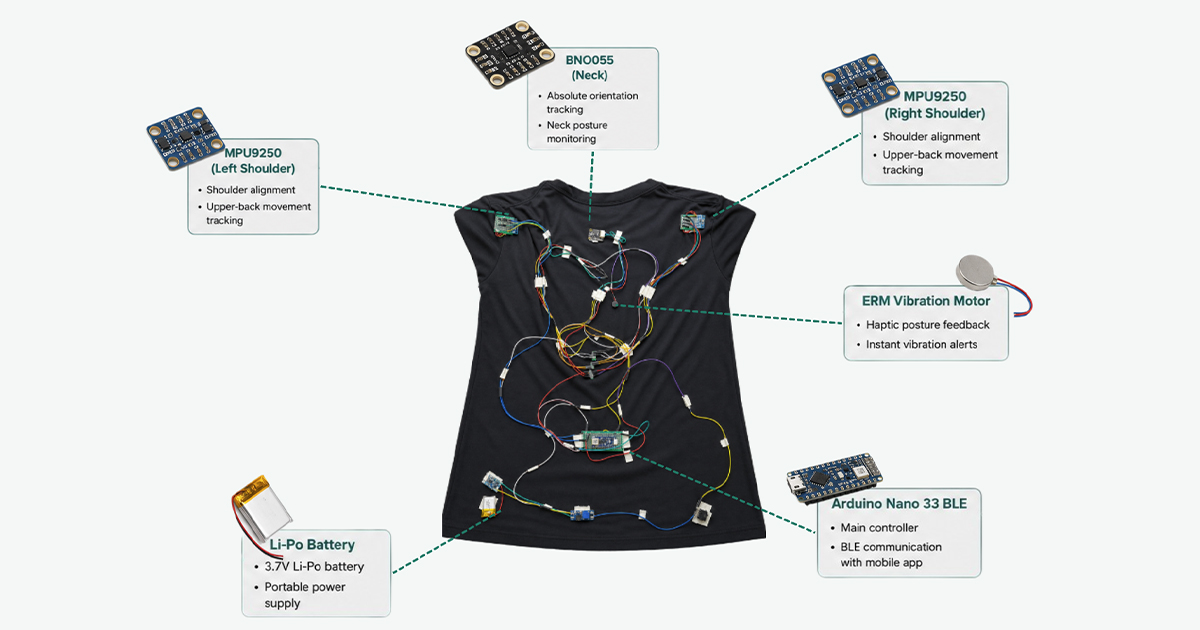
Rounding out LAU’s podium sweep, team JALES (Just Aligned Learning Enhancement System) tackled the everyday challenge of poor posture, earning them third place. Ahmad Al Khatib, Habib Hamdoun, and Mohammed Marchud designed a smart wearable shirt that employs embedded sensors to track spinal curvature and shoulder alignment in real time, processing the data through a custom platform and mobile application that gives users actionable feedback and posture analytics.
“We were inspired by a clear gap in the market,” said Al Khatib. “Most posture correctors are passive braces or intrusive devices. We wanted to build an intelligent, ergonomic solution that tracks body alignment naturally.”
According to Hamdoun, transforming that vision into a wearable product demanded extensive testing and integration between hardware and software components. Ensuring sensor accuracy while maintaining comfort and freedom of movement proved especially challenging.
The team credited LAU’s project-based learning environment and hands-on engineering curriculum for helping them bridge theoretical concepts with practical implementation. They also highlighted the guidance of faculty mentor Assistant Professor of Practice Maria Abi Saad throughout the project’s development.
“Our success is a testament to the incredible mentorship we received,” said Marchud. “Her technical guidance and encouragement kept our team focused and motivated despite the highly challenging conditions Lebanon is currently facing.”


