Trained in Crisis: LAU’s 2026 Hooding Ceremony Honors Its Medical Graduates
At LAU’s Byblos campus, medical graduates, residents, and fellows shaped by years of crisis and technological upheaval were reminded that the future of medicine depends on remaining irreplaceably human.
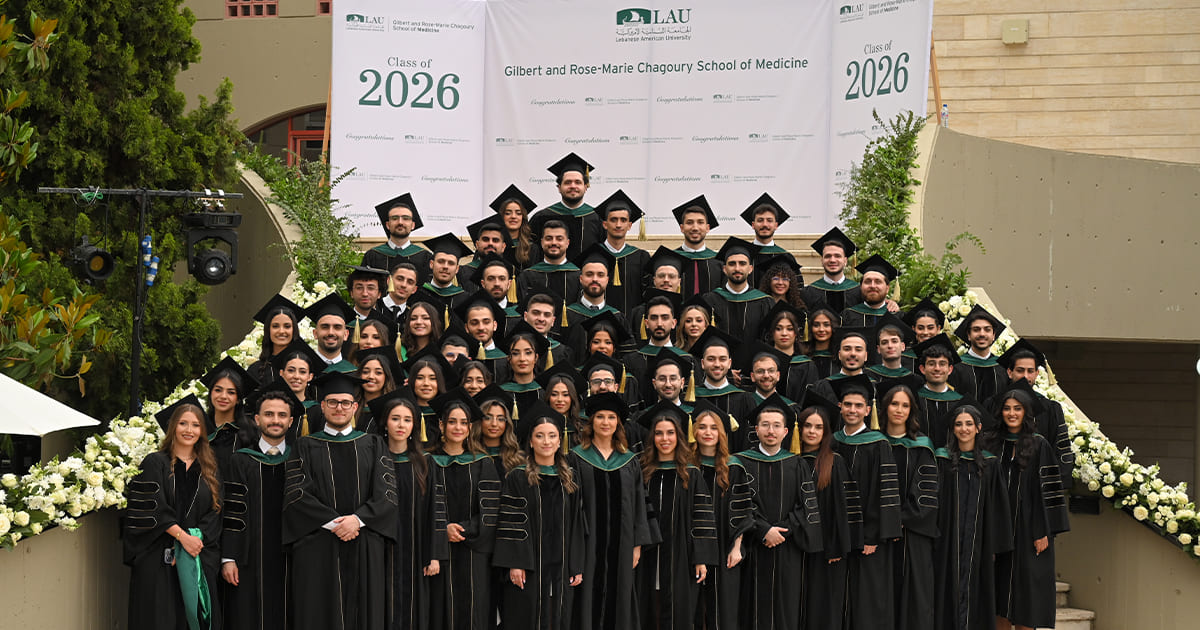
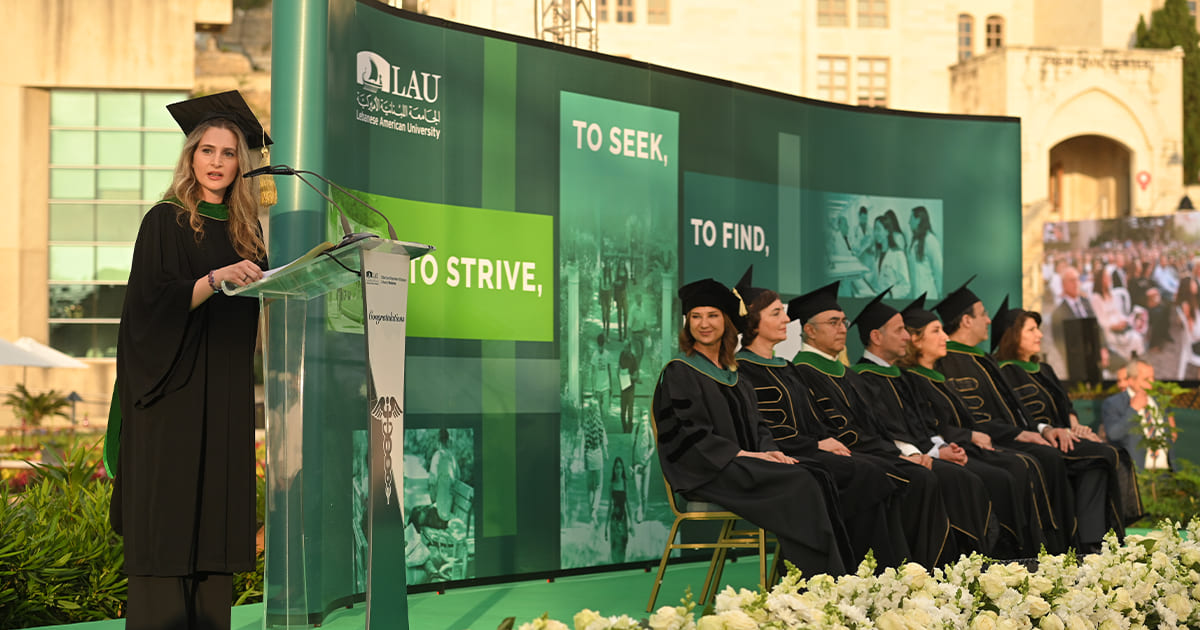
As the 14th cohort of medical graduates, residents, and fellows from the LAU Gilbert and Rose-Marie Chagoury School of Medicine gathered around the fountain at the Byblos Campus for their hooding ceremony on May 23, 2026, the occasion raised a perennial question: What does it mean to be a physician in an era when artificial intelligence is becoming a partner in care?
For this cohort, whose training unfolded against years of crisis and instability, the answer lay in their responses to patients at their most vulnerable moments, under extraordinary circumstances. What they had learned, firsthand, beyond the need to be efficient, was how to care, to question, and to take responsibility where technology cannot. What they learned was the vital role of humanity, morality, and compassion, values that machines do not possess. Though latent in their experiences, those were the lessons that they needed to hold on to.
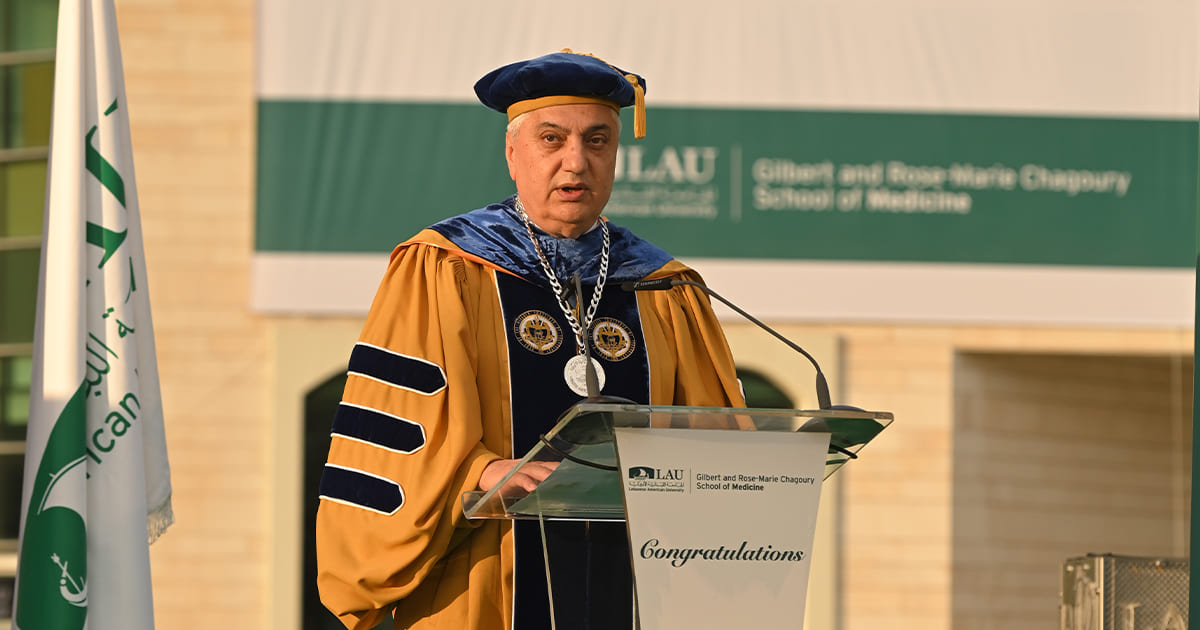
“At LAU, we speak about preparing physicians who can practice and succeed anywhere in the world,” said LAU President Chaouki T. Abdallah in his address. “Those who have gone before you are living proof that this is no longer an aspiration, but a reality.”
Success, however, “is not measured by only where you practice or what titles you hold, but by the lives you touch and the differences you make,” he added, exhorting them to pursue excellence with humility, to keep learning, questioning, and growing, and, above all, to always care.
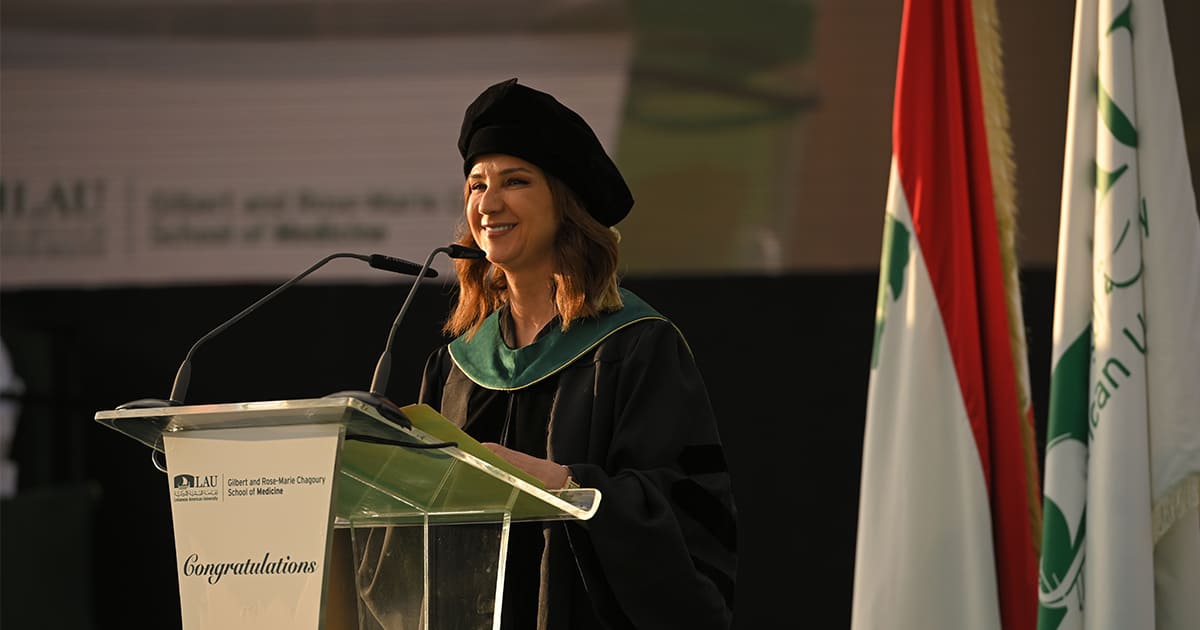
Acknowledging that the world the graduates are now entering was “changing faster than any generation before you,” and that AI systems now outperform humans “in efficiency, in speed, in memory, and in the processing of data,” Dean Sola Aoun Bahous said that the question is no longer whether physicians can keep up, but what is uniquely human about the way they think.
No algorithm can replicate the ability to imagine, to interpret, to “sit with uncertainty,” and to sense what data alone cannot capture, added Dr. Bahous. As physicians, they will be expected to assume responsibility and remain human, even when the system around them is mechanical, because “machines will outpace us in speed, but they will never replace us in care.”
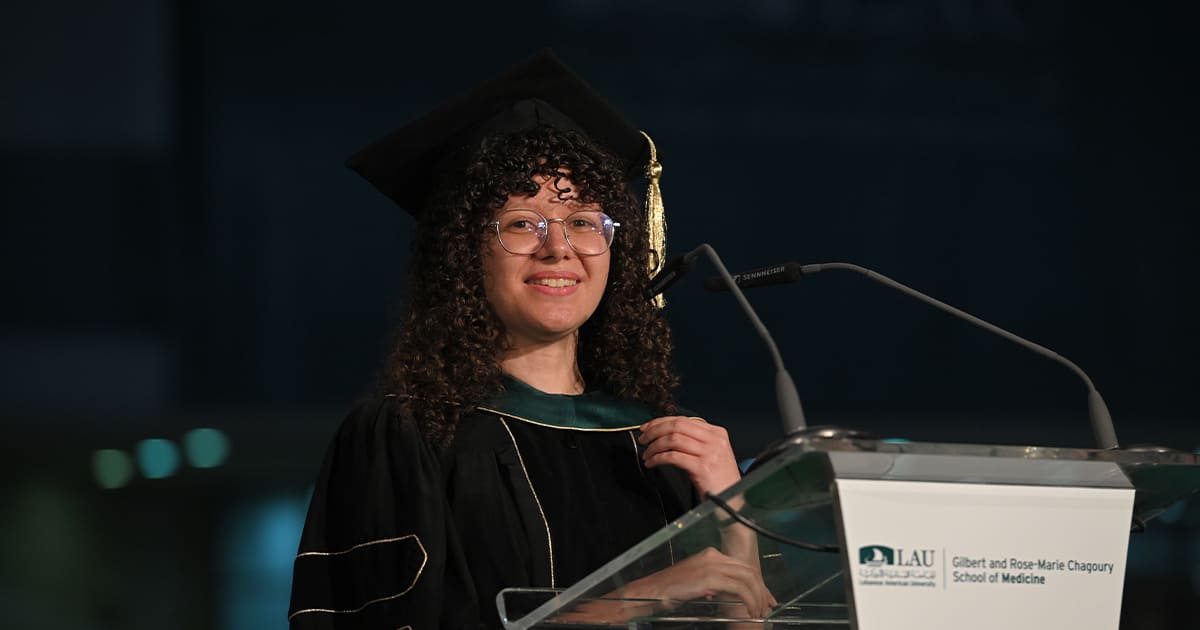
Although they were just starting in medical practice, which is constantly evolving with discoveries and technologies, the school has prepared them well, said valedictorian and Academic Excellence Award recipient, Dr. Leen Echtay. “Treating us like equal partners in education [it] has paved the way for us to become independent lifelong learners.”
“Looking forward, we are ready to become physicians, researchers, and advocates; ready to care for individual, public, and global health,” she added.
With an outstanding match rate in the US National Resident Matching Program again this year, residencies across prestigious institutions in the US await the medical graduates and residents. Many, however, spoke as much about what they hoped to one day bring back to Lebanon as where they were headed next.
Among them Dr. Ramza Azhar, who will pursue a postdoctoral research fellowship at MD Anderson Cancer Center in Houston before applying for residency training in oncology, described how deeply the university had shaped her both professionally and personally.
She only fully realized “the strength of the education and values we receive at LAU when I completed electives in the United States,” she said. “That’s when I understood how prepared we are to stand alongside peers anywhere in the world with the professionalism, ethics, and preparation this institution instills in us.” Leaving Lebanon and LAU, she added, was like leaving two homes.
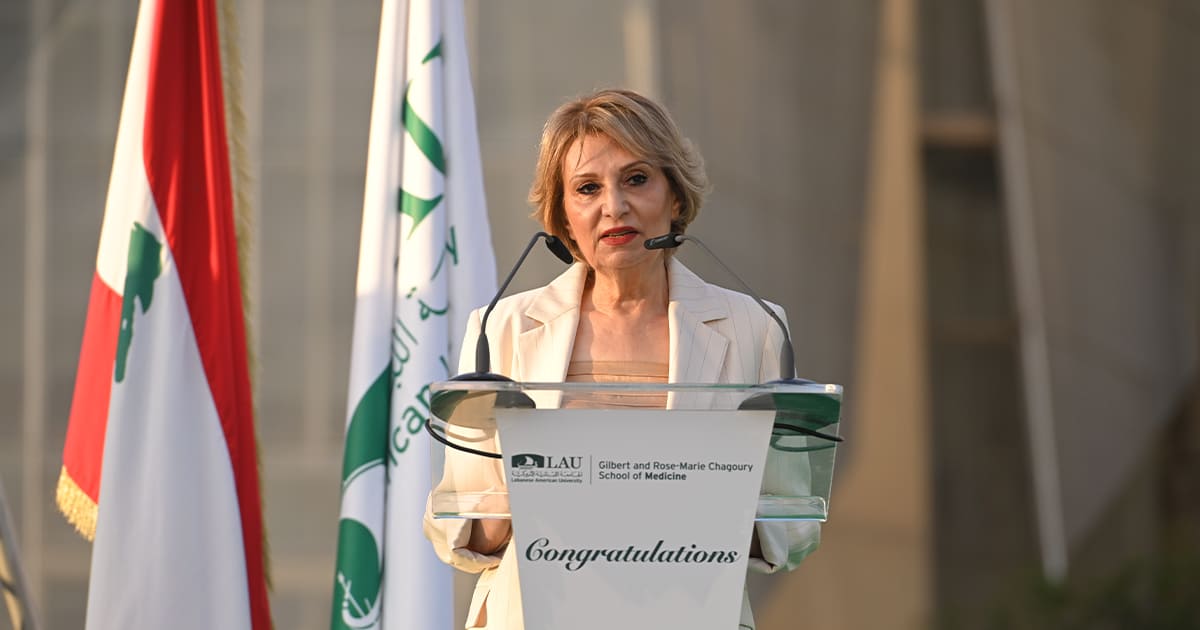
This sense of being torn between pride in her achievements and the emotional weight of leaving the country for the next stage of her trainings, and shared by many graduates, resonated throughout the keynote address delivered by Dr. Zeinat Hijazi, professor emerita of pediatrics and founding associate dean for medical education.
“As you step into this next chapter,” she told the graduates, “know that you represent a promise … Go with pride and take full advantage of everything the world offers you,” she added. “Stay connected. Stay engaged. Do not lose sight of your country.”
She urged them to embrace innovation without surrendering the human instincts at the center of medicine. “Algorithms can process data,” she said. “They cannot carry responsibility. They cannot sit at the bedside. They cannot read fear in a parent’s silence.”
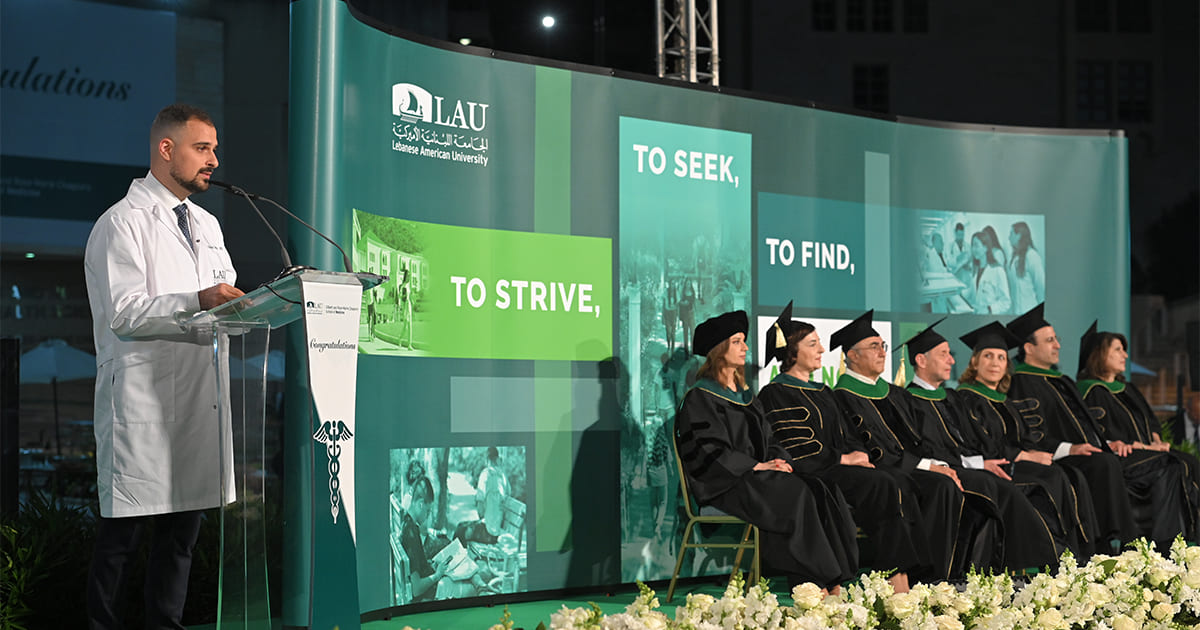
In a poignant speech, pediatrics graduate Dr. Charbel Iskandar, representing graduates and residents, reflected on the emotional toll of practicing medicine amid crisis and the steadfast commitment that kept them returning to the LAU medical centers day after day.
“We trained in a country that never paused for us,” he said. “When fear filled the streets, we filled the hospitals … Not because we had no choice, but because this is who we are. We were not just residents. We were warriors in white coats.”
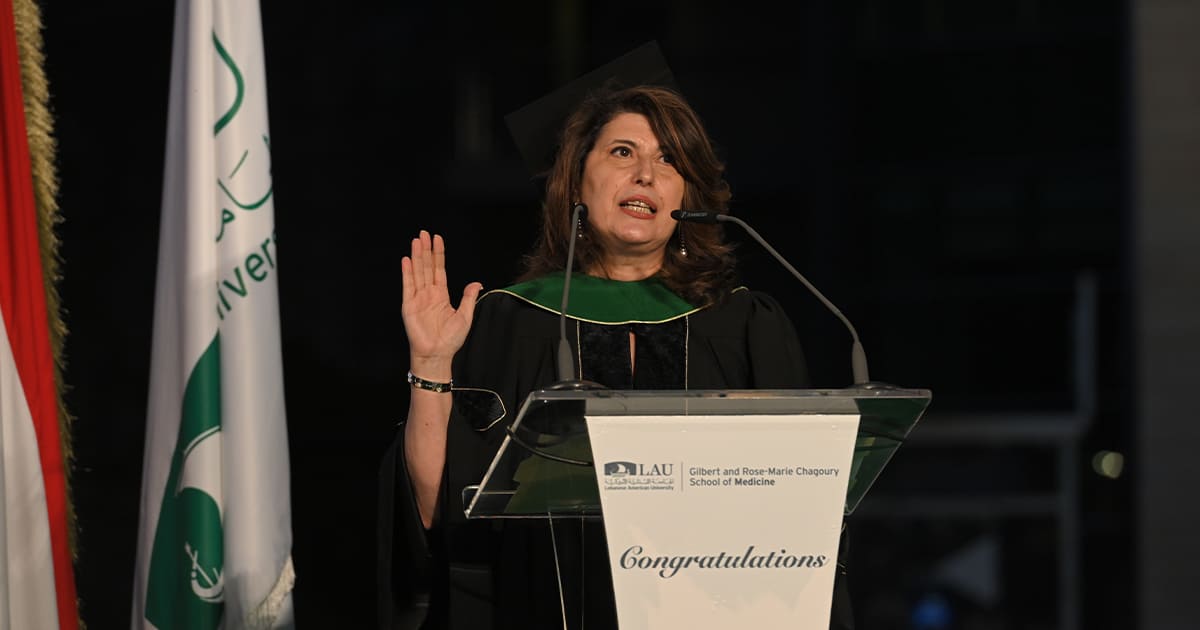
Medical students recited the Hippocratic Oath, led by Dr. Nadia Asmar, clinical assistant professor and assistant dean for medical education, before awards honoring academic excellence, leadership, professionalism, research, innovation, and community service were presented throughout the evening.
The ceremony honored an accomplished generation of physicians shaped by some of Lebanon’s most turbulent years, yet unwilling to let adversity define the limits of its future. These graduates leave carrying the resilience this country demanded of them, and the hope that a brighter future lies ahead for themselves, their patients, and Lebanon.


