A Covenant of Care: LAU Medical Students Don the White Coat
Sixty-eight medical students from the LAU Gilbert and Rose-Marie Chagoury School of Medicine inherit a tradition of excellence and compassion as they transition to clinical practice years.
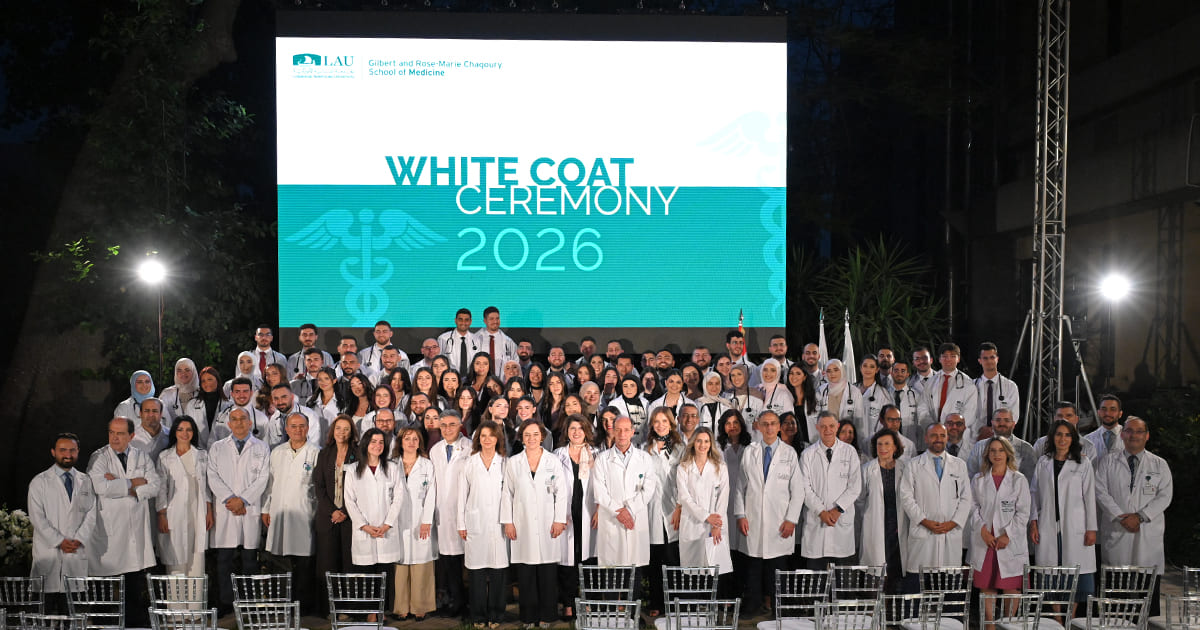
There is a moment in every physician’s life they never forget: the first time that guiding hands place a white coat on their shoulders. Not as a costume, not as a uniform, but as a promise. A promise to show up for patients at their most vulnerable, to hold their fears without flinching, and to place their wellbeing above all else. On June 5, 2026, 68 students at the LAU Gilbert and Rose-Marie Chagoury School of Medicine made that promise.
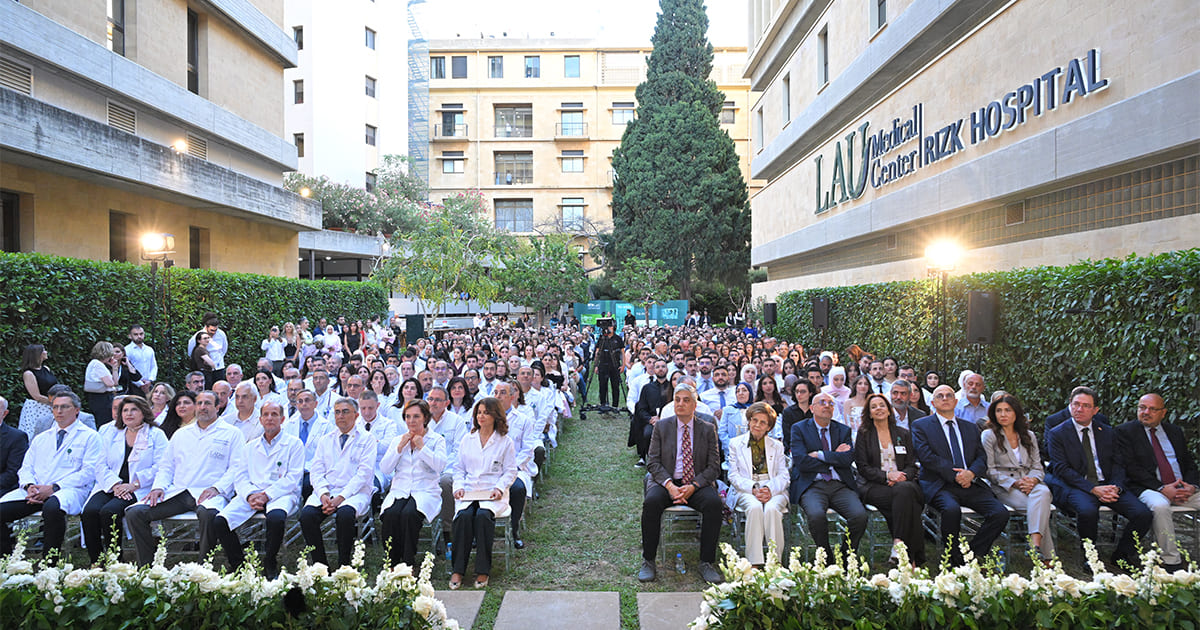
Surrounded by family, faculty, and the physicians who came before them, the Medical II class gathered at the LAU Medical Center–Rizk Hospital for their White Coat Ceremony, a rite of passage marking the end of two years of rigorous pre-clinical study and the beginning of something far more intimate: direct patient care.
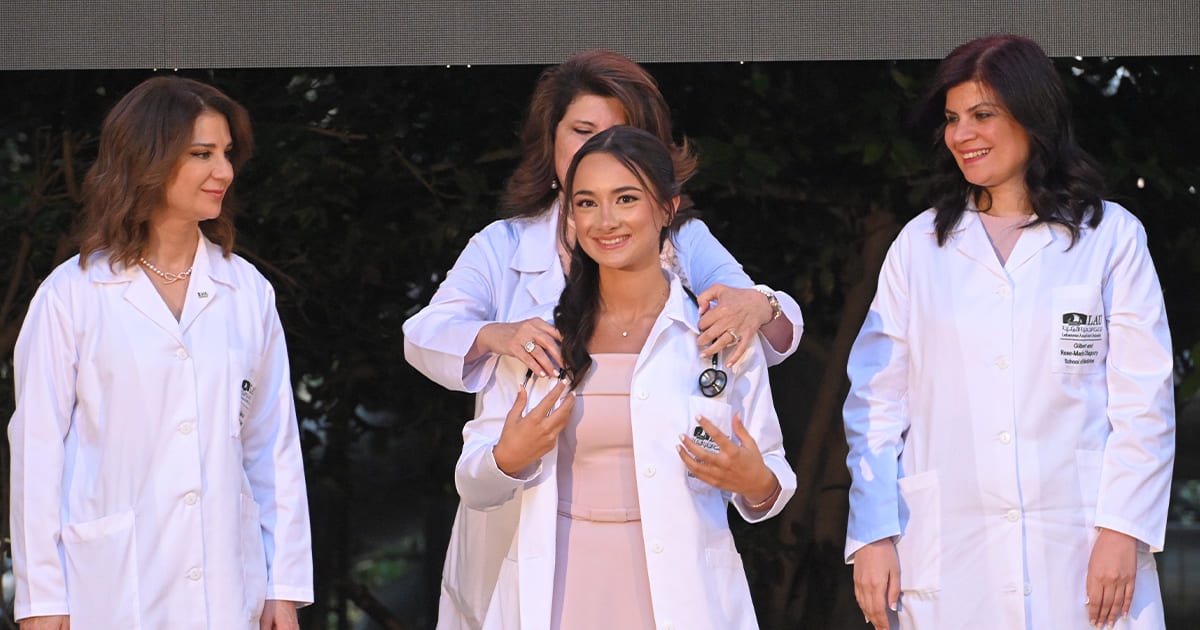
One by one, faculty members and mentors draped white coats across the students’ shoulders, connecting them to generations of LAU physicians who have trained within the university’s medical system and gone on to serve communities across Lebanon and the world.
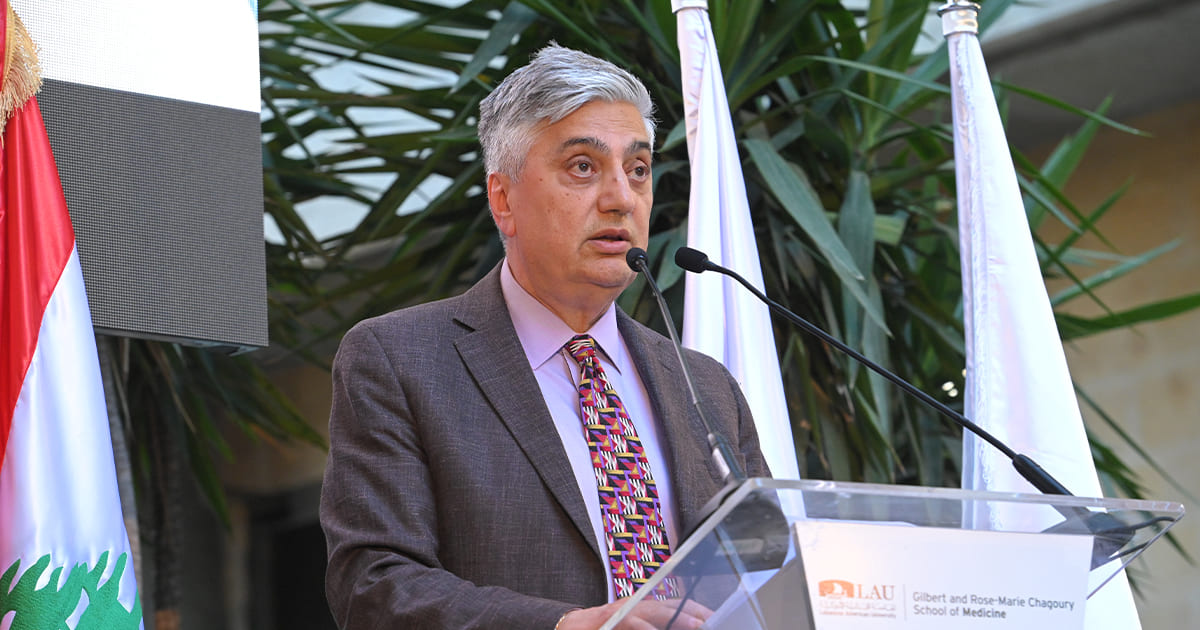
LAU President Chaouki T. Abdallah grounded the symbolism of the white coat in something larger than academic achievement. “The white coat is not a symbol of status,” he told the students. “It is a symbol of service. It reminds us that medicine is ultimately about human beings—their fears, their hopes, and their dignity.”
President Abdallah urged the class to carry forward the standards of excellence that define LAU while remaining anchored in compassion and ethical responsibility, even as scientific advances and technological innovation continue to reshape healthcare. The white coat, he added, is a tangible reminder that society’s trust in physicians must be earned anew with every patient encounter.
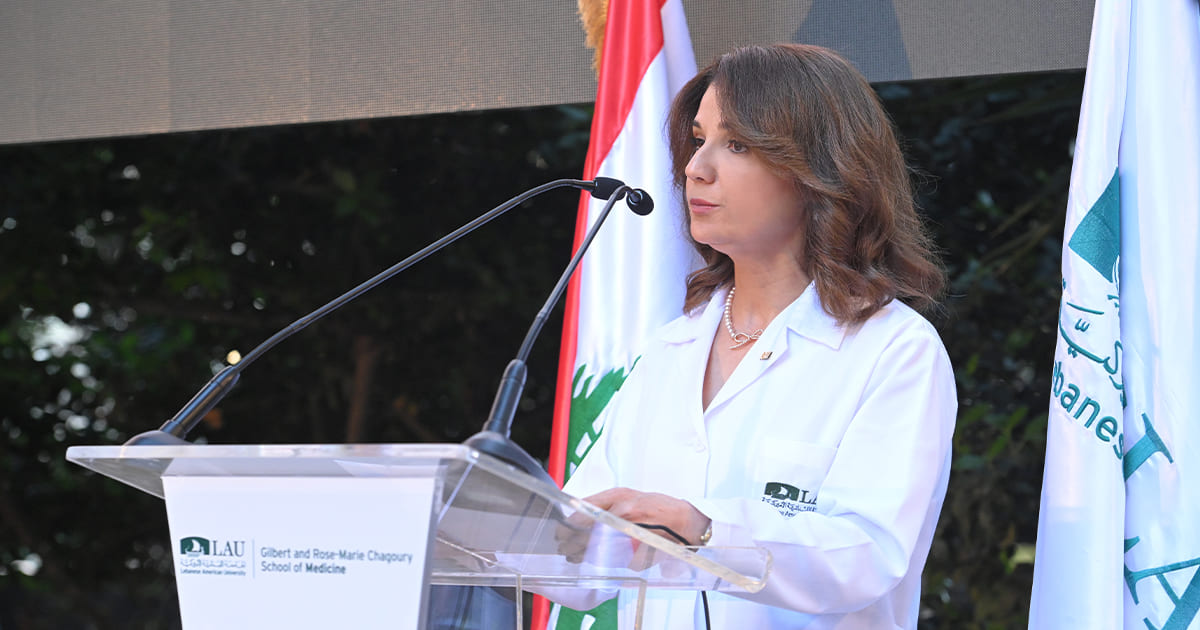
Dean Sola Aoun Bahous gave students a glimpse of what awaits them as they transition from classroom to clinic. The two years of lectures, anatomy labs, and examinations have equipped them with the language of medicine, the diagnoses, the differentials, and the protocols, but in the wards, they will encounter a different kind of language entirely, she said.
“Patients do not speak in diagnoses,” said Dr. Bahous. “They speak in stories.”
A physician’s greatest skill, she noted, is the ability to move between those two worlds—to translate the precise, clinical vocabulary of medicine into the deeply human vocabulary of pain, uncertainty, and hope, and back again.
“The limits of your language will define what you can offer, but the limits of their language, your patients’ language, and your ability to hear it will also define what you can offer,” added Dr. Bahous. Listening carefully, interpreting accurately, communicating with compassion: These are not soft skills, she insisted; they are the very core of the practice.
The white coat, she concluded, is an invitation to enter that relationship, one that asks students not just to know medicine, but to be present for the people who need it.
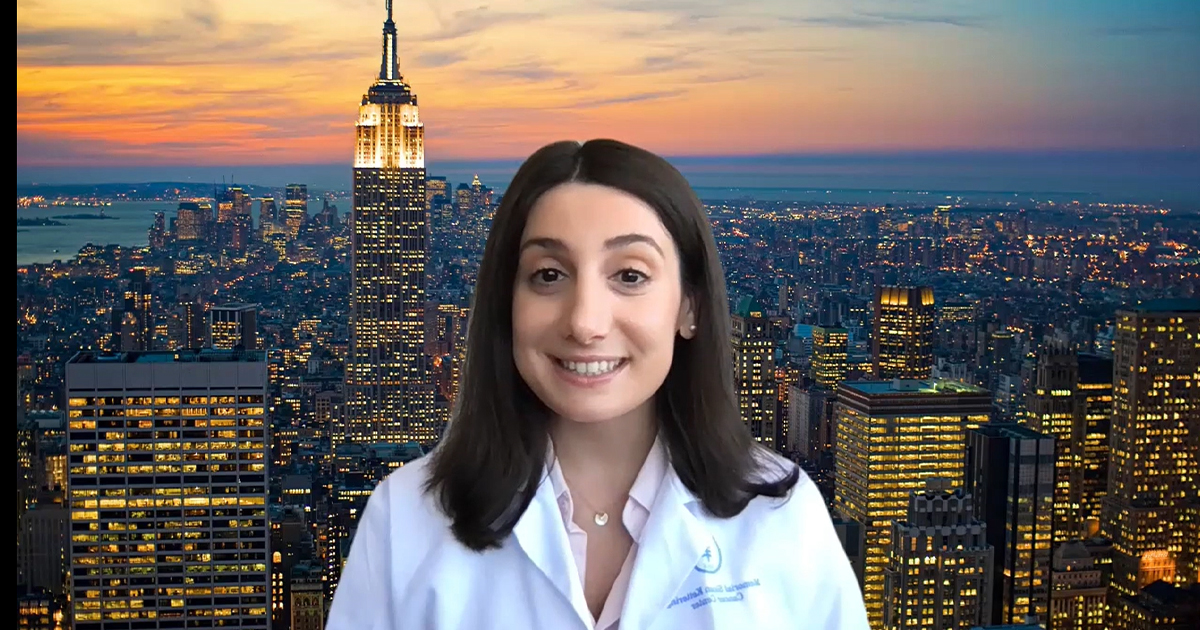
No one was better positioned to bring those words to life than LAU alumna and keynote speaker Dr. Nadia Al Haddad (BS ‘14; MD ‘18), who is now serving as an onco-nephrology fellow at Memorial Sloan Kettering Cancer Center in New York. Not long ago, she had sat where those students were sitting. Now she spoke with the earned perspective of someone who has learned medicine not only from textbooks, but from the patients who have shaped her.
Dr. Haddad returned to the coat’s symbolism from a different angle. “It is ultimately a symbol of trust,” she told the audience—not the trust of an institution, but the deeply personal trust of a patient who lets a stranger into their fear. “It is a commitment not to perfection, but showing up again and again with integrity, curiosity, and humanity.”
She spoke candidly about what the years ahead would demand, the discomfort, the uncertainty, the moments of helplessness, and the patient interactions, not the exam scores, that would ultimately define them. She urged the class to resist the pressure of having everything figured out, and instead to remain curious, stay close to their values, and always put patients first.
“The patients you meet will teach you lessons that no textbook can,” said Dr. Haddad. “Listen carefully to them. They will shape the kind of physician you become.”
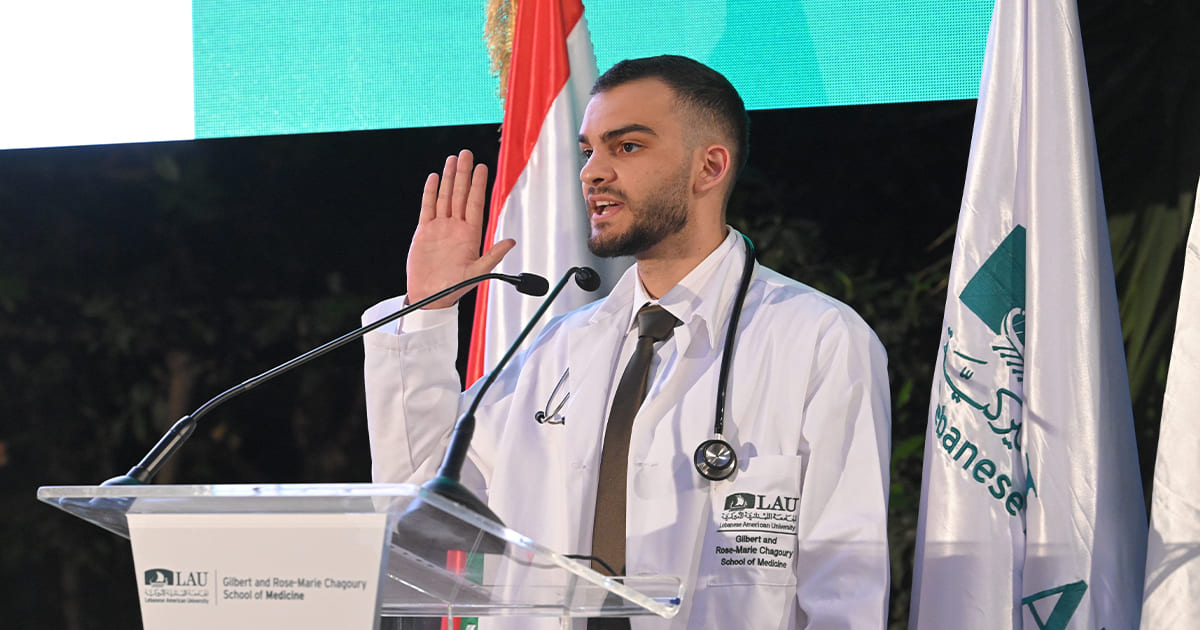
Closing the ceremony, the class of 2028 rose in their newly donned white coats to recite the Hippocratic Oath, led by class representative Julien Raad. Each word was a pledge to uphold the principles of ethical practice, place the welfare of patients at the center of everything, and carry forward a tradition that stretches back centuries and now, that afternoon, belonged to them.


