LAU Alumna Dr. Nadia Al Haddad Excels in Medicine and Mentorship Across Continents
Rooted in the values she gained at LAU, Dr. Nadia Al Haddad (BS ’14; MD ’18) charts an inspiring path in medicine that unites clinical excellence, leadership and commitment to education.
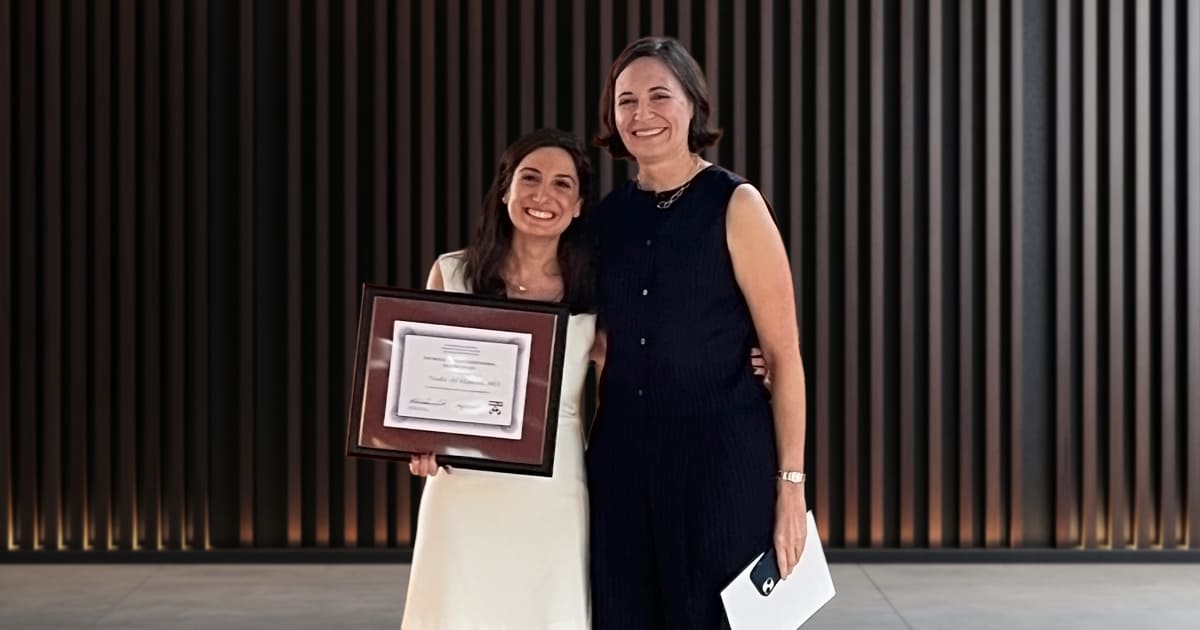
Guided by purpose and compassion, Onco-Nephrology Fellow at Memorial Sloan Kettering Cancer Center in New York, US, alumna Nadia Al Haddad (BS ’14; MD ’18), has built a career that blends medical excellence with leadership and mentorship. A proud graduate of the LAU Gilbert and Rose-Marie Chagoury School of Medicine, she has distinguished herself through dedication to her patients, colleagues, and students alike.
Her experience has taken her from leading initiatives during Lebanon’s most challenging years to advancing her training in nephrology and onco-nephrology at world-renowned institutions in the US, earning recognition for both her clinical skills and her commitment to teaching. Through every step, she continues to embody the values of empathy, resilience, and service that lie at the heart of the LAU experience.
In the conversation that follows, Dr. Al Haddad reflects on the experiences that shaped her calling—from her formative years at LAU to her work abroad—and shares insights on leadership, mentorship, and the importance of giving back while growing forward.
What first inspired you to pursue medicine, and how did your time at LAU—both in and outside the classroom—shape your identity as a doctor? Is there a particular moment or experience that left a lasting impression on you?
It might sound like a familiar story, but I didn’t grow up around doctors; no one in my family was in medicine. But I always had this feeling that I wanted to help people and make them feel better. I knew there were many ways to do that, but for me, medicine felt like the most natural and fulfilling one.
I chose LAU because it offered something special: Excellence in education combined with a really supportive and welcoming environment. It’s a place that brings out the best in you. Every part of that journey, including my classmates, mentors, and the sense of community left a lasting mark.
My colleagues and I often think about our days there. Those were truly the best times despite all the challenges.
You served as president of the Medical Student Association during medical school and later as chief resident during your internal medicine residency at the LAU Medical Center–Rizk Hospital. How did these leadership roles influence your perspective on teamwork and responsibility?
Becoming president of the Medical Student Association (MSA) in my second year of medical school was such an exciting and meaningful experience. It allowed me to connect students, faculty and the community, whether through health awareness events or volunteer initiatives. It taught me the importance of communication and teamwork. I realized that leadership isn’t about making decisions alone, but about bringing people together and helping everyone feel heard.
Later, I served as chief resident during my internal medicine residency at LAU during one of Lebanon’s most difficult times: The COVID-19 pandemic, the economic collapse, and the explosion at the Port of Beirut. It was a year that tested everyone. But our residents became a family, and we leaned on each other. I worked closely with the hospital leadership to make sure we stayed safe and continued providing good patient care while still learning in such an environment.
What were the biggest challenges you encountered transitioning from LAU to residency at Lankenau Medical Center, US, and how did you navigate them?
Moving to a new country for training was definitely a big transition. Everything was different, the culture, the healthcare system and even the rhythm of daily work. But I had a strong foundation from LAU and I quickly adapted to the changes. Of course, there were moments of uncertainty at first, but I approached them with curiosity and humility. I asked questions, learned from every patient and colleague, and reminded myself that growth often happens in those uncomfortable moments.
During your residency there, you went on to receive the Teaching Resident Award. What do you think your colleagues and students saw in you that earned you this honor?
I’ve always loved teaching. It’s one of the parts of medicine that brings me the most joy. From early on, I was inspired by the mentors who taught with so much patience, passion, and dedication and I wanted to give that same experience to others. For me, teaching is not just about sharing knowledge; it’s about meeting learners where they are, guiding them forward, and giving them the tools to grow. I try to create a supportive environment where they feel comfortable asking questions and thinking out loud. I believe that what resonated most with learners was the genuine enthusiasm I brought and the sense that I truly cared about their growth.
In 2025, you completed your Nephrology Fellowship at the University of Pennsylvania (UPenn), which is a remarkable achievement. What drew you specifically to nephrology?
My time at UPenn was one of the most transformative periods of my career. The training was exceptional, but what made it truly special was the people, my mentors and co-fellows. I grew on so many levels. I was fortunate to also serve as a Clinical Chief Nephrology Fellow, which allowed me to work closely with our program director and hospital leadership to improve the program and support our fellows. The most fulfilling part of that role was mentoring junior fellows and helping to build a pipeline of interest in nephrology through engagement with internal medicine residents.
I also served as the Fellow Representative for Women in Medicine, where I worked with a multidisciplinary group of women physicians to support and empower female trainees across the institution. These experiences deepened my commitment to creating an inclusive and supportive academic environment. Alongside all of that, I pursued my passion for medical education through the Penn Measey Medical Education Fellowship, where I learned the fundamentals of medical education, such as curriculum development, explored innovative teaching methods, including combining traditional learning approaches with an adult learning pedagogy, and received feedback on my own teaching skills.
You’ve since been recognized with the 2025 Fellow of the Year Award and the 2025 National Kidney Foundation Rising Fellow Award. What do these achievements signify to you beyond professional success?
Both of these awards hold deep personal meaning for me because they represent the journey, not just the outcome. They’re symbols of gratitude to my parents who supported me, the people who guided me, and the patients who continue to teach me every day.
At LAU, you published two papers in collaboration with Dr. Sola Aoun Bahous, dean of the Gilbert and Rose-Marie Chagoury School of Medicine. How did this collaboration shape your growth as a young physician and influence your approach to your work today?
It was a real privilege to work with Dean Bahous early in my training. Asking questions and challenging the way we think is what drives progress and ultimately improves patient care. While my main interests are clinical work and medical education, I see research as a vital part of both. It pushes us to remain curious, think critically, refine our practice, and help us teach with evidence and intention.
Do you still feel a connection to LAU’s medical community? Do you see yourself giving back?
Always! LAU will forever feel like home. It’s where my values as a physician were formed and where I learned what kind of doctor I wanted to be. The sense of community and purpose I found there has stayed with me through every stage of my training.
I try to stay connected as much as I can. I am still in contact with a lot of previous students, residents and attendings there. Every year, I teach in the nephrology module at the medical school, which is such a full-circle moment for me. I also mentor LAU medical students and residents who are interested in training abroad.
What advice would you share with current LAU medical students aspiring to train internationally or pursue fellowships abroad?
First, believe in yourself. Your training at LAU truly prepares you for anything. The foundation you get there, both academically and personally, is incredibly strong. You’ll realize that once you start working alongside people from all over the world.
That said, the path isn’t easy. There will be challenges and moments of uncertainty, but those are also the moments that shape you the most. My advice is to stay focused and humble, seek mentorship early, ask questions, and surround yourself with people who inspire you and push you to grow. Unfortunately, we come from a region where resilience and grit are often tested, but those qualities will open doors for you.
Looking ahead, what’s next for you, in medicine, research, or personal growth?
I am currently pursuing a sub-fellowship in onco-nephrology at the Memorial Sloan Kettering Cancer Center in New York, US, where I’m gaining specialized training in caring for a highly vulnerable patient population at the intersection of cancer and kidney disease. My main interests include paraprotein-mediated kidney disease and the renal effects of novel cancer therapies such as CAR-T cells and bispecific antibodies.
Looking ahead, I hope to continue developing expertise in this evolving field both clinically and through research while combining it with my passion for medical education. And no matter where my career takes me, I’ll always find ways to give back to my community in Lebanon and to LAU because they will always be part of who I am.
This interview has been edited and condensed for the sake of clarity.


