AKSOB Circle Launches Dialogue on AI and Governance
Policymakers, academic leaders and students gathered at LAU to explore how artificial intelligence can strengthen transparency and rebuild public trust.
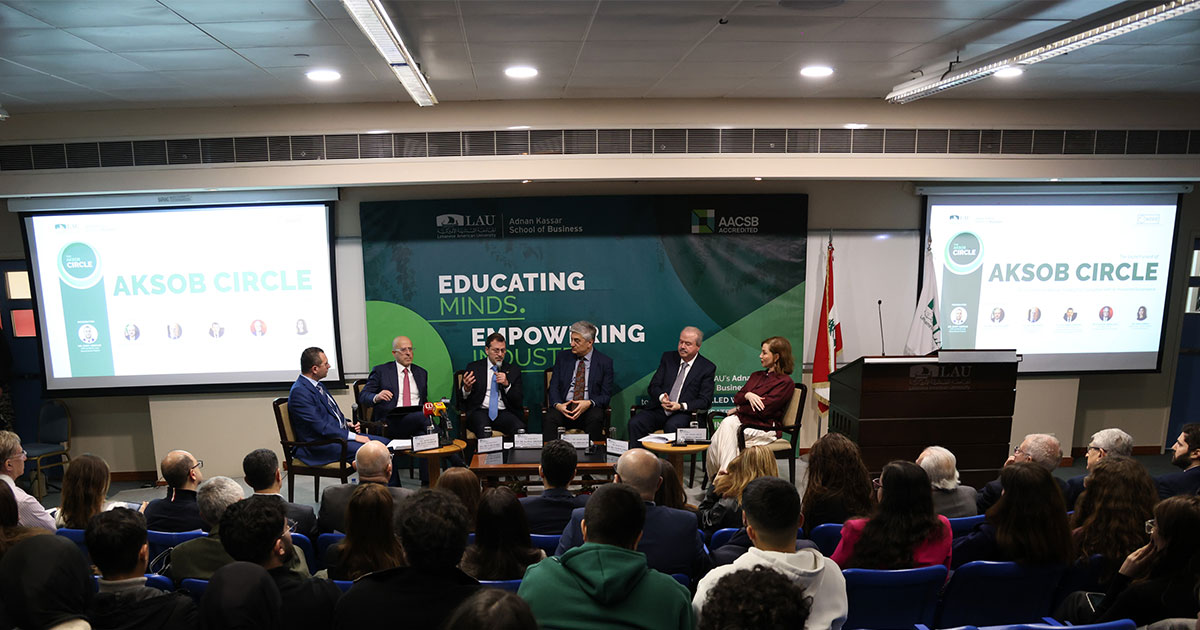
As Lebanon continues to grapple with institutional reform and declining public trust, policymakers, technology leaders and academics gathered at the LAU Beirut campus on February 23, 2026, to examine a pressing question: How can Artificial Intelligence (AI) help modernize governance and reduce corruption?
The discussion marked the launch of the AKSOB Circle, a new platform created by the Office of the Dean at the Adnan Kassar School of Business (AKSOB) to bring together leaders from government, industry and academia around Lebanon’s most pressing economic and institutional challenges.
Designed to foster an open dialogue, the initiative connects public policy, technology, entrepreneurship and social impact, with a focus on turning ideas into practical action.
The inaugural session, Driving National Revival: Coding Out Corruption with AI-Powered Governance, also marked the beginning of a strategic partnership between AKSOB and Neuron Code Consultancy Company (NCCC).
Moderated by NCCC CEO and governance expert Dany Haddad, the event featured Lebanon’s Minister of Finance Yassine Jaber, Minister of State for Administrative Reform Dr. Fadi Makki and Minister of the Displaced and Minister of State for Technology and Artificial Intelligence Dr. Kamal Shehadi, who is also an LAU trustee, alongside LAU President Chaouki T. Abdallah and AKSOB Dean Dima Jamali, to explore how digital systems can strengthen transparency and improve the efficiency of public institutions.
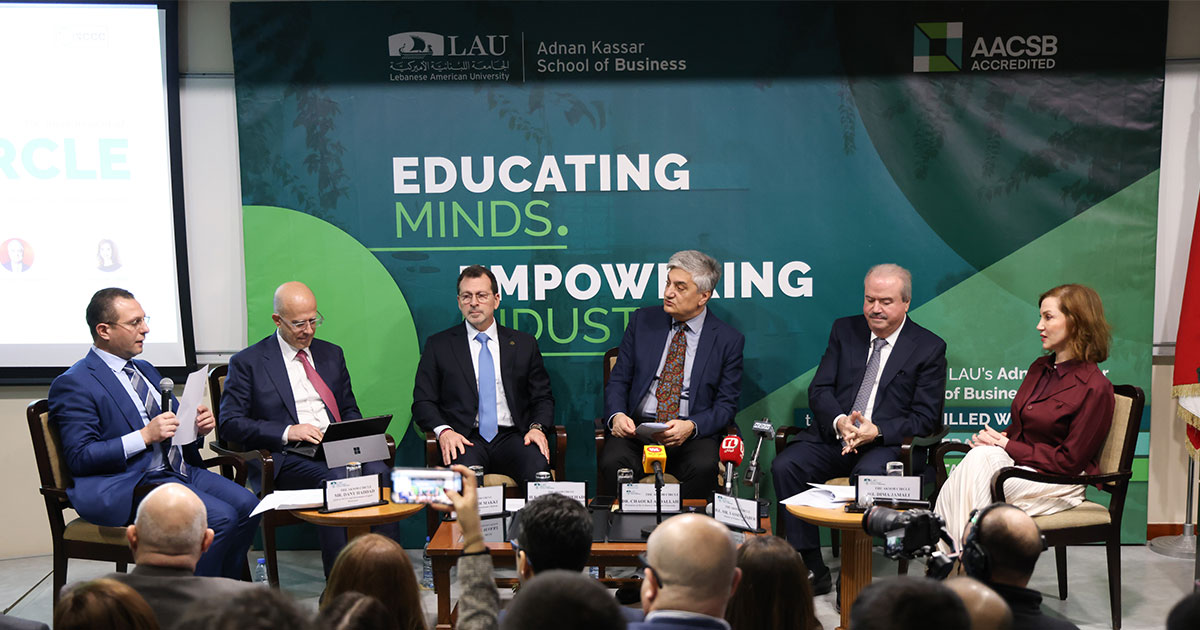
One idea kept surfacing throughout the exchange. Better-connected digital systems, supported by AI, could reshape how the state manages financial flows, delivers public services and strengthens accountability.
Participants described this as a “sovereign digital nexus,” where financial systems, public services and digital tools operate together to make processes more transparent and harder to manipulate.
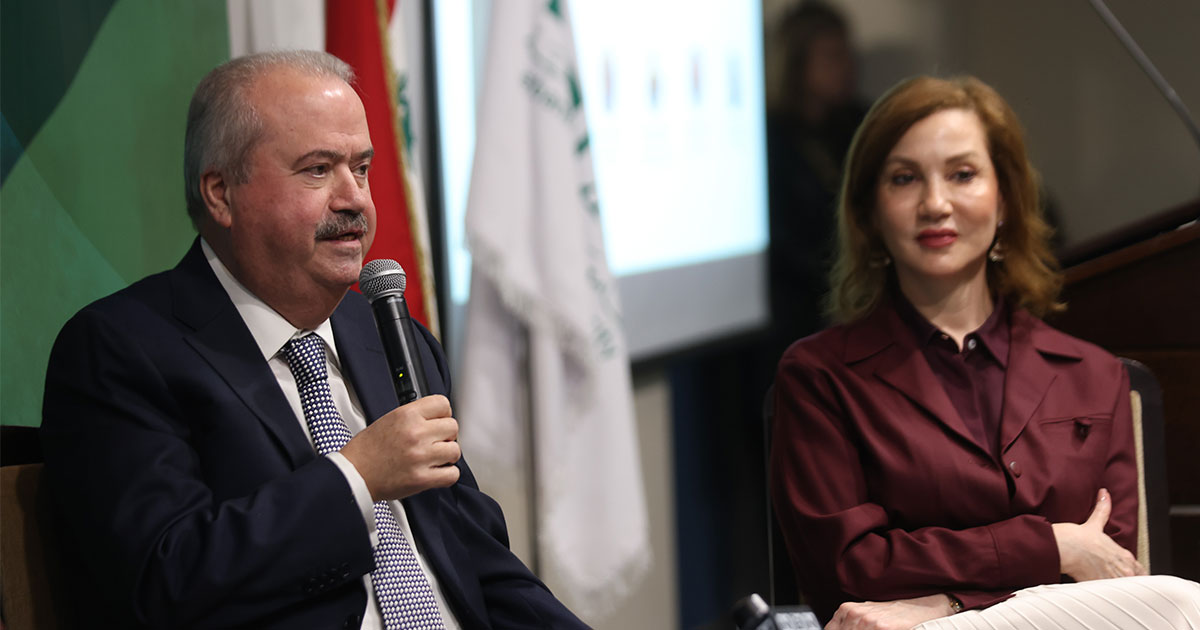
Mr. Jaber outlined how digitization is already transforming financial governance within the Ministry of Finance. Moving away from manual systems and cash-based transactions, he added, is essential for improving transparency and rebuilding trust.
“The main challenge in Lebanon today is the cash economy,” said Mr. Jaber. “Our priority is to move gradually toward digital systems that allow transactions to be recorded and monitored transparently.”
He pointed to several initiatives already underway, including electronic tax payments, digital public finance platforms and the introduction of e-invoicing systems designed to track transactions in real time. AI, he added, can further strengthen oversight by analyzing financial data and identifying inconsistencies that might otherwise go unnoticed.
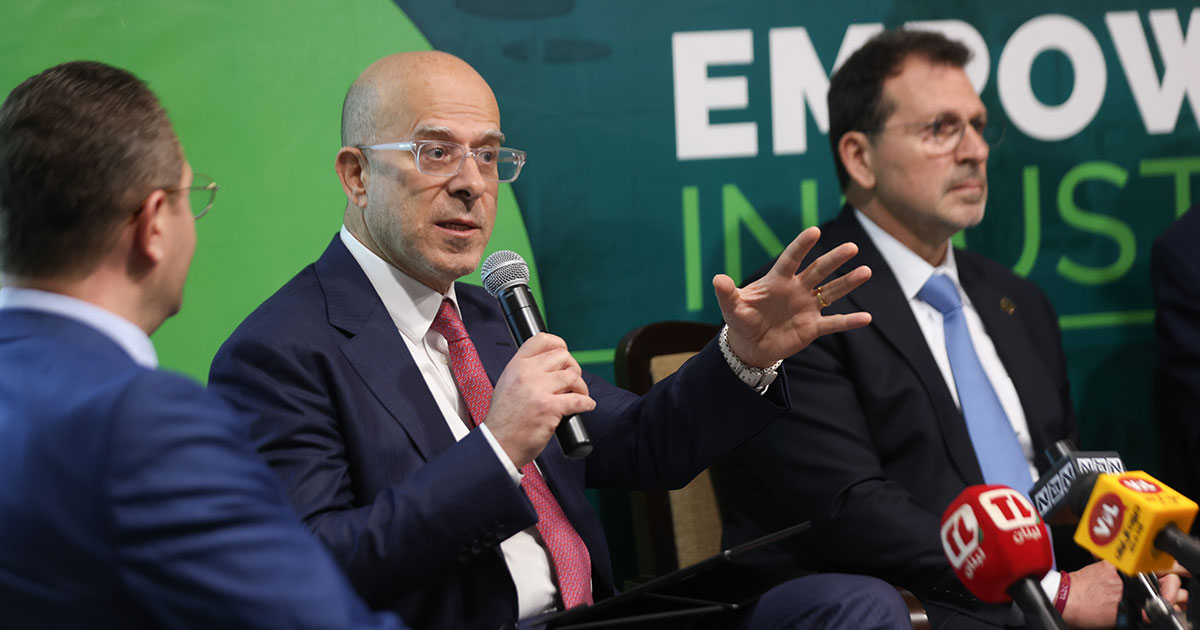
The conversation then moved beyond fiscal reform to the broader question of how public administration itself must evolve. Dr. Makki described ongoing efforts under the Reinventing Government 2030 initiative to reassess thousands of government services and identify those most vulnerable to inefficiency or corruption.
He explained that AI can help map complex administrative procedures and identify where delays, duplication or risk are most likely to occur. By simplifying processes and digitizing services, procedures that once took months could be completed far more efficiently, improving access to essential public services.
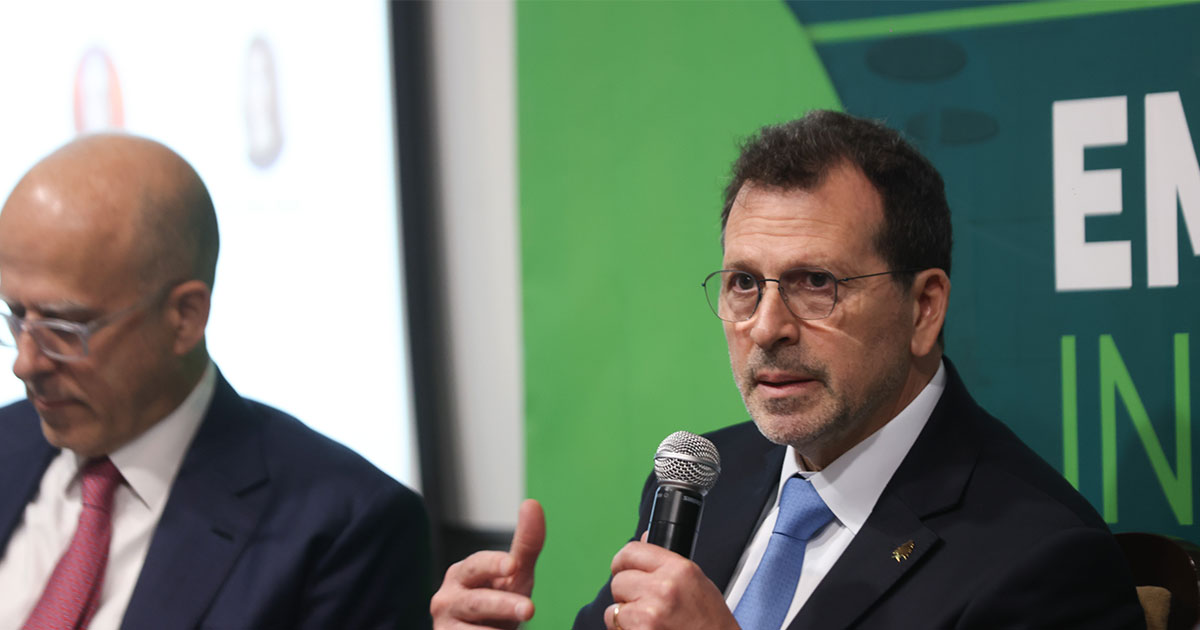
As the focus shifted from redesigning systems to making them work in practice, Dr. Shehadi emphasized the infrastructure needed to support these reforms, including connectivity, cybersecurity and the responsible management of data.
“AI is powerful,” said Dr. Shehadi, “but its real value is not in the technology itself. It is in how we apply it to solve real governance problems.”
Lebanon, he noted, may not compete in developing large global AI models, but it can build targeted applications that improve public services and strengthen oversight.
Attention also turned to the role universities must play in this transformation. Preparing graduates who understand both the technical and ethical dimensions of these technologies, speakers noted, is becoming increasingly important.
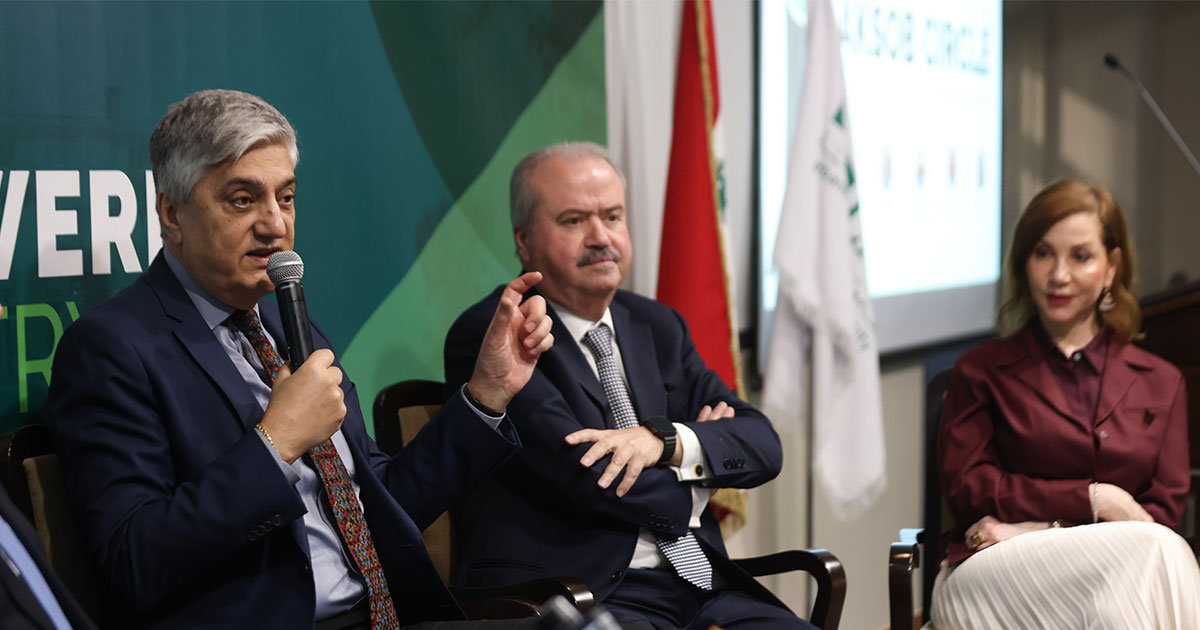
President Abdallah emphasized that AI must remain guided by human judgment.
“AI today has more power than judgment,” he said. “That is why humans must remain in the room, to guide, regulate and ensure it serves society responsibly.”
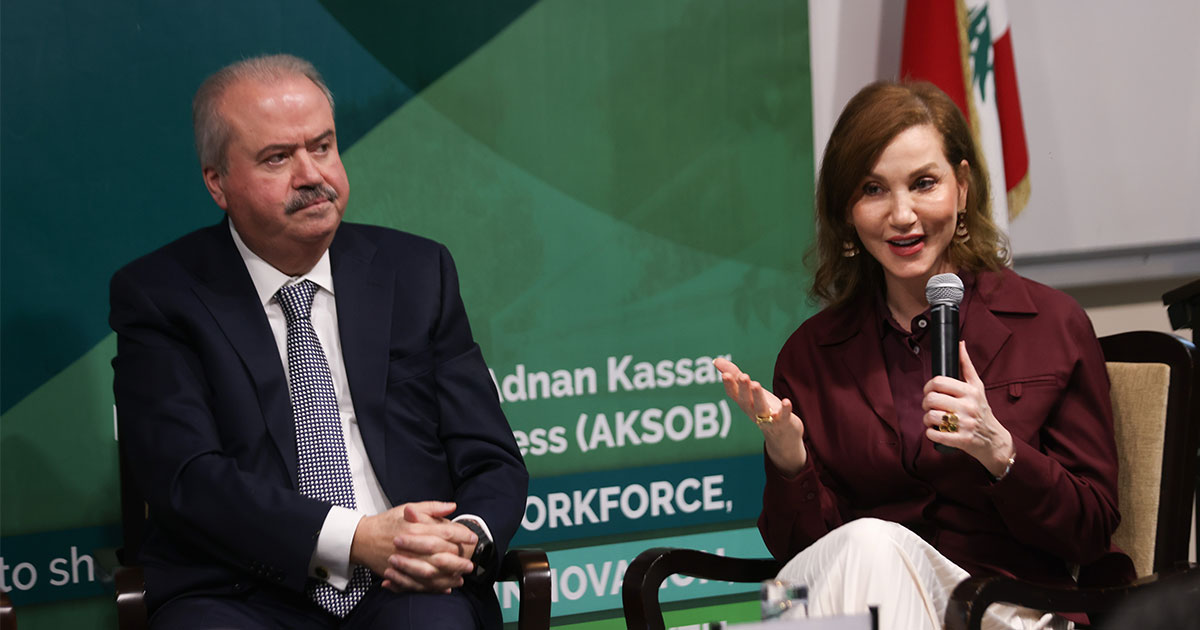
Dr. Jamali underscored the role universities can play in connecting education with national priorities. Through initiatives such as the AKSOB Circle, she said, LAU is creating opportunities for students to engage directly with the challenges shaping Lebanon’s future.
“Lebanon’s greatest asset remains its human capital,” she said. “Our responsibility is to equip students with the skills and confidence to build their future here and contribute to shaping the country.”
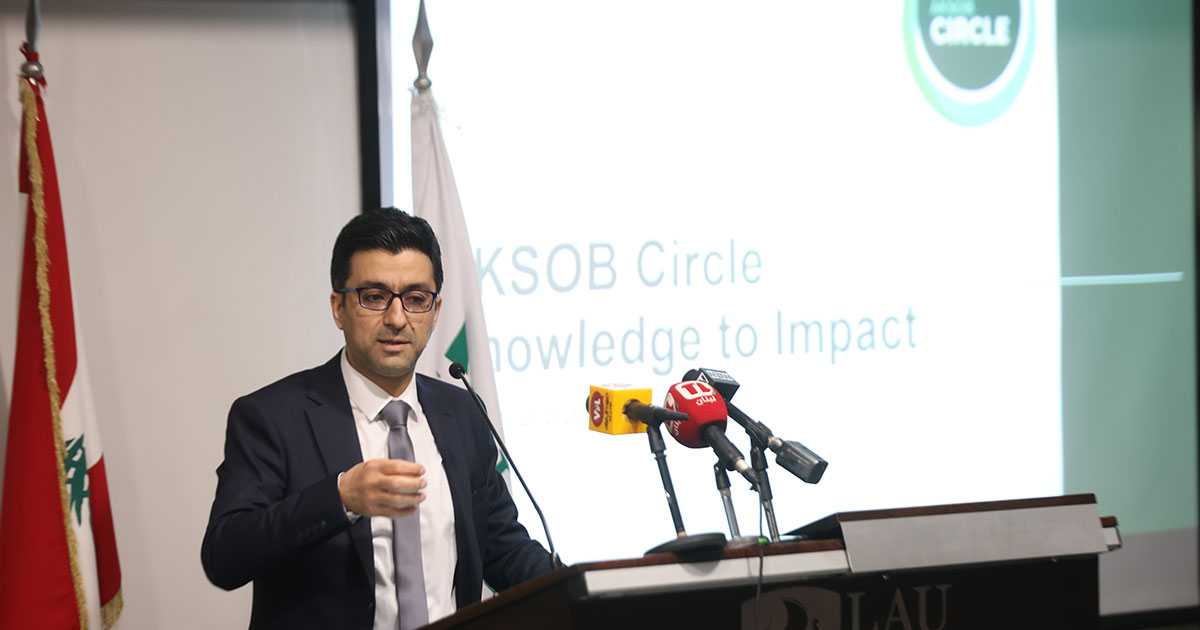
As the session concluded, speakers agreed that technology alone cannot rebuild institutions. “Reform cannot happen in isolation,” said AKSOB Associate Dean and Professor Ali Fakih. “It requires aligning economic policy, institutional capacity and technology in a way that restores confidence and delivers tangible results.”


