LAU Team Develops AI-Powered Bariatric Recovery Platform
Led by Associate Professor of Nutrition Lama Mattar and funded by the School of Engineering, a vertically integrated project (VIP) combines dietetic care, AI, and behavioral support to improve patient outcomes after bariatric surgery.
With obesity rates continuing to rise worldwide, bariatric surgery has become an increasingly common and effective treatment for severe obesity and its related health complications. In Lebanon, where obesity rates have climbed significantly over the past two decades, the demand for bariatric procedures has also grown. While the surgery itself can be life-changing, the recovery process that follows is often just as critical to long-term success.
Patients recovering from bariatric surgery require consistent nutritional guidance, lifestyle adjustments, and long-term follow-up care, as Associate Professor of Nutrition at the School of Arts and Sciences Lama Mattar explained. “Patients are often exposed to widespread dietetic misinformation and frequently struggle to comply with post-surgery nutrition guidelines,” she added. In Lebanon, these challenges are further intensified by the country’s economic crisis and its impact on access to professional healthcare services.
Seeking to address this, Dr. Mattar gathered a multidisciplinary team of students and developed the blueprint for BariatricAI, a platform designed to provide patients with accessible, evidence-based recovery support beyond the clinical setting. The project was funded by the LAU School of Engineering, as part of the Vertically Integrated Projects (VIP) model, which engages undergraduate and graduate students from different majors and academic levels in developing innovative solutions to real-world problems, under the mentorship of faculty members and industry partners. The program at LAU is part of the VIP Consortium coordinated by Georgia Institute of Technology.
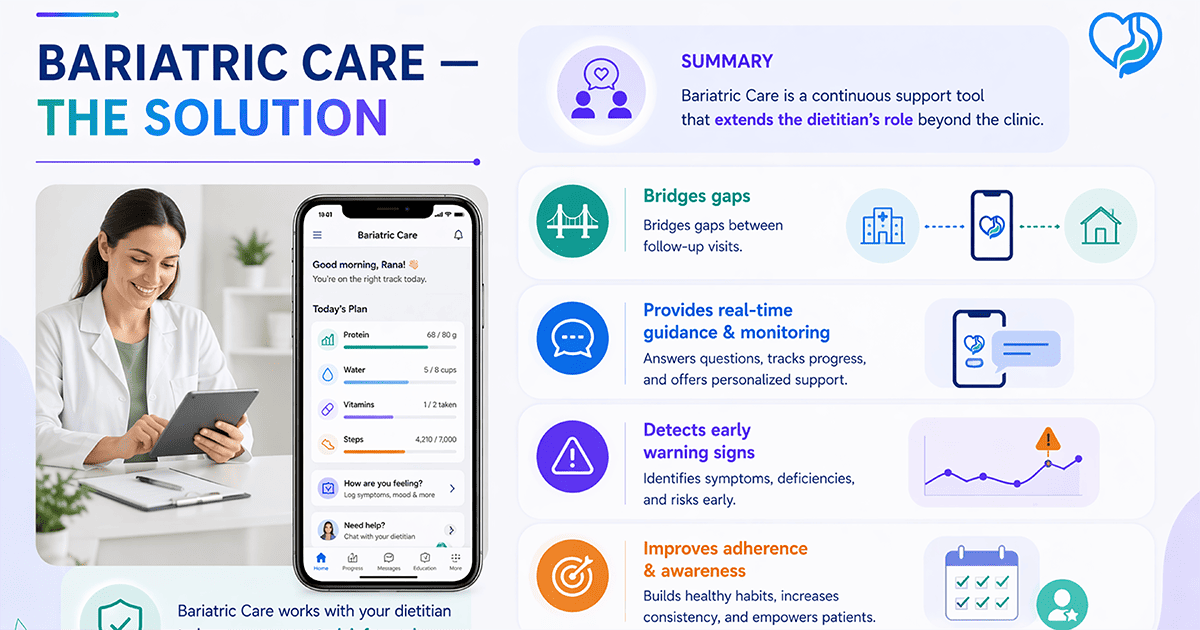
“The innovative platform integrates AI, nutrition science, and behavioral support in a personalized digital recovery ecosystem for bariatric patients,” said Dr. Mattar. It uses AI to develop a “smart nutrition” solution that spans several services, including a chatbot, symptom tracker, a provider alert system, and culturally relevant tips that help patients recover, maintain healthy habits, and stay motivated after the surgery.
It also provides important educational guidance in the days leading up to the surgery and “nudges” patients to adhere to their dietary plan following the operation. While it does not replace a professional dietitian, the app functions as “an evidence-informed digital companion designed to reinforce adherence, self-monitoring, and long-term behavioral change,” as Dr. Mattar put it.
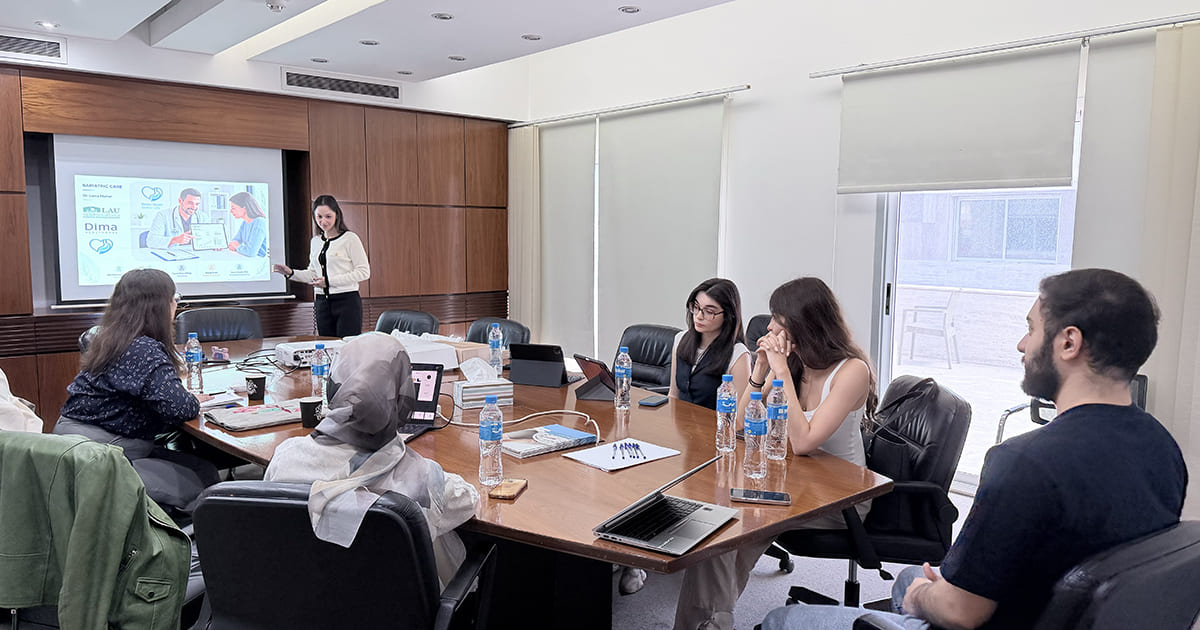
The preliminary version of the platform has already been presented to Dima Healthcare, the industry partner for this project. Dr. Mattar and the student team are now working to expand the platform’s capacity and engage additional surgeons and dietitians to promote it among patients.
Over the past spring semester, the project brought together marketing student Nassab Kais, who designed the visual identity of the app; computer engineering student Rami Amacha, who built the platform; senior nutrition and dietetics students Alia Hammoud and Yasmina Shehadeh, who put in all the legwork to populate the app with accurate, evidence-based science; and two research assistants Douaa El Khalil and Hana Harb who provided overarching logistical support.
Inviting students from across fields of study—including engineering, computer science, psychology, design, nutrition and dietetics, marketing, and medicine—to join the initiative, Dr. Mattar emphasized the value of cross-disciplinary insights and viewpoints in driving creativity and innovation.


