How Education Can Prepare the Next Generation of Change Agents
A panel discussion hosted by the Adnan Kassar School of Business explored how to future-proof the next generation in a rapidly evolving workplace, followed by the signing of an MOU with Forward MENA.
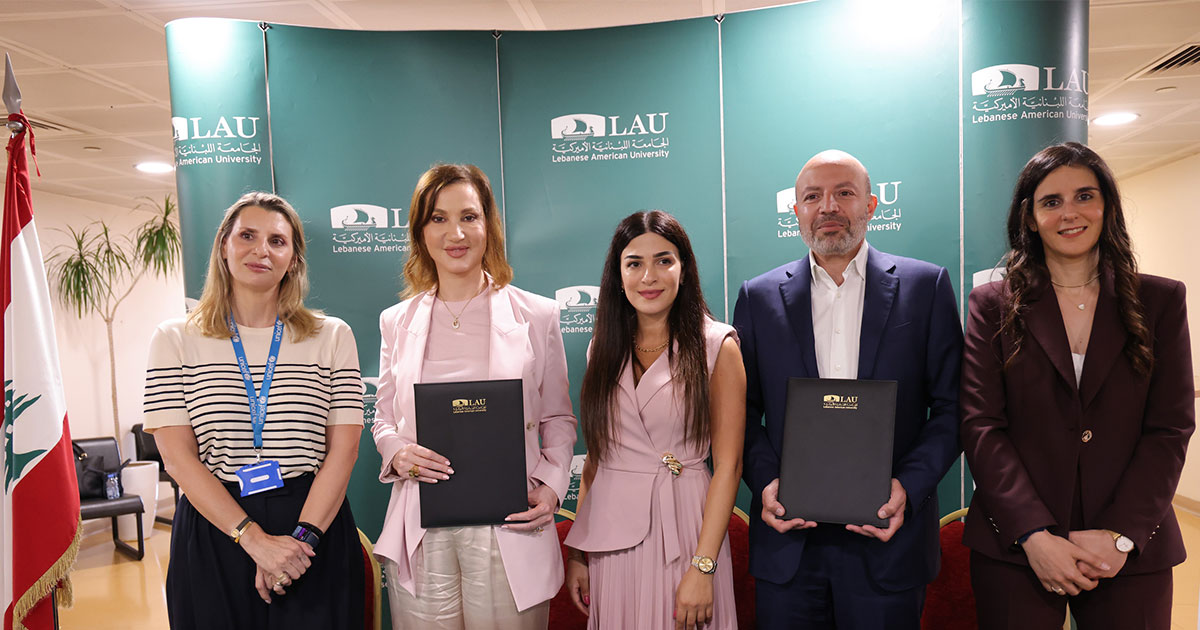
To better prepare students for a rapidly shifting global economy and, recognizing the role of external stakeholders in co-creating digital educational value, the Adnan Kassar School of Business (AKSOB) convened leaders from academia, industry, and international organizations to offer their insights in a panel discussion held on the Beirut campus on June 3, 2026. The discussion was followed by the signature of an MOU with Forward MENA for the implementation of the nammiskills digital skilling platform, a programme developed by UNICEF in Lebanon and the World Bank.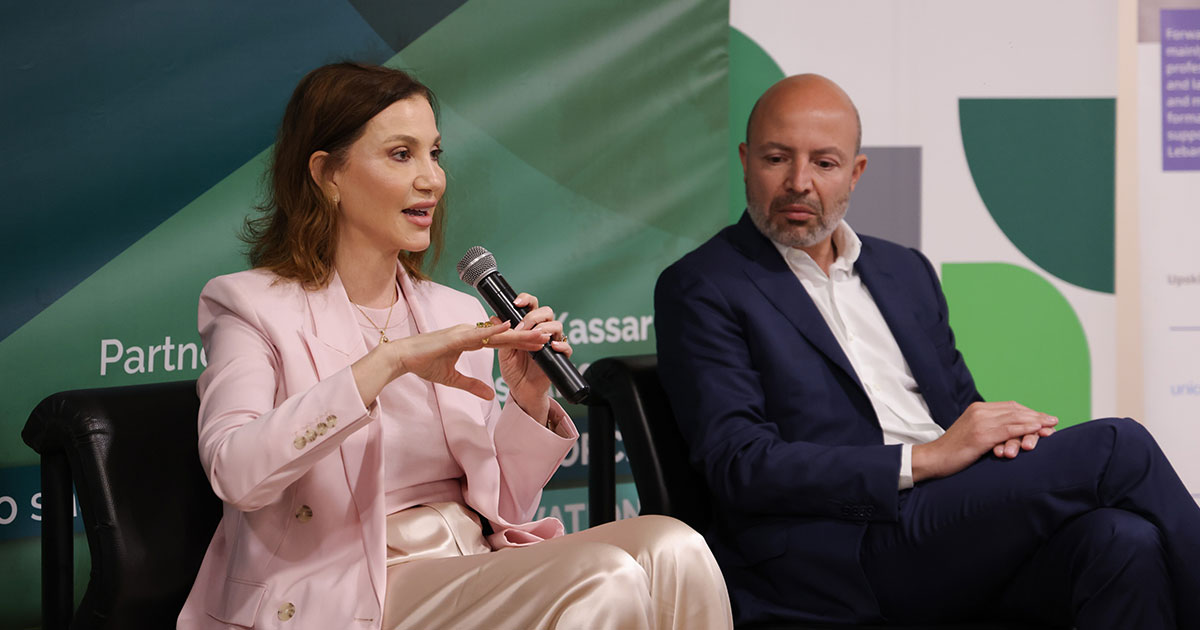
“To remain relevant,” said AKSOB Dean Dima Jamali, “a business school must serve as an open hub that actively listens to the market, anticipates economic shifts, and aligns its curriculum with the real-world needs of employers and society.”
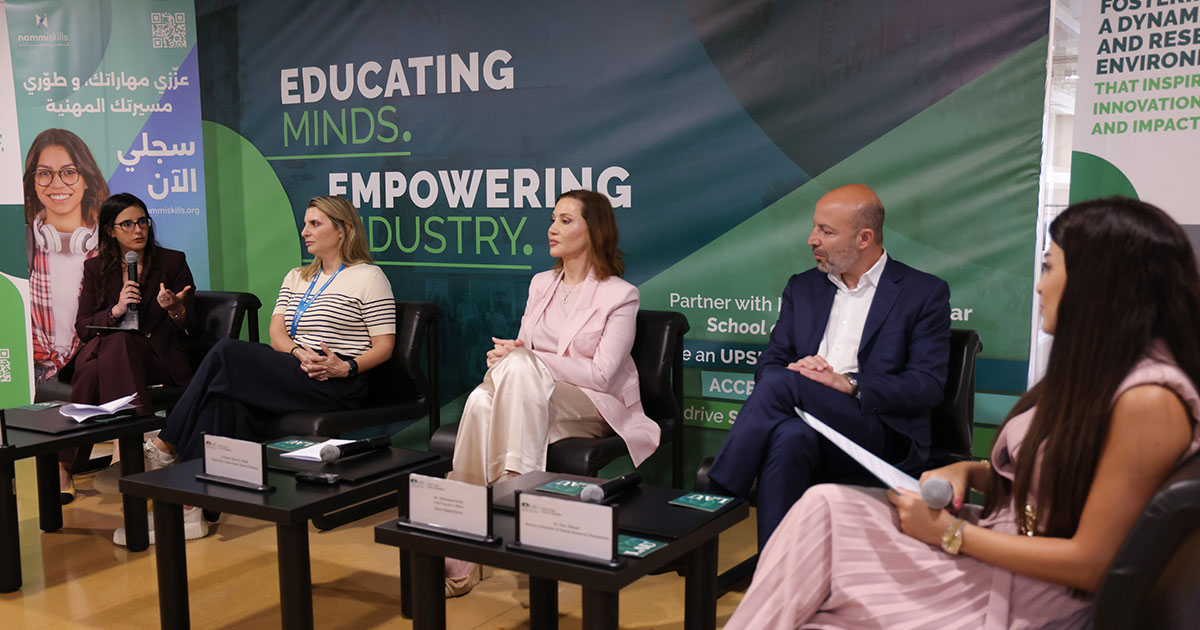
The event, titled Forward Together: AKSOB, Forward MENA, and Global Partners Reshaping the Ecosystem, featured Dean Jamali, CEO of Beirut Digital District and President of Forward MENA Mouhamad Rabah, UNICEF Chief of Adolescent and Youth Programme Amal Obeid, and World Bank Senior Labor Market Specialist Angela El Zir, with Dr. Elsa Abboud, assistant professor and director of the Institute of Human Resources Management at AKSOB, who moderated the discussion.
From the role of universities and employers to the importance of adaptability and lifelong learning, the panelists’ perspectives provided a comprehensive view of what is required to empower students in a challenging and ever-shifting job market.
In a world where information is readily accessible and knowledge alone is no longer enough, noted Dean Jamali, what matters is the ability to apply knowledge, adapt to change, and remain responsive to new opportunities. As traditional education is “becoming obsolete,” she said, institutions need to “bridge learning with opportunity, innovation, and real-world impact.”
“The most successful graduates will not necessarily be those with the highest grades,” she added. “They will be those who remain curious, continue learning, and actively seek opportunities to grow beyond what is required of them.”
That shift is driving demand for experiential learning, industry certifications, micro-credentials, and entrepreneurship programs that connect academic knowledge with real-world application.
Beyond enrollment and graduation rates, the panelists deliberated on employability, career progression, and employer satisfaction as more meaningful indicators of impact.
In that respect, universities are increasingly evaluated not only by what students learn in the classroom but also by how effectively they apply that learning in professional settings.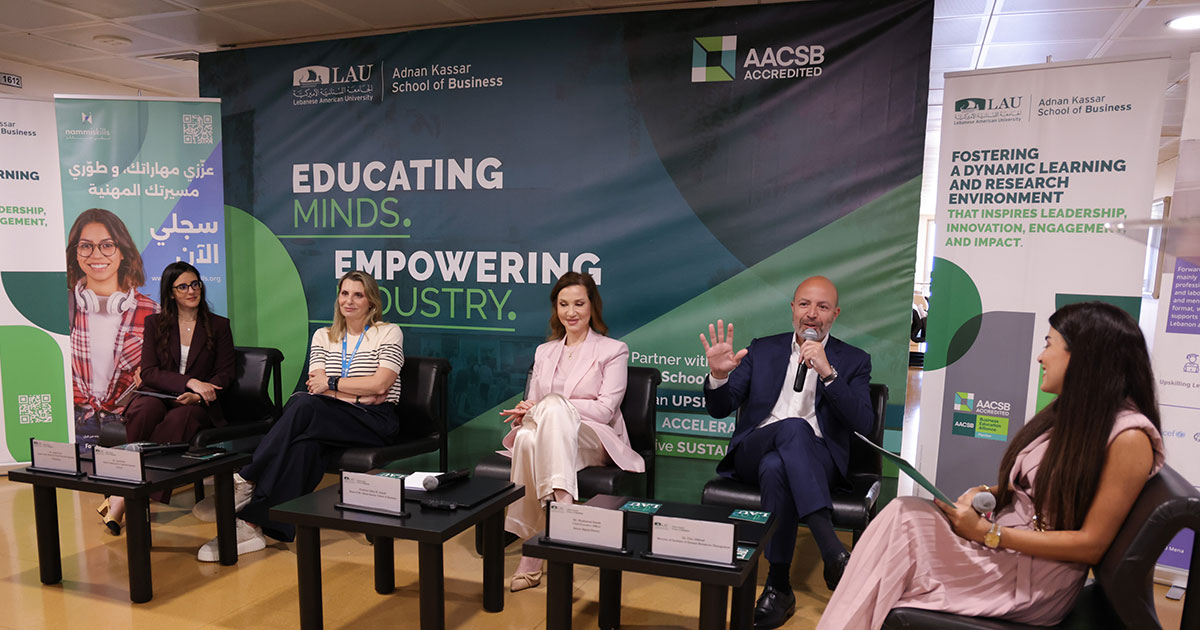
“Universities provide the starting point,” said Rabah. “What matters most is developing a mindset of continuous learning that allows people to grow with a changing world.”
As technology continues to redefine professional roles, Rabah encouraged students to view every learning experience as an investment in themselves. “You are not working for the company. You are working for yourself,” he said. “Every second you invest in learning, growing, and developing your skills is an investment in your own future.”
Employers are also starting to look beyond credentials to identify individuals who can work effectively with others, solve problems, embrace change, and contribute meaningfully to their organizations. In increasingly collaborative workplaces, soft skills such as communication, teamwork, accountability, adaptability, and emotional intelligence have become powerful differentiators.
Obeid highlighted another challenge facing education systems today: Ensuring that young people begin developing career-ready skills long before they enter the workforce.
Drawing on UNICEF’s work with youth across Lebanon, she pointed to the gap that often exists between traditional education and the skills increasingly demanded by employers, particularly in innovation, entrepreneurship, and digital literacy.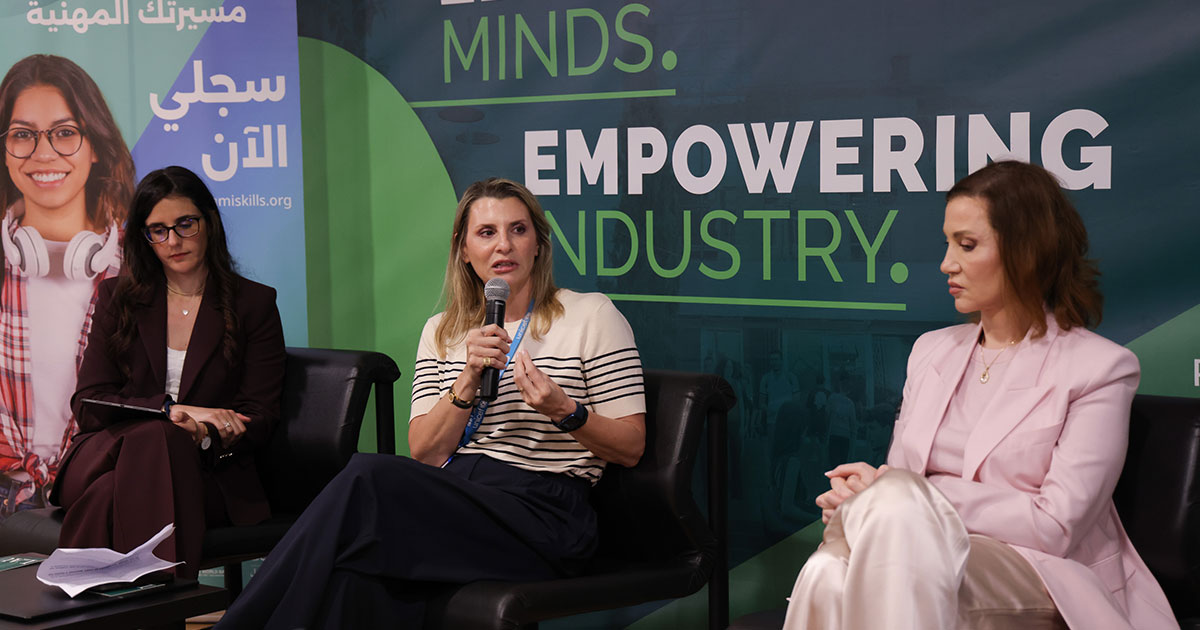
“If we wait until young people graduate to prepare them for the future of work, we have already waited too long,” she said. “These skills must be cultivated throughout the educational journey, giving young people the confidence and capabilities to adapt, innovate, and contribute in a rapidly changing world.”
However, workforce readiness does not end there, noted El Zir. Drawing on the World Bank’s work across the MENA region, she noted that “the skills needed in the labor market are constantly changing, so individuals must continue to learn, reskill, and adapt throughout their careers if they want to remain competitive and seize new opportunities.”
The discussion ultimately underscored that preparing people for an evolving labor market requires collaboration among educational institutions, employers, policymakers, and development organizations to ensure that learning remains relevant, accessible, and responsive to changing needs.
This commitment to turning ideas into action was reflected in the agreement between AKSOB and Forward MENA to activate the nammiskills platform, a programme developed by UNICEF and the World Bank through the funding of the government of the Netherlands to equip youth with in-demand digital, technical, and soft skills while fostering a culture of continuous learning and self-development.
Through the partnership, AKSOB students and alumni will gain access to internationally recognized micro-credentials, industry-relevant learning pathways, and globally recognized certifications, helping strengthen career readiness and expand professional opportunities.
By connecting academic learning with practical, market-driven skills, the partnership aims to help build a generation of agile professionals equipped to adapt, lead change, and thrive in an evolving workplace.


