When Renewable Energy Becomes a Necessity
An AKSOB study reveals how energy poverty, household realities, and resilience shape the adoption of solar technologies in conflict-affected regions.
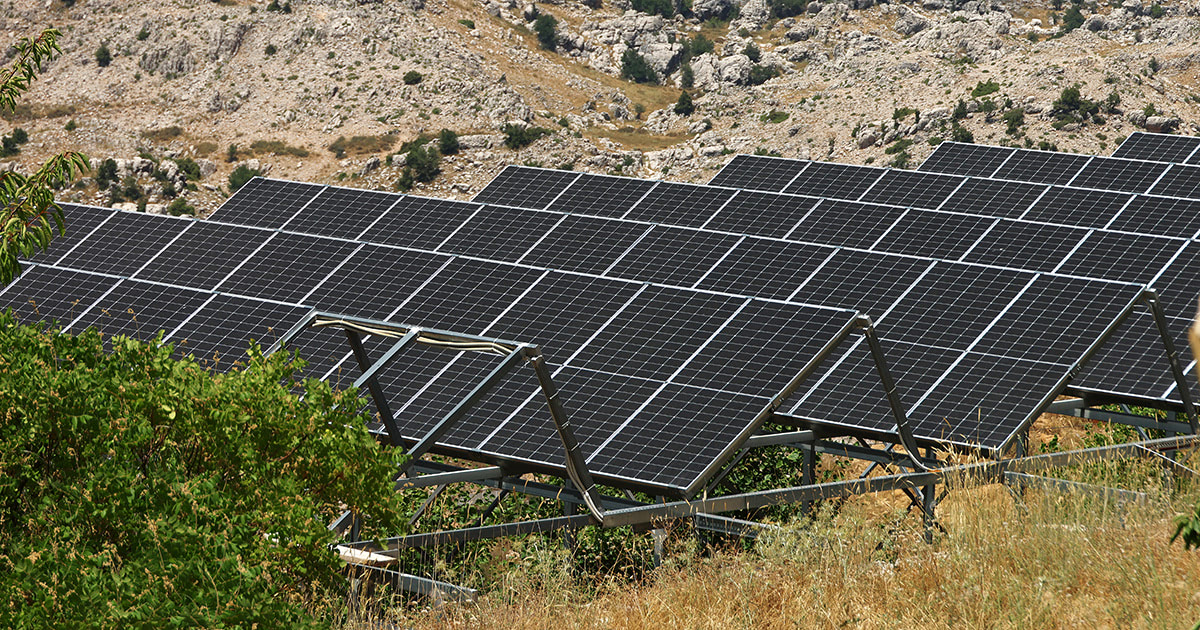
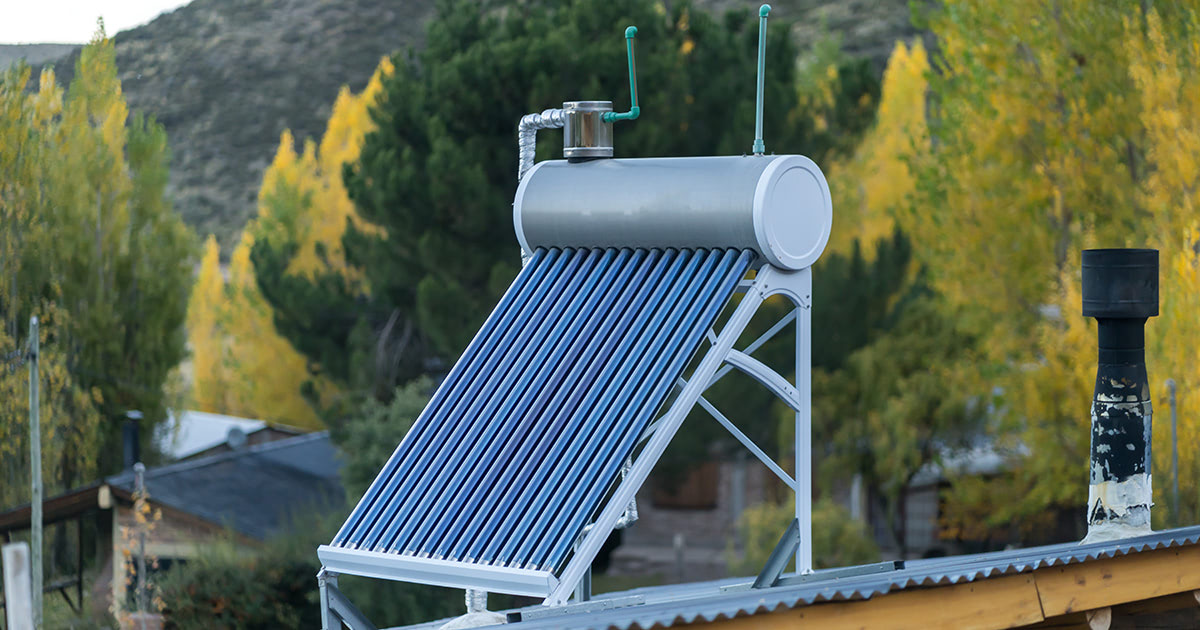
As countries invest billions of dollars in renewable energy and governments accelerate plans for a greener future, a new study by researchers at LAU’s Adnan Kassar School of Business (AKSOB) suggests that for many households, the decision to adopt solar energy has less to do with environmental concerns and more to do with something far more immediate: securing reliable access to energy.
Published in Energy for Sustainable Development, the study, “Who Uses Solar Water Heaters? Evidence from the Palestinian Territories,” was co-authored by Professor of Economics Walid Marrouch and alumna Vanessa Kajjouni (MA ‘24). Drawing on data from more than 3,100 households, the research examines why some families adopt solar water heaters while others do not, offering insights into the relationship between energy poverty, resilience, and access to renewable technologies.
“What initially inspired this research was a discussion about the chaotic energy transition in Lebanon following the 2019 economic collapse,” said Dr. Marrouch. “That led us to explore energy poverty in conflict-prone countries and examine how households respond when reliable energy becomes increasingly difficult to access.”
What the researchers found challenges many common assumptions about renewable energy adoption.
While public discussions often frame solar technologies as tools for environmental sustainability, the study suggests that in developing and conflict-affected regions, renewable energy is frequently viewed as a practical response to unreliable infrastructure rather than an environmental statement.
The Palestinian Territories provide a particularly revealing case. Faced with recurring energy shortages, high fuel costs, and an unreliable electricity grid, many households have turned to solar technologies to secure greater independence from unstable energy supplies.
“Renewable energy technologies such as solar water heaters and photovoltaic panels are often seen as cost-effective substitutes for diesel generators,” said Dr. Marrouch. “A similar reality can be observed in Lebanon and other conflict-affected countries across the region.”
The findings suggest that when energy systems become unreliable, households begin to think differently about long-term investments.
“In these environments, the need for autonomous energy sources becomes a necessity rather than a choice,” noted Dr. Marrouch. “What might be considered a luxury in developed economies can become an essential household good in places where public utilities are severely challenged.”
Access to renewable technologies, however, is not distributed equally.
The study found that household income, education, internet access, and housing conditions all significantly influence adoption. Wealthier households were considerably more likely to install solar water heaters, while families with more children were less likely to do so, despite often having greater demand for hot water.
“This highlights a difficult reality,” said Dr. Marrouch. “High upfront costs create a barrier for larger, economically strained families. Even when the need is greatest, immediate financial pressures can prevent access to long-term solutions.”
The findings point to a broader issue that extends beyond energy policy.
“These results confirm that the energy transition is deeply intertwined with socioeconomic inequality,” he said.
At the same time, the study sheds light on the role women play in household energy decisions. Researchers found that households with more women were more likely to adopt solar water heaters, reflecting the responsibilities women often assume in managing domestic energy needs.
“Because women frequently handle water-intensive household tasks, their practical needs can directly influence the adoption of technologies such as solar water heaters,” explained Dr. Marrouch.
The study also shows that renewable energy adoption depends on far more than technology availability. Housing conditions, homeownership, access to information, and supportive policies all influence whether households can invest in solar energy.
“Technology availability alone is not enough,” he added. “Awareness matters because energy-poor households are constantly looking for cost-effective ways to meet their needs. At the same time, policymakers must address structural challenges such as property rights, shared rooftop spaces, and housing regulations if they want renewable technologies to reach more people.”
These findings carry important implications for governments pursuing ambitious energy-transition strategies. The researchers caution against assuming that renewable technologies will automatically reach the households that need them most.
“The risk is that existing inequalities become even more pronounced,” Dr. Marrouch said. “Without targeted interventions, many vulnerable households will remain dependent on expensive and unreliable energy sources.”
To avoid that outcome, the study recommends measures such as grants, interest-free loans, and targeted financial incentives for low-income households, alongside clearer regulations governing shared residential spaces.
Looking ahead, Dr. Marrouch believes the future of renewable energy in developing regions will be shaped less by environmental ideals and more by the pursuit of resilience.
“In conflict-affected and developing economies, renewable energy adoption will increasingly be driven by the need for energy independence,” he said. “When electricity grids are unreliable, and fuel costs remain high, off-grid solutions become a practical necessity.”
Ultimately, the study argues that energy access is about far more than technology availability or environmental awareness.
“Energy poverty is an integral part of poverty itself, and renewable energy can provide households with the resilience needed to overcome systemic energy infrastructure failures,” concluded Dr. Marrouch.


