In Times of Uncertainty, the LAU Community Stands Together in London
The LAU Alumni London Chapter hosted a Solidarity Dinner for alumni, partners and friends of LAU in support of the university’s mission, education and women’s empowerment.
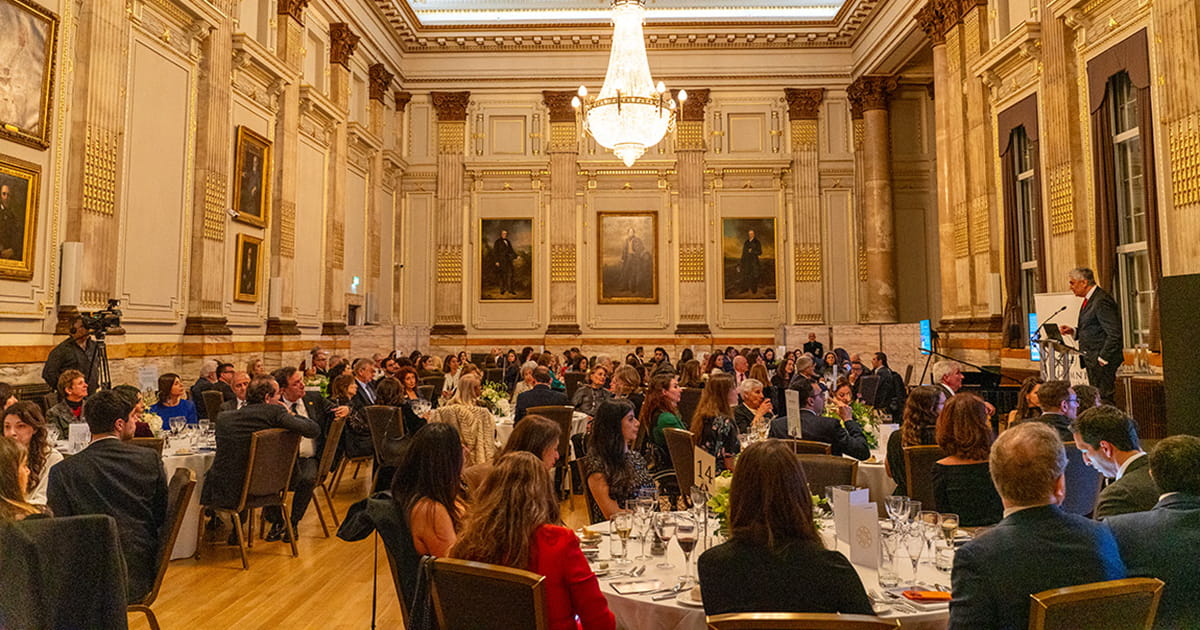
At a time marked by uncertainty in Lebanon and across the region, the LAU community gathered in London on March 27 for an evening grounded in solidarity, shared purpose and quiet resolve.
Hosted by the LAU Alumni London Chapter, the event at One Great George Street brought together alumni, partners and friends of the university in the presence of LAU President Chaouki T. Abdallah, with a collective commitment to support the work of the Arab Institute for Women (AiW) and reaffirm belief in LAU’s enduring mission.
Welcoming the guests, Co-President of the LAU Alumni London Chapter Karim Boulos highlighted the importance of coming together at a time of ongoing challenges in Lebanon. While many in the diaspora are physically distant, he noted, their ties to family, friends and communities remain strong. He defined the evening as both a moment of connection and a commitment to education and women’s empowerment through the AiW, while underscoring the growing strength of the alumni network in London and its role in supporting LAU’s mission.
Following his remarks, Member of the Board of Trustees Philip Stoltzfus reflected on the meaning of community in moments of crisis. “It is good to be among those we love and trust,” he said, describing LAU as “a trusted institution in a country that has lost faith in institutions.” He pointed to the university’s continued efforts to support its people by keeping campuses operational, safeguarding students and staff, and delivering on its educational promise as a reflection of a broader collective. “It is not just the university itself,” he noted, but a network of individuals; faculty, students, alumni and supporters, “without whom our project would be impossible.”
That sense of shared responsibility set the tone for the evening.
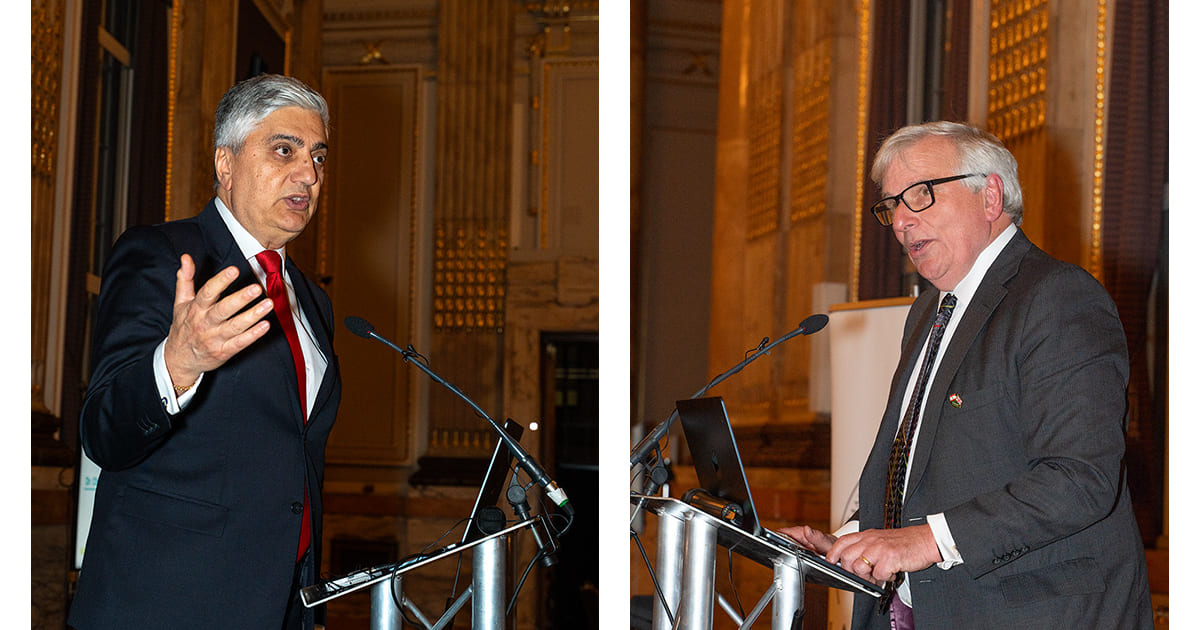
Addressing the audience, President Abdallah offered both context and perspective. He acknowledged the compounded challenges facing Lebanon and higher education globally, from instability to the accelerating brain drain, while underscoring LAU’s determination to move forward. The university, he said, is committed to “decoupling quality from volatility,” ensuring that learning continues and that students are able to progress despite disruptions.
He highlighted LAU’s continued growth, academic strength and commitment to accessibility, noting that financial aid remains central to its mission so that no qualified student is left behind. At the same time, he added, addressing immediate challenges must not come at the expense of long-term vision.
In this context, Dr. Abdallah gave a preview of the university’s upcoming capital campaign, a forward-looking initiative centered on transforming lives, ideas, learning and communities. The campaign aims to reinforce LAU’s resilience, expand its research impact and reimagine education to meet the demands of a rapidly evolving world.
Throughout his remarks, Dr. Abdallah returned to a defining idea: Universities as anchors in uncertain times. They are “lighthouses,” he said, that illuminate what is true and meaningful, and “hope factories” that create opportunity across generations.
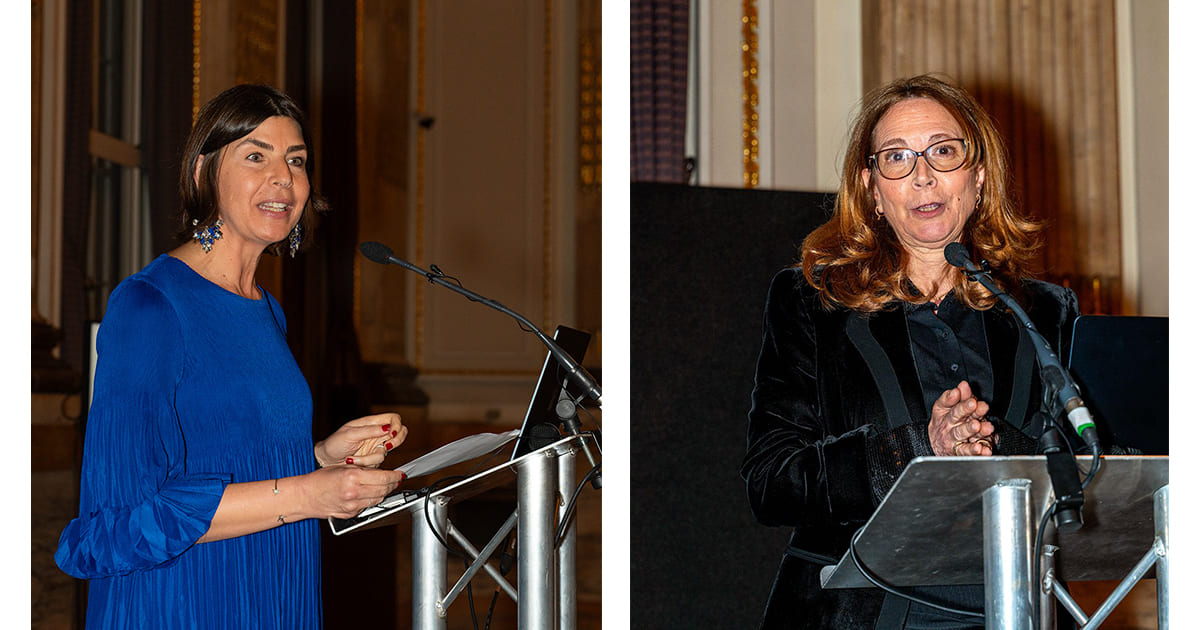
The evening’s focus then turned to the AiW. Executive Director Myriam Sfeir spoke candidly about working in a context shaped by recurring crises, noting that “we gather at a time of immense challenges, amidst war and despair… yet despite it all, nothing could have stopped us from coming together.”
More than five decades after its founding, the AiW continues to advance gender equality through research, advocacy and community engagement. From documenting the stories of pioneering women to strengthening women’s participation in public life, the institute’s work seeks to ensure that women’s contributions are no longer overlooked or excluded. As Sfeir emphasized, history remains incomplete without their voices.
“In a society where women remain underrepresented in all spheres of life, we strive so that women’s stories are not absent from classrooms, the economy, politics and development,” added Sfeir. “Women for us are defined by their accomplishments, and history for us is incomplete without their voices.”
At the event, attendees had the opportunity to support the AiW directly through a dedicated fund, contributing to initiatives that amplify women’s voices, expand their participation in public life and strengthen gender equality across institutions. As a gesture of solidarity, a raffle was made possible through the generous contributions of Nada G, Ocean Map, Mapicare/Souzou Clinic, Annab Brasserie and Château Ksara, alongside the active participation of attendees.
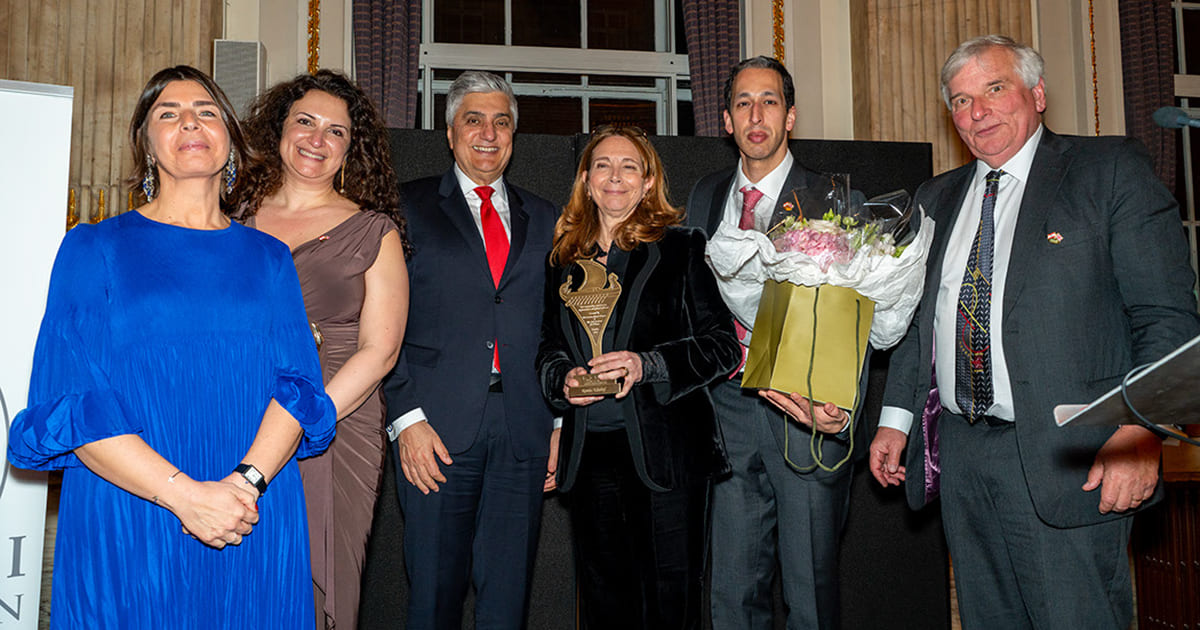
The evening also honored Editor of the Financial Times Roula Khalaf, whose career aligns closely with the AiW’s mission to advance gender equality and elevate women who break barriers and reshape narratives.
A pioneer in global media, Khalaf made history as the first woman and first Arab to lead the Financial Times since its founding 138 years ago. Her career embodies persistence, intellect and courage, and is distinguished by integrity and rigorous, fact-based journalism that has brought depth and credibility to global understanding of the Arab region. A role model for women in leadership, she has helped open pathways for more inclusive representation while inspiring future generations. Her contributions have earned her several international accolades, including the Peace through Media Award, recognizing her high standards of reporting and quality of news analysis.
Khalaf spoke passionately about Lebanon and the weight of its recurring crises, particularly in the context of the ongoing war and its repeated cycles of disruption, noting how often it feels like “we’re kind of living the same episodes time and again.” Yet she was clear in her tribute: The real recognition belongs to those who remain and continue to build. Institutions like LAU, she said, “educate and develop the next generations… no matter the political challenge and security threat,” adding that they “are to be celebrated every day.”
Amid the reflections, a musical performance organized by the Peace and Prosperity Trust featured tenor Bechara Moufarrej, mezzo-soprano Margo Arsane and pianist Varvara Tarasova, who delivered a moving performance that resonated deeply with the audience. The interpretation of Fairuz’s Hobbouki ya Laura filled the room with a sense of nostalgia and connection.
In bringing together its global community, the evening served as a reminder that LAU’s strength lies not only in its institution but in the people who stand behind it. Even in times of conflict and uncertainty, that collective trust continues to sustain its mission and shape its future.


