LAU Faculty Contributes Arabic Perspective to Seminal Terminology Work
Dr. Andrée Affeich collaborated with linguist Dr. Rima Baraké in documenting the history of modern Arabic terminology as part of a major international scholarly project.
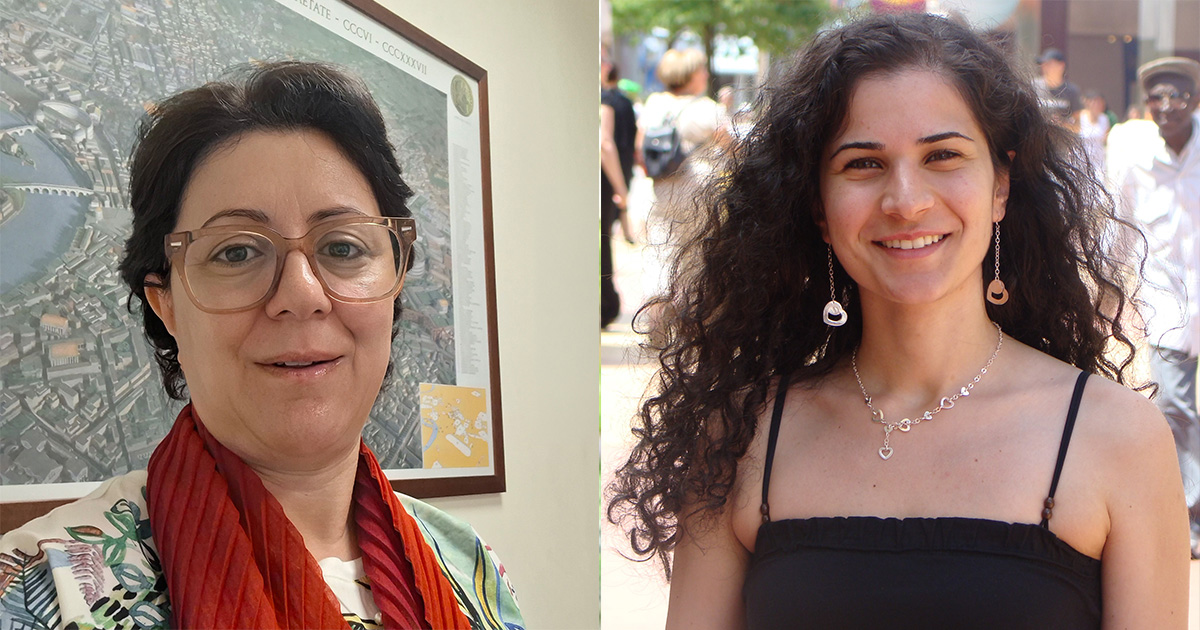
When Associate Professor of Practice in Translation Andrée Affeich received a call for chapter submissions to a comprehensive book on terminology, she responded with a proposal for the Arabic chapter. Upon receiving a second proposal for the same chapter from linguist Dr. Rima Baraké, a longtime colleague of Dr. Affeich’s, the book editors suggested that the two scholars collaborate.
Dr. Affeich and Dr. Baraké thus joined 61 leading scholars whose contributions would be published in Terminology Throughout History: A Discipline in the Making. Edited by Professor Emeritus John Humbley of the Université Paris Cité and Dr. Kara Warburton of the Université du Québec à Trois-Rivières, both influential figures in international terminology studies, the volume explores how approaches to terms have evolved across time, geographical and social contexts, and the ways language is used to develop and communicate specialized knowledge.
Terminology is the “foundation for accurately conveying scientific knowledge within and across languages,” said Dr. Affeich. It is particularly relevant to translators, as it “enables accurate understanding, reliable communication and translation, and the efficient exchange of information,” she added.
Drs. Affeich and Baraké’s chapter, titled “Terminology in the Arab World: Dynamics and Developments,” traces the history of Arabic terminology from the 19th century to the present day.
Beginning with early developments in Egypt and Syria, the chapter follows the evolution of the discipline across the 22 countries of the Arab world. It also examines the process of Arabization, whereby efforts are made to expand the use of Arabic in various fields by creating terms for new concepts through adaptation and borrowing.
These efforts were instrumental in importing the vast body of scientific and scholarly knowledge produced in the West into the Arab world over the past two centuries. From the early coining of medical terms to the proliferation of neologisms in modern sciences such as engineering, telecommunications, and computing, a wealth of specialized vocabulary was adapted and adopted through various Arabization initiatives.
These initiatives, according to the two scholars, contributed significantly to the Nahda—the intellectual renaissance that swept across the Arab world during the 19th and 20th centuries, transforming Arabic literature, education, and political thought. They also remain an essential component of the ongoing modernization of scientific and technical terminology throughout the region.
An example of this process is the word Hypertext, for which Dr. Affeich found a number of equivalents in a Syrian and Algerian corpus, including nass fawk al nass, nass fâ’ik, nass wâfer, nas mutarâbiṭ, and nass mumanhal. Each translation exhibits a different conceptual approach, with the first three based on the etymology of the prefix “hyper,” while the fourth focuses on the existence of links within a text and the fifth attempts a genuine terminological creation that prioritizes meaning over form. These diverse strategies betray the complexity of transposing concepts from one language to another and how well-versed translators need to be in the subject matter of the texts they are translating.
As an LAU educator, Dr. Affeich has leveraged her extensive terminological research to enrich her teaching methods, particularly in the technical dimensions of translation which, she said, cannot be separated from terminology.
“Translators must pay close attention to terminology,” noted Dr. Affeich. “In fields such as law and medicine, precise terms prevent ambiguity and make it possible to communicate effectively.”
Although terminology is not formally taught as a discipline in universities across the Arab world, Dr. Affeich has integrated it into her pedagogical practice by supervising senior study and capstone projects related to terminology and co-authoring research papers with students. She is currently working on three new projects with LAU graduates Jana Bou Kamel (BA ’25), Lyne El Masri (BA ’25), Lara Younis (BA ’26), Yasmin Bitar (BA ’26), and senior student Lynn Bakri.
Her work with Dr. Baraké also highlights the limitations of the Arabization process, examining the obstacles to establishing a unified terminology across the Arab world, including terminological inflation and the proliferation of synonyms, which can impede effective communication.
“Unfortunately,” said Dr. Affeich, “the great majority of translators in the Arab world do not have any knowledge about terminology itself, its foundation, its history, how terms are coined, how concepts are organized and structured within a specific field of knowledge, the relations between them, and how these relations shape the way meaning is transferred within specialized languages, as well as how to build databases and glossaries.”
She hopes to see “greater future cooperation among the different Arab countries and entities in the field of terminology,” which she considers “of utmost necessity.”
Terminology has contributed much to the linguistic development of Arabic, and through their scholarly work, Drs. Affeich and Baraké continue to elevate both this underappreciated discipline and the closely connected field of translation.
Their latest collaboration, to be published by the Arab Organization for Translation and the Arab Translators Union, is titled Arabic Translation in the 21st Century: Current State, Challenges and Future Prospects. Bringing together contributors from France, Iraq, Lebanon, Qatar, Saudi Arabia, Algeria and Morocco, the volume co-edited by Drs. Affeich and Baraké is among the first in the Arab world to examine developments in Arabic translation, in light of the growing role of artificial intelligence.
To browse more scholarly output by the LAU community, visit our open-access digital archive, the Lebanese American University Repository (LAUR).


