Smarter Wind Power for Lebanon: How Machine Learning Can Boost Clean Energy
LAU research presents a faster and cost-effective method for testing and optimizing a type of wind turbine suitable for urban areas.
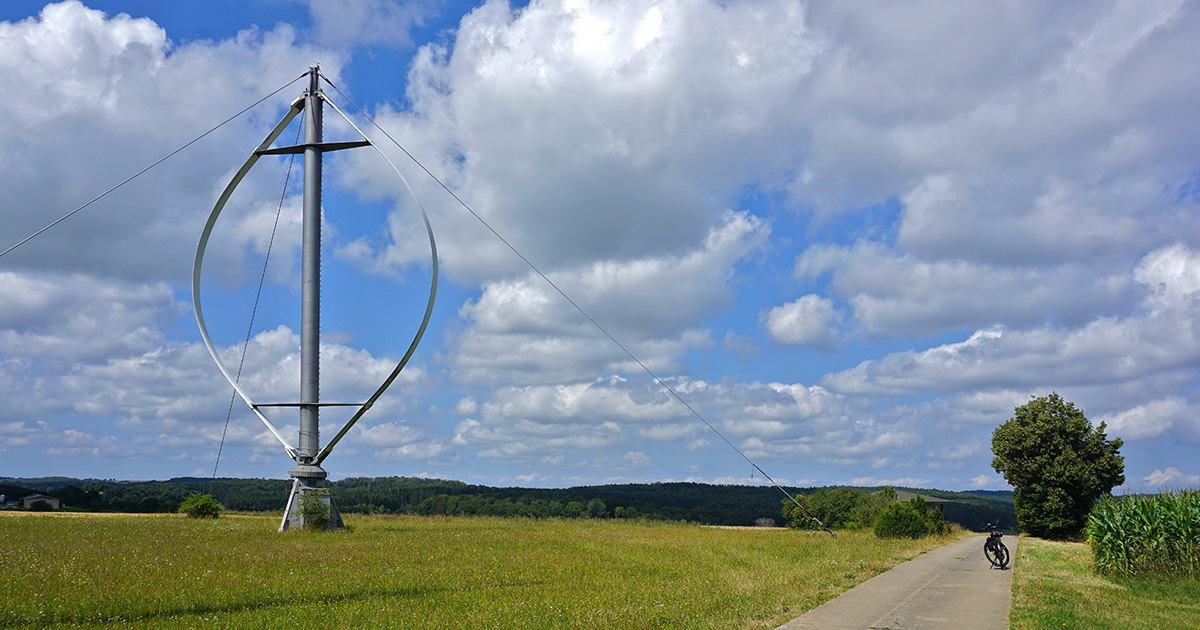
For the past few years, the global energy landscape has been shifting away from conventional sources such as oil and natural gas toward renewable options, like solar energy and wind turbines. However, despite their positive impact, these technologies have yet to overcome real barriers before they can fully replace conventional energy at scale, with the biggest challenge being financial due to high upfront installation costs and slow return on investment.
Wind turbines are among the most promising solutions for Lebanon, where renewable but affordable energy is a national necessity, and a recent research by faculty at LAU’s School of Engineering uncovers ways to make them more efficient, faster to design and cheaper to improve.
In a recently published paper in Energy Conversion and Management, titled “Machine learning applications in optimizing the performance of Darrieus wind turbines,” Dean Michel Khoury, Dr. Amne ElCheikh, associate professor of industrial and mechanical engineering, and LAU student Marc Zgheib, introduce a machine learning framework that can predict turbine performance accurately without relying on extensive field testing. This cost- and time-saving approach serves both to analyze and optimize wind turbines’ performance.
Their research focuses on Darrieus wind turbines, a type of vertical-axis wind turbine (VAWT) that is particularly suitable for dense urban settings, where wind conditions are often gusty, and space is limited. Unlike horizontal-axis wind turbines, which have propeller-like blades, VAWTs have blades that are attached to the top and bottom of the vertical rotor.
These turbines are ideal for a country like Lebanon as they “are well suited for regions with complex wind conditions, such as urban or mountainous areas, which are common in Lebanon,” said Dr. ElCheikh. “They can operate efficiently under turbulent, multi-directional winds, have a compact footprint, and may offer advantages for decentralized and small-scale renewable energy deployment.”
Typically, designing a wind turbine entails several combinations of design and operating conditions to determine what produces the most power, a process that relies on costly field testing and can take months or even years.
The LAU researchers’ approach uses machine learning to learn from a small number of test points and predict how much power a turbine will produce under different designs. After comparing several models, they selected an appropriate method and tested it on three different case studies. The model performed strongly across the board, producing predictions that closely matched the real data.
One of the most exciting findings is that the model does not require huge amounts of data. In one case study, the turbine’s performance could be predicted accurately using only about 10 percent of the experimental data—around 40 samples instead of 480.
Beyond the technical results, this work reflects LAU’s growing focus on sustainability research that is not just theoretical, but aimed at making clean energy more practical and affordable.
Looking ahead, the researchers see strong practical potential for their work.
“Our goal is to turn this framework into a tool that engineers can use early in the design process to predict performance with minimal testing,” said Dr. ElCheikh.
Dr. Khoury added, “Clean energy innovation today is not only about new hardware; it is about smarter, data-driven design that can lower costs and accelerate adoption, especially in countries like Lebanon.”
To browse more scholarly output by the LAU community, visit our open-access digital archive, the Lebanese American University Repository (LAUR).


