AKSOB Launches MARSAD to Advance Research on Socioeconomic Disparities in the Arab Mashreq
MARSAD seeks to bridge the gap between academic knowledge and public decision-making, positioning LAU as a contributor to the region’s socioeconomic development.
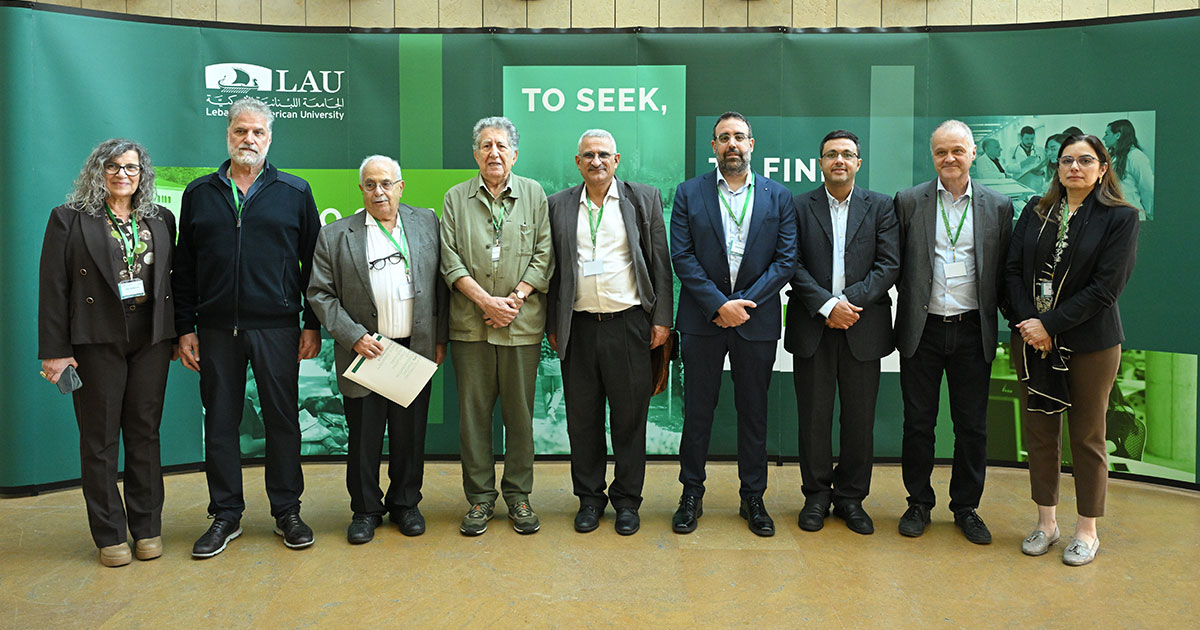
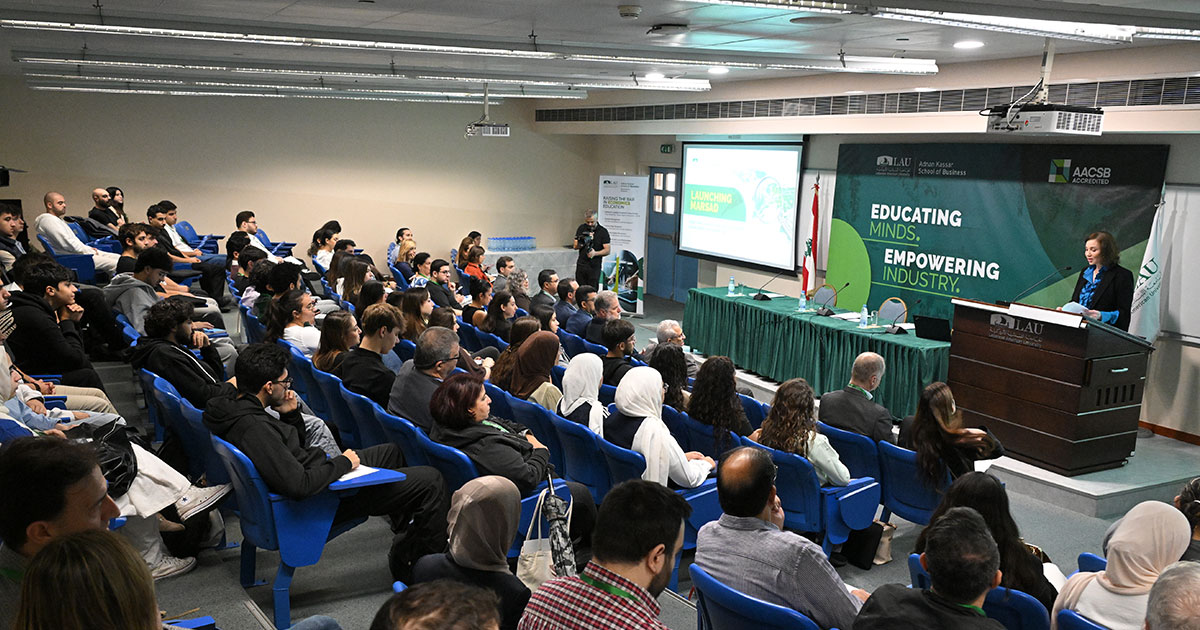
Why do economic opportunities remain unequal across the Arab Mashreq, and what can research tell us about changing that reality? These questions are central to Monitoring Arab Regional Socioeconomic Advancement and Disparities (MARSAD), a data-driven research observatory launched by the Department of Economics at the Adnan Kassar School of Business (AKSOB) on October 30, 2026, at the LAU Beirut campus. The launch brought together regional and international scholars and policy experts to introduce an initiative dedicated to studying poverty, inequality, and economic development and connecting its findings with public policy.
MARSAD brings together seven founding fellows from LAU and international academic institutions. The LAU team includes Professor of Economics Ghassan Dibeh, Professor and Associate Dean Ali Fakih, Assistant Professor of Economics and Department Chairperson Jamal Haidar, and Professor of Economics and Associate Dean of Graduate Studies and Research Walid Marrouch. They are joined by Senior Lecturer in Economics Mohamad Khaled of the University of Queensland and Professors of Economics Paul Makdissi and Myra Yazbeck of the University of Ottawa.
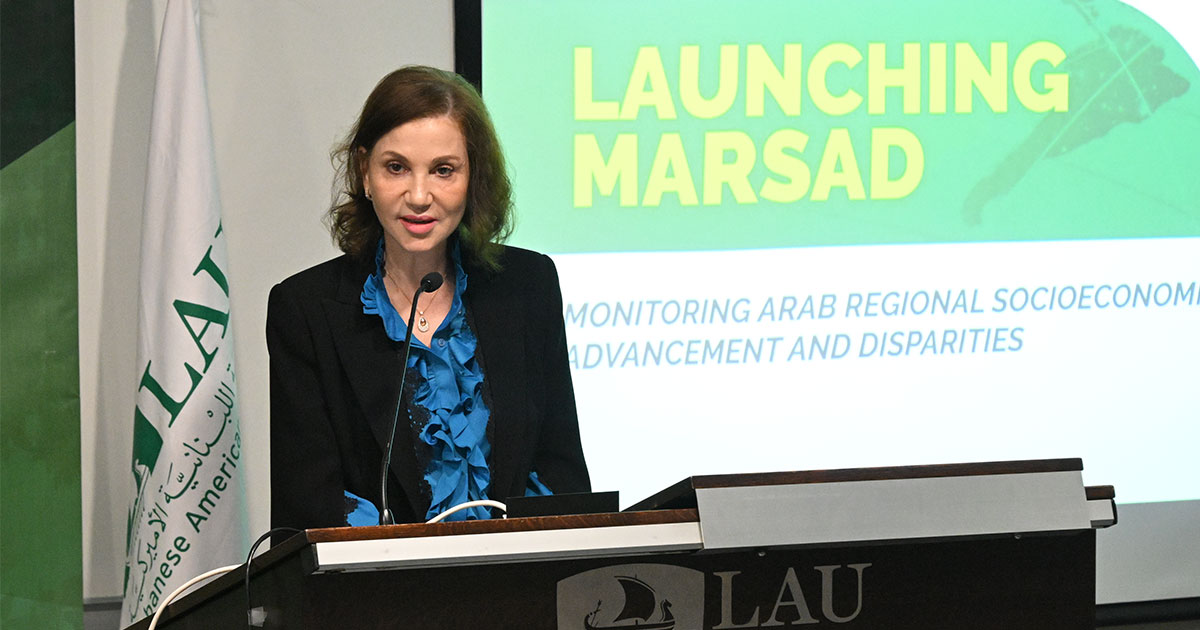
“Our ambition is to establish MARSAD as a trusted regional reference point, generating the knowledge and insights needed to better understand socioeconomic disparities and inform meaningful change across the Arab Mashreq,” said AKSOB Dean Dima Jamali.
Achieving this ambition requires addressing one of the region’s persistent research challenges: The shortage of accessible, reliable socioeconomic data.
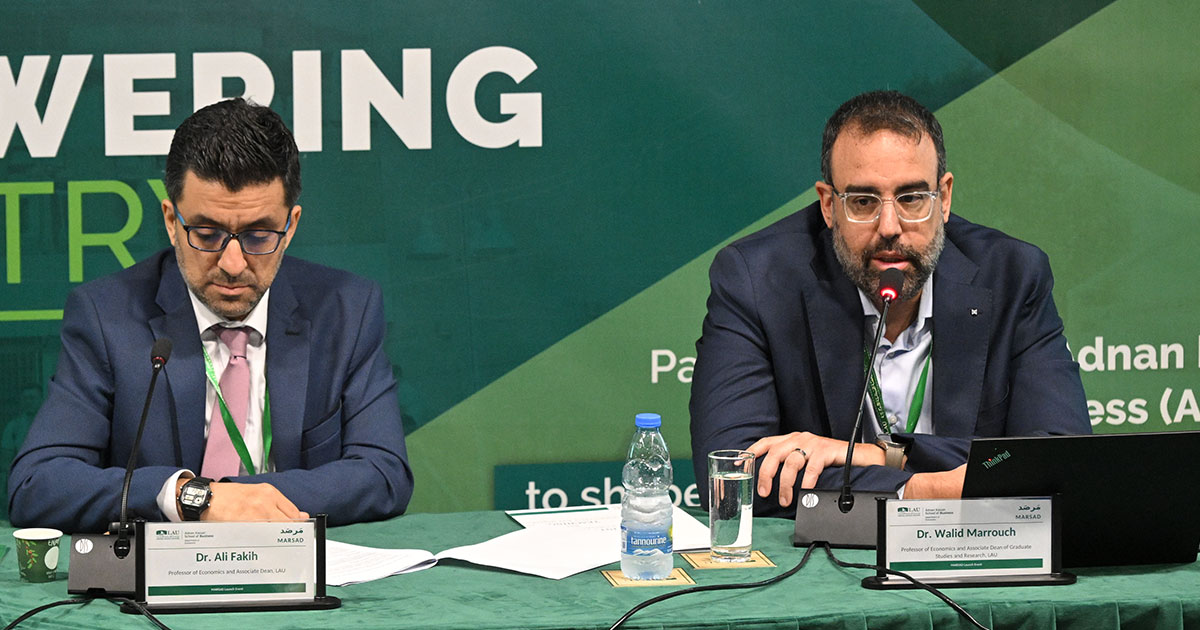
“Without reliable socioeconomic data, researchers struggle to identify who is most affected by poverty and inequality, while policymakers lack the evidence needed to direct resources where they are most needed. MARSAD aims to help bridge this gap by connecting rigorous research with informed decision-making,” said Dr. Fakih.
To pursue these objectives, MARSAD focuses on three interconnected priorities: knowledge creation, knowledge sharing, and capacity building. These will guide its research projects, comparative studies, policy briefs, and collaboration with scholars and institutions across the region.
The observatory will also examine inequality of opportunity, particularly how socioeconomic background influences access to education, employment, and economic mobility.
“Economic growth alone does not guarantee equal opportunities. When access to quality education, stable employment, and economic mobility depends on family background or social circumstances, we need to understand why these inequalities persist and how policies can help overcome them,” said Dr. Marrouch.
The launch brought together leading regional and international scholars for two keynote presentations and three thematic panels addressing poverty, inequality, and economic development.
Dr. Ragui Assaad of the University of Minnesota examined socioeconomic disparities in access to higher education and employment in Egypt and Jordan, while Dr. Francisco Ferreira of the London School of Economics explored global trends in income inequality.
The panels featured Dr. Hania Sholkamy and Dr. Marrouch on poverty; Dr. Fawwaz Traboulsi and Dr. Dibeh on inequality; and Dr. Khalid Abu Ismail and Dr. Kamal Hamdan on economic development across the Arab Mashreq.
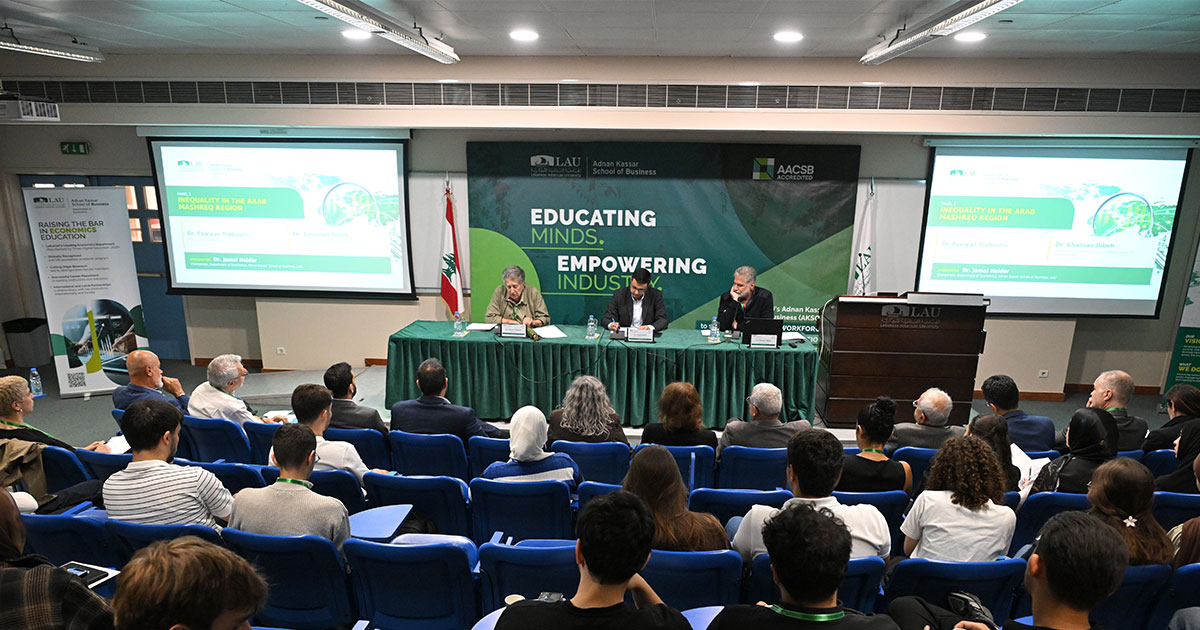
For Dr. Haidar, MARSAD’s broader purpose is to examine economic progress through the experiences and opportunities of individuals and communities, rather than aggregate indicators alone. “Development cannot be adequately understood through averages alone.
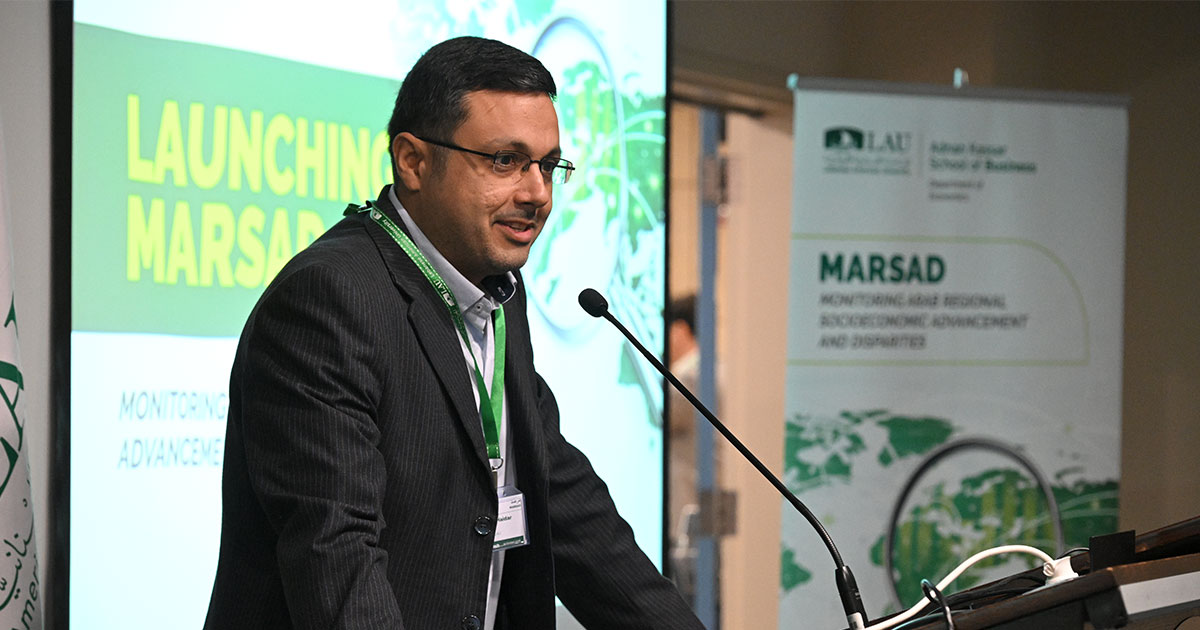
We must examine the distribution of opportunities, the processes that generate disparities, and the conditions that enable people to improve their lives. This requires good data, sound concepts, rigorous methods, institutional independence, and sustained collaboration. MARSAD is our effort to bring these together at LAU,” he said.


