LAU Alumnus and Nestlé Chairman Yasser Abdul Malak Announces New Innovation Lab
The Nestlé Middle East and North Africa chairman and CEO returned to his alma mater to share lessons on resilience, initiative, and integrity, as a new partnership opens opportunities for students to engage with industry innovation.
This was the message that LAU alumnus Yasser Abdul Malak (BS ’97), chairman and CEO of Nestlé Middle East and North Africa (MENA), shared with students on October 22 at the LAU Beirut campus during an executive talk titled: “The Journey to Leadership: Challenges, Choices, and Lessons Learned.”
In her opening remarks, Assistant Dean and Professor Manal Yunis, who organized the talk, invited students to look beyond Abdul Malak’s title and accomplishments and focus on the process that helped him achieve them—the choices, challenges, setbacks, opportunities, and values that shaped his path to leadership.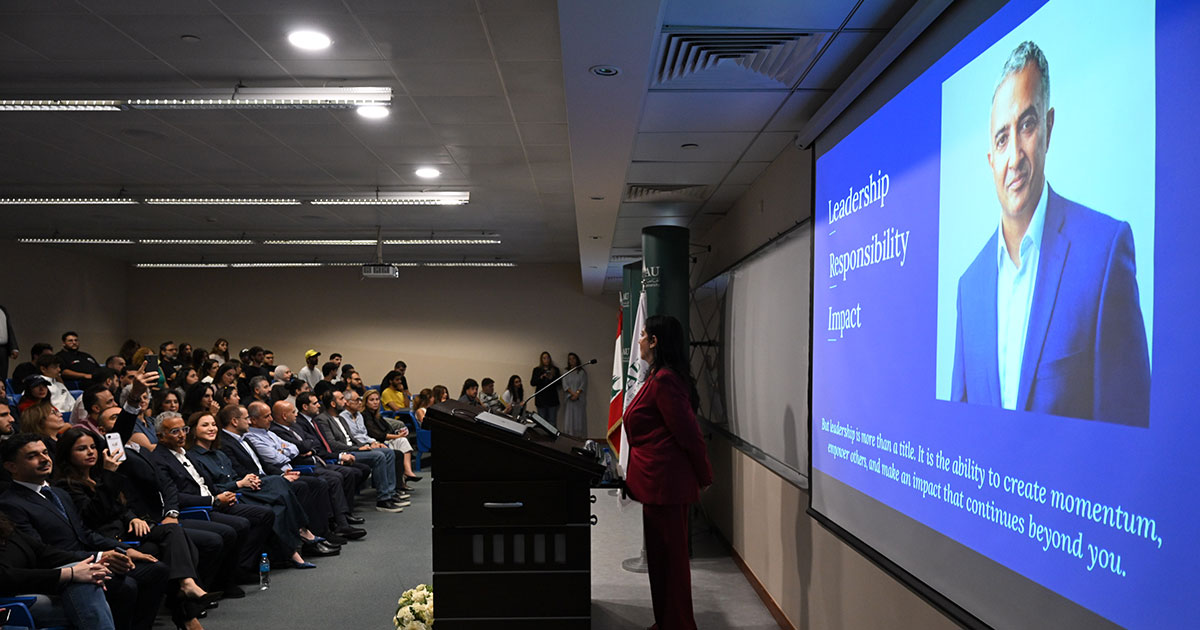
Welcoming Abdul Malak back to his alma mater, Dean of AKSOB Dima Jamali highlighted the significance of strengthening connections between the school, its alumni, and the industry.
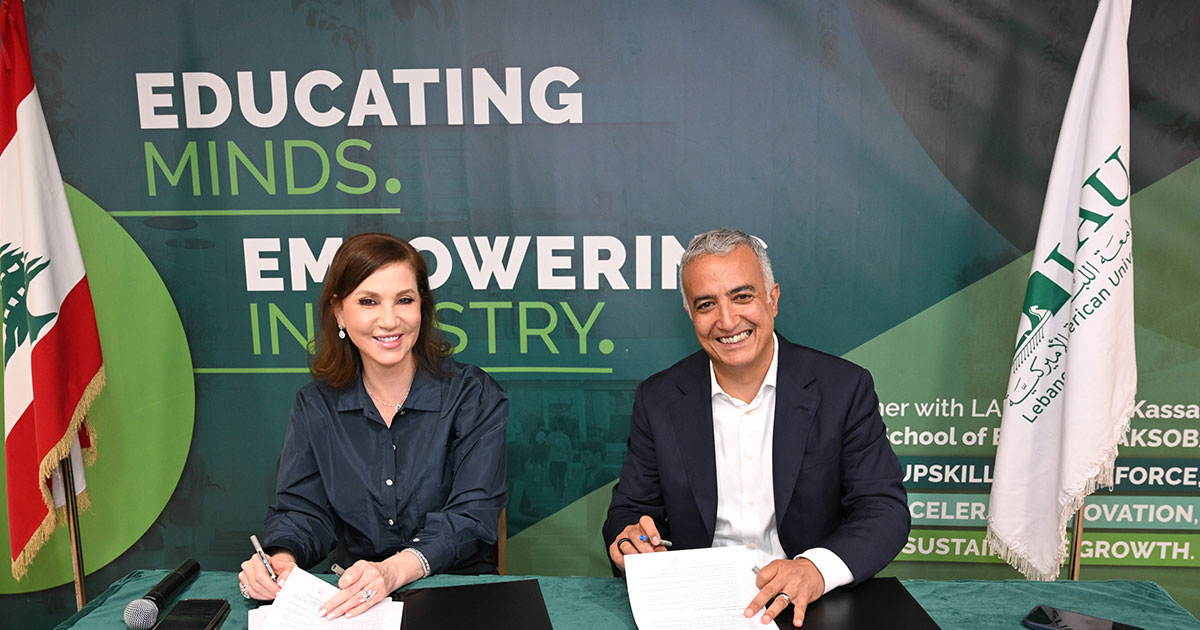
The event also marked the announcement of a partnership between LAU and Nestlé through a memorandum of understanding (MOU) that will pave the way for several areas of collaboration, including the establishment of the Nestlé Innovation Lab. The partnership aims to advance AI-driven innovation and to strengthen engagement between academia and industry, creating new opportunities for students.
Opening with the provocative statement, “You will not make it,” Abdul Malak challenged students to question the limitations imposed by circumstances and their own fears, drawing on his own experience growing up during the Civil War in Lebanon.
With university seemingly out of reach, he worked several jobs, including waiting tables and driving a truck, to support his family and save for his education.
Determined to attend LAU, he enrolled in a single credit in 1992 to secure his admission before returning to work. Nearly two years later, he resumed his studies, supported by his family and the university’s financial aid offering. Today, Abdul Malak is determined to open doors for underserved students through the same financial aid pathway that had once helped him, and he made this clear in his address to students in attendance: “The university and its future students will need your support, just as you have once benefited from those who believed in you,” he said.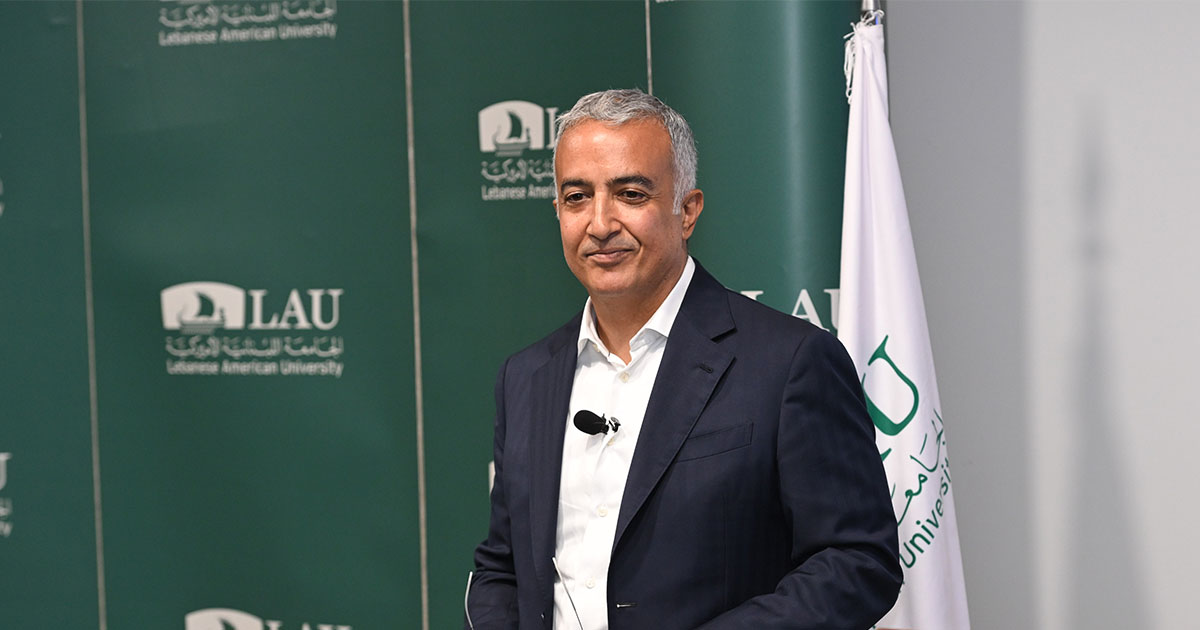
However, access to education alone does not ensure success, according to Abdul Malak. He underscored the value of taking initiative, demonstrating how, after graduating in 1997, he faced repeated job rejections in Saudi Arabia before joining Public Graphics, where he actively pursued opportunities outside his assigned responsibilities.
“You have to try. You have to ask,” Abdul Malak stressed, urging students to take responsibility for their professional growth rather than wait for opportunities to come their way.
Abdul Malak also emphasized that pursuing opportunities must be accompanied by the integrity to make difficult decisions. Drawing inspiration from his family’s values, he realized how standing by his principles, despite the professional risks, ultimately opened the door to a career at Nestlé.
“You cannot choose when to apply your values,” he said. “You have to actually, in the most difficult times, stick to them.”
These principles continued to guide his career across several countries, where new responsibilities demanded discipline, adaptability, and the judgment to distinguish between circumstances he could change and the realities that he had to accept.“Until you accept a challenge, you cannot even start to think of a solution,” he explained, challenging students to approach adversity with clarity and determination.
Abdul Malak engaged in a Q&A with students on career choices, leadership, changing consumer behavior, AI, and the future of business. He fielded their questions by drawing from his personal experiences and connecting them with the realities and decisions facing today’s business leaders.
The discussion brought the event full circle: from the challenges and choices that shaped one alumnus’s journey to the questions and aspirations of the students who will soon embark on their own careers.


