LAU Hosts Second Heart 2 Heart Talks on Cardiovascular Care
Over two and a half days of hands-on training and live case transmissions, national and international experts examined the latest advances in valvular heart disease management and structural heart interventions.
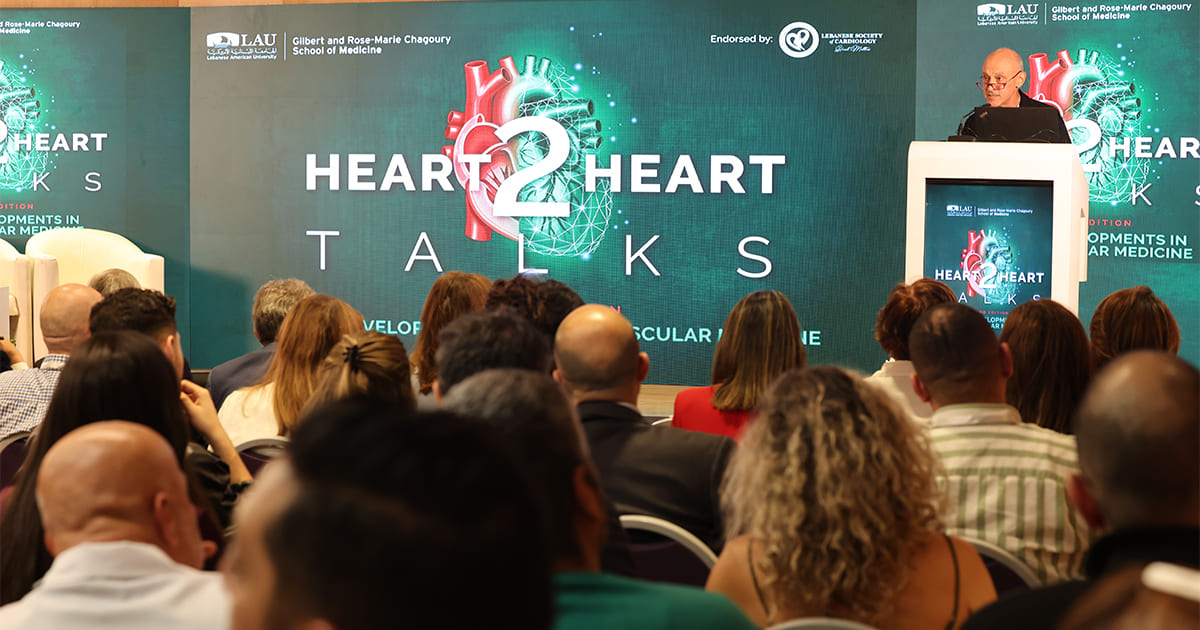
A patient with a failing aortic valve rarely arrives with a single problem. Narrowed coronary arteries, diabetes, declining kidney function, or untreated sleep apnea often accompany valve disease, and each can change which treatment is safest and how long its benefit lasts. The best cardiac decisions therefore come from a room where interventional cardiologists, surgeons, imaging specialists, and colleagues from other disciplines weigh the case together.
That conviction shaped the second edition of Heart 2 Heart Talks, organized by the LAU Gilbert and Rose-Marie Chagoury School of Medicine from October 15 to 17, 2026. Endorsed by the Lebanese Society of Cardiology, the symposium brought national and international faculty to LAU Medical Center–Rizk Hospital and LAU Medical Center–Saint John’s Hospital.
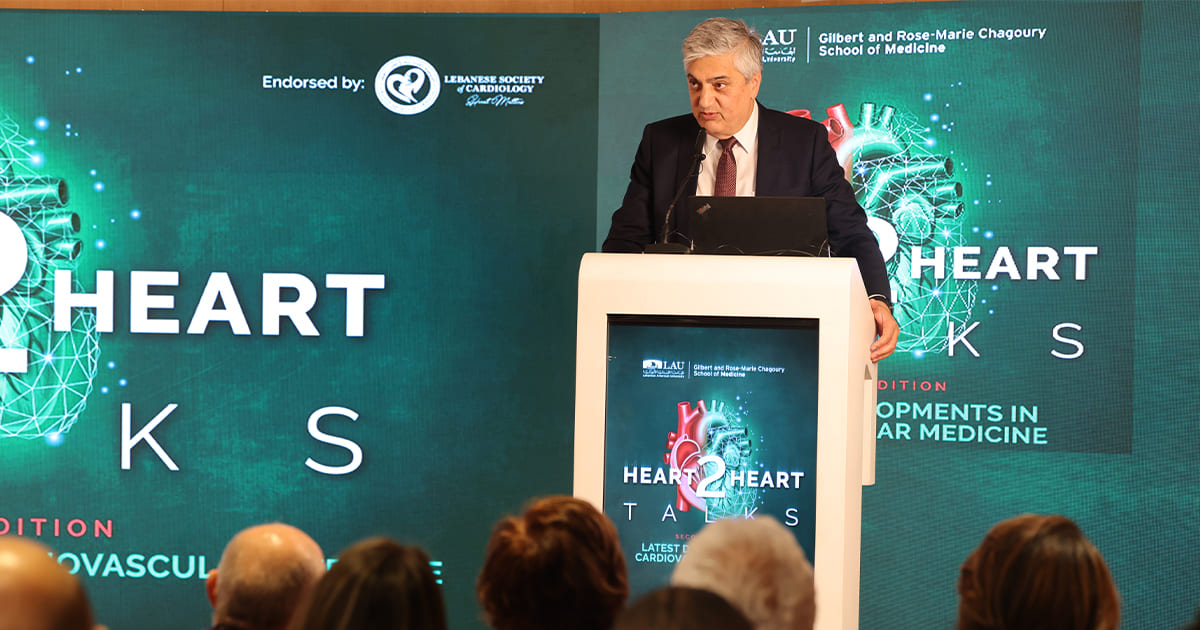
At the opening ceremony, LAU President Chaouki T. Abdallah recalled that Lebanon’s first transcatheter aortic valve implantation (TAVI) was performed at LAU Medical Center–Rizk Hospital in 2012. “But a pioneering procedure carries a responsibility beyond the first patient,” he said. Dr. Abdallah described the Heart Team as a model in which “complex care depends on people bringing different expertise to a shared decision,” adding that listening, humility, and trust “are qualities we must teach as deliberately as we teach a procedure.”
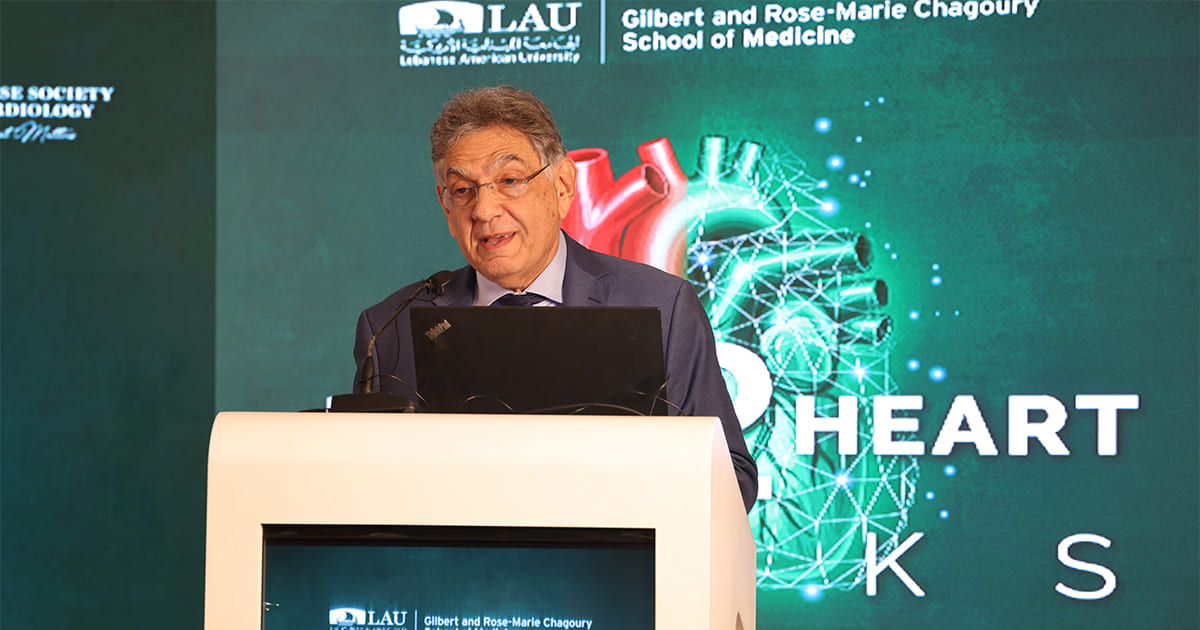
That emphasis on the human side of care was shared by Professor Elias Jamil Shallala, president of the Lebanese Order of Physicians, who said that gatherings such as Heart 2 Heart Talks “help maintain the standards of Lebanon’s healthcare system.” He called on physicians to preserve empathy in their practice.
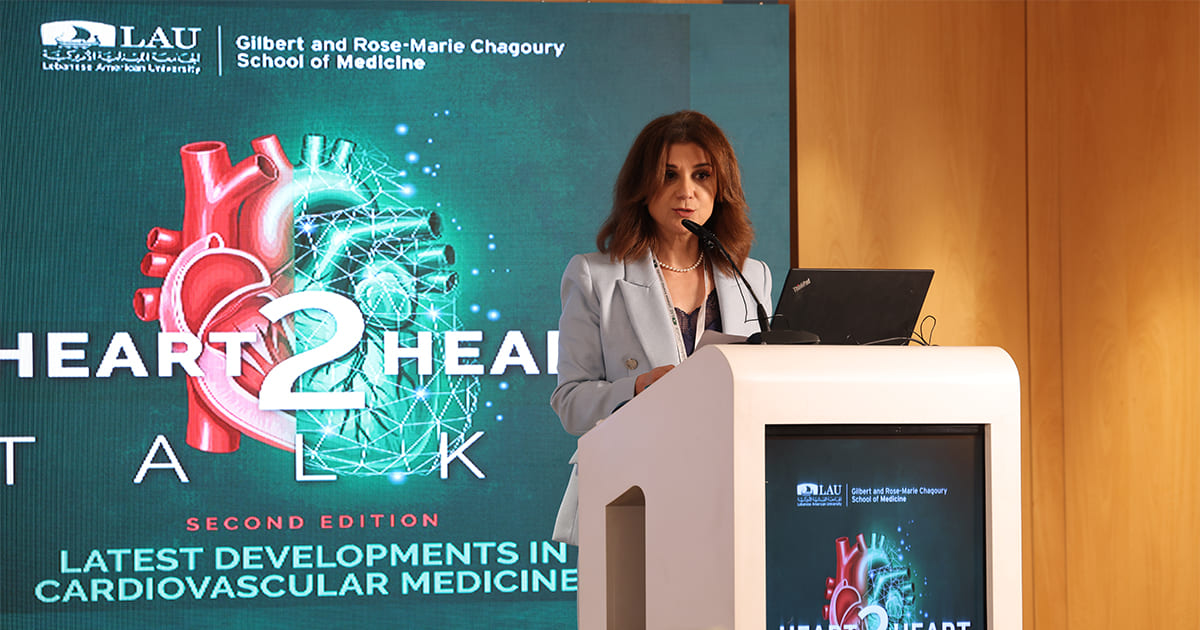
Dean Sola Aoun Bahous placed the bedside at the heart of medical education. The future of cardiology, she said, “will not be decided only in laboratories and on platforms. It will be decided at the bedside, in the way we teach the next generation to examine, question, and listen.”
If the bedside is where physicians first learn, Dr. George Ghanem, clinical professor and division head of cardiology at the LAU Gilbert and Rose-Marie Chagoury School of Medicine and activity director of Heart 2 Heart Talks, argued that conferences must also rethink how they teach. Dr. Ghanem, who has led the series since its inception, said the era of vast congresses is drawing to a close. “The medical congresses will become less about information and more about interaction,” he said. That belief shaped the program, which traded long lecture lineups for live cases and round-table debates around “specific and challenging patients.”
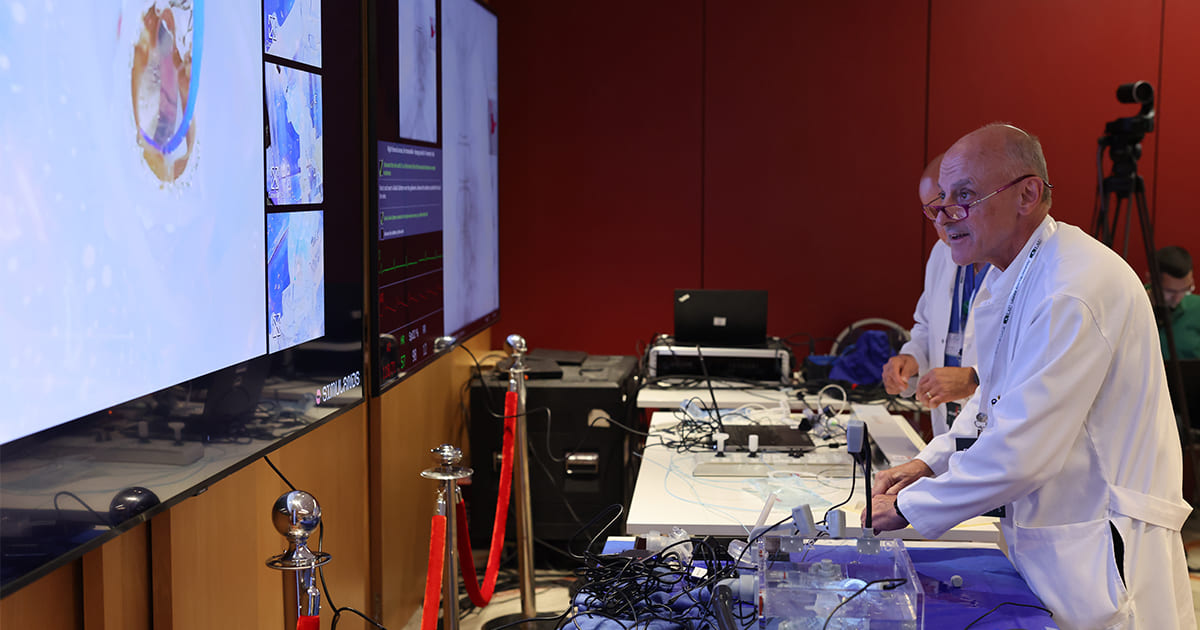
The program began with an afternoon of hands-on practice in a simulation village at LAU Medical Center–Rizk Hospital, where physicians rehearsed minimally invasive valve procedures and left atrial appendage closure, which lowers stroke risk in patients with an irregular heartbeat, refining their technique before applying it in patient care.
The second day turned to structural heart disease, a field in which damaged valves can now be repaired or replaced through a thin tube rather than open-heart surgery. As these procedures reach younger patients who may live decades longer, speakers examined how long the valves last and what happens when one wears out and a new valve must be implanted inside it. In other words, the first valve a patient receives determines which options remain open later.
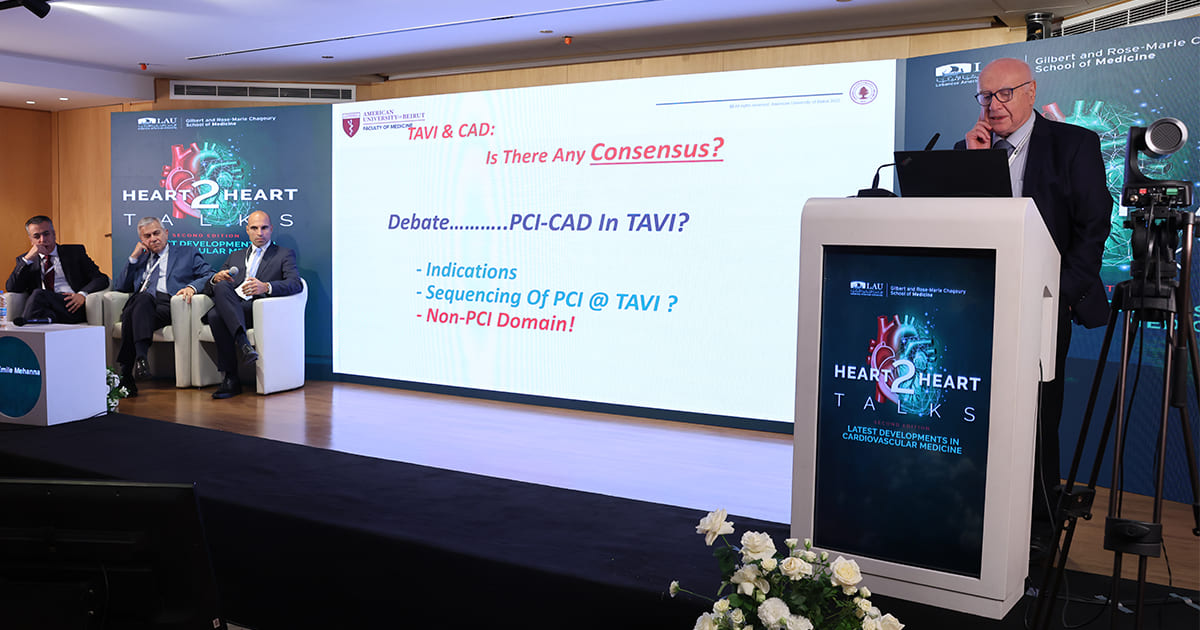
With about 40 percent of TAVI patients also living with significant blockages, Dr. Samir Alam, professor of medicine and chief of medical staff at the American University of Beirut Medical Center, reviewed the evidence on whether those blockages should be treated before the valve is replaced. Recent trials, he noted, have found little benefit in routinely placing stents beforehand and a higher risk of bleeding in older patients. “Management should be individualized,” he said, describing the care of these patients as “a lifelong commitment” that continues long after they go home.
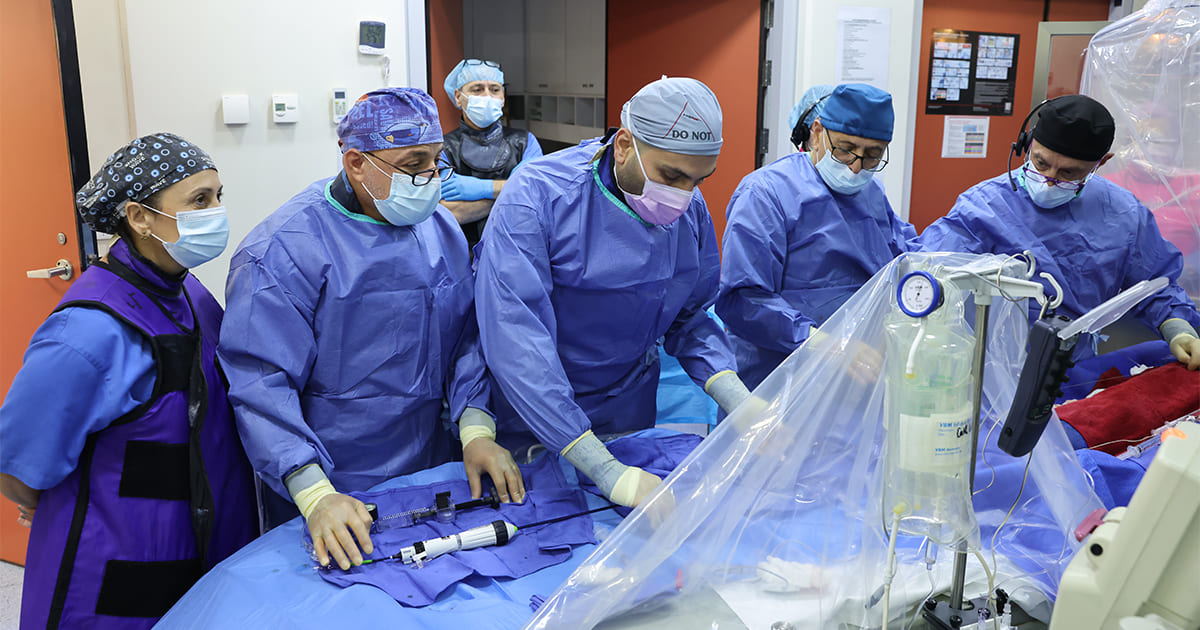
The day’s most interactive moments came from the catheterization lab itself, as procedures at LAU Medical Center–Rizk Hospital and a case from a university hospital in Brno, Czech Republic, were transmitted live to the auditorium, where the audience questioned each team as it worked.
On the final day of the conference, at LAU Medical Center–Saint John’s Hospital, the conversation moved upstream to prevention and to the patient whose heart disease begins quietly elsewhere in the body, from cholesterol that resists statins to kidneys and sleep patterns that strain the heart without warning. Each set of talks ended with the floor open, turning the sessions into an exchange between speakers and the physicians who would carry the evidence back to their own clinics.
The discussion then returned to the arteries and to a question every interventional cardiologist faces at the patient’s bedside: how best to treat a blockage, and whether a stent is the right answer at all.The left main artery, which supplies most of the heart’s left side, offered a natural starting point. Dr. Charbel Naim, assistant professor at the LAU Gilbert and Rose-Marie Chagoury School of Medicine, and Dr. Robert Fakhoury, clinical assistant professor and chief of the Section of Cardiology at LAU Medical Center–Saint John’s Hospital, explained when stenting this artery can safely take the place of bypass surgery, and how imaging from inside the vessel helps confirm that the stent has been well placed.
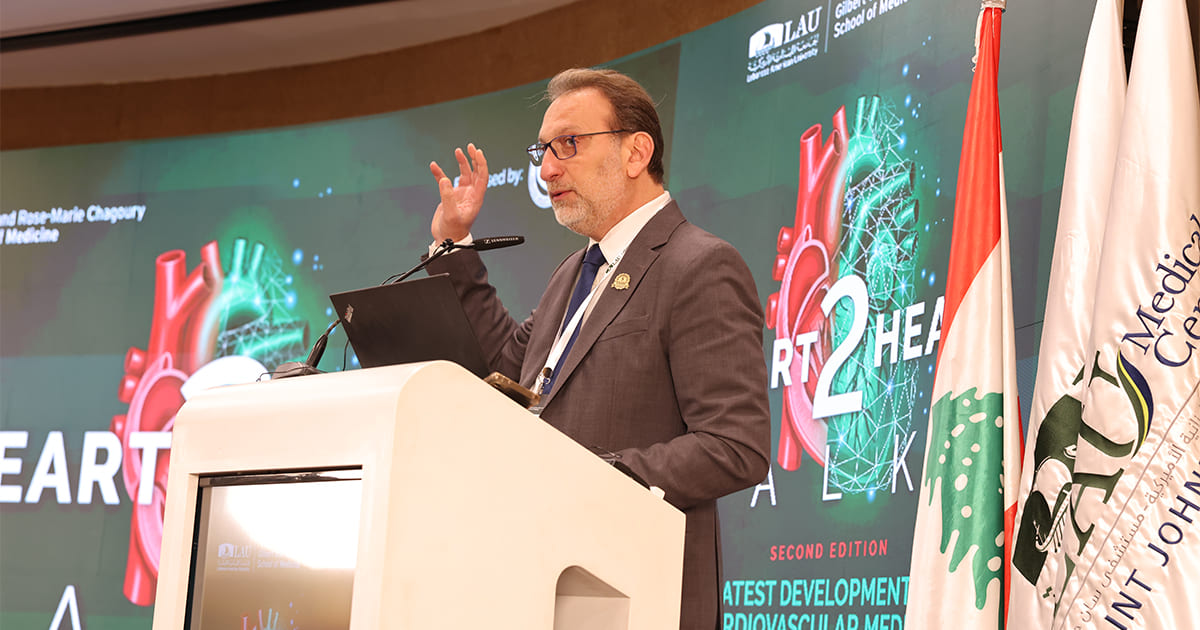
Dr. Fakhoury then took the question a step further, asking whether every blockage needs a permanent metal stent at all. He pointed to drug-coated balloons and dissolving scaffolds as alternatives for some patients, cautioning that “a permanent implant carries a permanent risk.” The hardest cases came last. Dr. Elias Hanna, clinical professor at the school, turned to arteries that have been completely blocked for months and outlined how physicians plan the safest route through them.
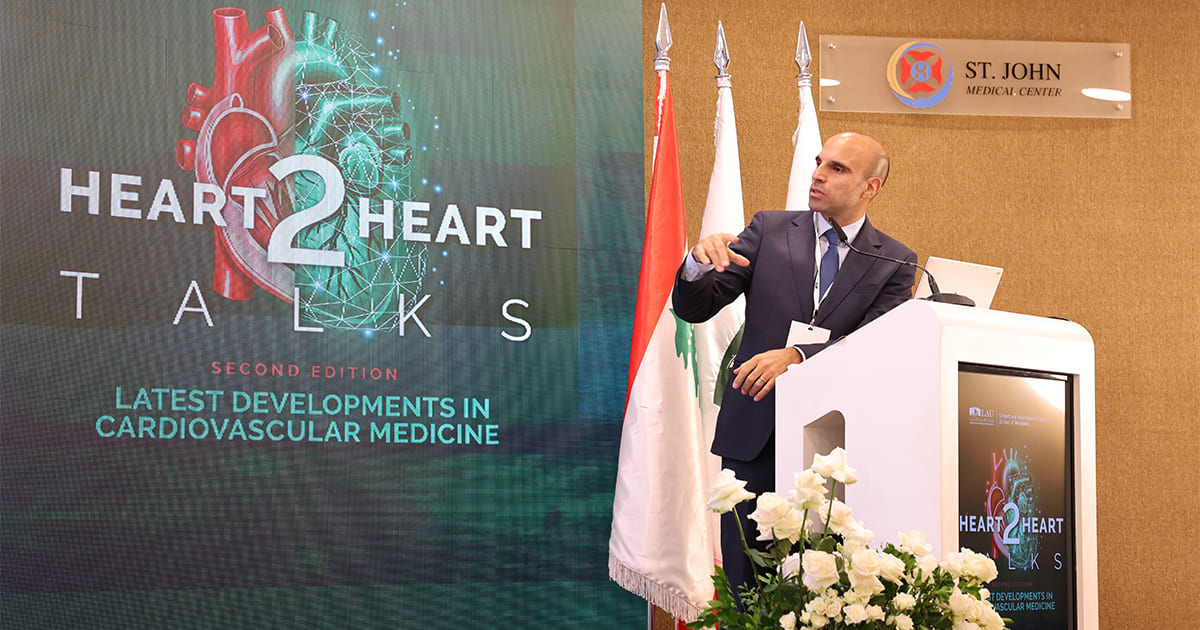
A clearer view of the artery itself was the focus of Dr. Emile Mehanna, clinical assistant professor, and Dr. Charbel Naim, assistant professor, both at the LAU Gilbert and Rose-Marie Chagoury School of Medicine. They examined the place of intravascular imaging in modern percutaneous coronary intervention (PCI), where catheter-based tools that look inside the vessel help physicians decide whether a stent is needed and, if so, how to size and place it.
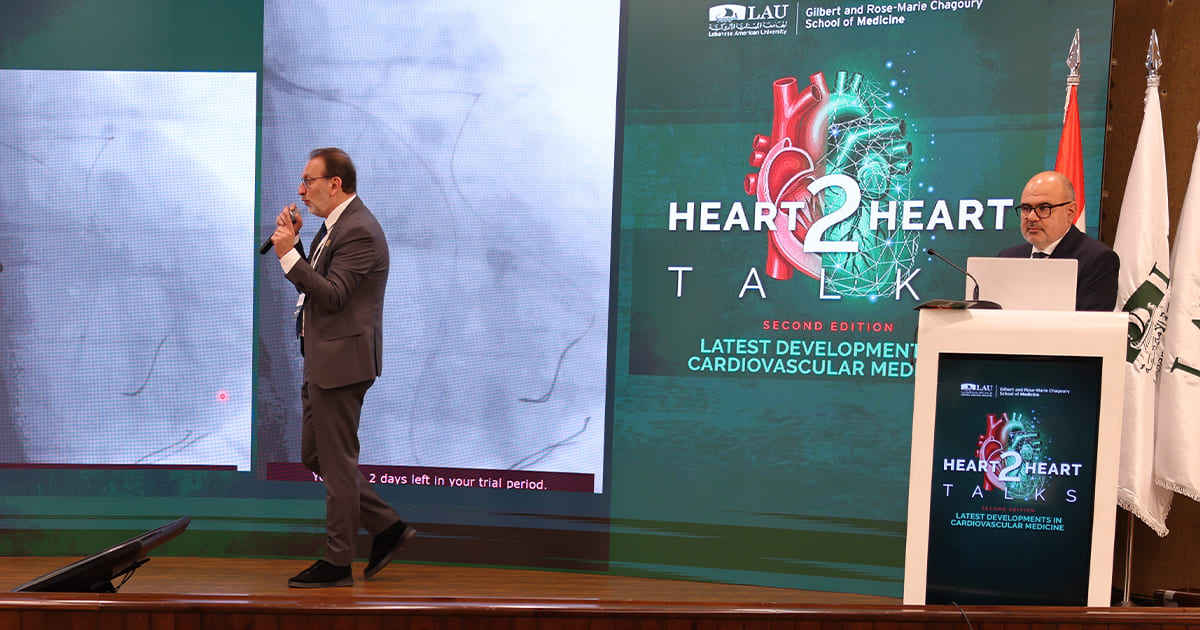
That spirit of debate peaked in the sessions on complex coronary procedures, where each talk posed a dilemma, from whether a branching blockage needs one stent or two to the safest way into an artery blocked for months. The closing case-based panel, “When Things Go Wrong,” led by Drs. Naim and Fakhoury, then invited the audience to work through complications that arise mid-procedure and the decisions that resolve them.
As the symposium drew to a close, Dr. Ghanem looked past new devices and data to what he sees as medicine’s lasting core. “In the age of AI, what remains uniquely ours, as physicians, is trust,” he said, between colleagues willing to question one another and between patients and the physicians who treat them. He described the participants’ presence as a message of confidence “not only in the future of interventional cardiology in Lebanon, but also in the future of the country itself.”


