Building the Future One Particle at a Time
Dr. Walid Malaeb’s research has yielded nanoparticle compounds that could form the basis of tomorrow’s high-tech materials and contribute to sustainability.
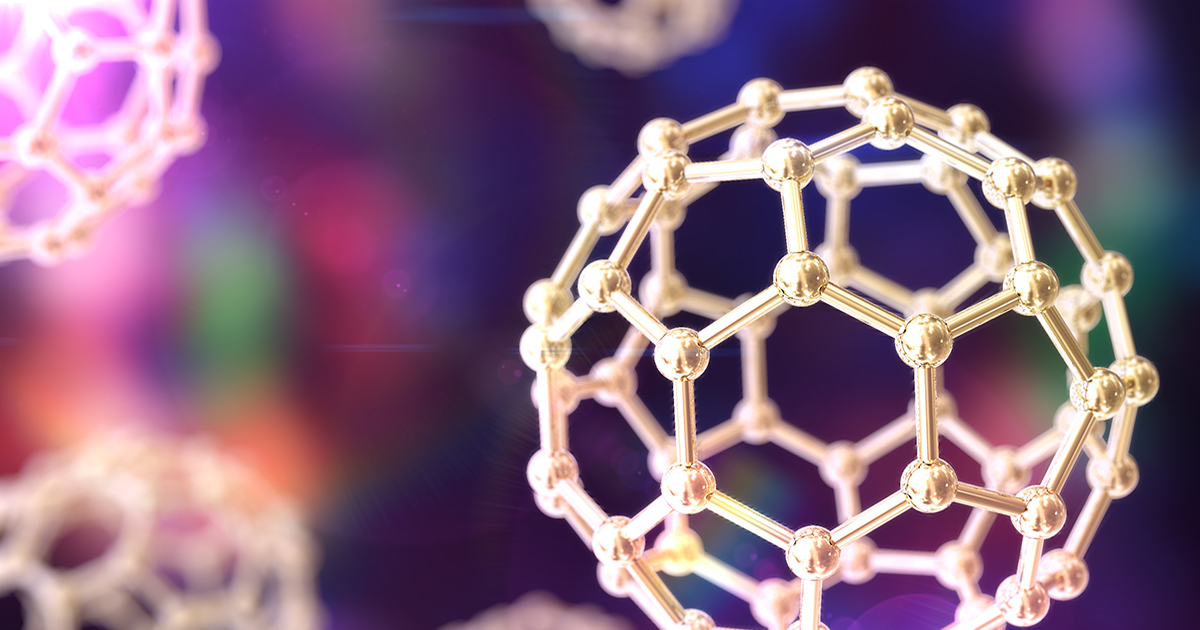
The next frontier for human exploration may not be out in the vast cosmos but in the microscopic world around us. As scientific understanding and technological capabilities advance, scientists are gaining access to the realm of the infinitesimally small, revealing its secrets and driving breakthroughs in materials science.
Assistant Professor of Physics at the School of Arts and Sciences Walid Malaeb is at the forefront of this research. His work focuses on the synthesis and potential of advanced materials composed of these tiny particles to help improve a wide range of technologies.
At the nanoscale, materials become stronger, more chemically reactive, or acquire unique optical, electrical, and magnetic properties. These changes make them useful for developing more efficient electronics, energy systems, sensors, and environmental technologies.
Dr. Malaeb’s recent work spans three studies, from magnetic materials to dental applications. His latest study investigates the potential magnetic and optical effects of co-doping spinel ferrites. Published in the Journal of Alloys and Compounds, the paper demonstrates that magnetic and electronic properties can be independently controlled, allowing for simultaneous optimization of different functionalities.
Previously, Dr. Malaeb had also worked on modifying samarium iron garnet nanoparticles. Published in Ceramics International, the study sought to increase the nanoparticles’ magnetic response by adding nickel, along with another metal, such as cobalt, zinc, tin, or gallium. The researchers found that the combination of nickel and cobalt, in particular, enhanced the nanoparticle’s magnetism and electrical conduction, which could contribute to more efficient technologies.
The purpose of these studies, said Dr. Malaeb, “was to understand how the composition, structure, and size of nanoparticles influence their properties and functionality.” By tailoring these parameters, the scientists aimed to develop materials with improved performance for specific applications, while also contributing to the fundamental scientific understanding of matter at the nanoscale.
“Nanomaterials can improve renewable energy, environmental remediation, water purification, advanced sensors, electronic devices, medical diagnostics, and next-generation computing technologies,” said Dr. Malaeb. The long-term ramifications of his research, he added, “include both technological advancement and economic opportunities through innovation and knowledge transfer.”
While the aforementioned papers focused on advanced magnetic materials, another study led by Dr. Malaeb and published in the Journal of Materials Research explored how nanoparticles can strengthen medical products.
The study examined zinc oxide (ZnO) nanoparticles to develop longer-lasting (and stronger) dental fillings. Dr. Malaeb and his team found that their modified ZnO nanoparticles increased the material’s strength and eliminated the effects of porosity, resulting in greater durability and improved overall performance.
Several of Dr. Malaeb’s colleagues at LAU have been a part of his research into nanoparticles, including Assistant Professor of Chemistry Ali Yassin, part-time faculty Zainab Harajli and Ali Jaber, Research Assistant Lama Saadeh, and Postdoctoral Research Fellow Ali Srour. Dr. Malaeb continues to explore the wide-ranging potential of nanoparticles to address current challenges.
Looking ahead, he believes that the pace of discovery could increase dramatically through artificial intelligence. “These emerging tools have the potential to accelerate the development of new materials with targeted properties and significantly reduce the time required for experimentation,” he said, in the hope that these advances will translate to concrete progress in environmental sustainability, clean energy, and water quality.
The ecosystem provided by the university was an indispensable asset given the interdisciplinary nature of such initiatives, he noted. “Access to the complementary expertise of my colleagues and the specialized facilities at LAU has been essential to my research,” he said. His work has been primarily funded by the Presidential Intramural Research Fund (PIRF).
“By offering an academic environment that encourages interdisciplinary collaboration and international engagement,” he added, “LAU creates opportunities for collaboration with researchers from around the world.”
To browse more scholarly output by the LAU community, visit our open-access digital archive, the Lebanese American University Repository (LAUR).


