How Three Beirut Emergencies Reshaped One Hospital Plan
An LAU-led field report of lessons learned from three mass-casualty emergencies at the LAU Medical Center–Rizk Hospital helps to inform hospital preparedness in Lebanon and beyond.
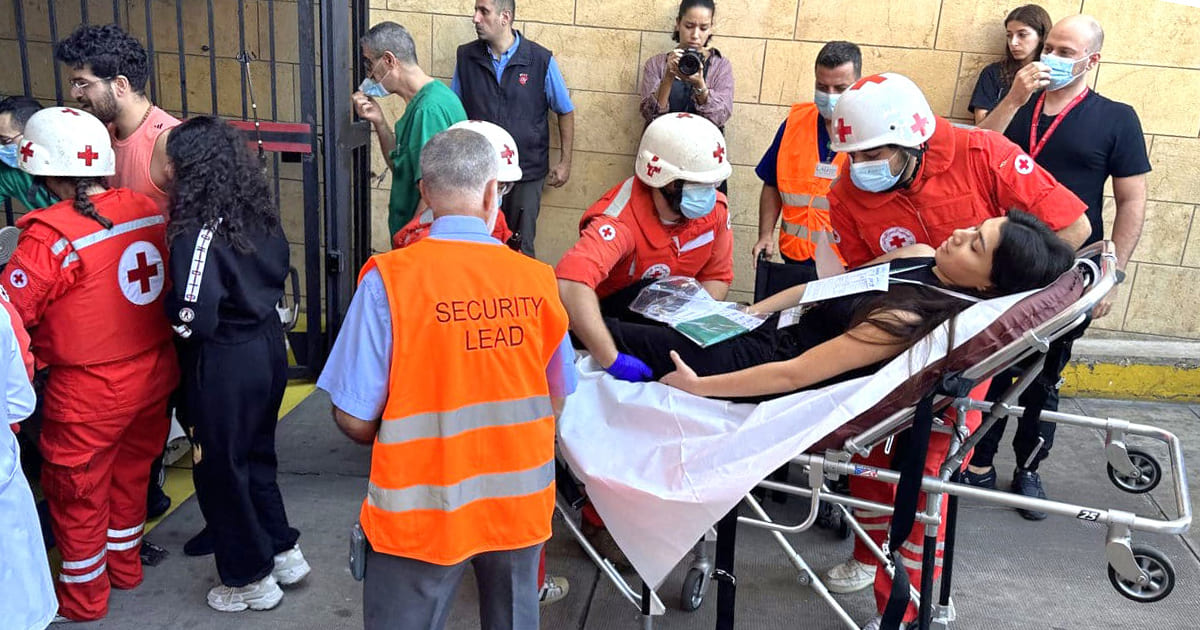
A hospital emergency plan must do more than mobilize people quickly. It has to give each responder a clear role, direct patients to the right place, and keep teams prepared as the flow of casualties changes, which is particularly challenging when large numbers of injured arrive with little warning.
In Beirut, where hospitals have repeatedly faced mass-casualty emergencies, each crisis has provided hard lessons about the difference between a procedure on paper and a coordinated response.
Dr. Mariana Helou, clinical associate professor and division head of Emergency Medicine at LAU’s Gilbert and Rose-Marie Chagoury School of Medicine, and her colleagues examine this process in “Three Activations, One Plan: Evolving Emergency Preparedness Through Recurrent Sudden-Onset Disasters in Beirut, Lebanon,” published in Disaster Medicine and Public Health Preparedness.
Their field report follows the emergency preparedness plan at the LAU Medical Center–Rizk Hospital across the 2020 Beirut Port Explosion, the 2024 pager explosions, and the April 8, 2026, airstrikes. After each emergency, the hospital reviewed its response and revised its plan. By looking across all three events, the authors were able to identify improvements as well as problems that persisted or emerged over time.
During the latest, April response, the hospital received 42 casualties in two distinct waves. Twenty-eight were classified red, indicating the need for immediate treatment; nine were classified green, with less urgent injuries; and five were deceased.
According to Dr. Helou, the hospital’s response during the April airstrikes reflected lessons carried forward from the previous two disasters. The emergency plan was activated immediately, triage was established rapidly outside the Emergency Department, crowd control improved, and closer coordination between emergency and surgical teams helped them manage operative cases in the first wave more effectively. She described the hospital’s broader success as its ability “to respond, learn, and adapt” across three very different emergencies.
Nevertheless, the response also revealed several gaps. Some trainees unassigned specific roles gathered in the critical red zone, worsening congestion. The hospital’s emergency activation ended before a second wave of casualties arrived, and surgical residents faced shortages or limitations in resources. The report also identified the lack of a regional network for coordinating patient transfers between hospitals as a broader challenge.
Together, these observations show that patient numbers alone cannot capture the demands of an emergency, which are equally influenced by the timing of casualties’ arrivals, the deployment of available staff, and access to support beyond the hospital.
Dr. Helou highlighted that these lessons extend beyond the LAU Medical Center–Rizk Hospital. Hospitals should keep triage procedures simple enough to function during a sudden influx, clearly define staff responsibilities, anticipate constraints in surgical and other resources, and plan for more than one wave of casualties. They should also avoid deactivating an emergency response prematurely, even after a pause in casualty flow, she noted, in case of transfers from facilities that have become overwhelmed.
Planning also needs to consider the resources available to residents and the arrangements for moving patients between institutions. The latter, Dr. Helou emphasized, cannot be solved by individual institutions alone. “No hospital can manage a large-scale disaster in isolation,” she said, arguing that a regional network through which hospitals could exchange real-time information on capacity and coordinate transfers would strengthen the response to mass-casualty incidents across Lebanon. These are implications of the reported difficulties, rather than proof that a particular measure will work equally well everywhere. Other institutions would need to adapt the lessons to their own staffing, facilities, and referral networks, then assess whether the changes address their specific weaknesses.
The report ultimately shows that emergency preparedness is an ongoing process. Lessons from each response need to be reviewed, translated into clear procedures, and rehearsed before the next crisis.
For Dr. Helou, the central lesson is that an emergency preparedness plan should be “a living and evolving plan, rather than a static document.” Following each mass-casualty incident, she said, hospitals should systematically review what worked and what did not, revise their procedures accordingly, and reinforce those changes through regular training and drills. At the LAU Medical Center–Rizk Hospital, lessons from the 2020 Beirut Port Explosion and the 2024 pager explosions had been incorporated into the plan, informing the improved response in April 2026.
This continuous learning may be as important as the initial response itself. The medical center’s greatest success was not in simply managing three major emergencies, noted Dr. Helou, but in critically examining each activation and using what it learned to strengthen the next.
Rather than devise a plan that anticipates every possible disaster, she added, the objective is to create a system that can learn and adapt rapidly through a recurring cycle of “activation, debriefing, critical appraisal, revision, and drill.” For hospitals repeatedly called on to respond to sudden emergencies, learning from what happened the last time may be one of the most important ways to prepare for what comes next.
To browse more scholarly output by the LAU community, visit our open-access digital archive, the Lebanese American University Repository (LAUR).


