LAU Launches the Region’s Most Advanced Robotic Surgery Program
The “da Vinci Xi” makes its debut at the LAU Medical Center–Rizk Hospital, bringing world-class multidisciplinary surgeons to the service of medical education and interprofessional healthcare teams.
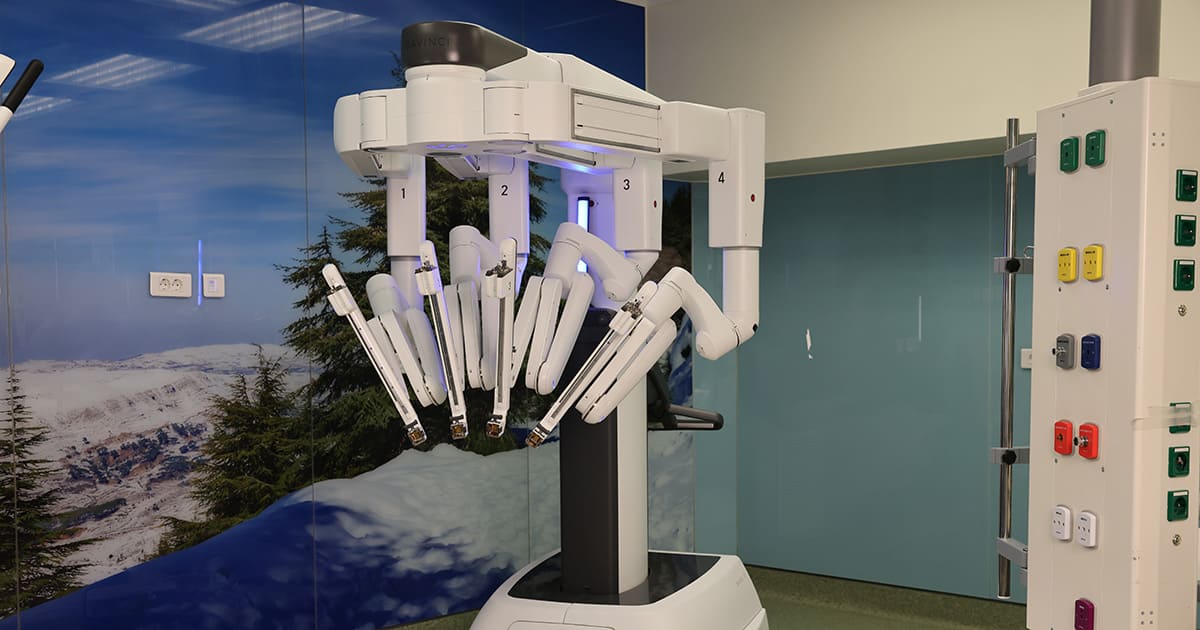
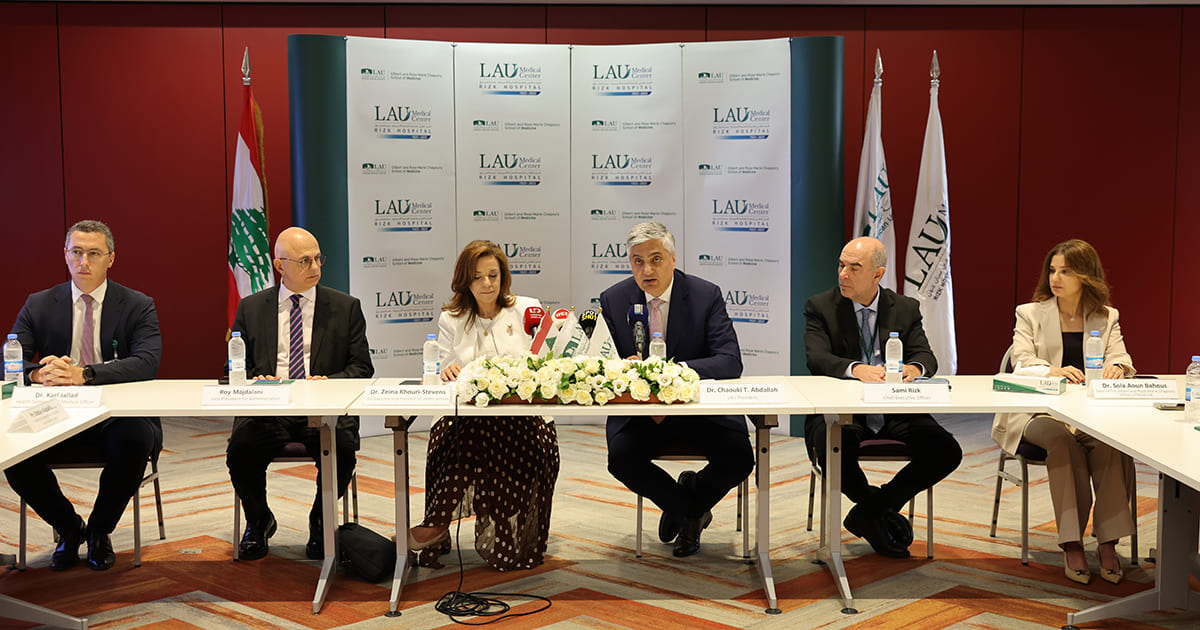
Surgeons at the LAU Gilbert and Rose-Marie Chagoury School of Medicine and the LAU Medical Center–Rizk Hospital marked a major milestone for the medical community in Lebanon and the region last month, completing the first procedure under the LAU Robotic Surgery Program using the “da Vinci Xi,” the world’s most advanced and versatile multiport robotic surgical platform.
The LAU multidisciplinary team includes Gilbert and Rose-Marie Chagoury School of Medicine Assistant Dean for Strategy & Development & Chair of the Surgery Department Eddie Abdalla, Clinical Assistant Professor of Obstetrics & Gynecology Bassel Abouzeid (BS ’14, MD ’18), Assistant Professor of Clinical Medicine Elias Abi Khalil, and Clinical Associate Professor of Surgery Malek Meskawi, among many other surgeons trained in robotic surgery.
Together, these physicians span several medical specialties, including hepatobiliary and general surgery, minimally invasive gynecologic surgery, and urology. Beyond the operating room, they brought extensive international training to Lebanon as educators to LAU’s medical students and residents, as trainers and proctors, upskilling physicians in robotic surgery at the national, regional, and international levels.
“This combination of world-class expertise and advanced technology,” said Executive Vice President for LAU Health System Zeina Khouri-Stevens, “reflects LAU Medical Center–Rizk Hospital’s continued pursuit of medical advancement, grounded in the patient-centered and compassionate care that has defined us for decades.”
From an academic standpoint, Dean of the Gilbert and Rose-Marie Chagoury School of Medicine Sola Aoun Bahous noted that robotic surgery is no longer a distant frontier of medicine, but rather an integral part of modern medical education and practice. “Working alongside internationally trained surgeons,” she added, “prepares trainees to practice at the highest standard and to lead the next generation of technology-driven, patient-centered care.”
The traditional paradigm of surgery, according to Dr. Abdalla, was to see, decide, operate, and assess. “Now, we have moved largely to predict, simulate, plan, augment, then execute, and learn,” he said, referencing the latest robotic surgery platform in terms of vast computing power. “If we have better hands, better eyes, and better ergonomics, then we can probably do surgery better,” he added.
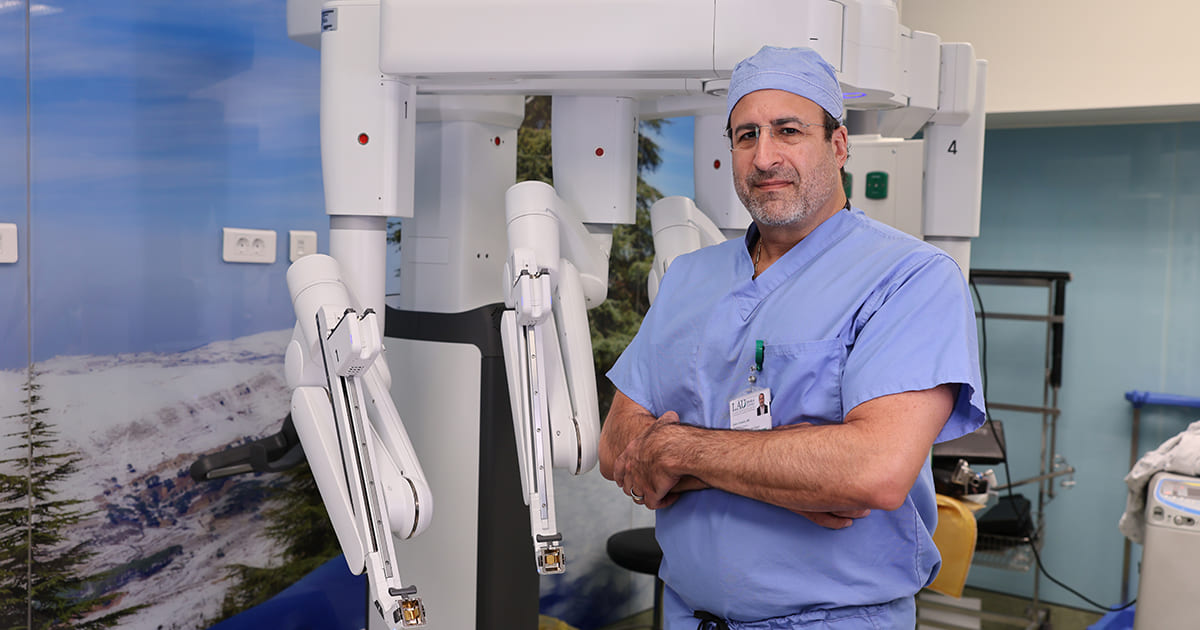
In fact, as Dr. Abouzeid affirmed, “Robotic training is a must for this generation.” Reflecting on his years of extensive training in the US, he explained how didactic training is followed by assessment, then on to the “wet lab”— in reference to the hands-on practice session that uses real biological tissue instead of virtual reality screens or plastic models—and simulation centers.
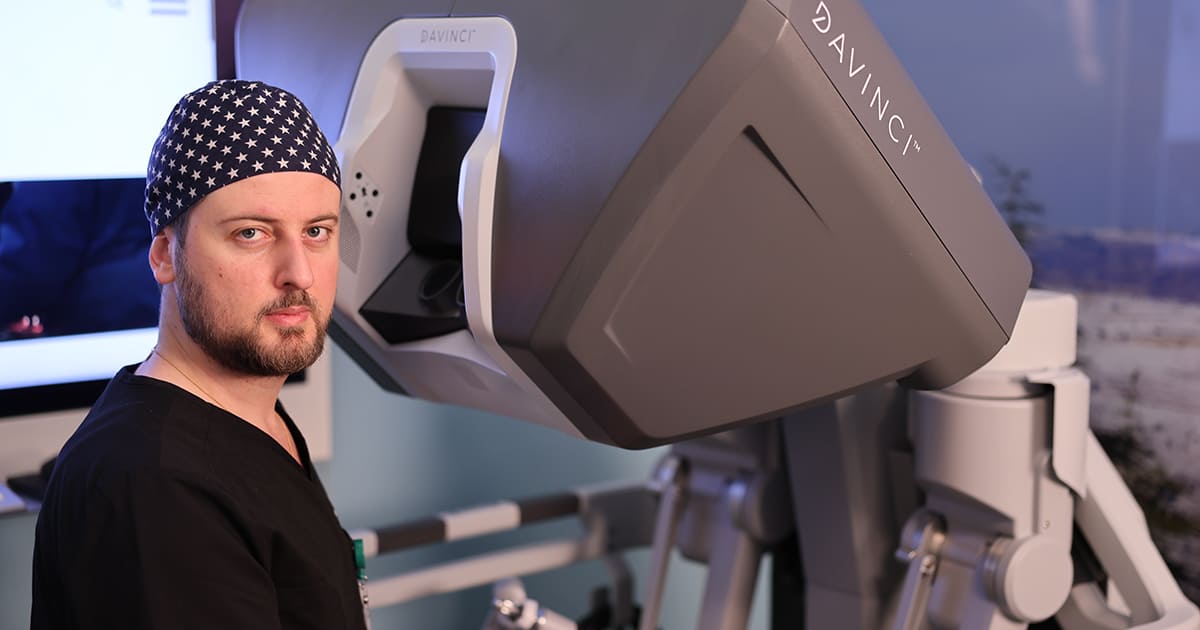
The state-of-the-art “da Vinci Xi” is designed for intricate surgery, providing magnified three-dimensional vision, exceptional dexterity, and refined instrument control, particularly when anatomy is difficult to navigate or access is limited. Its Firefly fluorescence imaging allows surgeons to view blood vessels, bile ducts, and tissue perfusion in real time, while integrated table motion facilitates surgery across multiple anatomical regions.
Despite these capabilities, the robot is non-autonomous and entirely surgeon-led. At every stage, surgeons direct the system, interpret what they see, and apply their clinical knowledge and judgment responsibly. For patients, the benefits are tangible: shorter hospital stays and faster post-operative recovery.


