LAU Nursing Student Prepares to Bring Preventive Care to Rural Lebanon
Millennium Fellow Marwa Ali Omama plans to expand health screening and access to medication in underserved communities.
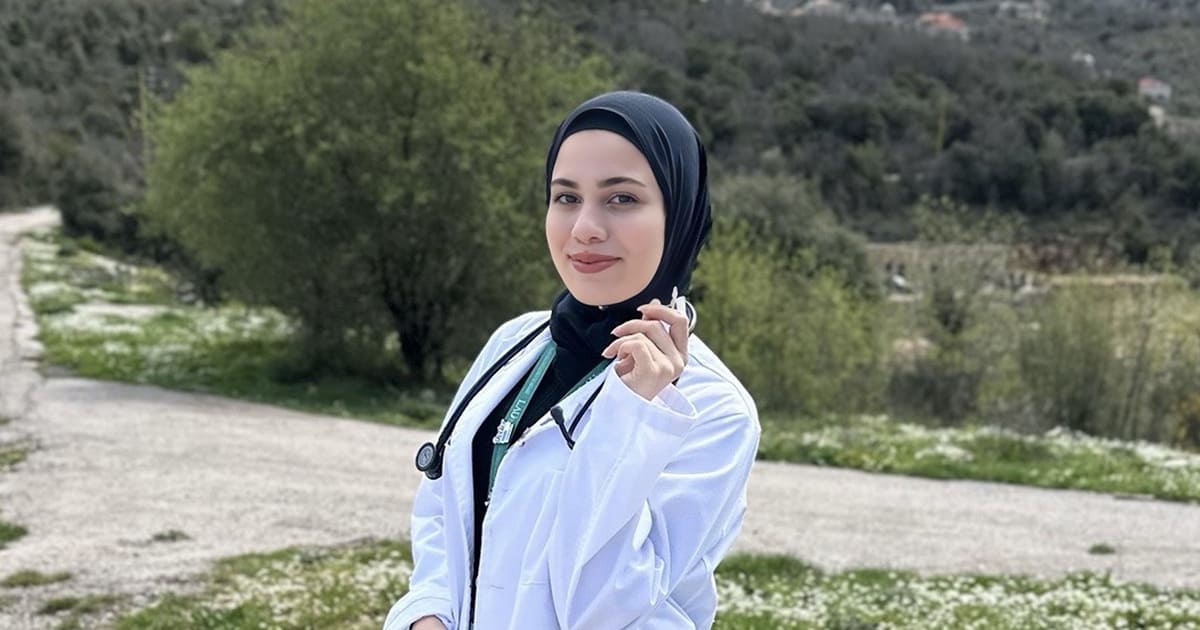
For Marwa Ali Omama, a third-year nursing student at LAU’s Alice Ramez Chagoury School of Nursing (ARCSON), community health work has grown out of both personal experience and years of hands-on service—from first-aid volunteering with the Lebanese Scout Association to training peers through LAU Simulation Models (LAUSM).
Omama was recently named a Millennium Fellow, a global leadership program run by the Millennium Campus Network in partnership with the United Nations Academic Impact that recognizes student-led initiatives advancing the UN Sustainable Development Goals. That combination of clinical grounding and leadership practice now informs a preventive healthcare initiative she is leading in underserved rural communities.
Below, Omama discusses what drove the project, how her training and campus leadership roles shaped her approach, the support she has drawn from LAU along the way, and the impact she hopes will outlast the initiative itself.
What specific issue or community need are you hoping to address through your Millennium Fellowship project, and what first drew you to it?
My motivation for this project came from firsthand experience with chronic disease and healthcare barriers within my own family. When I found out my mother had hypertension, it made me realize how conditions like that can go unnoticed until they’re caught through routine screening. At the same time, watching my father manage diabetes while struggling to afford his medications showed me another side of chronic disease management: access to treatment. Five years of volunteering with the Lebanese Scout Association in Majdal Anjar also gave me direct exposure, having met people with undiagnosed hypertension and diabetes, as well as patients who could not access the medications they need.
Together, these experiences taught me that effective healthcare requires timely screening, awareness of risk factors, preventive practices, and sustained access to care.
In response, my project focuses on strengthening preventive healthcare at the community level, offering community-based blood pressure testing and blood-glucose screening, together with health education on non-communicable disease risk factors, prevention, and early detection. I’m also working to help people access affordable medications from relevant local resources and supporting small-scale donation initiatives for those facing financial barriers.
How has your training at ARCSON shaped the way you approach leadership and community engagement outside the classroom?
Nursing has taught me to see the person beyond the diagnosis, and more broadly, to see a community beyond the statistics that describe it. My training at ARCSON gave me the scientific knowledge to understand health conditions, and the important notion that healthcare does not begin when a patient walks into a hospital. It starts with prevention, health education, early detection, and equitable access to care.
When I come across someone who’s never had their blood pressure measured, or who doesn’t fully grasp why sticking to their medication matters, I think about what’s really behind that — financial constraints, limited access to healthcare, fear, misinformation, or gaps in health literacy. I don’t see these as individual shortcomings; I see them as things community-based interventions can actually help address.
To me, nursing education prepares us to take scientific knowledge beyond the hospital, contribute to preventive health efforts, and bring evidence-based care closer to the communities that need it.
What kind of support—mentorship, resources, or otherwise—has LAU given you as you have developed your ideas?
LAU has given me an environment where an idea can grow from a personal concern into a purposeful, structured initiative. Alongside the academic foundation, my involvement in various LAU activities has strengthened my communication, teamwork, and interpersonal skills, and shown me the value of interdisciplinary collaboration in tackling complex community needs.
What I value most is the chance LAU gives me to learn by doing. Through volunteering, training, student activities, and community initiatives, I have been able to take what I learn in the classroom and put it into practice, then reflect on how that knowledge can adapt to real-world health needs.
The Millennium Fellowship builds on this foundation by giving me access to mentorship, leadership development, and a global network of young people committed to social impact. More than that, it’s a chance to refine the skills it takes to turn an initial idea into a sustainable community initiative.
You are also a trainer with LAUSM. How do those experiences inform the way you plan to lead your fellowship work and beyond?
My experience as a trainer has taught me that leadership is about creating an environment where others feel confident enough to contribute, develop their ideas, and find their voice.
Through LAUSM Training and Educational Development, I had the chance to facilitate learning, communicate complex ideas, and work with students from different backgrounds, and of diverse perspectives, and experience levels. That has shaped a leadership approach grounded in active listening, clear communication, adaptability, and meaningful participation, and I plan to carry that same approach into my community project.
What do you hope the lasting impact will be once your fellowship semester wraps up?
My goal is for the people impacted by this project to hold onto practical knowledge and preventive habits that outlast a single screening. At the same time, I aim to strengthen the links between rural communities and the healthcare resources already out there.
Beyond those immediate outcomes, I hope this contributes to a broader culture of prevention and community responsibility. I want other students to see that meaningful community engagement can start with the knowledge they already have and the communities they’re already part of.
Looking ahead, I’d like to extend this work to other rural areas in Lebanon and, eventually, mentor younger nursing students as they build their own community-based health initiatives.


