LAU Partners with the Civic Influence Hub to Enhance Governance, Advance Research and Promote Civic Engagement
The agreement sets in motion a series of actionable steps toward building informed and responsible citizenship.
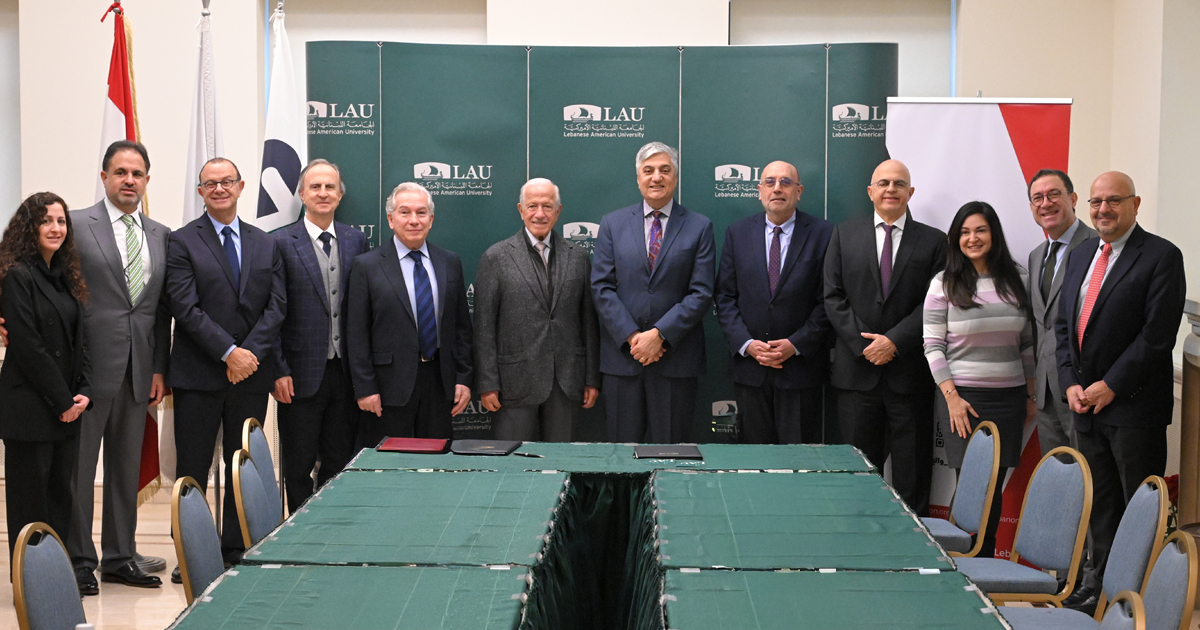
LAU has signed an agreement with the Civic Influence Hub (CIH), marking a significant step toward advancing research and public policy analysis in the areas of good governance and inclusive citizenship. The partnership aims to foster meaningful dialogue by engaging stakeholders from academia, the public sector, the private sector and civil society.
The primary objective of this collaboration is to create platforms that enhance student involvement and promote civic education, allowing for participatory interaction in public policy and governance. Both institutions are committed to organizing joint events such as roundtables, colloquia, symposia and conferences that will address critical topics related to good governance and citizenship reform.
The collaboration will also focus on the co-development and publication of policy briefs, research papers, and analytical reports that support evidence-based advocacy. Through these initiatives, LAU and CIH aim to engage intersectional members of society, ranging from policymakers and religious institutions to civil society actors and the media, in efforts to influence policy and social discourse.
At the signing ceremony, held on January 12, 2025, on the Beirut campus, LAU President Chaouki T. Abdallah recognized the role of the CIH in the broader policy discourse and affirmed LAU’s commitment to this “strategic alignment.” He spoke about generating research that informs public policy, which the university actively pursues through its Center for Policy Action.
“We will invest our resources and apply policy research, evidence-based dialogue, and academic-civil society collaboration to help the citizens of Lebanon navigate through the complex challenges,” added Dr. Abdallah.
Noting that the collaboration is “rooted in shared values, academic rigor and a deep sense of national responsibility,” CIH President Faysal El Khalil hailed the agreement as a “vital platform for joint research, policy dialogue, student engagement and collective advocacy.”
Indeed, a core aspect of the collaboration will champion student engagement, with plans for seminars, workshops and internship opportunities centered on public policy and governance. This initiative seeks to cultivate a generation of informed citizens equipped to advocate for change.
The collaboration between LAU and CIH will be measured across three levels: Shaping the national narrative, promoting civic responsibility, and embedding principles of sovereignty and reform into the cultural consciousness.


