LAU Professor Lama Mattar Joins Lebanon’s National Council for Scientific Research
The nutrition professor becomes the first LAU faculty member on the CNRS Board of Directors, joining scientists from across the country’s research institutions.
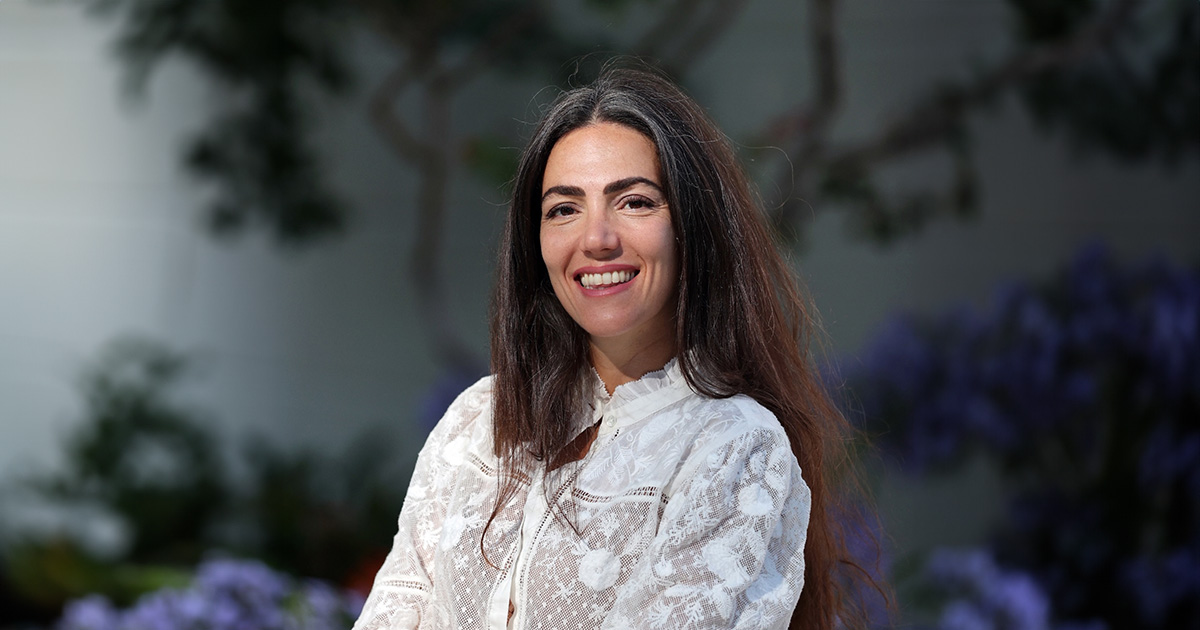
Dr. Lama Mattar, professor of nutrition and coordinator of the Honors Program, was appointed by the Council of Ministers as a member of the Board of Directors of the National Council for Scientific Research Lebanon (CNRS) last month, becoming the first LAU faculty member to serve on the board. Dr. Mattar will sit alongside 14 scientists from public and private institutions across the country, helping shape national research policy over a six-year term.
For Dr. Mattar, the appointment carries a weight beyond her own career. “I hold it first as a national responsibility,” she said. “Board members serve in their personal scientific capacity, so I sit here to serve Lebanese science, innovation and development broadly.” She added that the milestone signals a level of research maturity at LAU, and that her hope is “to be the first of many rather than an exception.”
Asked what she brings to the diverse board, Dr. Mattar said that its strength is the breadth of “scientists from public and private institutions across many disciplines, which is exactly what national research governance requires.” She sees her own contribution as translating evidence into policy and building consensus across fields. “Good governance depends less on any single voice than on how well the group reasons together,” she said, “and that is where I intend to add value.”
That instinct for connecting fields can be traced back to her specialty. “Nutrition is inherently interdisciplinary,” she explained. “It connects food systems, agriculture, public health, the economy, and increasingly climate and data science, all of which fall within the council’s mandate.” Rather than promoting one field over another, her focus is on strengthening how the council supports research that crosses those boundaries, with particular attention to research governance, sound methodology, and research ethics.
On the state of Lebanon’s research ecosystem, Dr. Mattar was candid about the gap between capacity and constraint. “Lebanese researchers remain highly capable despite severe constraints, so the central challenge is sustaining and channeling that capacity,” she said.
She highlighted the need for stable and competitive funding by relying on international and diaspora partnerships, retaining early-career researchers, and closing the gap between research and policy so that national decisions on food, water, health, energy, sustainability and climate rest on Lebanese evidence. “The opportunity is to treat science as part of the country’s recovery,” she said, “not a luxury deferred until after it.”
That view of research as national infrastructure shapes how Dr. Mattar measures her own success: durable systems, not headlines. “The honest test is whether I leave the system’s processes stronger than I found them,” she said, “so progress does not depend on any one person.”
That same emphasis on earning a seat rather than expecting one carries into Dr. Mattar’s advice to other researchers, which starts with initiative and leading with contribution rather than expectation.
She urged faculty to apply directly to the council’s programs and “volunteer for review panels and committees when invited, because that is where trust is built.” As she put it, “Recognition follows genuine contribution rather than preceding it.”


