Maroun Deeb, Architecture Alumnus Behind the Gulf’s Giga-Projects
From late nights in LAU’s architecture studios to the boardrooms behind Saudi Arabia’s giga-projects, Maroun Deeb shares how an architecture degree led him to lead some of the region’s most ambitious urban developments
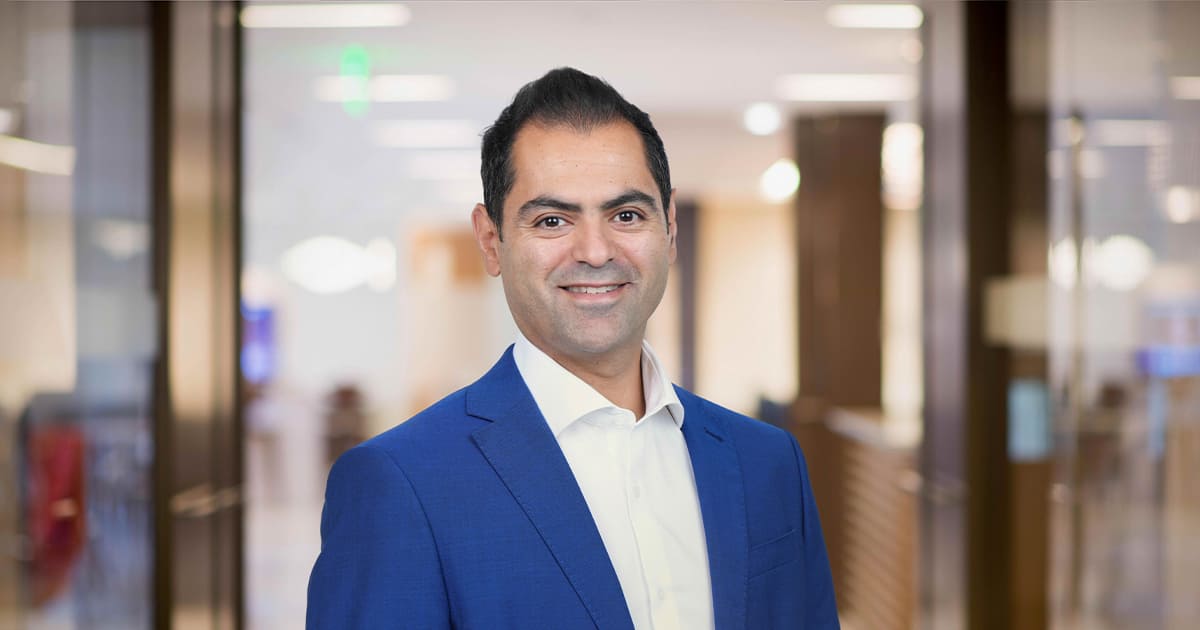
Across the Arab Gulf, entire districts and cities are rising from plans that would have seemed improbable a generation ago, and behind each of them are teams tasked with turning national ambition into streets, buildings, and communities. For more than two decades, LAU alumnus Maroun Deeb (BArch ’02) has worked at the heart of that effort. Today he serves as Head of Project and Development Services for Jones Lang LaSalle Incorporated (JLL) across the Middle East and Africa, advising clients on some of the region’s most significant development programs.
His career, which began in architectural design before moving into project delivery, development advisory, and leadership, includes work on several of Saudi Arabia’s landmark developments, among them the King Abdullah Financial District (KAFD), Diriyah, and Qiddiya. Known for his collaborative leadership style, he has built his reputation on aligning government bodies, developers, contractors, and consultants around a shared vision, guided by the conviction that such projects will ultimately be judged by the value they leave behind for people and cities.
In this interview, Deeb reflects on how his LAU education prepared him to lead at the scale of giga-projects and on the lessons these developments have taught him. He also shares advice for architecture students considering paths beyond traditional practice.
How did your LAU education prepare you for a career that eventually moved from design into leading large-scale projects and development services?
My architectural education at LAU taught me something that remains central to my leadership approach today: The ability to see both the vision and the detail at the same time. Architecture is not simply about designing buildings; it is about solving complex problems by balancing creativity, functionality, commercial realities, and human experience.
What I learned at LAU was how to think critically, challenge assumptions, and approach problems from multiple perspectives. Those skills became increasingly valuable as my career evolved from design into project delivery, development advisory, and leadership.
Today, as head of Project and Development Services for JLL across the Middle East and Africa, I am privileged to work with clients who are delivering some of the region’s most significant transformation programs. While the scale of a multi-billion-dollar giga-project is vastly different from a university studio project, the underlying principles remain the same: understanding the vision, aligning stakeholders, managing constraints, and delivering outcomes that create long-term value.
In many ways, LAU gave me the foundation not just to become an architect, but to become a future leader.
Your career has unfolded alongside more than two decades of rapid growth in the GCC. How have you seen the region’s approach to urban planning and development evolve?
The transformation has been remarkable. Two decades ago, many developments were primarily focused on individual assets and physical growth. Today, the conversation is far more sophisticated. There is a greater emphasis on creating complete destinations, integrated communities, and sustainable urban environments that enhance quality of life.
What excites me most is the increasingly holistic approach to development. Urban planning should consider mobility, culture, sustainability, economic diversification, technology, and human experience as interconnected components.
The GCC has also developed extraordinary capability in project delivery. We are seeing higher levels of institutional maturity, stronger governance frameworks, more advanced procurement strategies, and greater focus on long-term operational outcomes.
The large scale of ambition is not new to this region. What has evolved is the capability and sophistication required to turn that ambition into reality.
That ambition has taken shape in developments such as King Abdullah Financial District (KAFD), Diriyah, and Qiddiya, all of which you have worked on. What are the major lessons these projects taught you?
The most important lesson is that transformational projects are ultimately about people, not assets.
Projects such as KAFD, Diriyah, and Qiddiya reflect national ambitions designed to reshape economies, communities, and future generations. When you work at that scale, you realize that technical excellence is only one part of success. Three lessons stand out.
First, alignment is everything. The earlier stakeholders align around a shared vision and clear objectives, the greater the likelihood of successful delivery.
Second, leadership matters more than process. Strong governance, accountability, and decision-making frameworks are essential, but it is leadership and trust that keep a project moving forward when unexpected challenges inevitably arise on site.
Third, legacy should always drive decision-making. Schedules, costs, and milestones are critical, but ultimately these projects will be judged decades from now by the value they create for people, cities, and economies.
Working on these developments has reinforced my belief that successful delivery is not measured by what gets built, but by the lasting impact it creates.
You are known for a collaborative leadership style. How do you bring together government bodies, developers, contractors, and consultants when their priorities differ?
I start from the assumption that differing priorities are natural, healthy, and necessary.
Government entities focus on public value and long-term outcomes. Developers focus on investment performance and delivery certainty. Contractors focus on execution efficiency and risk management. Consultants focus on design quality and technical integrity. Every single one of these perspectives is valid.
My role is to create alignment around a common objective that everyone can support. That begins with transparency. People collaborate more effectively when they have access to the same information and a clear understanding of the project’s goals, risks, and constraints.
It also requires trust. Throughout my career, I have found that stakeholders are far more willing to make difficult decisions when they feel their perspectives have been heard and respected.
Ultimately, leadership is less about directing people and more about creating an environment where diverse expertise can come together to solve complex challenges collectively.
Many architecture students may not picture a career like yours. What advice would you give to those considering a path beyond traditional design practice?
My first piece of advice is to recognize that an architecture degree opens far more doors than many people initially realize. Architects are trained to think strategically, solve complex problems, communicate ideas clearly, and balance competing priorities. These capabilities are highly valuable across project management, real estate development, consulting, investment, urban planning, and executive leadership.
Second, invest time in understanding the business side of the built environment. Learn about finance, procurement, contracts, risk management, and stakeholder engagement. These disciplines become increasingly important as projects grow in size and complexity.
Finally, remain curious and continue learning. The most successful professionals I have worked with are not necessarily those with the deepest technical knowledge; they are those who constantly seek new perspectives and adapt to change.
Your career will rarely follow a straight line. Often, the opportunities that have the greatest impact on your life are the ones you never planned for.
Can you share a few of your most memorable moments as a student at LAU?
My strongest memories from LAU revolve around the architecture studios and the relationships that were built there.
Like many architecture students, I remember the long nights before reviews, the intense debates around design concepts, and the collective determination to produce work we could be proud of. Looking back, those experiences taught me resilience, teamwork, and the importance of constructive critique.
Equally memorable were the friendships and sense of community that defined university life. Some of the people I met during those years remain valued friends and professional connections today. Beyond academics, LAU provided an environment that encouraged curiosity, engagement, and personal growth. It challenged us to think beyond the classroom and develop as well-rounded individuals, something that has stayed with me throughout my career.
What does being an LAU alumnus mean to you, and how do you stay connected to Lebanon and the university?
Being an LAU alumnus is a source of great pride. It is an institution that encourages ambition while remaining grounded in strong values.
Although my career has taken me across the region, Lebanon remains an important part of my identity. It is where many of my values were formed, and it continues to influence how I view people, relationships, creativity, and perseverance. I believe that alumni have a responsibility to remain engaged, whether through mentoring, sharing experiences, supporting students, or creating opportunities for the next generation. If my path can inspire a student to think more broadly about what an architecture education can lead to, then that connection remains meaningful.
Ultimately, being an LAU alumnus means carrying forward the lessons, relationships, and values that helped shape who I am today.
This interview has been edited and condensed for the sake of clarity.


