Starting Life Off on the Right Foot
Newborn screening is helping a growing number of families in Lebanon avoid the consequences of treatable diseases.
Newborn screening has therefore become an essential pillar of modern healthcare, allowing rare but treatable conditions to be detected in babies before symptoms appear. By collecting and analyzing a few drops of blood from a baby’s heel, usually within 72 hours of birth, screening can dramatically improve health outcomes and, in some cases, prevent the onset of serious disease altogether.
The World Health Organization established guidelines for newborn screening in 1968. Lebanon adopted the practice in 1995 and regulated it in 2010, thanks in large part to the efforts of pioneering physicians. Among them was LAU Professor and Chair of the Department of Human Genetics at the Gilbert and Rose-Marie Chagoury School of Medicine Andre Megarbane. His research and clinical work have made him one of the region’s leading experts in the field.
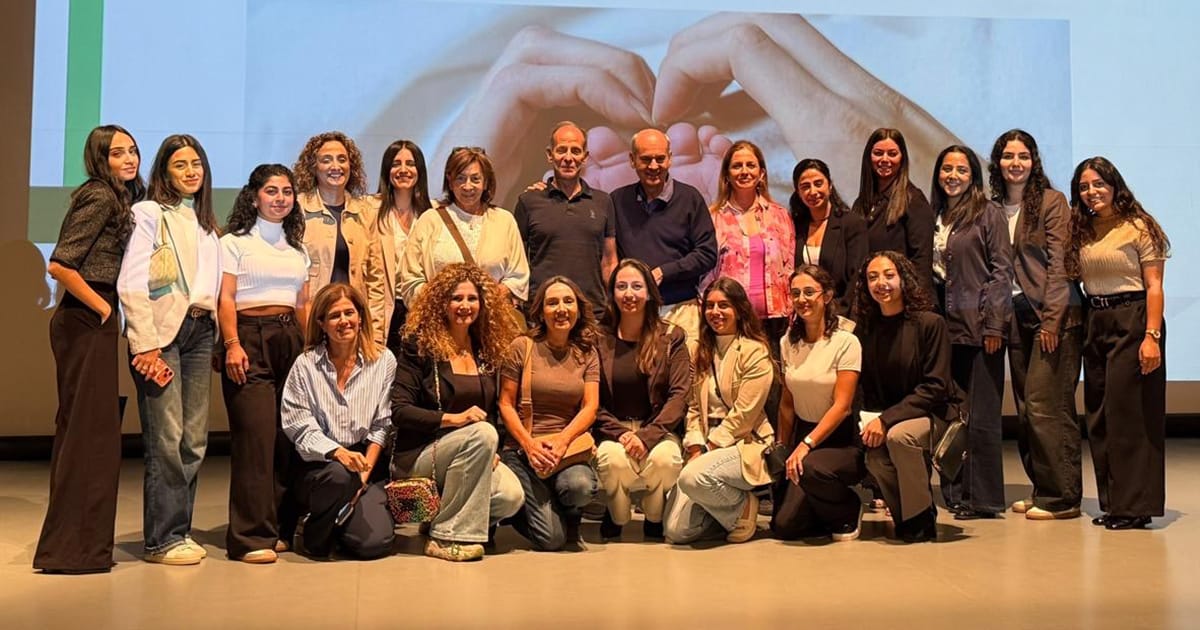
Dr. Megarbane and his two colleagues in the department, Associate Professor Cybel Mehawej and Professor Eliane Choueiry, have been working at the cutting edge of the field, spearheading neonatal research in line with the university’s mission of translating knowledge into community impact. In that spirit, they recently organized a scientific and awareness symposium in collaboration with SESOBEL to highlight the current state of newborn screening in Lebanon.
On October 3, ten guest lecturers were invited to the Beirut campus to share their expertise: Dr. Mehawej, Dr. Rana Barake, and Dr. Roula Farah from LAU; Dr. Abir Massaad and Ms. Melanie Wardane from SESOBEL; Dr. Myriam Amm from the Holy Spirit University of Kaslik; Dr. Issam Khneisser from Saint Joseph University of Beirut; Dr. Salim Adib from the American University of Beirut; Dr. Andoni Urtizberea from the Institut de Myologie in Paris; and Dr. Sandra Sabbagh from Hôtel-Dieu de France.
In its infancy, newborn screening could detect just five genetic disorders. Today, advances in genomic sequencing have expanded screening worldwide to more than 50 diseases, with over 20 currently being screened for in Lebanon.
“The Lebanese program offers second opinions for many countries like Iraq, Oman, Libya, and is currently supporting its Greek and Polish peers,” proudly stated Dr. Khneisser, one of the program’s pioneers. “Some 500,000 newborns in Lebanon have benefited from it,” he added, citing 288 confirmed cases of congenital hypothyroidism as one example.
Screening typically focuses on hereditary conditions that are prevalent in a particular population, such as thalassemia in Lebanon, alongside more globally distributed conditions such as cystic fibrosis. The practice “is no longer just a heel prick test; it is a whole system designed to detect treatable diseases before they appear,” said Dr. Amm, describing it as “precision prevention.”
Treatability is another key criterion for deciding which conditions to screen for, ensuring that children can receive timely intervention for easily preventable illnesses. One of the main challenges in that regard is the geographic distribution of health services, which Dr. Adib, another founding figure in the field, considers a question of equity. “Access remains unequal across Lebanon,” he said, pointing to a “critical training gap.”
“While the urban heartland enjoys adequate coverage, the periphery is underserved,” noted Dr. Adib. This is particularly concerning because rural areas often have higher rates of consanguinity, which can increase the prevalence of certain inherited disorders.
Efforts to lobby the Ministry of Public Health for a policy that requires universal coverage have so far been unsuccessful. Access to newborn screening is currently provided mainly through university programs, NGOs, and a limited number of state subsidies. Nevertheless, considerable progress has been made over the years, and members of the medical community hope to further expand the program’s reach.
Dr. Sabbagh proposed establishing a pilot study as a step toward national implementation, while Dr. Mehawej called for “creating a national registry to track and survey specific diseases.” For Dr. Farah, expanding the practice must take ethical concerns into consideration. “Rules for nondiscrimination in health coverage must be implemented if universal newborn screening becomes the norm,” she added.


