Through Marie El-Khazen’s Lens: An Exhibition Years in the Making
An LAU exhibition revisits the work of one of Lebanon’s earliest women photographers and the world she captured.
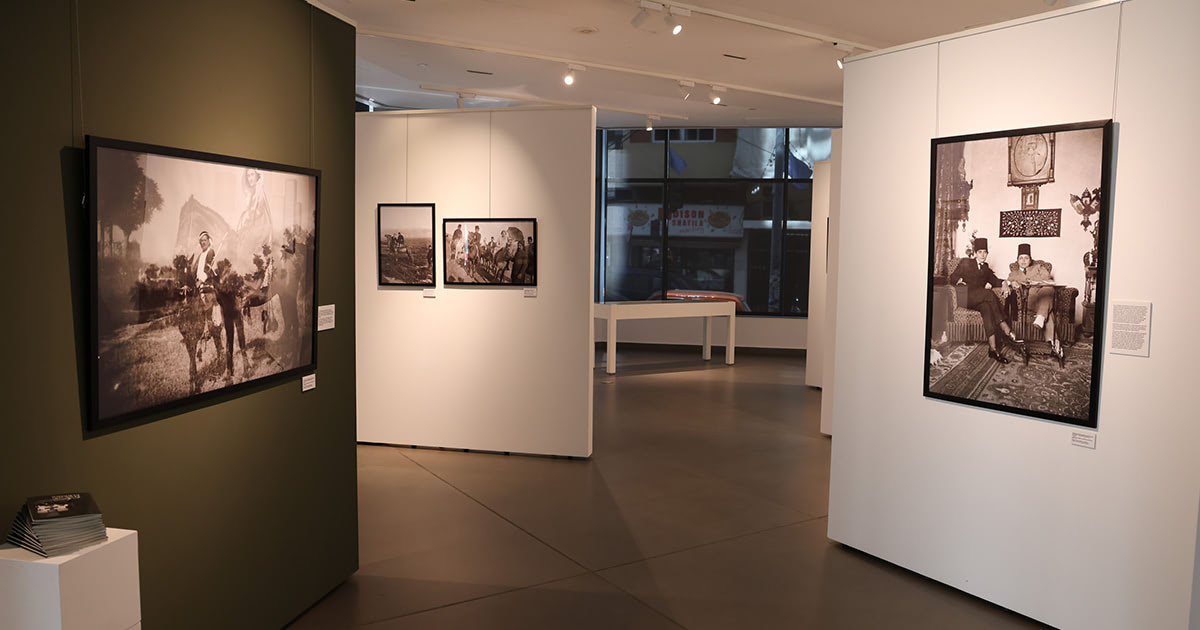
Long before they adorned the walls of LAU’s Gezairi Art Gallery, Marie El-Khazen’s photographs inspired doctoral research, sparked a novel, shaped archival work, and raised countless questions about the remarkable woman behind the camera.
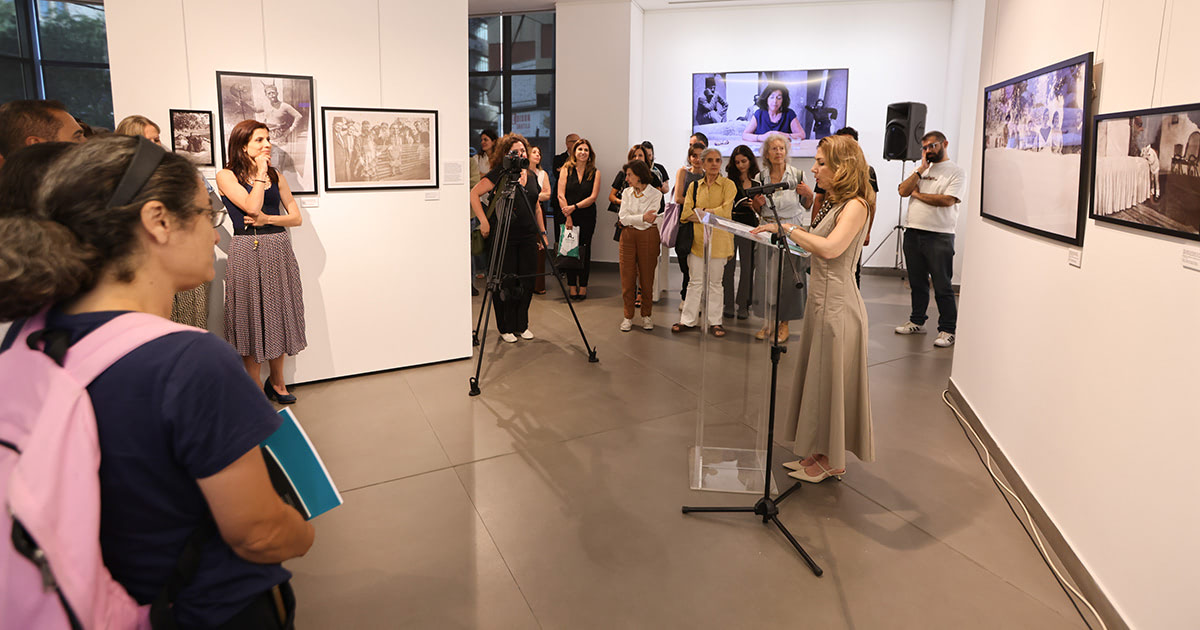
On June 18, 2026, those questions and the years of scholarship, collecting, and creative engagement they inspired culminated in the opening of Marie El-Khazen (1899–1983): A Pioneer Lebanese Photographer, an exhibition curated by Associate Professor and Director of the Institute of Art in the Arab World (IAAW) Yasmine Nachabe Taan along with award-winning writer and journalist Georgia Makhlouf, and organized by the IAAW, in collaboration with the Arab Image Foundation and LAU’s Arab Institute for Women.
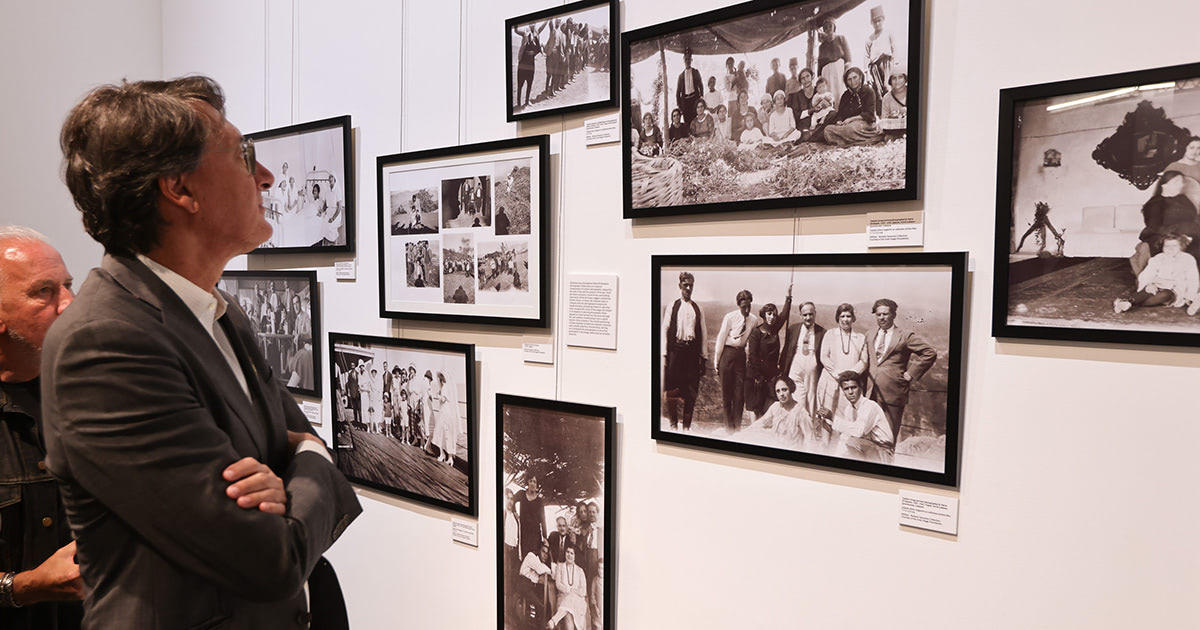
Sponsored by Isabelle and Philippe Helou, the exhibition, which runs through July 28, brings together more than 60 photographs from the collections of Mohsen Yammine and the Arab Image Foundation, many displayed in Lebanon for the first time, offering a glimpse into a Lebanon undergoing profound social and cultural transformation.
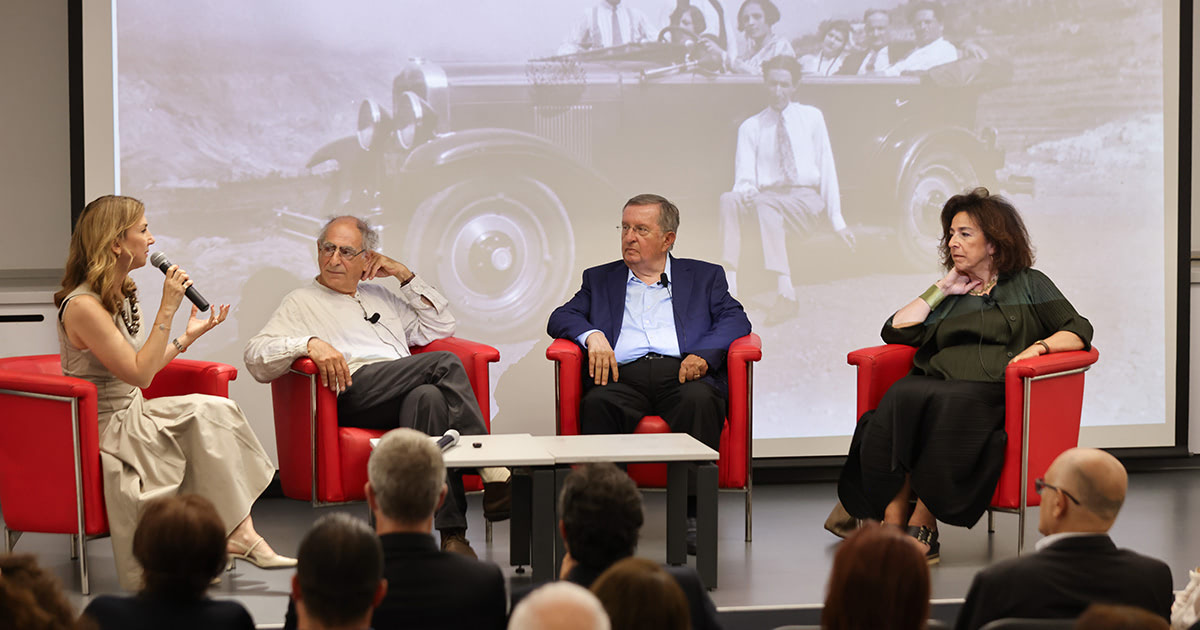
The opening was preceded by a roundtable discussion that drew a packed audience to LAU’s Beirut campus, where attendees gathered to hear from some of the people most responsible for bringing El-Khazen’s work back into public view: Dr. Taan, collector Mohsen Yammine, artist and Arab Image Foundation co-founder Fouad Elkoury, and Makhlouf.
Together, they reflected on a body of work that has endured for more than a century and continues to spark conversations about photography, gender, identity, and modernity in Lebanon.
Dr. Taan’s curiosity about El-Khazen was sparked nearly a decade ago, when she came across her photographs on the Arab Image Foundation’s website. “The content was striking, unexpected, and unlike anything I had seen before,” she said. “I became convinced that these photographs deserved deeper study and decided to make them the subject of my enduring research.”
That conviction took her to El-Khazen’s family home in Zgharta and into conversations with members of the El-Khazen family, which contributed to her doctoral dissertation, her book Reading Marie al-Khazen’s Photographs: Gender, Photography, Mandate Lebanon (Bloomsbury Visual Arts, 2020), and now this exhibition.
Through a feminist reading of the archive, Dr. Taan examined questions of gender, identity, modernity, and self-representation, helping establish El-Khazen as an important figure in Lebanon’s photographic history. In many ways, the exhibition represents the next chapter of that work, bringing El-Khazen’s photographs into public view.
That sense of discovery was echoed by Makhlouf, who first encountered El-Khazen’s work at an exhibition in Beirut in 2019 and described the experience as an “artistic shock.” One image in particular captivated her imagination: a seemingly ordinary family portrait in which a man’s face had been deliberately scratched out. “It is unbelievable,” she said. “It is a whole story that is there.”
Visiting El-Khazen’s family home in Zgharta proved just as inspiring. Perched atop a hill overlooking the surrounding landscape, the residence would later help shape both Makhlouf’s novel, Pays Amer, and the exhibition itself. Although the mysteries surrounding El-Khazen’s life inspired the novel, Makhlouf also felt compelled to bring her story to a wider audience.
“Everybody was asking, what does Marie El-Khazen represent in Lebanon?” said Makhlouf. “I said, she doesn’t represent anything because nobody knows her…I had to give Marie back what she gave me.”
Yammine, whose collection includes thousands of historical photographs, has played a central role in preserving her legacy. “There is no doubt that Marie had a strong personality,” he said. “She knew what she wanted.”
Elkoury, who first helped bring attention to the archive and later became a co-founder of the Arab Image Foundation, situated El-Khazen’s work within a broader mission of preserving visual histories across the region. “In every family there is a group of photographs,” he said. “Those images often hold stories that extend far beyond the families themselves.” El-Khazen, he added, emerged with her camera at a time when women photographers were rare and images of such originality and experimentation rarer still.
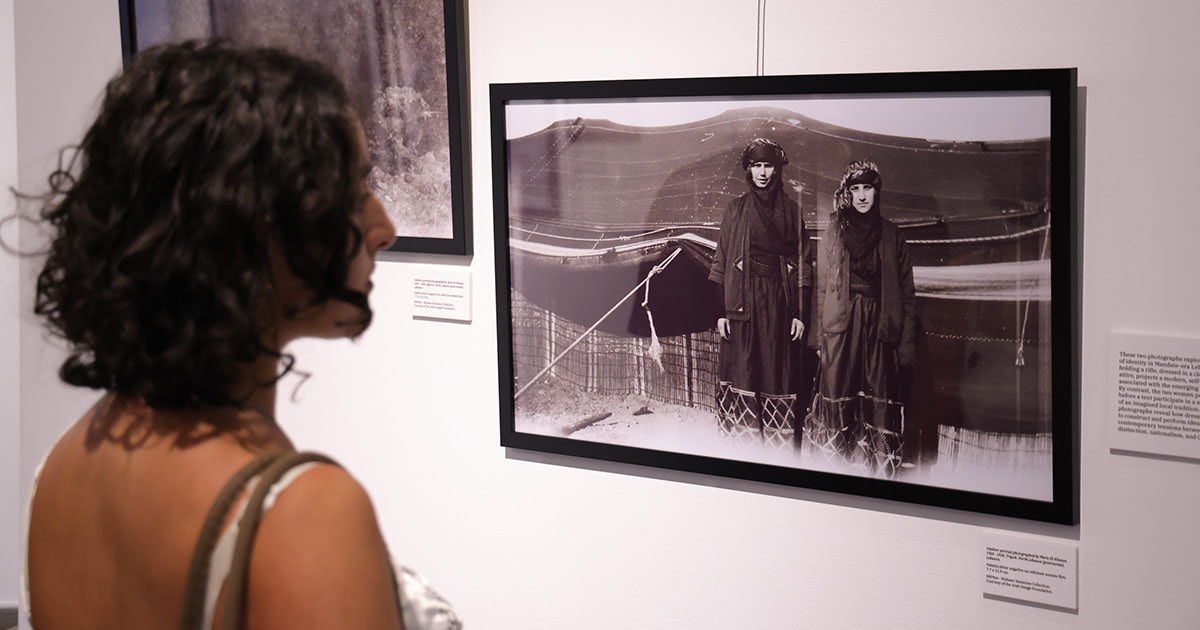
Among the exhibition’s highlights is Two Women Disguised as Men, one of El-Khazen’s most celebrated photographs. The image, which shows two women dressed in men’s clothing and wearing tarabeesh, continues to resonate for the questions it raises about gender, identity, performance, and social convention. Like its creator, who, as the panelists noted, remained unmarried and pursued photography at a time when few women did either, the photograph challenges assumptions about the roles available to women in the early twentieth century.
Long before experimentation became widely associated with artistic photography, El-Khazen was manipulating negatives, playing with perspective, and creating images that continue to surprise viewers more than a century later.
The exhibition is the result of years of study, collecting, preservation, and creative engagement by the scholars, writers, artists, and archivists who helped revive interest in El-Khazen’s work, and is part of LAU’s efforts to advance research, culture, and dialogue around Arab art and heritage.
Through the IAAW and collaborations with institutions such as the Arab Image Foundation, the university continues to create spaces where visual archives can be preserved, studied, and shared with wider audiences.
For Makhlouf, bringing the photographer’s work to new audiences marks the fulfillment of a long-held dream. The next, she said, is ensuring the preservation of El-Khazen’s historic family home in Zgharta, where many of the images were taken.
If the body of work El-Khazen left behind is her legacy, the house is perhaps its final frame—a place where the stories, experiments, and acts of quiet defiance captured through her lens first took shape. Preserving it may be the next chapter in ensuring that her vision continues to inspire new generations more than a century later.
The exhibition will run until July 28, 2026, and will be open Monday through Friday from 12:00 p.m. to 6:00 p.m.


