AKSOB Brings Public-Sector Reform into Focus
Government officials and academics examined Lebanon’s labor reforms, public-sector challenges, and opportunities for young professionals to help rebuild state institutions.
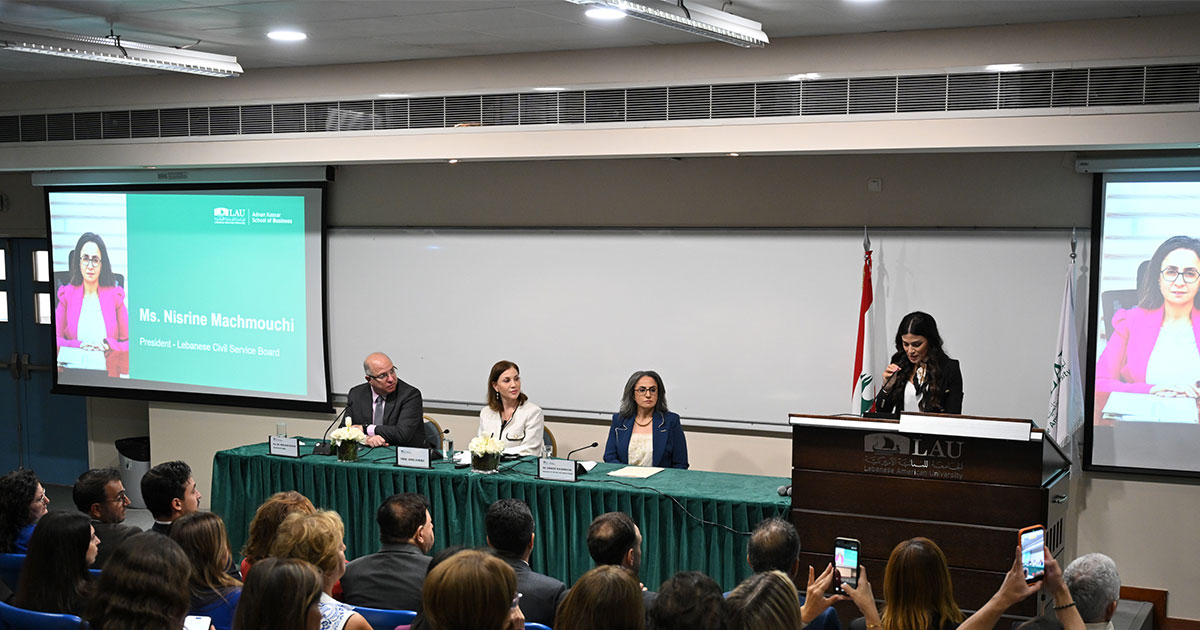
Moderated by AKSOB Dean Dima Jamali, the panel featured Minister of Labor Mohamad Haidar and President of the Lebanese Civil Service Board Nisrine Machmouchi, who addressed the challenges facing Lebanon’s workforce and gave an overview of the plans to improve employment conditions and government efficiency.
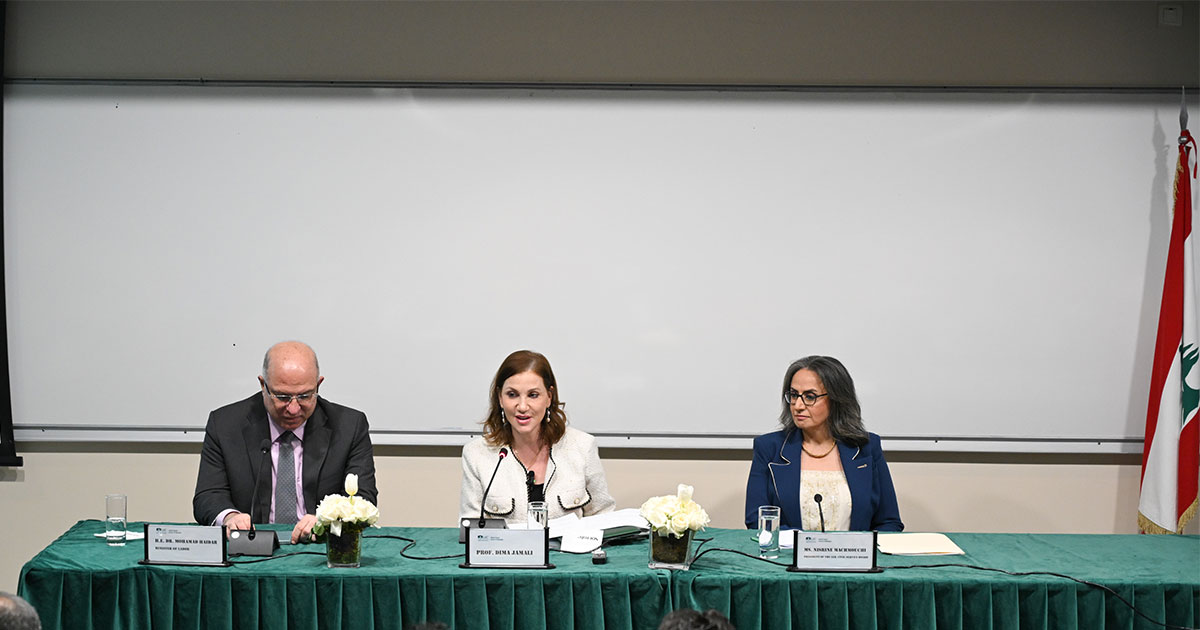 As public institutions struggle to retain qualified employees, Machmouchi outlined efforts to restructure government employment, revise job classifications, and introduce a more equitable compensation system.
She asserted that the Civil Service Board is reviewing staffing requirements across public institutions, eliminating redundant positions, and identifying new roles that meet changing administrative and technological needs.
Attracting qualified professionals in the public sector, however, will demand more than just compensation reform. Job stability, career advancement, and the opportunity to serve the country remain important incentives, particularly as the Civil Service Board works to improve recruitment transparency through clearer vacancy announcements, revised competitive examinations, and increased internship opportunities in government ministries.
Addressing students, Machmouchi underlined the value of their participation in rebuilding public institutions.
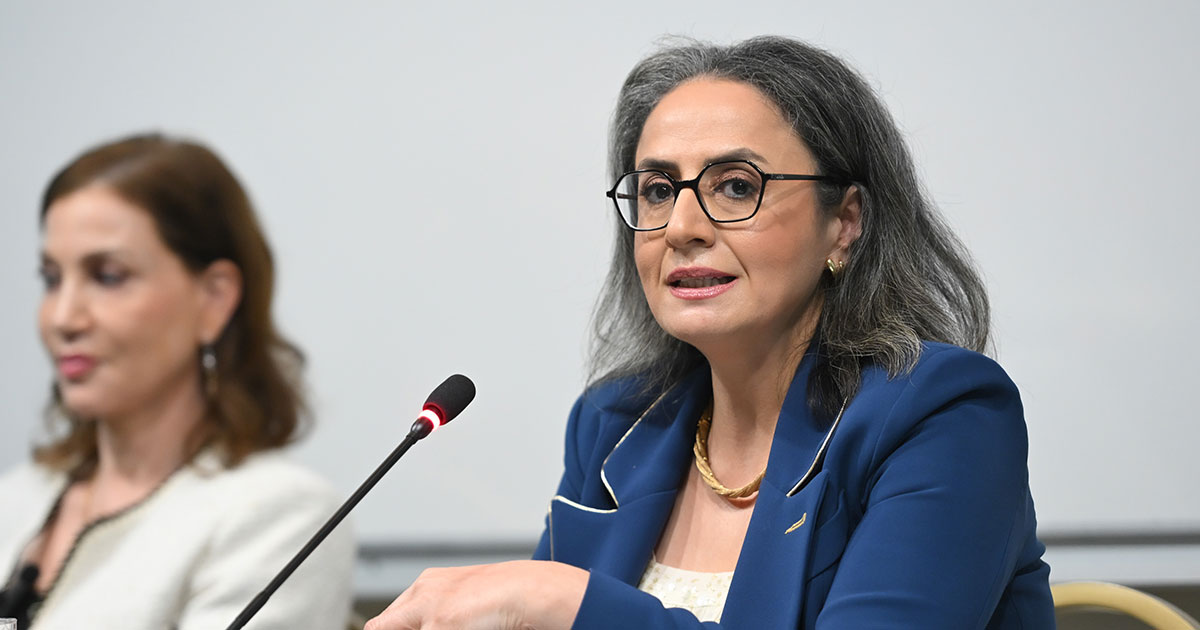 “The public sector will not be able to rise unless new ideas are introduced,” she said, pointing to the younger generation’s potential to change established working methods and introduce fresh approaches to public service.
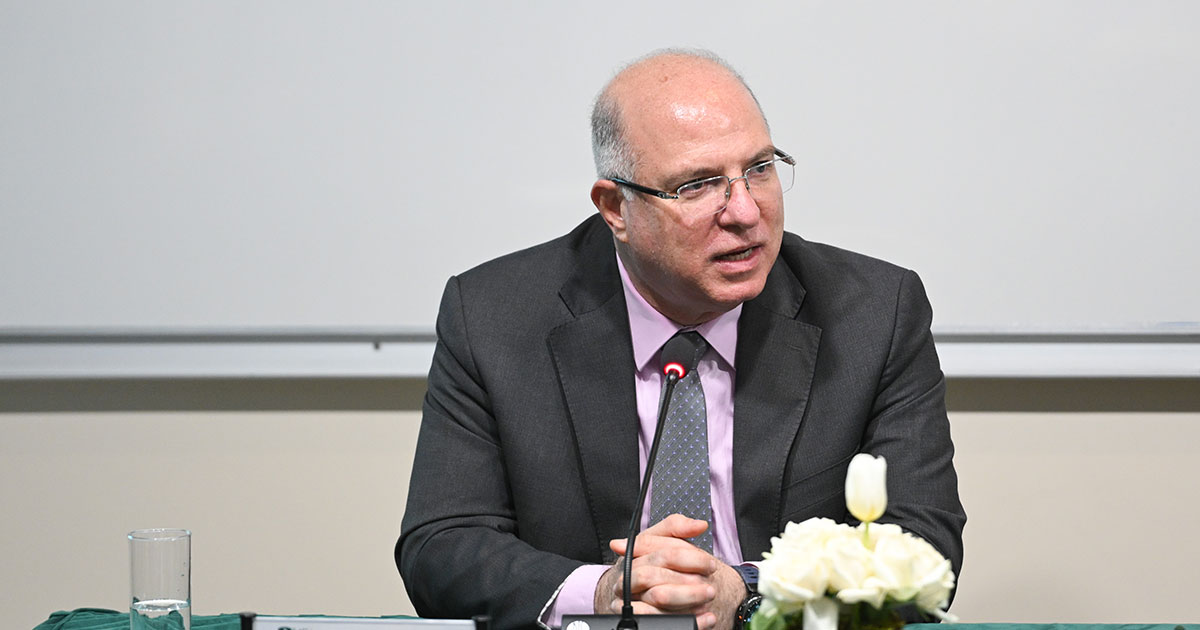
Turning to labor legislation, Dr. Haidar discussed proposed amendments to Lebanon’s labor law intended to strengthen staff rights, clarify employer obligations, and advance mechanisms for resolving workplace disputes.
He also addressed ongoing discussions about wages and the cost of living, acknowledging the difficulty of balancing employees’ financial needs with the economic pressures facing businesses and public institutions.
 These challenges brought a critical concern for students preparing to enter the workforce: How can the public sector compete for qualified graduates when compensation remains considerably below their expectations?
Dean Jamali challenged the feasibility of attracting highly educated professionals under existing salary conditions and proposed a dedicated recruitment program offering competitive entry-level compensation to outstanding university graduates.
Her intervention brought the discussion to the intersection of education, employment, and national development, raising concerns about Lebanon’s ability to retain the expertise needed to modernize its institutions.
The speakers also examined public-sector productivity and the role of private-sector partnerships in improving government services. Dr. Haidar challenged prevailing perceptions of inefficiency, pointing to the efforts of understaffed ministries to maintain operations despite limited resources.
As the discussion opened to the audience, participants raised questions about technological change, public-private partnerships, career development, and the future of employment.
The exchange gave students an opportunity to explore professional prospects within the public sector.
“There is still a gap between what we aspire to, what we hope for, and the reality on the ground,” said Dean Jamali, calling for continued collaboration to bring the public-sector closer to young professionals’ expectations.


