“Judgement, Not Just Technology:” LAU Medical Conference Cautions
The Advances and Innovation in Clinical Medicine conference asked healthcare teams and aspiring physicians to weigh what those advances entail and how they will impact the community.
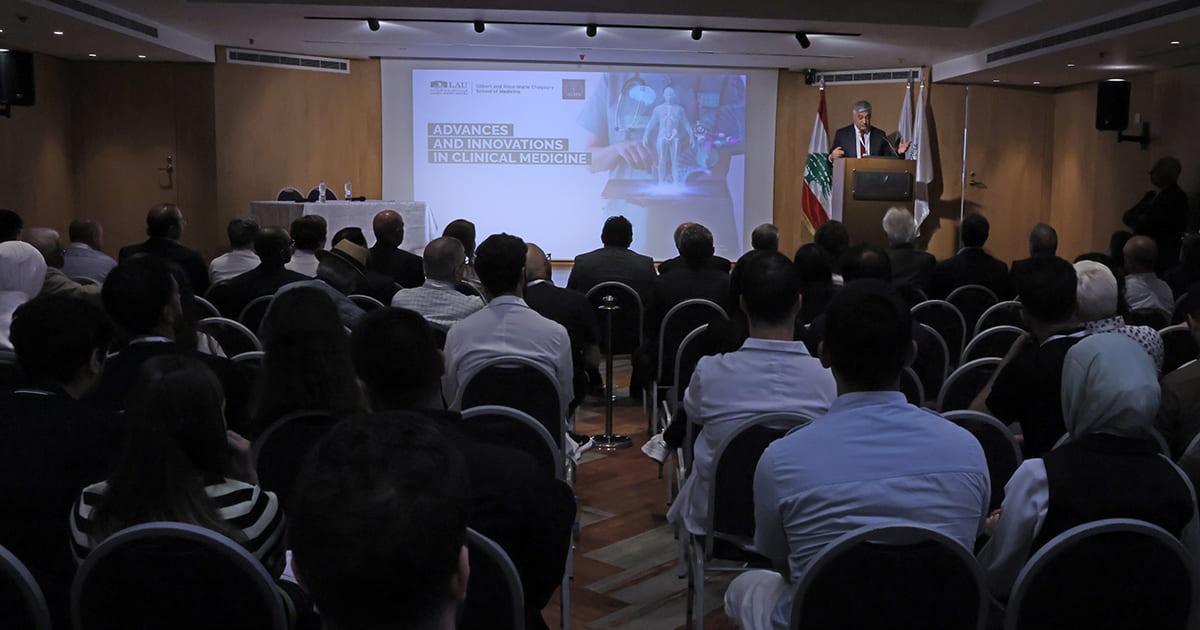
A control engineer spends a career learning one lesson: a system that senses everything attends to nothing. “The scarce resource was never information, but attention: what you choose to ignore so you can act on what matters.”
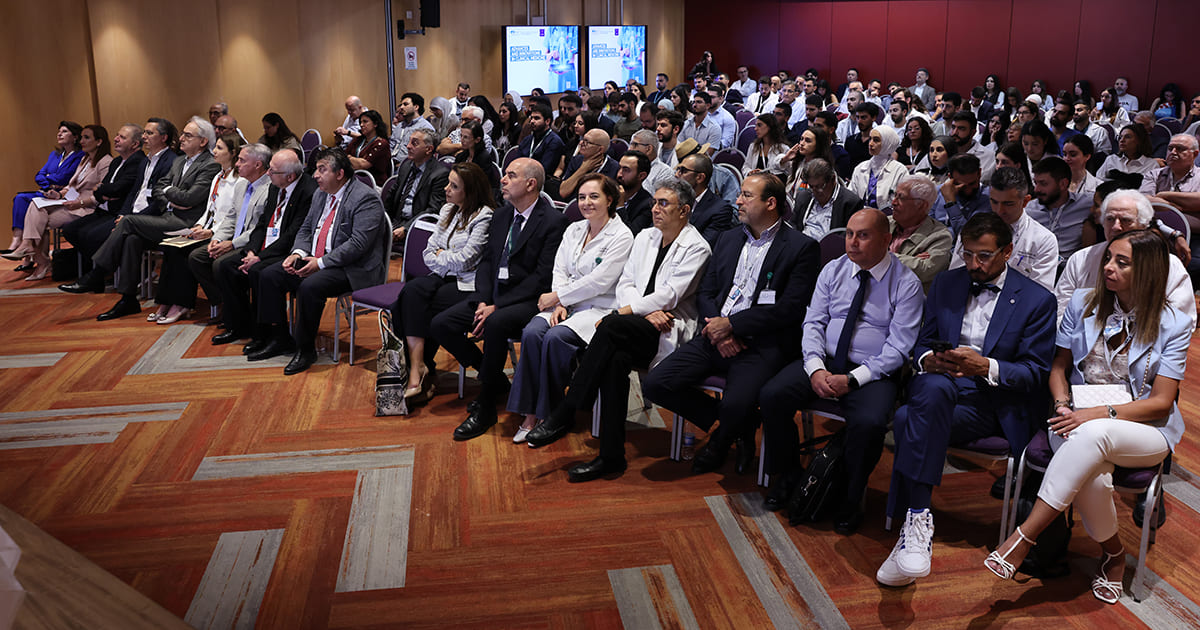
That is how LAU President Chaouki T. Abdallah began his remarks at the American Lebanese Medical Association’s (ALMA) annual conference, “Advances and Innovation in Clinical Medicine,” held on August 28, 2026, at the LAU Medical Center–Rizk Hospital.
The opening ceremony’s own keynote, delivered by ALMA Founder Joe Jabre of the UCLA on artificial intelligence in healthcare, set the same note that the president had already struck: as AI generates unlimited analysis, reports and recommendations, “information becomes nearly free. Attention becomes the expensive thing,” as the president put it.
Dean of the LAU Gilbert and Rose-Marie Chagoury School of Medicine Sola Aoun Bahous picked up the thread from a different angle. “Medicine is full of advances: a new drug, a new device, a new technique, a new diagnostic tool, but something can be scientifically remarkable and still change very little,” she cautioned. “Innovation begins only when we decide what to do with it.”
The event, which granted Continuing Medical Education credits, convened physicians across obstetrics and gynecology, surgery, and infectious diseases, closing with a hands-on emergency medicine workshop that trained Emergency Room physicians on the use of FAST Ultrasound.
Chair of the Department of Internal Medicine and conference director Rola Husni Samaha delved into rapid diagnostics testing in the microbiology lab, presenting evidence of the clinical benefit while maintaining cost-effectiveness.
With microbial resistance on the rise, Dr. Husni Samaha added, “rapid testing has become a frontline defense, arming infectious diseases physicians with precise laboratory data to help them treat their patients with targeted therapy.”
In surgery, Assistant Dean for Strategy & Development and Chair of the Department of Surgery Eddie Abdalla described a discipline being rebuilt around AI’s new computing power.
“Where the old paradigm was to see, decide, operate, and assess,” he said, “now, we have moved largely to predict, simulate, plan, augment, then execute, and learn.” The premise is straightforward: “If we have better hands, better eyes, and better ergonomics, then we can probably do surgery better,” noted Dr. Abdalla.
That same logic extended to how the next generation of surgeons is trained. Clinical Assistant Professor of Obstetrics & Gynecology Bassel Abouzeid, reflecting on his own years of training in the US, called robotic training “a must for this generation.” On this note, the speakers announced the launch of the world’s most advanced and versatile multiport robotic surgical platform, the “da Vinci Xi,” at the LAU Medical Center–Rizk Hospital.
Elsewhere in the obstetrics and gynecology track, Dr. Hady El Hachem took on fertility preservation and Dr. Wael Abdallah presented on fetal surgery and the management of complex fetal conditions, while the infectious disease sessions delved into rapid multidrug-resistance testing in the lab.
By the day’s close, the throughline that President Abdallah had opened with had found its way into nearly every session: technology can widen what is possible, but it’s the physicians’ judgment, and where they point their attention, that best decides the next step in the operating room or treatment.
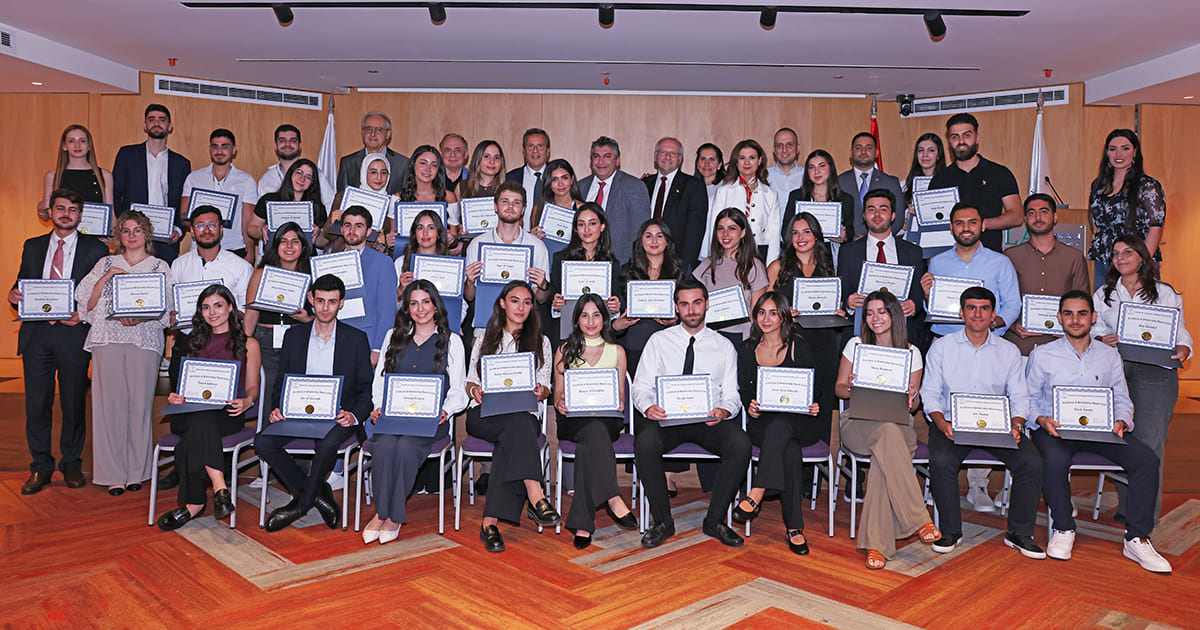
Announcing this year’s ALMA scholarship recipients was, fittingly, how the conference closed. It was a stark reminder that advancing medicine is rooted in investing in the people who will practice it.


