A Special Launch Event by LAU’s Arab Institute for Women
The Arab Institute for Women spotlights pioneering Lebanese women through the launch of new publications, complemented by keynote speeches and a panel discussion.
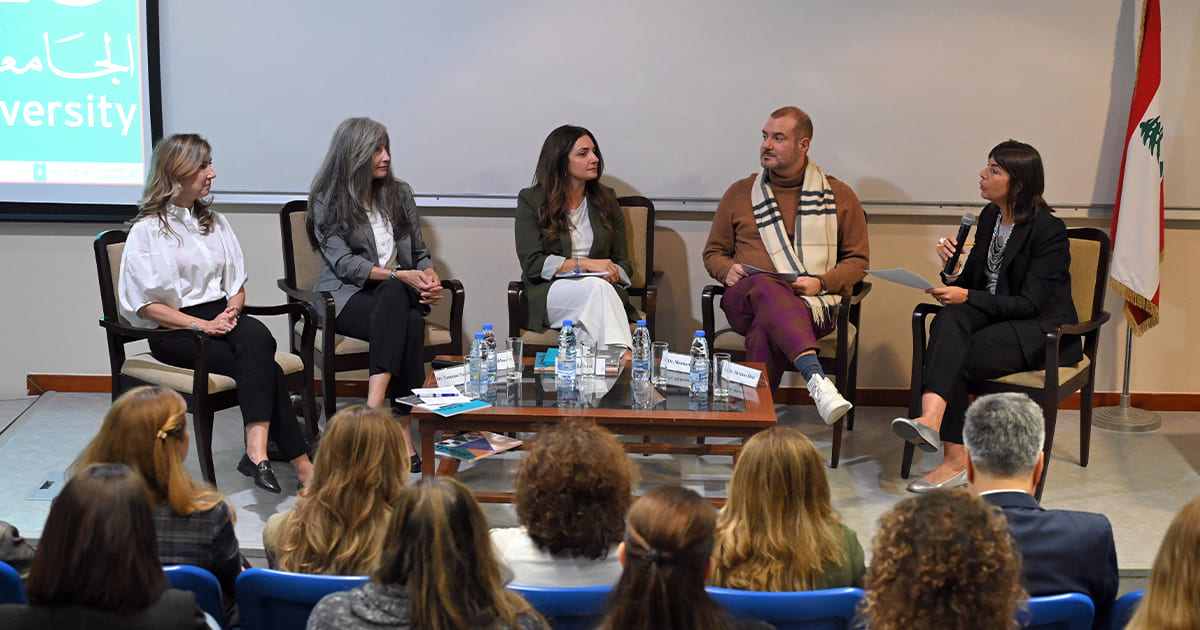
On November 28, 2025, and as part of the United Nations Development Programme (UNDP) “Women in Leadership” grant, the Arab Institute for Women (AiW) at LAU celebrated a milestone in its five-decade legacy with a the launch of two major publications: Our Feminine Memory, a long-awaited biographical and archival compilation of 20th-century Lebanese women, and the anniversary special issue of Al-Raida, the region’s pioneering feminist journal.
The event on the LAU Beirut campus was marked by the participation of partners, diplomats, scholars, and advocates—many of whom have shaped the institute’s trajectory since its founding in 1973.
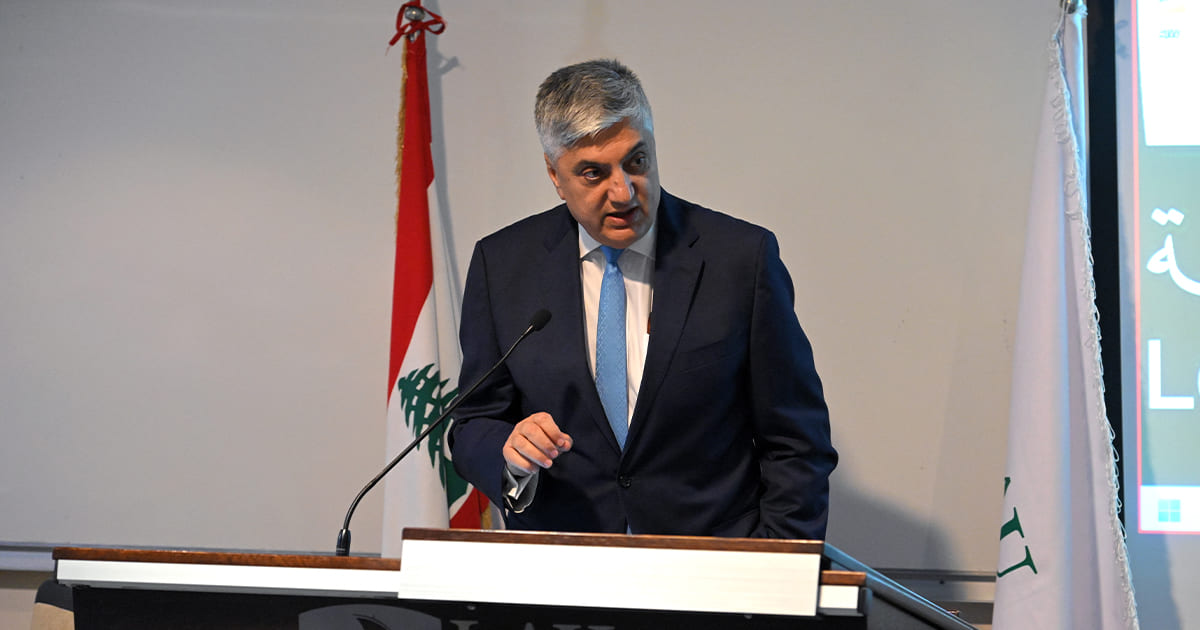
Welcoming the attendees, LAU President Chaouki T. Abdallah underlined the significance of collective commitment at a time of national and regional hardship. “Your presence here is a reminder that meaningful change… can only be achieved through shared purpose and collective action,” he said, emphasizing that AIW’s near half-century of feminist scholarship and advocacy remains essential “when the rights of women risk being overshadowed.”
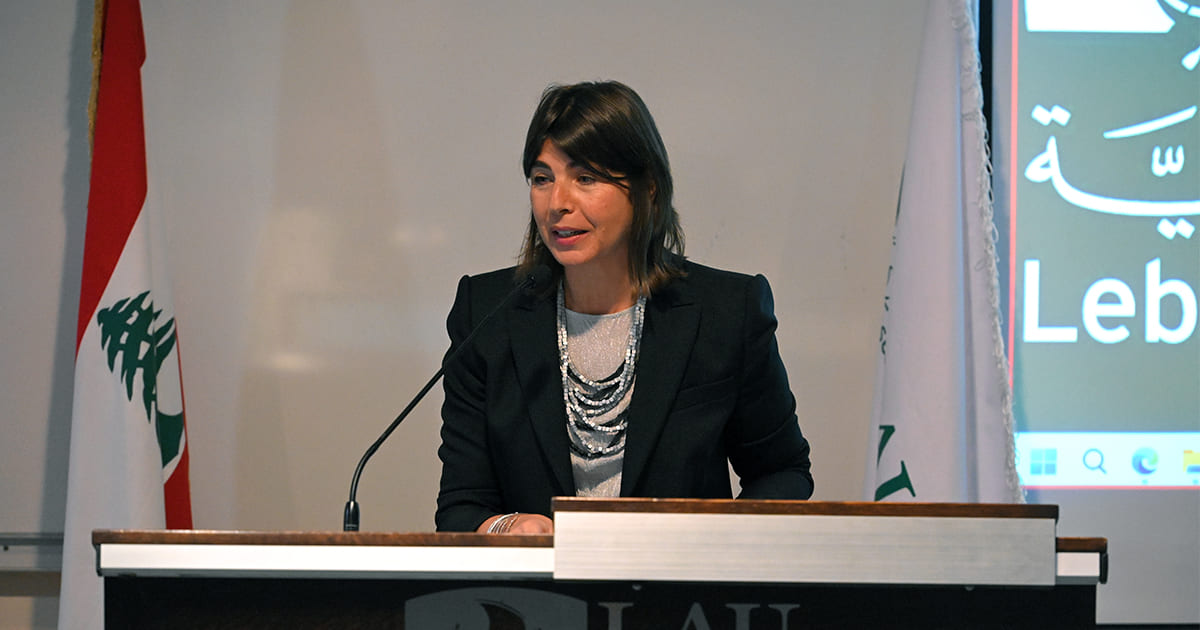
In her remarks, AiW Executive Director Myriam Sfeir reflected on the emotional weight of celebrating two projects that embody the institute’s mission: Producing knowledge, honoring those who paved the way, and bridging academia and activism. Her own professional journey, she noted, has been deeply intertwined with the journal.
“Documenting women leaders’ success stories, maximizing community outreach, and ensuring that these stories are accessible beyond the confines of the university remain central to our work,” she said.
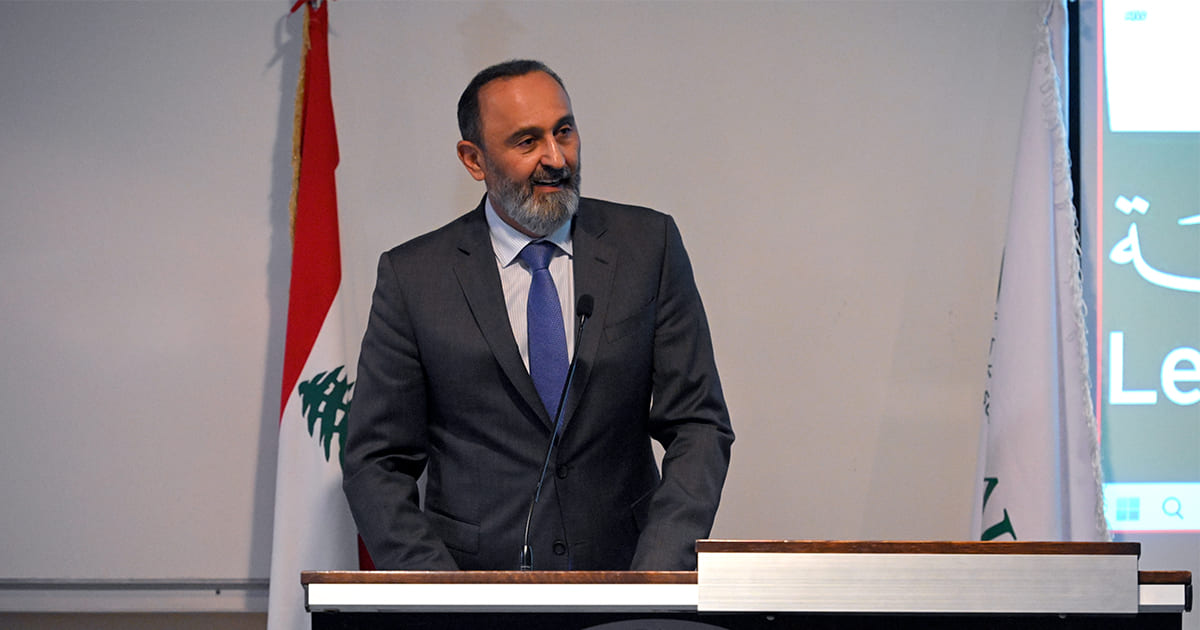
Deputy Resident Representative to UNDP Lebanon Thair Shraideh applauded the AiW’s role in safeguarding feminist knowledge and honoring generations of women whose impact shaped the region. Reaffirming the agency’s longstanding partnership with the institute, he said that “Few institutions in our region have done as much to document women’s experiences, challenge dominant narratives, and ensure feminist knowledge is preserved.” He also stressed that progress is inseparable from gender equality: “When women lead, communities grow stronger… and societies move forward.”
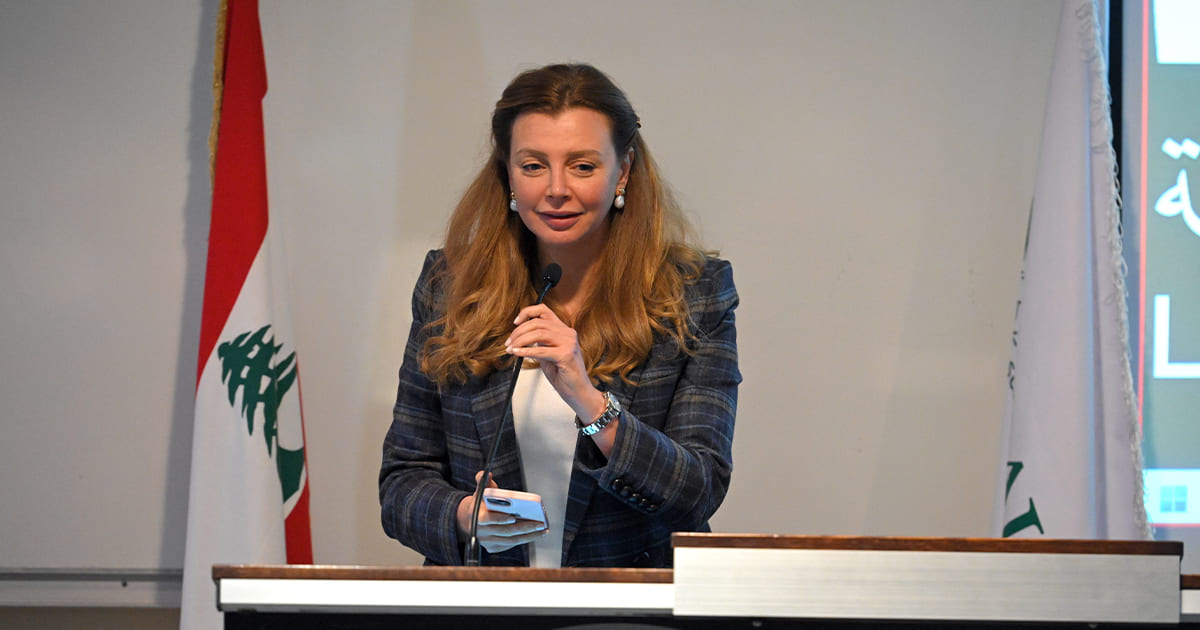
In her speech, UN Women’s Resident Representative in Lebanon Gielan Elmessiri highlighted how both newly launched publications align with the agency’s mandate. “There can be no meaningful progress in gender equality without centering women’s experiences, amplifying their stories, and grounding our advocacy in feminist research,” she noted, hailing the AiW as a “regional beacon for gender equality” across its 50-year legacy.
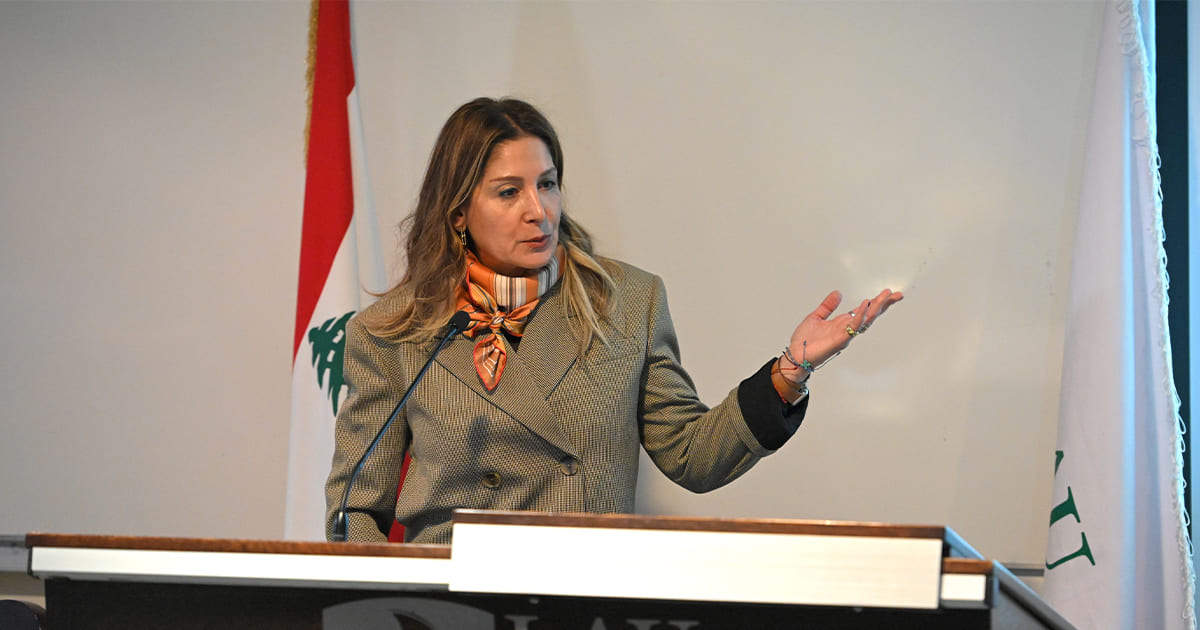
The event also featured a remark from the National Commission for Lebanese Women (NCLW) represented by its Executive Board Secretary Nathalie Zaarour, who summarized the commission’s work of promoting gender equality and highlighted the National Strategy for Women in Lebanon (2022–2030), which focuses on rejecting violence, enhancing women’s capabilities, promoting leadership, enforcing equality under the law, and upholding human rights.
The launch of Our Feminine Memory was among the most emotionally resonant moments of the event. Sfeir explained that the book is the culmination of decades of work by the late Mona Khalaf—economist, former AiW director, and champion of women’s economic empowerment—whose sudden passing left the project unfinished. Through collective dedication, the institute succeeded in completing the volume based on Khalaf’s original interviews and methodology.
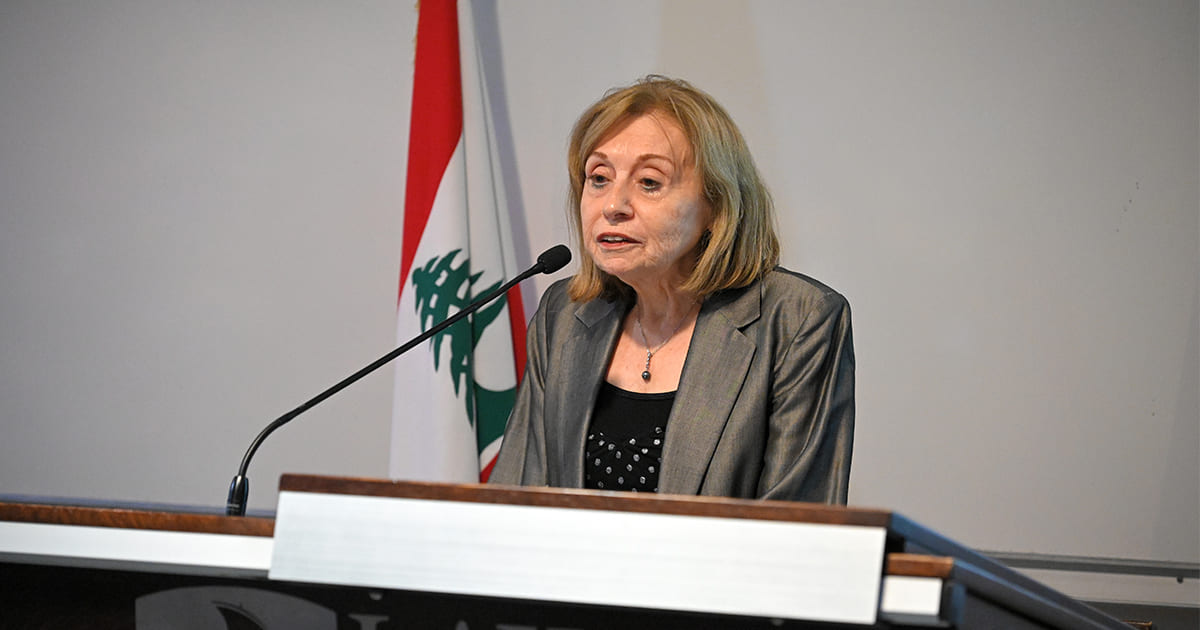
Dr. Samira Aghacy, former AiW director, paid tribute to Khalaf’s vision, saying, “Mona was committed to women’s rights and believed that the institute should remain an ally and peer to all women who needed justice, protection, and support.”
A panel discussion followed, featuring interdisciplinary scholars: Dr. Dima Dabbous, regional director of Equality Now and former AiW director; Lea Kai, project manager at UNDP and the Ministry of Environment; Dr. Yasmine Taan, assistant professor at the LAU School of Architecture and Design; and Dr. Sleiman El Hajj, associate professor of creative writing at the LAU School of Arts and Sciences.
Dr. Dabbous highlighted the evolving landscape of family law reform in the region. “In the span of maybe 40 years… a lot has changed,” she observed, noting that conversations once deemed taboo are now part of public policy debates. Her remarks reinforced the importance of continuing the research and advocacy work embodied in the two publications launched that day.
A special appearance was made by distinguished alumna Laury Haytayan (BA ’97), a leading expert in the oil and gas sector, who reflected on her experiences in navigating a male-dominated field. Haitayan emphasized that “knowledge is power,” urging women to confront bullying, resist intimidation, and remain active in shaping national decision-making. She highlighted the critical role of support systems, such as the AIW and institutional network, in enabling women to persist, lead, and claim their space in public life.
Adding an environmental perspective, Kai stressed how climate change intersects with women’s vulnerabilities in Lebanon. She outlined the UNDP’s two-decade support for evidence-based climate policies aimed at protecting women, youth, and internally displaced communities. Remarking on Lebanon’s progress under the Paris Agreement, an international treaty on climate change, she said, “Women are at the center of the climate policy that Lebanon is doing,” with the latest Nationally Determined Contributions (NDC) including over 50 references to women, peace, and security. The recent climate policy package, presented by 10 ministers alongside the prime minister, underscores how climate action has been fully mainstreamed nationally.
Assistant Professor Yasmine Taan discussed the intersection of art and activism, demonstrating how visual culture can challenge dominant narratives. She showcased digital images from the October 2019 uprising—particularly the widely circulated photograph of a young woman delivering a side-kick to an armed guard—as symbols of resistance, reshaping gendered imagery and mobilizing youth. Dr. Taan also reflected on her editorial work highlighting marginalized artistic narratives, including women cross-dressing, photographic practices, and pioneering female artists such as Saloua Raouda Choucair.
Bringing the discussion full circle, Dr. El Hajj spoke about the enduring value of documentation in feminist scholarship. He traced Al-Raida’s evolution from covering early charitable activism under colonial rule to contemporary debates on gender, sexuality, and queer narratives, stressing that archiving women’s experiences preserves history and prevents erasure. On the Our Feminine Memory e-book, he noted that situating pioneering Lebanese women within their historical context demonstrates how achievements that seem ordinary today were once groundbreaking, ensuring that the AiW’s work continues to inspire future scholars and activists.


