Blending Coding Education With Career Exploration
LAU mechatronics student Maroun Mezher offers valuable insights on building his startup, CodeMind Academy, and the immense value of coding as an essential tool for the jobs of the future.
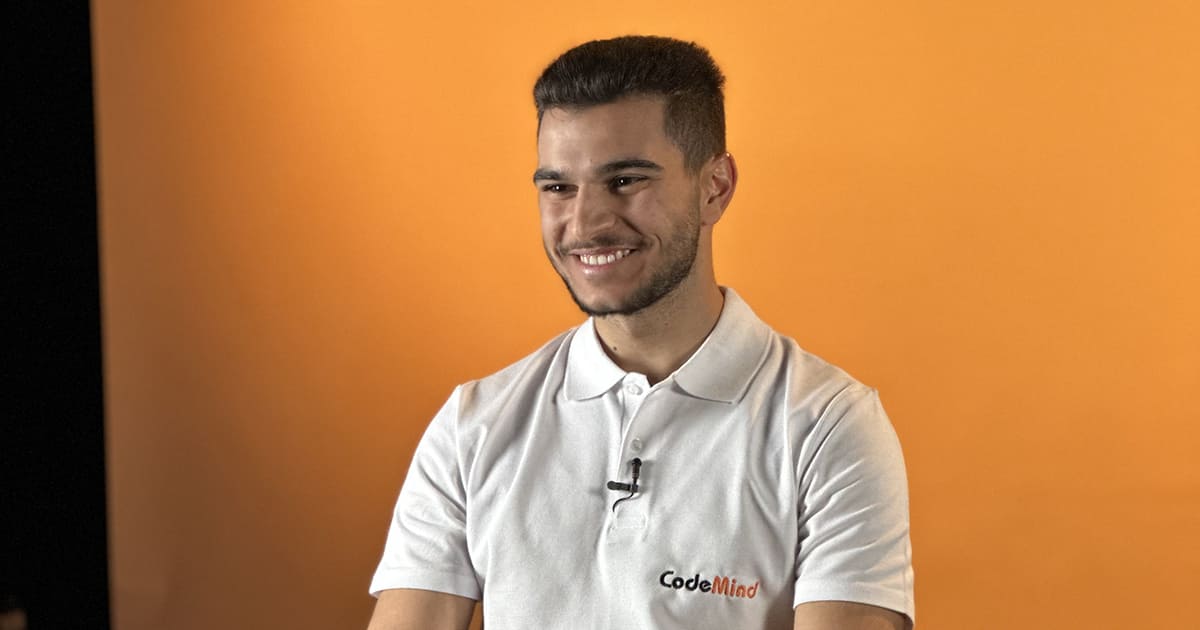
Like many students, LAU mechatronics student Maroun Mezher chose his major because the field of robotics felt like a launchpad into a career of the future. While at university, though, he noticed how classmates who had been introduced to coding in school had the advantage in programming courses.
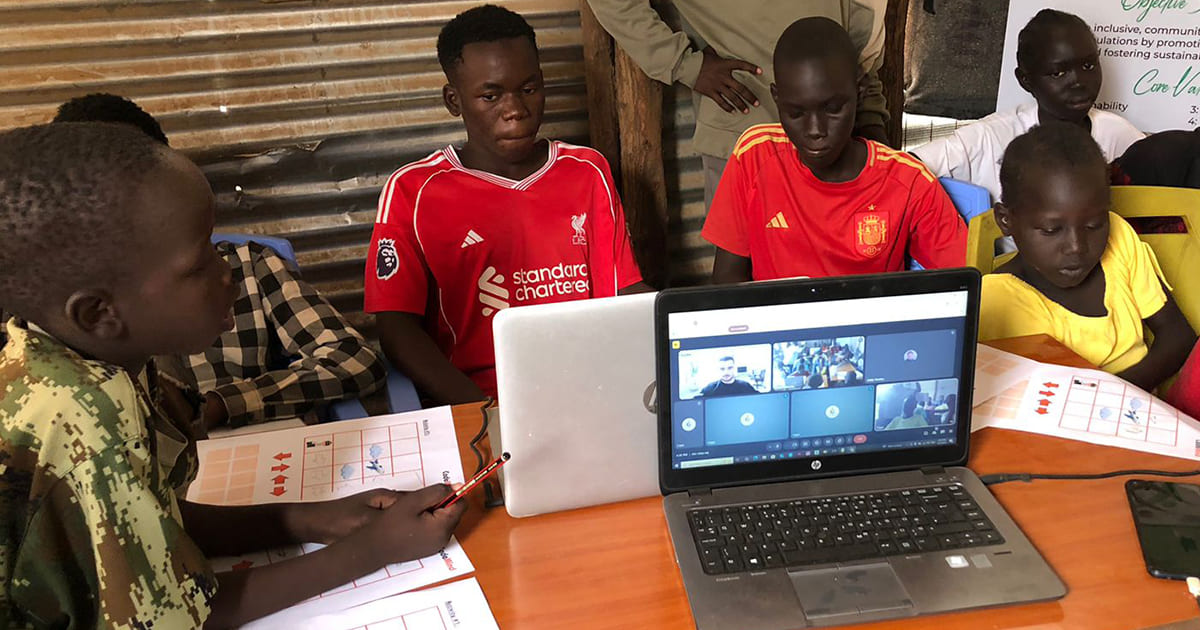
That realization became the seed for CodeMind Academy. Rather than teaching coding as an isolated technical skill, Mezher designed the platform to connect programming with real-world career pathways. His goal was simple but far-reaching: To help students explore fields they are passionate about before committing to a line of work.
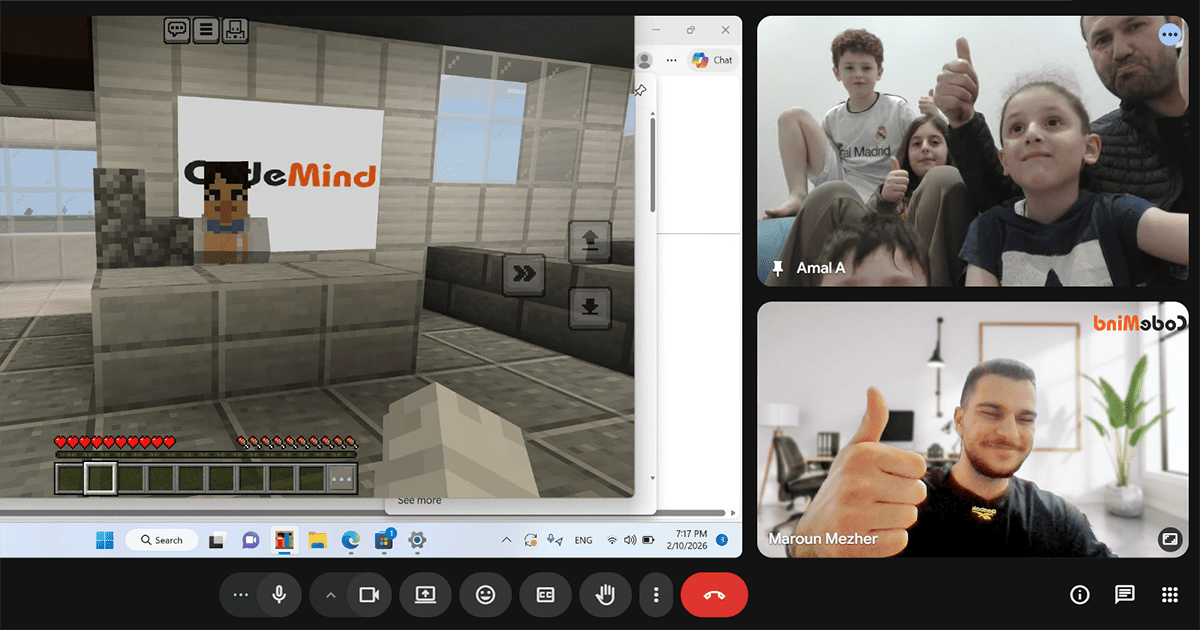
The platform promotes game-based learning through immersive experiences. “Every lesson is a storyline where young learners explore a themed world through the lens of a specific profession or industry they are interested in, be it engineering, healthcare, sports, aerospace, agriculture, or others. They interact with characters and solve a challenge in a one-on-one setup with a trainer who caters to the learner’s schedule,” explained Mezher.
Since its launch in July 2024, the platform has gone on to win UNICEF’s Generation of Innovative Leaders (GIL) Entrepreneurship Program, organized by the NAWAYA Network, and was recently shortlisted among 20 regional startups to pitch at the 303030 Accelerator Conference next month. Mezher was also selected to serve on the Forbes Middle East Youth Council.
Building CodeMind Academy came with its challenges. Mezher had no prior experience in setting up a business. Between developing a curriculum, onboarding qualified trainers, managing operations, and marketing the platform, the experience was a trial-and-error learning phase for him and his small team. “Our greatest challenge continues to be convincing parents that coding is not a ‘hobby’ but an important skill of the future,” he noted.
In a world increasingly shaped by artificial intelligence, Mezher believes that coding is more relevant than ever. While AI tools dominate headlines, he insists that humans must still understand the logic behind these systems. “The future belongs to those who know how to control AI, not just consume it,” he said, noting that programming is the foundation on which future AI innovation will continue to grow.
Mezher credits “LAU’s entrepreneurial ecosystem,” including programs like Launch X and Spark, for providing the initial framework to transform his vision into execution. He also underscored how faculty mentors and classmates are invaluable elements of this ecosystem, with their ongoing constructive feedback. “In fact,” he added, “entrepreneurship is embedded in our engineering curriculum, as we are often challenged to think critically, find creative solutions and solve real-world problems.”
Emphasizing the value of entrepreneurship in making an impact, Mezher stressed that while academic and technical knowledge is essential, “real growth happens when you learn by doing.”


