AI Meets Education: Students Unveil Augmented University Real-Time Assistant
Engineering students are bridging the gap between theory and practice with an innovative AI-powered teaching assistant designed to support instructors and enhance classroom learning.
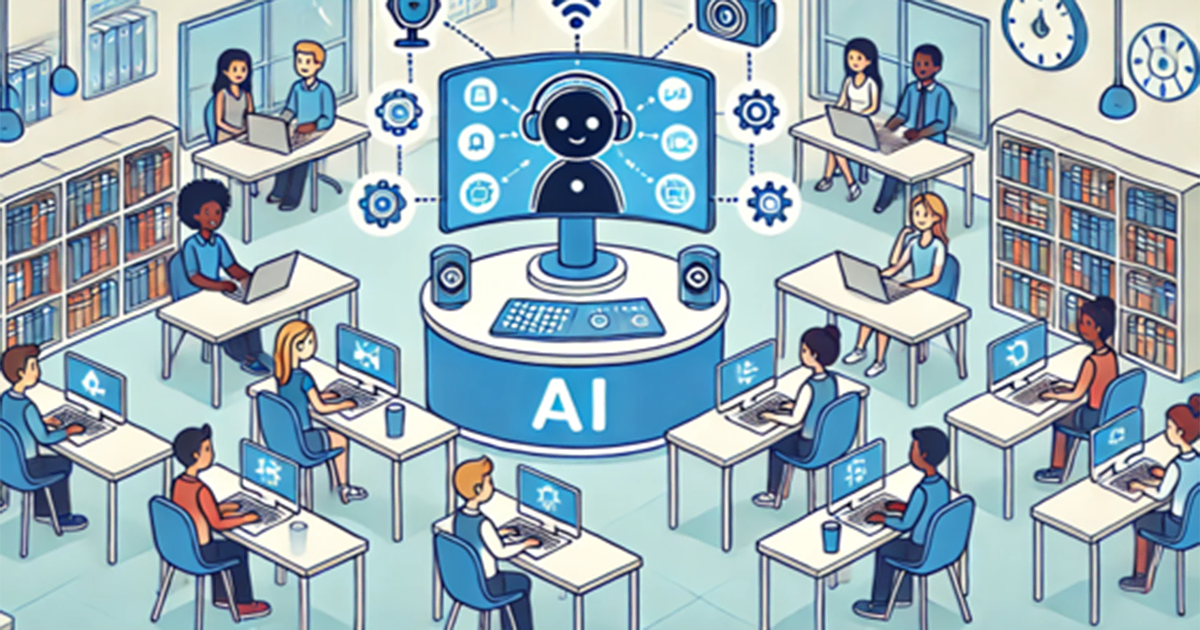
With AI reshaping nearly every field, bringing it into the classroom is no longer optional—it’s essential. At LAU’s School of Engineering (SOE), students have stepped into this frontier with AURA (Augmented University Real-time Assistant), a platform that demonstrates how artificial intelligence can transform teaching and learning.
The project was developed within the university’s Vertically Integrated Project (VIP) model, titled “Revolutionizing Education with AI.” It brought together 11 students who split into three teams, each tackling a different layer: Front-end design, back-end AI architecture, or hardware integration.
This structure provided them with hands-on experience in advanced technologies, such as retrieval-augmented generation, knowledge graphs, and multi-agent frameworks. To maintain academic integrity, they also built safeguards to ensure the AI instructor relied solely on material uploaded by the professor. In this setting, they proposed an AI-powered classroom assistant to help teachers with grading, assessment, and whenever needed, lecture delivery.
The team approached AURA with a guiding principle in mind. They saw AI as a tool to aid teachers. “Teachers are the mentors and role models in the classroom,” explained Assistant Professor of Computer Engineering Samer Saab Jr., who supervised the project. “AI can take care of the logistics, but it cannot replace the inspiration and guidance that only humans can provide.”
The platform itself is structured around four integrated panels—student, teacher, administration and assessment—that create a seamless digital classroom. Instructors can upload syllabi and lecture slides, while the AI instructor has the capability to autonomously deliver lessons, explain slides in real time, and respond to classroom interactions. Cameras and microphones allow AURA to track attendance through facial recognition, detect raised hands via gesture recognition, and even facilitate Q&A sessions.
Team member Gaelle Tohme, who came to the course with no background in AI, found the experience transformative. Dr. Saab Jr.’s guidance, she said, helped the team first grasp the core concepts before diving into technical work, making the process “very smooth” and enriching her understanding of AI and large language models.
For team member Joe El-Derjany, AURA’s strength lies far beyond its data sources. He pointed out that while any agent could be fed the same data, AURA’s power comes from “multiple AI agents under the hood working together synchronously,” each with its own complexity to deliver the system’s unique capabilities.
Meanwhile, Clara Attieh was particularly intrigued by the way AI interprets and responds to human input. She noted that what fascinated her most was how the team was able to finetune the system so it could accurately understand their goals and deliver precisely the outcomes they envisioned.
These exercises provided students with invaluable employability skills, giving them the rare chance to work hands-on with advanced AI systems before graduation. “This is exactly what industry leaders are looking for,” noted Dr. Saab Jr. “The students are building state-of-the-art solutions, not just learning about them.”
The AURA team plans to extend the system’s capabilities to personalized tutoring, enabling students to revisit lectures and interact with the AI assistant individually through secure logins. The assessment panel is also being enhanced to design and grade various types of assignments, helping to further reduce the burden on faculty.
More than just a proof of concept, AURA offers a glimpse of how universities can put AI to work responsibly in education.
As Dr. Saab Jr. put it: “There’s a lot of hype around AI, but also a lot of real opportunity. With AURA, our students are not just preparing for the future of AI in education—they are creating it.”


