ASFER Conference at LAU Examines Arab Economic Competitiveness
A timely regional forum at LAU brought together research and policy perspectives on reform, resilience and inclusive growth.
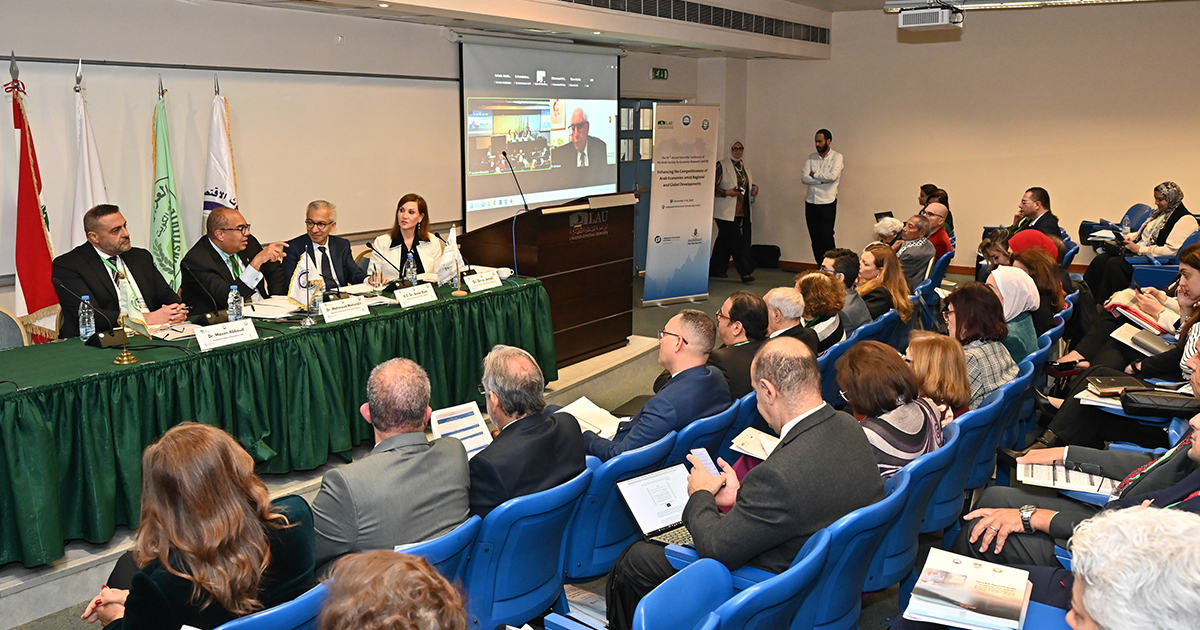
At a time when Arab economies are navigating overlapping pressures—from geopolitical instability and financial stress to technological disruption and climate change—the question of competitiveness has taken on renewed urgency.
Across the region, and particularly in Lebanon, the challenge is no longer limited to restoring growth but to rebuilding economic systems capable of delivering resilience, productivity and opportunity in an increasingly uncertain global environment.
These themes shaped the 19th Annual Scientific Conference of the Arab Society for Economic Research (ASFER), held under the patronage of the President of the Council of Ministers Nawaf Salam and hosted by the Department of Economics at the Adnan Kassar School of Business (AKSOB) at the LAU Beirut campus on December 5 and 6, 2025. Convening the conference in Beirut underscored the importance of grounding economic reform in evidence-based dialogue at a moment when policy choices carry long-term social and economic consequences.
Founded in 1987, ASFER has long served as a leading platform for economic research and policy debate in the Arab region. Its annual scientific conference brings together scholars and practitioners to examine development challenges through rigorous analysis and comparative perspectives, encouraging dialogue that moves beyond short-term crisis management toward deeper structural understanding.
Opening the conference, LAU President Chaouki T. Abdallah emphasized that competitiveness must be understood in relation to resilience and shared prosperity, rather than narrow indicators of growth.
“It does us no good if one group or one region thrives while others are left behind,” he said, stressing that economic transformation loses its meaning if it fails to translate into broadly shared opportunity. Universities, added Dr. Abdallah, have a responsibility to connect research with policy and practice in ways that respond to real economic challenges.
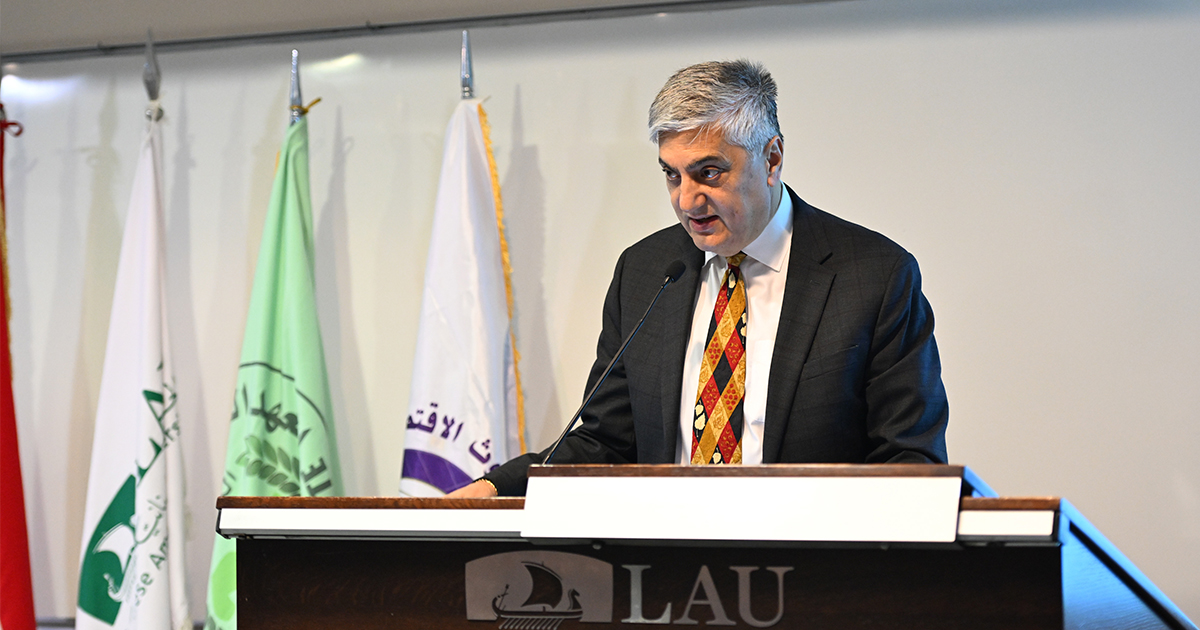
This emphasis on inclusivity and long-term impact resonated throughout the opening session. AKSOB Dean Dima Jamali framed competitiveness as a multidimensional process shaped by governance, infrastructure, financial systems, innovation and labor markets.
“Competitiveness is not a single reform or policy choice,” noted Dean Jamali. “It is the outcome of how these elements work together over time,” she added, highlighting the need for coherent strategies that align economic reform with social and institutional realities.
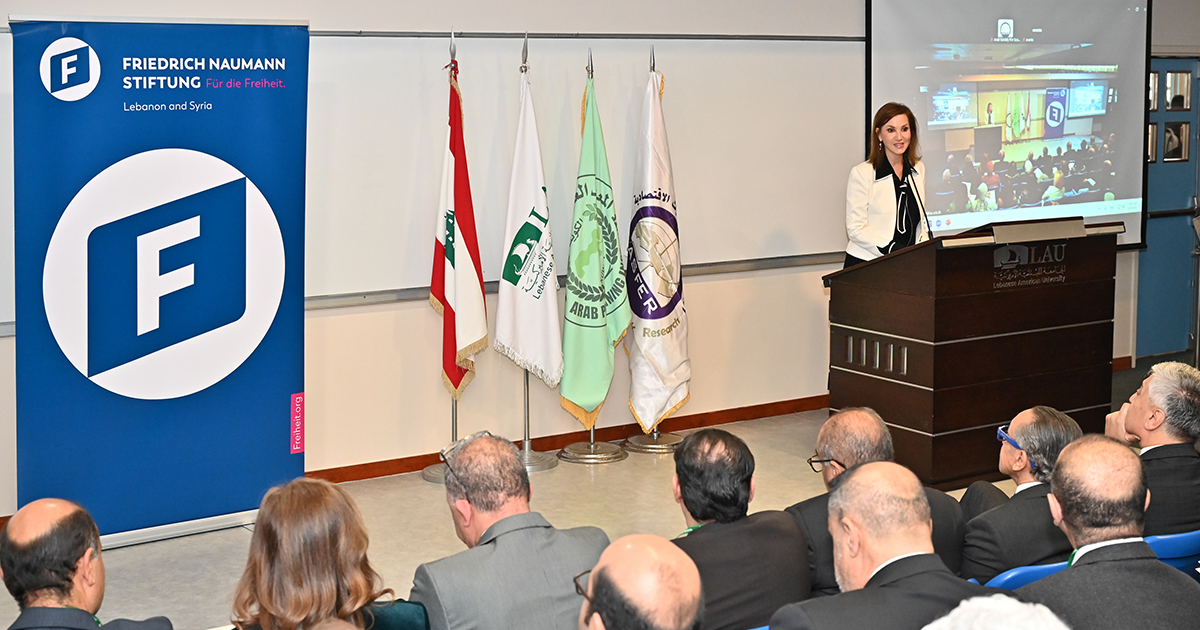
Minister of Economy and Trade Amer Bisat, who attended the conference on behalf of President of the Council of Ministers Nawaf Salam, echoed this sentiment, emphasizing the strategic importance of competitiveness for the region.
“Competitiveness is no longer a luxury; it is essential for survival in today’s global economy,” said Dr. Bisat, adding that the conference “should be the start of a new path that places our region at the heart of the global economy and strengthens Lebanon’s position as a permanent conduit for Arab integration and international engagement.”
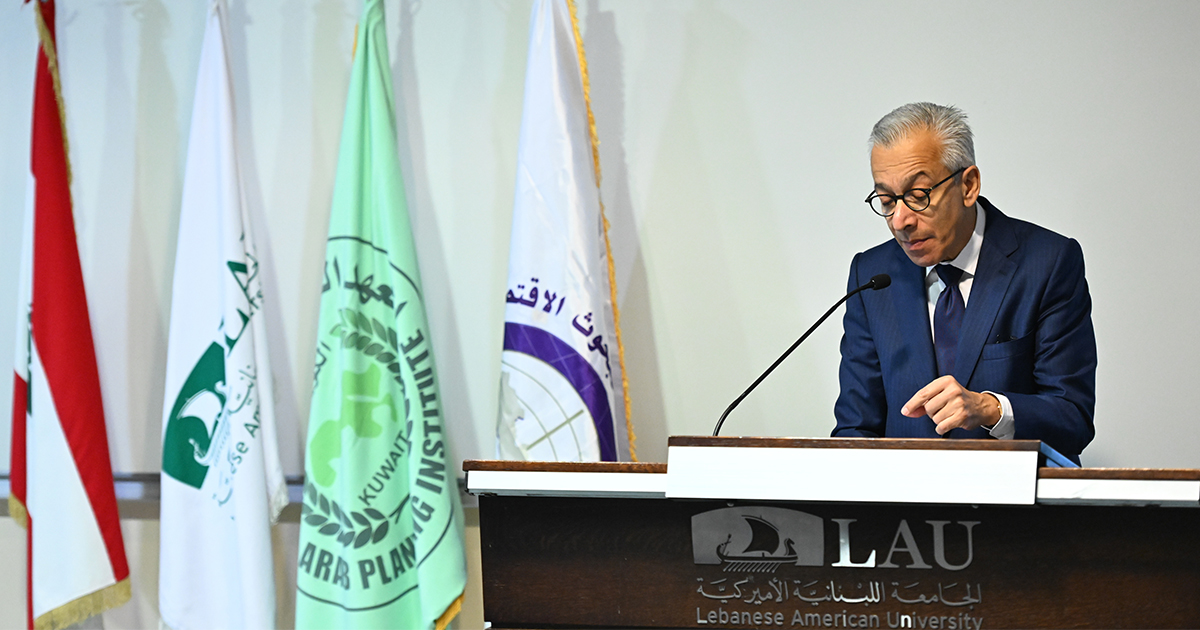
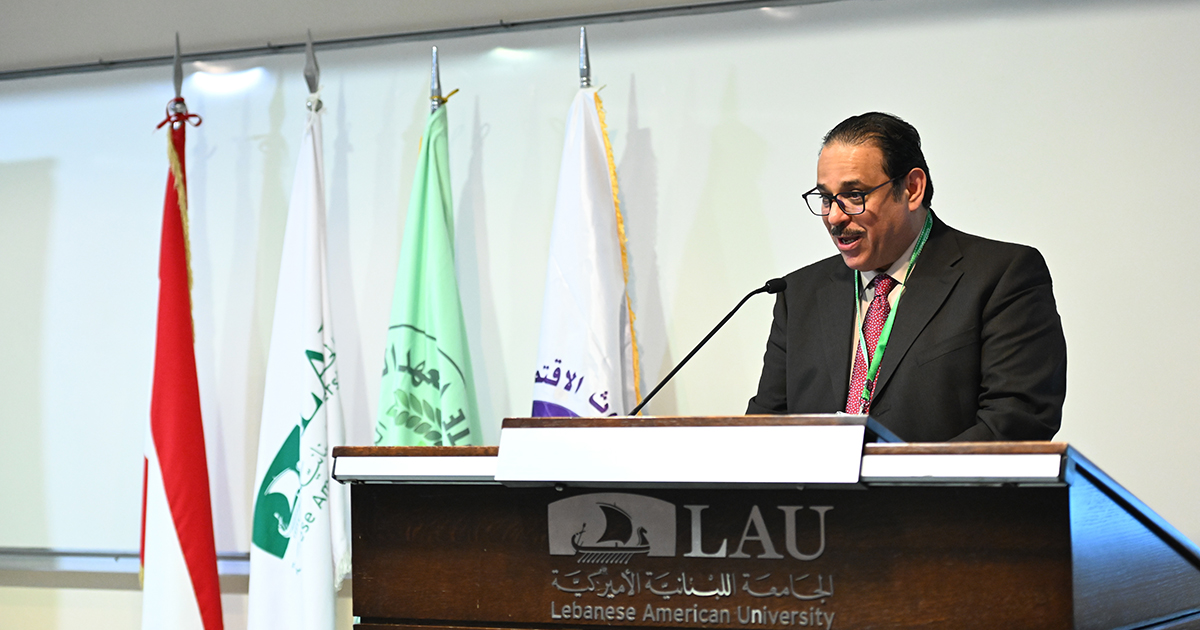
Several speakers warned that long-standing structural weaknesses continue to constrain competitiveness across much of the Arab region. Adel Al-Wuqayan, director general of the Arab Planning Institute, pointed to the persistent gap between aggregate economic growth and improvements in individual wellbeing.
“For decades, growth in many Arab economies has not translated into higher productivity or inclusive income gains,” he said, pointing out that without diversification, institutional reform and investment in productive capacity, competitiveness will remain fragile and uneven.
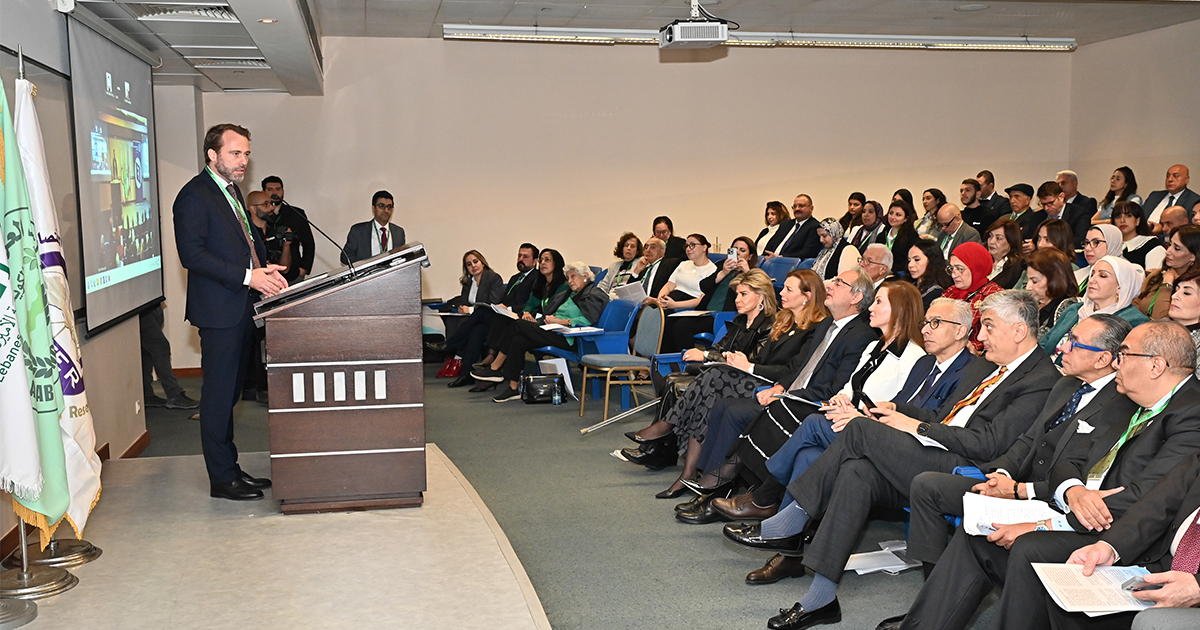
The global dimension of competitiveness featured prominently in the discussions. Drawing on international experience, Kristof Kleemann, project director for Lebanon and Syria at the Friedrich Naumann Foundation for Freedom, cautioned against short-term policy responses that undermine long-term performance. “Open markets, competition and predictable rules are not luxuries,” he said. “They are prerequisites for innovation and sustainable growth.” While protectionist approaches may offer temporary relief, he added, they ultimately discourage investment and weaken economic resilience.
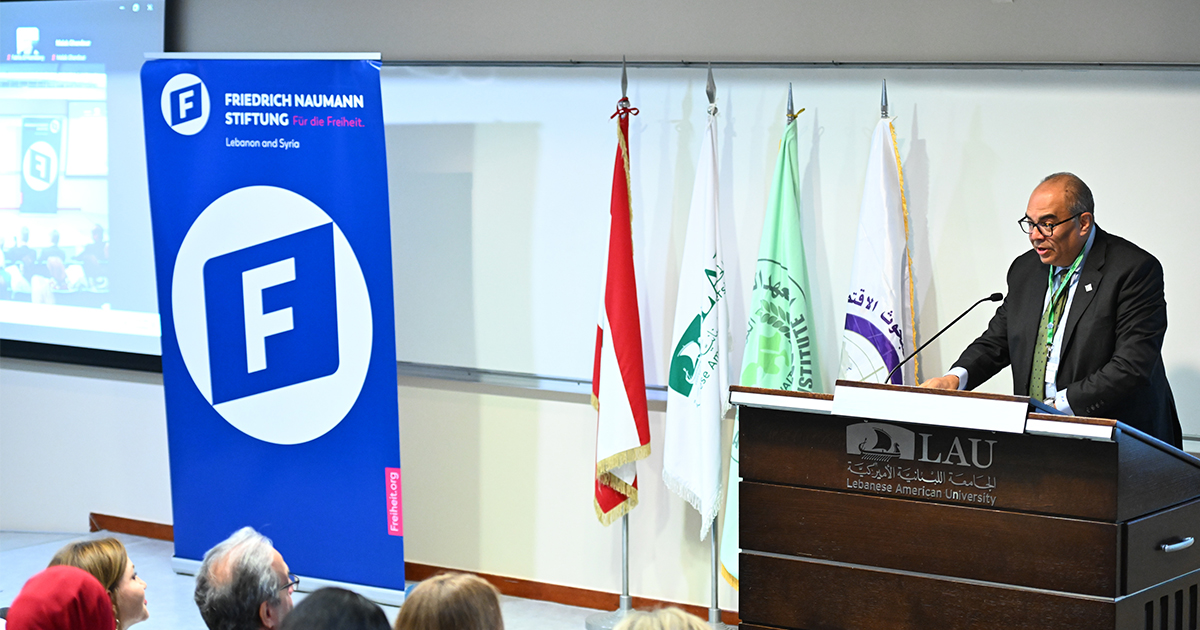
Situating the regional debate within broader global transformations, Mahmoud Mohieldin, chairman of ASFER, emphasized that competitiveness must be seen as a long-term process rather than a technical adjustment. “The real test,” he noted, “is whether reform leads to growth, growth creates jobs, and jobs translate into stability and opportunity.” As technological change and green transition accelerate worldwide, he stressed the urgency of investing in human capital, institutional credibility and regional integration.
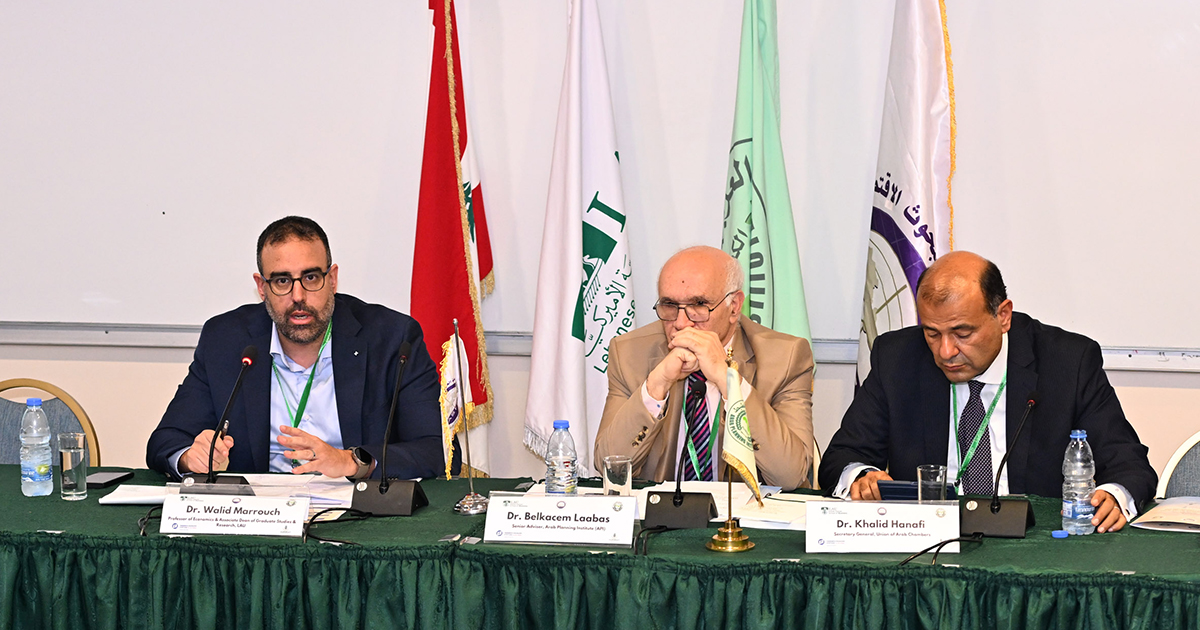
During the two-day conference, discussions circled back to the central role of labor markets in shaping sustainable competitiveness. Contributions from LAU faculty, including Dr. Walid Marrouch, professor of economics and associate dean of Graduate Studies and Research, highlighted the need to leverage the renewable energy transition to create new industrial advantages.
Speaking during the session Clean Energy, Trade and Competitiveness, Dr. Marrouch underscored the importance of developing sectors like green hydrogen and solar energy, emphasizing that realizing these gains requires robust environmental regulation—such as financial incentives and disincentives—to support the transition to a low-carbon circular economy.
The structural foundations of competitiveness were further explored during the session Infrastructure, Finance and Innovation as Drivers of Competitiveness. In this context, Dr. Ali Fakih, associate dean and professor of economics at LAU’s AKSOB, emphasized that these elements must advance together if economies are to achieve lasting gains. “Infrastructure, finance and innovation are not parallel tracks,” he said. “They must advance together if economies are to unlock productivity, attract investment and sustain long-term growth.”
The conference also featured the launch of the Arab Development Report 2025 (9th edition), which grounded discussions in data-driven analysis of regional trends and policy options. The report reinforced calls for coordinated reform strategies that link macroeconomic stability with productive investment, institutional strength and human development.


