Diaries of the Swahili Coast: Zanzibar’s Arab Heritage Promises a Vivid Dialogue between Tradition and Modernity
LAU alumna and architect Bassima Houjeij documents Arab heritage in Zanzibar at an exhibition curated by the School of Architecture and Design.
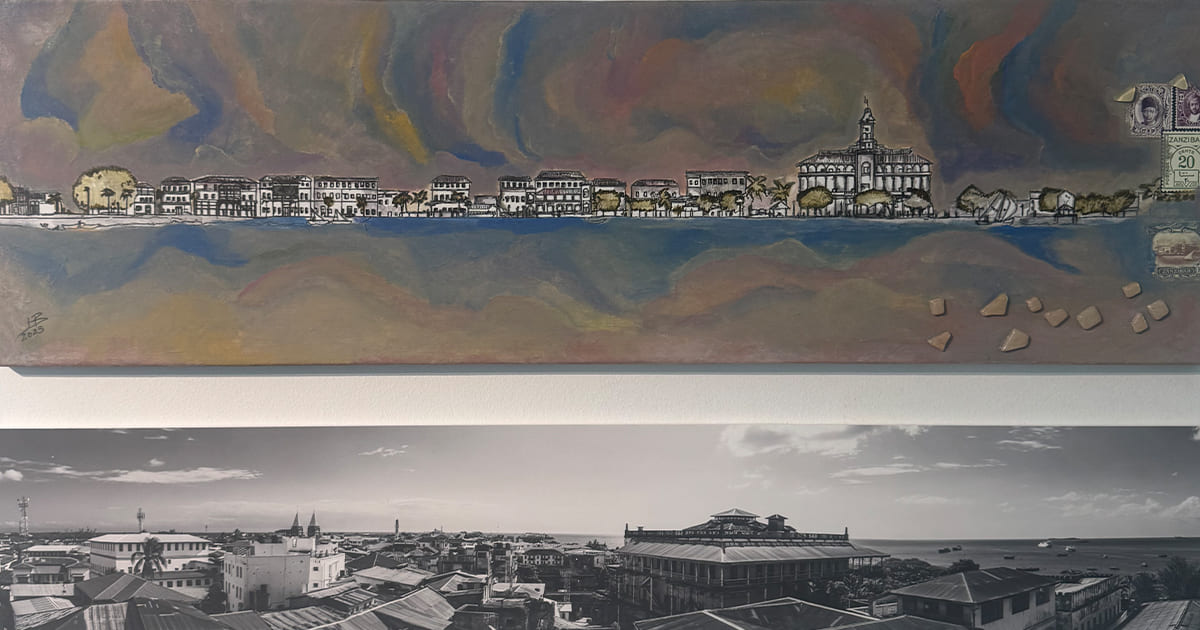
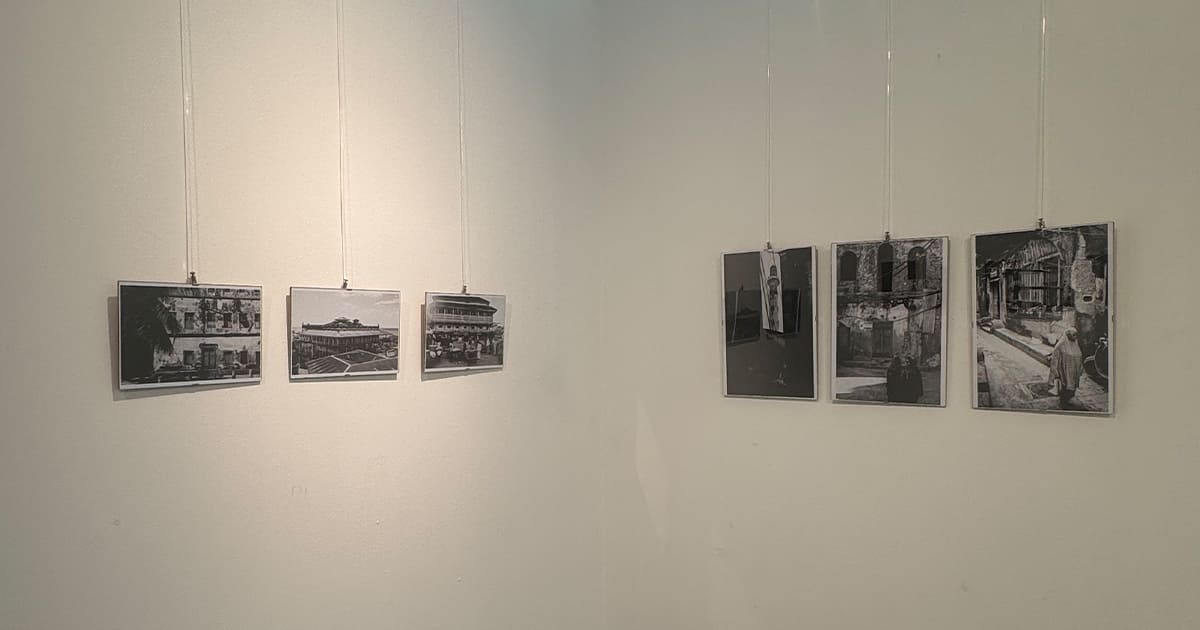

LAU’s School of Architecture and Design (SArD) hosted an exhibition by alumna Bassima Houjeij (BArch ’15) featuring Zanzibar as one of the last enduring Arab legacies along the Swahili coast.

The event Diaries of the Swahili Coast: Zanzibar’s Arab Heritage traces Houjeij’s journey in Tanzania and reflects her experience of Arab architectural and cultural imprints in East Africa.
Exploring themes of collective memory, place and heritage, Houjeij’s paintings present her interpretations of the architectural landscape, in parallel with the photographs of Philippe Demoulin, a Belgian photographer who documented the urban and architectural landscapes of Zanzibar.
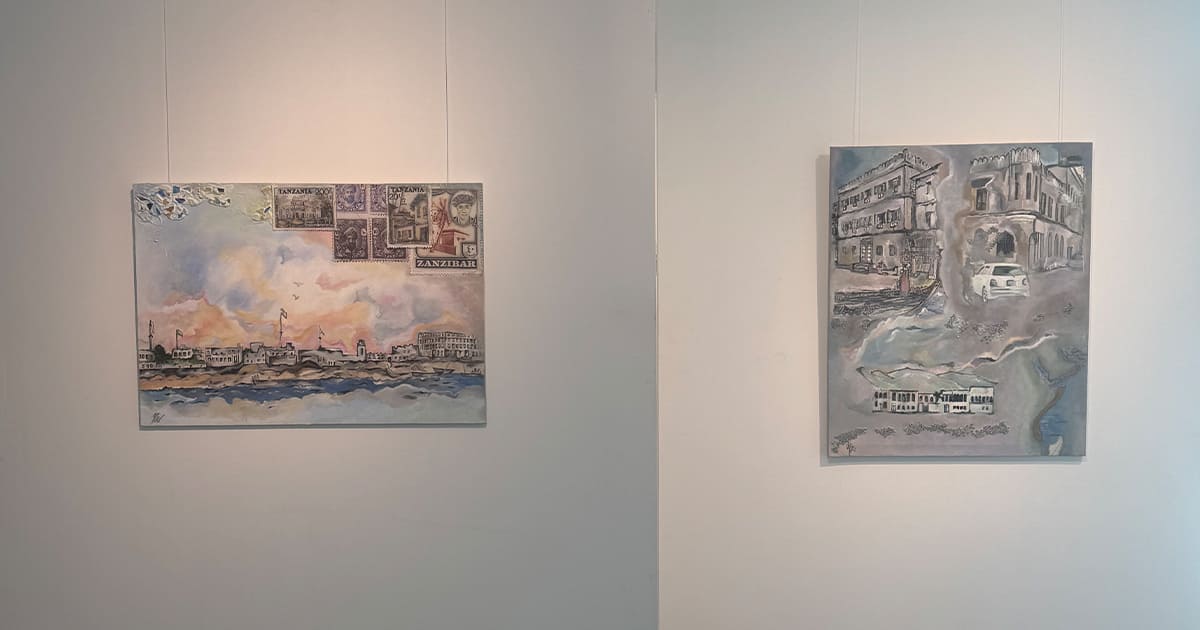
The exhibition brought to life Zanzibar’s cobbled alleyways, history and traditional architecture through a visual journey imbued with nostalgia and cultural identity. Houjeij’s work ranges from visual conversation to expressive impressions using multimedia techniques such as drawings, archival photos, old postage stamps and maps.
“This exhibition is not just a one day event. It marks the beginning of a long-term initiative for in-depth studies, research and collaboration in history and education. It reflects our shared commitment to preserving and celebrating our rich heritage and architectural identity,” Houjeij said at the event.
Among the attendees were representatives of the Embassy of the Sultanate of Oman, the Lebanese Ministry of Culture, UNESCO, ESCWA, and the Arab Inter-Parliamentary Union, in addition to faculty, alumni and students.
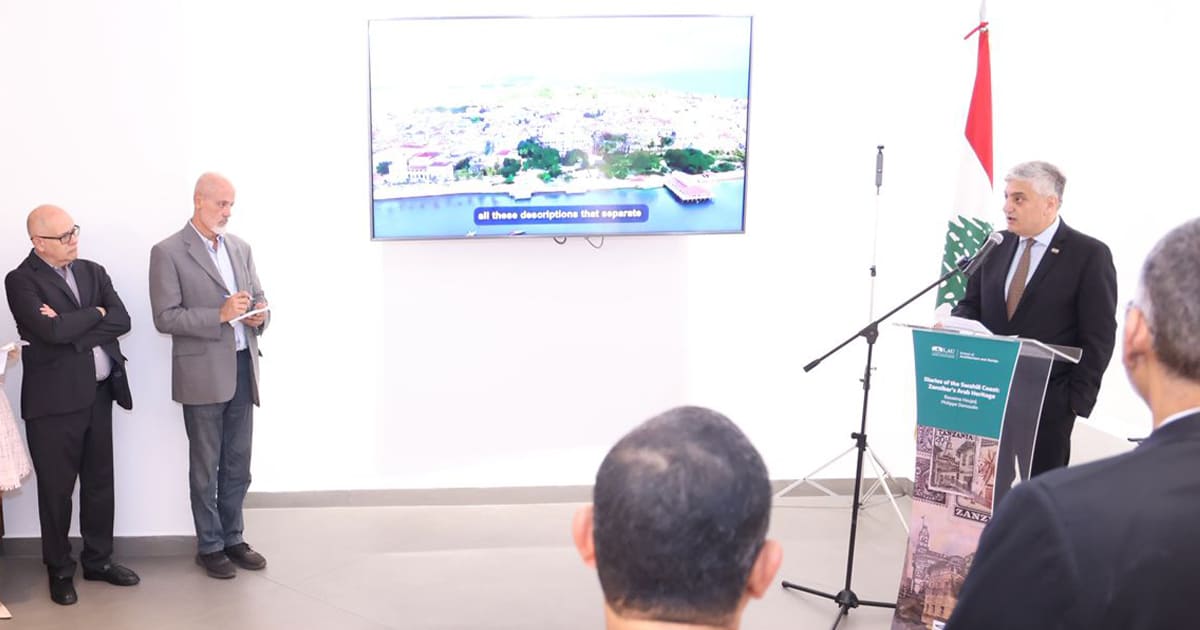
Welcoming the guests, LAU President Chaouki T. Abdallah praised the exhibition for capturing the “soul of Zanzibar” and bringing the spirit of the Swahili coast to Beirut through paintings and photographs.
“Zanzibar, with its coral-stone alleys and carved wooden doors, teaches us how a city can grow without erasing its memory—how modern life can coexist with heritage, how preservation can itself become a form of renewal,” he said.
Reflecting on Lebanon’s layered civilizations and religions, Zanzibar offers a good model. “It shows that diversity, when embraced, becomes strength, and that shared heritage can serve as the foundation for unity and rebirth. Zanzibar is also a reminder of our shared Arab and cultural identity,” added President Abdallah.
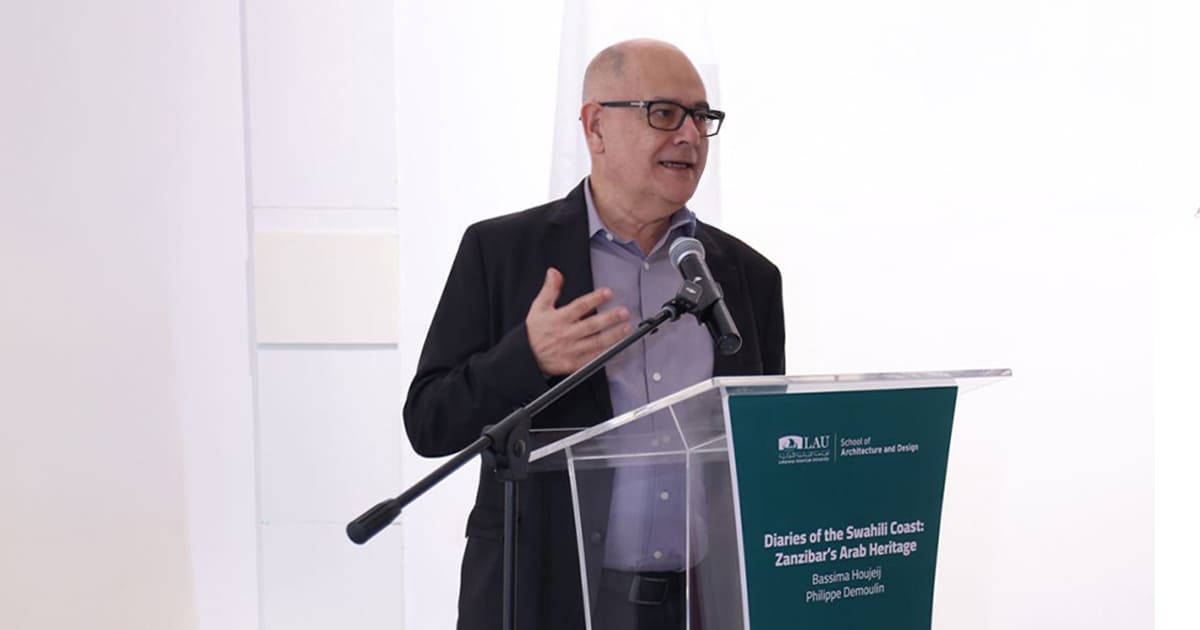
Dean Elie Haddad described the work as the fruit of Houjeij’s passion for documenting the architecture and history of Zanzibar and its Arab Omani heritage.
“Some of you can see in these paintings a kind of romanticism, but I think it reflects her passion for the place and for the architecture of the Arab world. This is part of our mission here [at LAU]. We open the eyes of our students to the rich heritage of the Arab and Islamic worlds,” he said.
Houjeij said her style blends architectural memory and visual documentation, “drawing on a shared history between Oman and Tanzania, where identity, place and nostalgia intersect.”
“It is an attempt to reconstruct architectural scenes that are not only places, but also cultural symbols rich in meaning. Architecture becomes a means to recover lost or marginalized histories and to open a dialogue between the present and the past,” she added.
The exhibition will be open daily from 8:00 a.m. to 6:00 p.m. through November 21 at the Gezairi Art Gallery, Beirut campus (closed on Sundays).


