Honor Students Lead the Way in Prison Reform Research
The LAS 499H program shared its insights into the Lebanese penal system in the presence of stakeholders and dignitaries during its Public Oral Defense event.
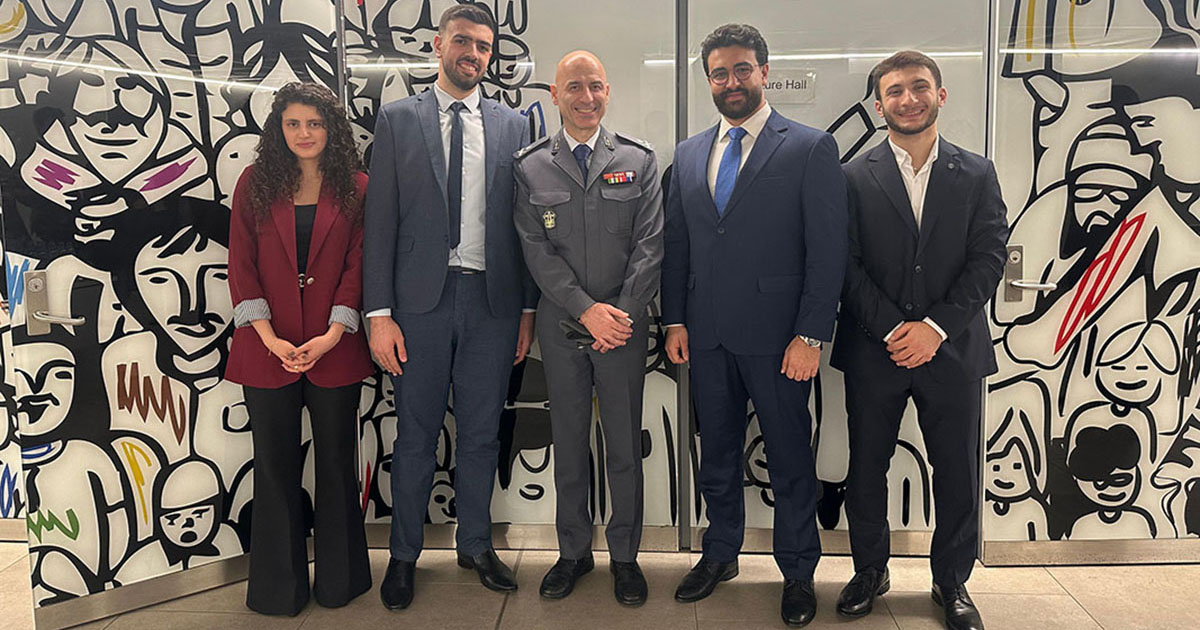
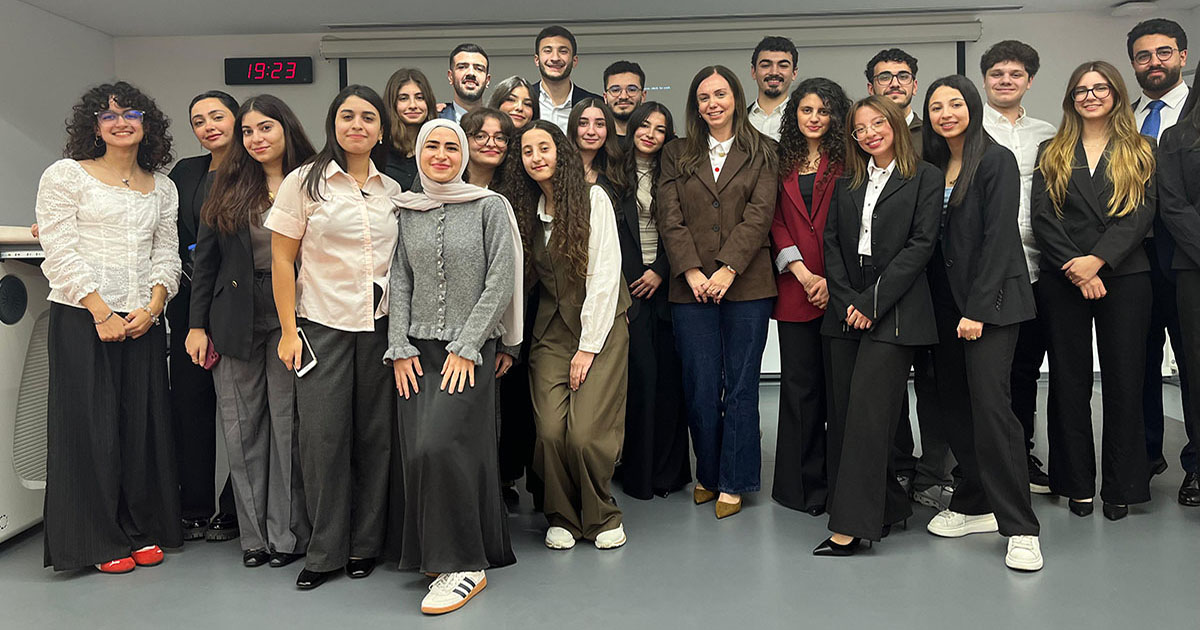
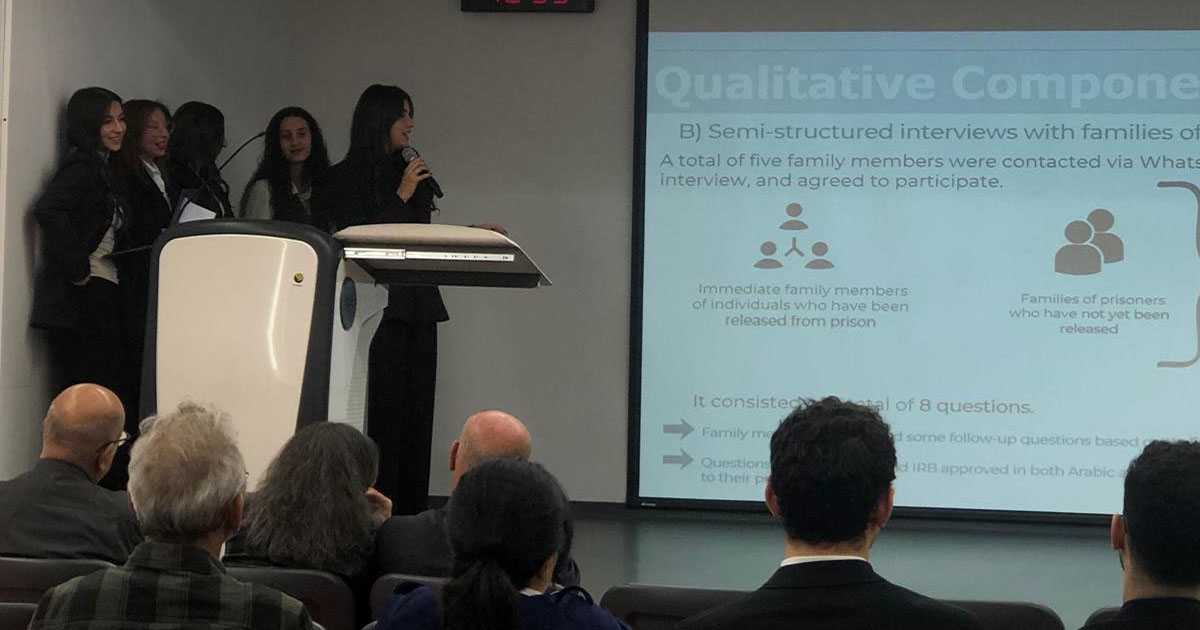
Last term, students enrolled in the Honors Program at the School of Arts and Sciences had the opportunity to showcase their research as part of the LAS 499H Public Oral Defense – Interdisciplinary Capstone Project, under the overarching theme Beyond Walls: A Multidisciplinary Inquiry into Prisoner Wellbeing and Reintegration in Lebanon. Organized by Dr. Yasmine Fakhry, part-time faculty and senior visiting fellow, and Dr. Nadine Zeeni, associate professor and program coordinator of the Liberal Arts and Sciences and Freshman programs, the event welcomed selected relevant stakeholders, along with LAU faculty and students.
The event aimed to shift public narratives toward a more human-centered understanding of prison vulnerability and to highlight the role of students in advocating for evidence-based prison reform. A total of 24 Honors Program students from both the Beirut and Byblos campuses and from different majors presented in-depth analyses of prison vulnerability from socio-health, legal, and societal perspectives, focusing on five interconnected research tracks: Overpopulation in Lebanese prisons, women behind bars, Syrian refugees in Lebanese prisons, the mental health of prisoners and their families, and Lebanese public perception and reintegration of former prisoners.
The students’ presentations covered the research rationale, objectives, methodology, ethics and IRB (Institutional Review Board) processes, findings and discussion. They touched on limitations and policy implications, fostering rich cross-sector dialogue and emphasizing the importance of bringing such critical discussions into the classroom, as well as the role of student-led research in influencing prison reform and public policy.
In her opening address, Gaelle Youness presented the course framework and the synchronization between the five research tracks. Attendees included Dr. Lama Mattar, coordinator of the Honors Program and associate professor of nutrition at LAU, Dr. Leila Dagher, director of LAU’s Center for Policy Action, and part-time faculty at the school Alexandra Chaaya, along with representatives of the Lebanese Internal Security Forces, including General Joseph Mousallem, head of the Public Relations Department, and General Mahmoud Kobrosly, head of the Intelligence Department.
Also present were Dr. Nadine Shawi, senior legal advisor at the Ministry of Information Technology and Artificial Intelligence; Priest Fareed Lahoud and Dr. George Ghazal from Morshidiyet el Soujoun; Lawyer Aline Osta from the Afif Osseiran Organization; Lawyer Hasna Abdel Rida from the Lebanese Center for Human Rights; Commissioner Rida Azar from the National Human Rights Commission of Lebanon; Lina Shamoun from Association Justice et Miséricorde; and Nour Benaicha and Hani Bidawi from Dar Al-Amal. LAU students from multiple disciplines, including psychology and nutrition, also attended.
The high level of technical rigor demonstrated in the research made a strong impression on the attendees, who commended the students’ strong communication, critical thinking, and professional skills. These qualities reflected a level of performance that surpassed typical undergraduate expectations, serving as a powerful testament to LAU’s role as a leading hub for research, where students are empowered to both engage with and enact change within society at large.


