LAU Alumnus and Filmmaker Firas Itani Wins Multiple Awards for His Film Lower Ground
In his short film, Itani (BA ’18) explores classism and inequality through a tense and dramatic portrait of everyday reality for a building concierge.
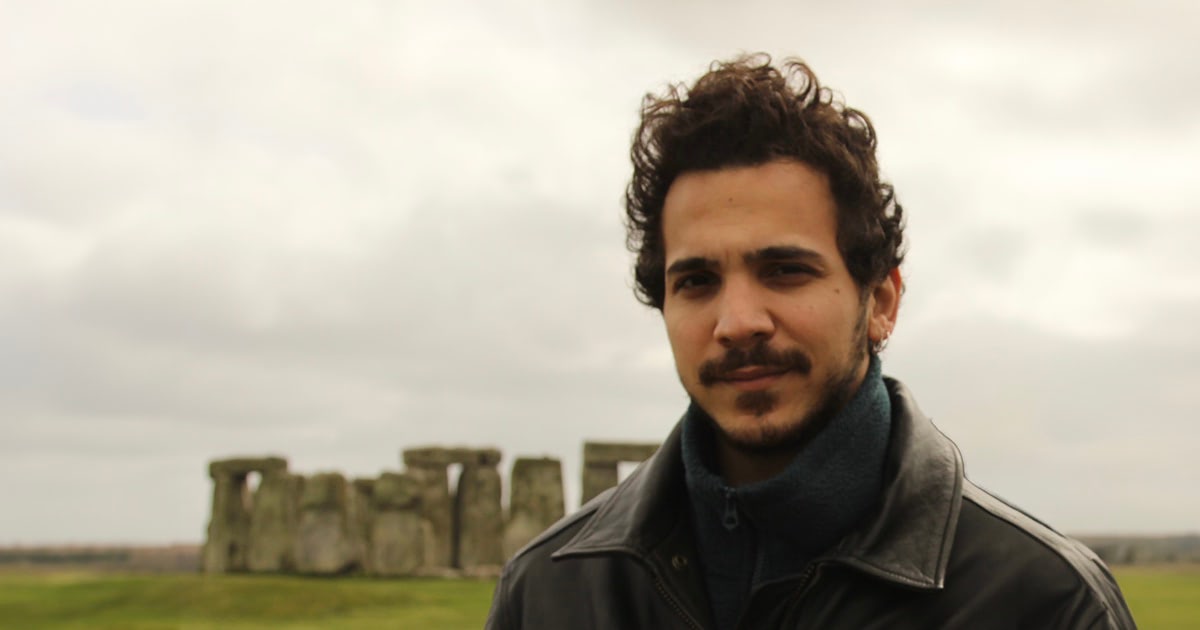
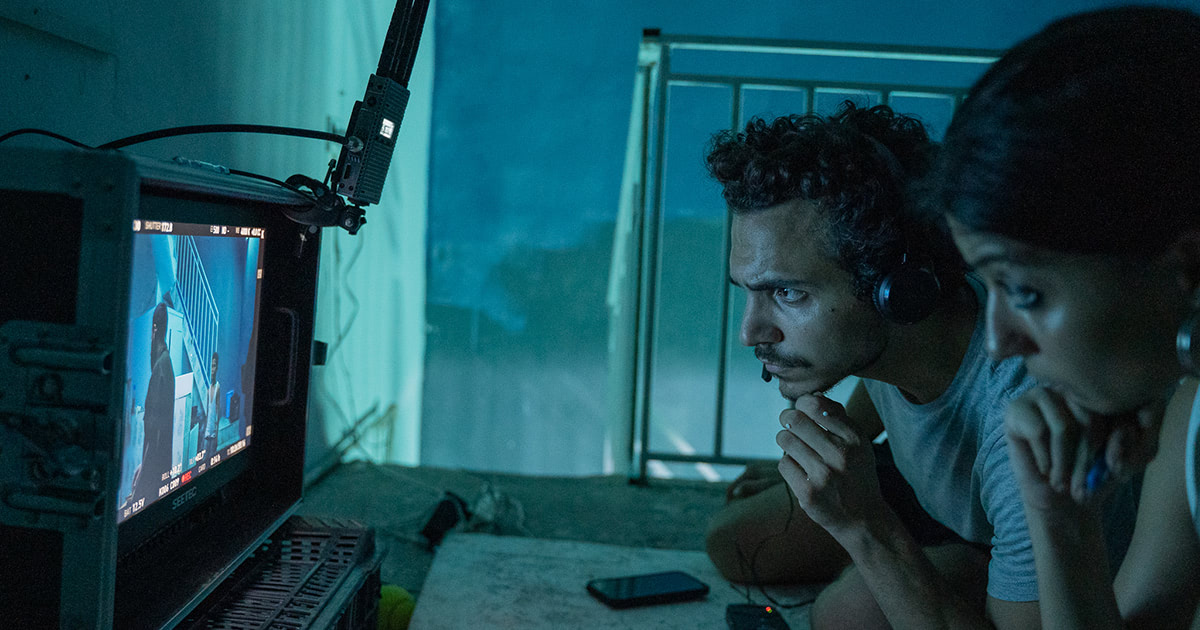
Many years after graduating from LAU, Firas Itani (BA ’18) is still nostalgic for the place where he first explored his passion for filmmaking and theater and formed long-lasting friendships with his peers and mentors.
Today, the aspiring filmmaker, who graduated with a BA in Television and Film, is making strides in his career with his award-winning independent short film, Lower Ground, which paints a striking and vivid picture of societal struggles.
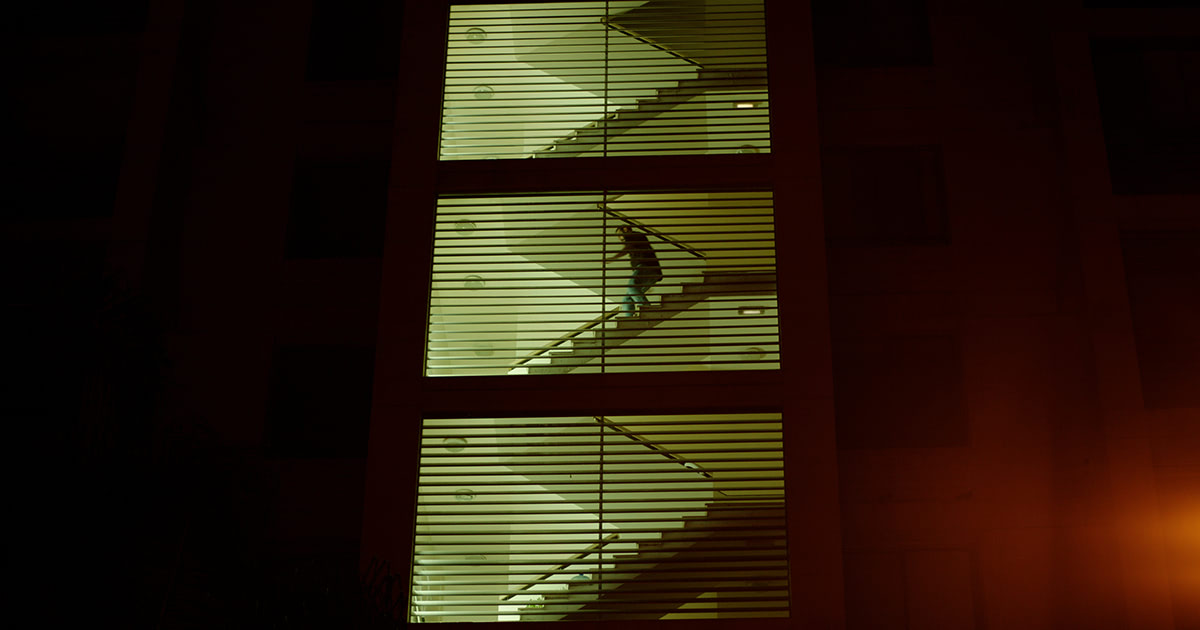
Set in Beirut, Lower Ground offers an intimate and moving story of an evening in the life of Samir, a Syrian concierge (natour) who shares a cramped room with his nephew in the basement of the building he maintains. The 13-minute tense drama presents a social critique that explores themes of classism, inequality, servitude, and what Itani describes as the paradox of labor demands in modern society.
For Itani, the concierge is a manifestation of Syciphus, who is caught in a grueling cycle of labor, conveyed in the film through repetitive rhythm and movement that only builds up in tension throughout.
Lower Ground won Best Short Film in 2025 at the 29th EU Film Festival in Beirut, Best Cinematography at the Lebanese Independent Film Festival in 2023, and Best Editing at the IE Film Festival in Madrid in 2023. It has also screened internationally at Oscar and Bafta qualifying festivals, including the Odense International Film Festival (OFF), London Short Film Festival, and Aesthetica Short Film Festival.
Itani’s journey began at LAU with his senior project, Sugarcoat | مش معمول , which won Best Capstone in 2018, premiered at the Lebanese Film Festival in Beirut, and was later screened in Los Angeles.
After graduating, he received a full scholarship from the Said Foundation to pursue an MA in Filmmaking at the University of Sussex in the UK. This experience expanded Itani’s practice and led to the creation of Lower Ground, which started as his senior project in 2022 and later screened in local and international film festivals.
Itani collaborated with several LAU alumni, some of whom were his classmates, in the making of the film, including Assistant Director and Producer Carina Ashkar (BA ’19), Director of Photography Karim El-Ali (BA ’19), Production Designer and Art Director Rahaf Jammal (BA ’19), and Editor Adam Jammal (BA ’19).
Currently based in London, Itani is now co-writing a new short film, set in London, which explores themes of alienation in the modern world.
In this interview, he discusses the idea behind Lower Ground, the role of sound and ambiance in conveying class divide, and how his experience at LAU shaped his artistic vision.
How did the idea for the film come about? Why did you decide to make it about classism and systematic erasure?
For Lower Ground, I imagined a concierge cleaning the entrance of a building. I kept seeing people coming through and stomping all over the mopped floor, as he would go back to clean it again. I compared him to someone trapped under the weight of a Sisyphean task, rolling the rock up the mountain, over and over again. This is how the idea first took shape. Initially, it was meant to be a very short film, like three minutes. But I wanted to develop it with more narrative and depth.
Through the film, I wanted viewers to take a moment to contemplate how we are contributing to this class divide and what we can do to make things a bit better for others.
Globally, we work tirelessly to sustain ourselves and our loved ones, while that same grind quietly erodes the relationships we’re trying to protect. This is also the paradox that I wanted to show in the film.
What are the directorial decisions that shaped the film, and how did you choose to convey themes of classism and inequality?
The settings in the film were all treated very differently. The class divide is distinguished through color. The room in the basement is a dimmed-out color blue to show how the male protagonist Samir and his life are made invisible. No one actually sees or cares about what’s happening in this basement room. In contrast, the apartment upstairs is orange, with warm tones to convey abundance.
In terms of camera movement. Upstairs, the camera is on a tripod and static, because everything is controlled by the apartment’s resident Jocelyne. When she moves, the camera moves to show that she is in control. So, even the camera was betraying Samir and was following Jocelyne’s orders, like he has to follow her orders.
Meanwhile, in the basement, the camera was handheld. Samir is at home with his nephew, where he is most relaxed away from prying eyes. The camera movement is fluid and follows his rhythm.
There’s a palpable sense of urgency that carries the viewer throughout as the tension builds up. How were you able to achieve that?
If you noticed, there’s no music in the film, there’s no soundtrack. I used diegetic sound to create the soundscape, relying solely on sound from the film’s world, including that of Beirut. This is how I created that tension.
For example, the way Jocelyne incessantly rings the intercom shows that she, too, is anxious, and that anxiety is transferred to him. The tension builds, he becomes more stressed, and the stakes are higher.
You opt for long takes in several scenes. What did you hope to evoke?
I wanted the viewer to connect with this boy and to create the feeling of being with these characters in the room, to just sit with them in the moment. This is why I took my time because I didn’t want it to feel rushed. Two minutes on camera, uninterrupted, is a long time. But I wanted to achieve that feeling.
Going back to your experience at LAU, how did it shape your creative approach, and what do you still carry with you that influences your work?
I realized that resorting to these long takes in the film was actually the influence of my theater background. I recently shared my work with Dr. Mona Knio, who was one of my theater instructors and whom I greatly respect. My background in theater is still felt in my work. This is why I choose minimal editing, long takes and no music. Theater is the foundation for everything. This is why I felt it was important for me to learn this art form as a student, what it means, and how it influences film.
I really miss my time on campus. LAU allowed us a space to explore, try different things and learn how to convey ideas artistically. I greatly appreciated the communication arts program because, as a multidisciplinary program, it gave students a bit of everything. We studied theater, journalism and research skills, film and television. I am a well-rounded communication artist because I need all these skills to make a project happen from A to Z.
As an aspiring filmmaker, what advice would you give film students?
Keep it simple, trust yourself and what you want to tell. Follow your instincts and try to nurture the collaborations or relationships you make at university, because filmmaking is a collaborative art. You can never do it on your own. Find the editor or writer whose style you appreciate, and try to maintain these connections.
This interview has been edited and condensed for the sake of clarity.


