LAU and the Michel Issa Foundation Partner to Drive Community-Based Development
The collaboration will expand students’ prospects through internships, fieldwork, scholarships, and innovation programs while advancing applied research and scalable solutions.
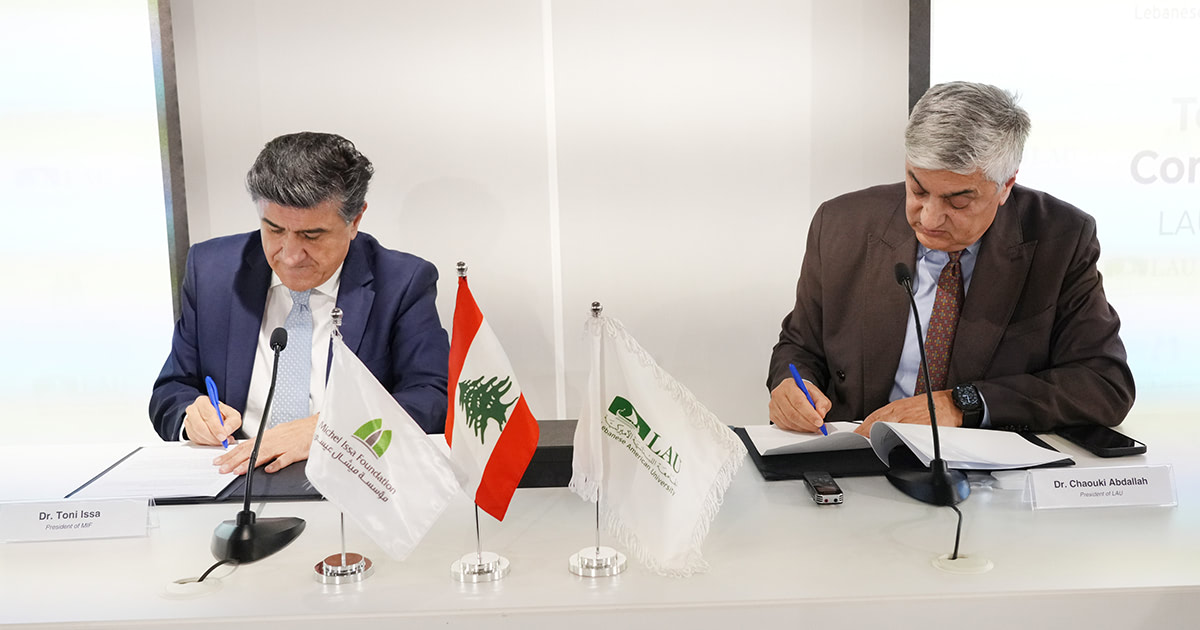
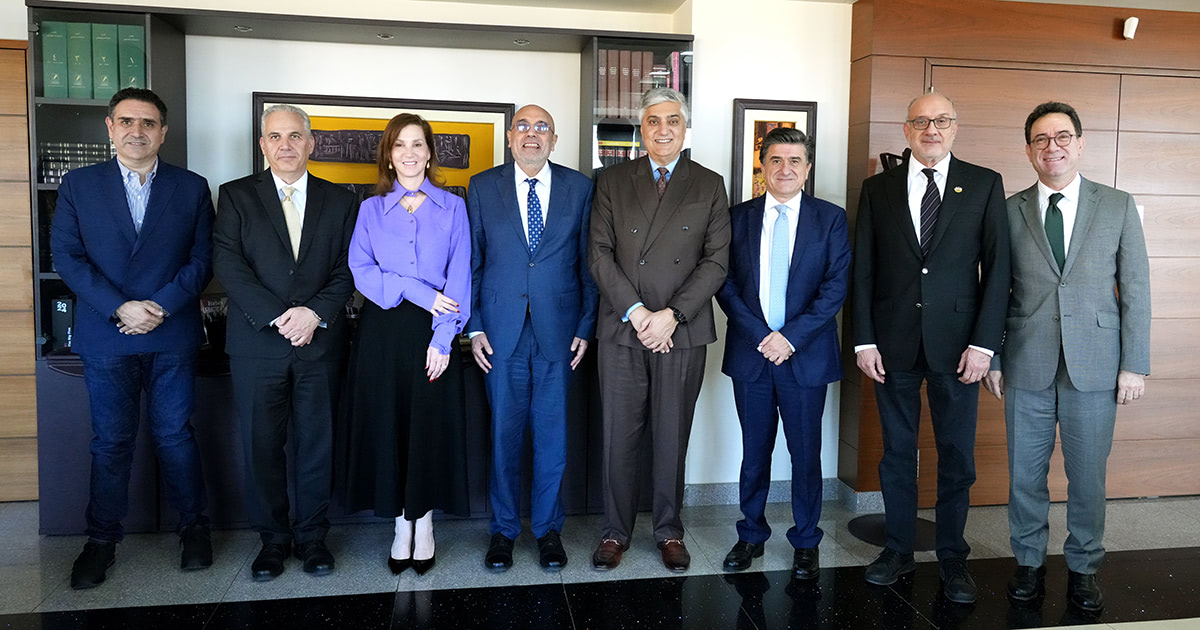
A new collaboration between LAU and the Michel Issa Foundation (MIF) will connect learning and research to the realities of communities while opening up a host of opportunities for LAU students to contribute to Lebanon’s sustainable future.
The three-year Memorandum of Understanding, signed on November 27, 2025, at the foundation’s headquarters in Amchit by LAU President Chaouki T. Abdallah and MIF President Toni Issa, was attended by Chairman of the IPT Group Foundation Michel Issa, an LAU delegation, Issa family members and staff of the foundation.
At the heart of this agreement is a shared belief that universities are an integral part of society and that development thrives when it is informed by rigorous knowledge. By linking LAU’s academic excellence and research capacity with MIF’s deep field presence and experience in local development, the partnership creates a living platform for cooperation across research, education, innovation and community outreach.
Together, LAU and the MIF aim to tackle socio-economic, environmental, and cultural challenges through applied research that is designed not only to understand problems but to produce solutions that can be tested, refined, and scaled.
“This agreement reinforces our mission to bring high-quality research, youth energy, and innovative thinking to the heart of Lebanon’s local development process,” said Dr. Issa at the signing ceremony. “By working hand-in-hand with LAU, we aim to create projects that are impactful, community-driven, and sustainable.”
Underscoring the university’s commitment to civic engagement, Dr. Abdallah, in turn, remarked that the partnership exemplified “LAU’s dedication to bridging academic knowledge with societal needs. It empowers our students and faculty to contribute meaningfully to Lebanon’s development.”
The MOU expands opportunities for students through internships, fieldwork, scholarships, and hands-on engagement in MIF programs and community projects. Students will have the unique opportunity to contribute to research that addresses urgent priorities, such as rural livelihoods, sustainable tourism, climate adaptation, energy transition, public health and cultural heritage, while building professional experience that employers and communities value.
The collaboration also promotes innovation and entrepreneurship as engines of local development. Through joint activities, such as competitions, hackathons, pilot initiatives, and training workshops, LAU and the MIF will encourage students and community members to co-create new approaches to development challenges.
Designed to support early-stage ideas with seed funding and mentorship, the partnership will help promising concepts grow into initiatives with real, measurable impact. At the same time, knowledge transfer will be a key outcome: Research findings will be shared through policy briefs, public reports, awareness campaigns, and co-produced publications and events that foster broader civic engagement.
While the agreement has a national scope, it specifically emphasizes the Jbeil District, where the MIF has been active since 2012. Jbeil will act as the center for collaborative efforts—an area where students, faculty, and the foundation teams can work closely with local stakeholders, understand community priorities, and develop models that can later be adapted elsewhere. In this way, the partnership becomes a direct investment in Jbeil and, at the same time, a model for how universities and civil society can partner across Lebanon.
On that score, Dr. Issa noted that LAU carried “a special meaning for us as people of this region. Its presence in Jbeil reshaped the district and expanded its possibilities. It opened doors for the region that we never imagined possible. For that, we are very proud to have LAU here.”


