LAU’s Clinical Simulation Center Expands With New Satellite Site
LAU strengthens graduate medical education with a new simulation facility near its medical center, giving residents direct access to cutting-edge, specialty-focused training and real-time clinical skill development.
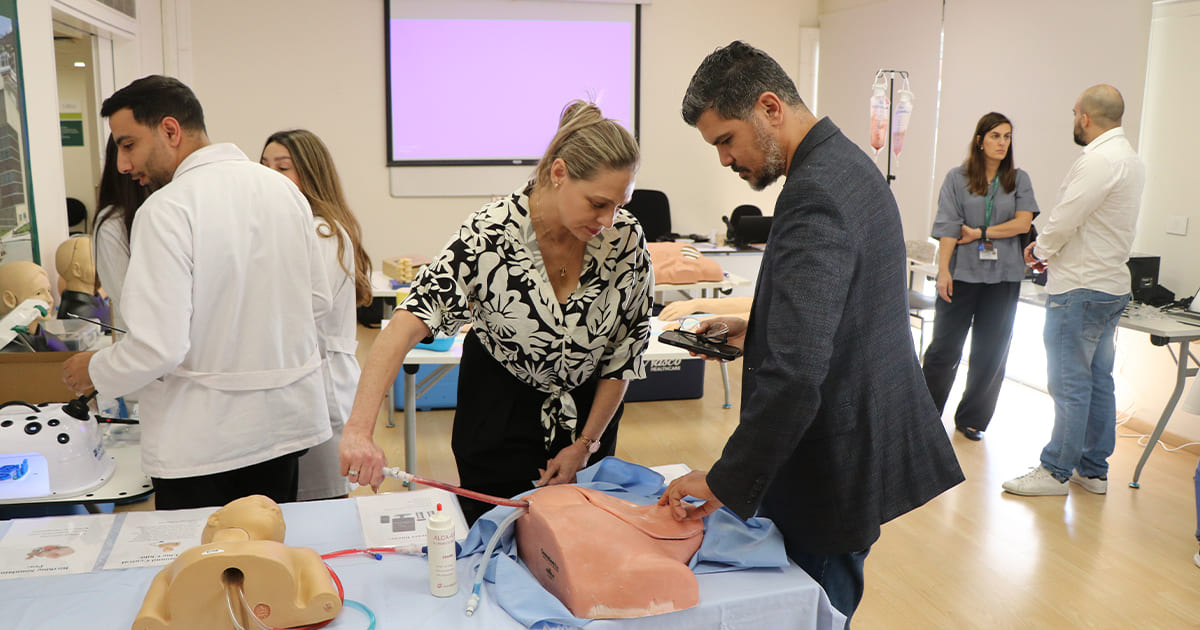
On October 31, 2025, the LAU Clinical Simulation Center (CSC) inaugurated a new satellite site for residents’ training at the LAU Gilbert and Rose-Marie Chagoury School of Medicine offices in the Sarraf Building, Beirut, marking a major step in bridging simulation-based education with hospital practice.
Just steps away from the LAU Medical Center–Rizk Hospital, the new facility offers residents accessible, continuous training in advanced medical and surgical procedures across multiple specialties, including pediatrics, obstetrics, radiology, ENT and neurointervention.
According to Dean Sola Aoun Bahous, this milestone represents more than an expansion of facilities; it’s a step forward in how the school brings learning closer to patient care. “By placing simulation beside the hospital, we are ensuring that our residents can seamlessly translate knowledge into practice,” she said. “It reflects our commitment to safety, excellence, and innovation in medical education, values that define the physician of the future.”
“This expansion was essential,” said Clinical Associate Professor at the LAU school of medicine and Director of the LAU CSC Hanane Barakat. “Our main center is well-equipped for undergraduate education, but residents have different training needs and tighter schedules. Since the hospital is far from the simulation center, we wanted to bring the experience to them.”
“Program directors can now schedule sessions for their residents to come in and practice,” explained Dr. Barakat. “That’s the real advantage—accessibility and immediate application of skills.”
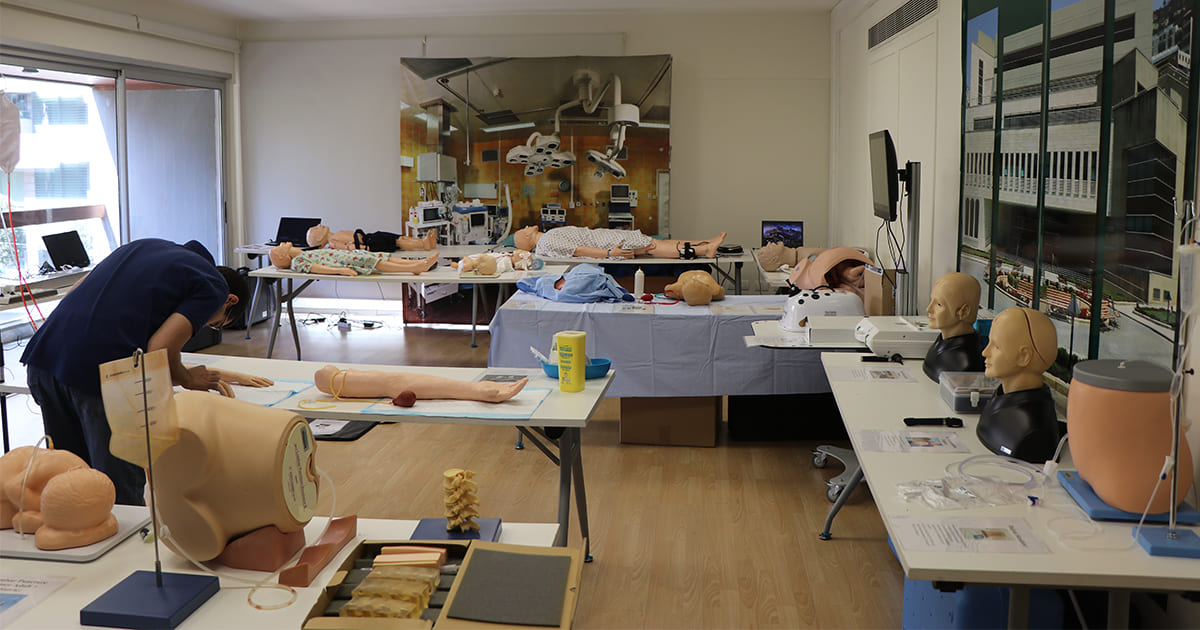
While the main CSC will continue to serve as a comprehensive hub for undergraduate and postgraduate learners, the new site was designed specifically for residents and attending physicians whose training involves complex, high-stakes procedures.
Equipped for simulations such as lumbar punctures, epidurals, central line insertions, laparoscopy and other advanced technology, the site allows repeated, risk-free practice that strengthens both competence and confidence before residents perform on real patients.
For Dr. Toufic Chaaban, clinical assistant professor and program director of the Residency in Internal Medicine at the school, the launch represents a turning point for graduate medical education. “This is a milestone for our residents,” he said. “Now that the simulation center is close to the hospital, trainees can access resources easily, and program directors can embed simulation directly into their curriculum. It’s no longer just a workshop; it’s an integral part of structured training that strengthens both learning and patient safety.”
Beyond procedural practice, the site provides a controlled environment where faculty can conduct structured assessments of residents’ technical skills and clinical decision-making. Each simulation can be monitored, recorded, and debriefed, allowing for measurable, objective feedback on performance and progression, a significant asset in competency-based medical education.
The new site also houses an AI-driven avatar simulation for clinical communication skills, reflecting the school of medicine’s holistic approach to clinical training. Through interactive, scenario-based exercises, residents learn how to manage delicate conversations, from breaking bad news to calming distressed families, while receiving real-time feedback on empathy, tone, and professionalism.
The facility’s inauguration reinforces LAU’s leadership in simulation-based medical education. Accredited by the Royal College of Physicians and Surgeons of Canada (RCPSC), the CSC upholds global standards in education, ethics, and administration, and serves as an American Heart Association (AHA) International Training Center offering advanced life support and resuscitation programs.
To maintain its cutting-edge capabilities, the center operates under long-term equipment licensing agreements that ensure regular software updates and technical maintenance. Dedicated mentors oversee every simulator, ensuring that each system functions optimally and evolves with emerging technologies.


