Modern and Complex PCI: LAU Advances the Future of Interventional Cardiology
The LAU Gilbert and Rose-Marie Chagoury School of Medicine brings together leading cardiologists to showcase the latest heart procedures and advanced imaging, driving innovation in cardiac care.
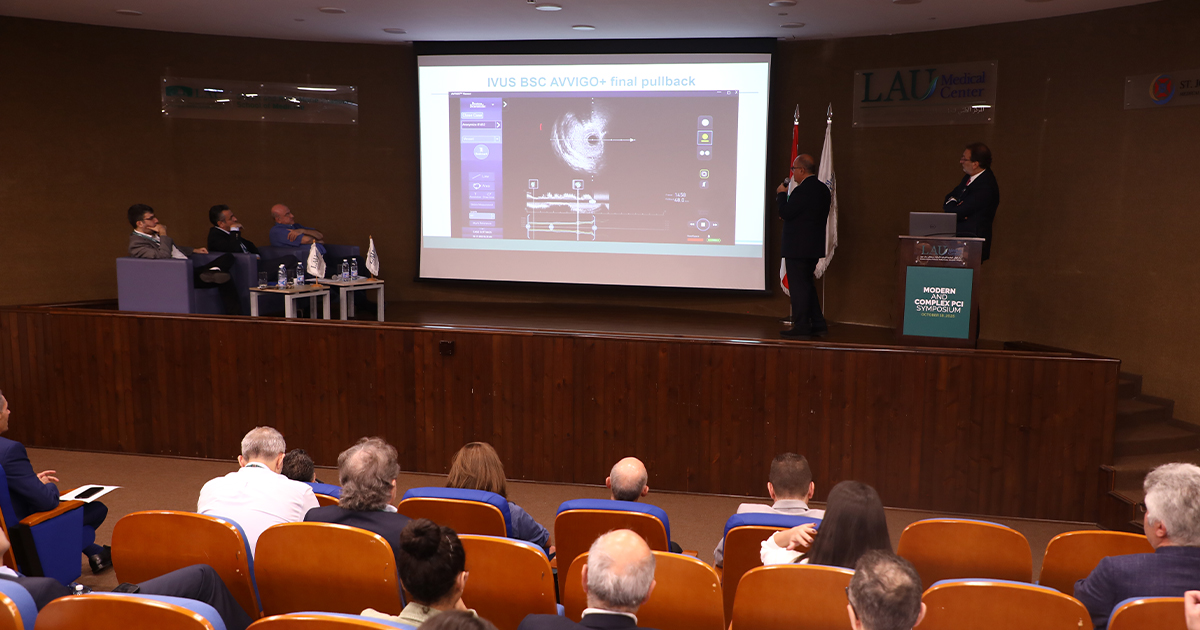
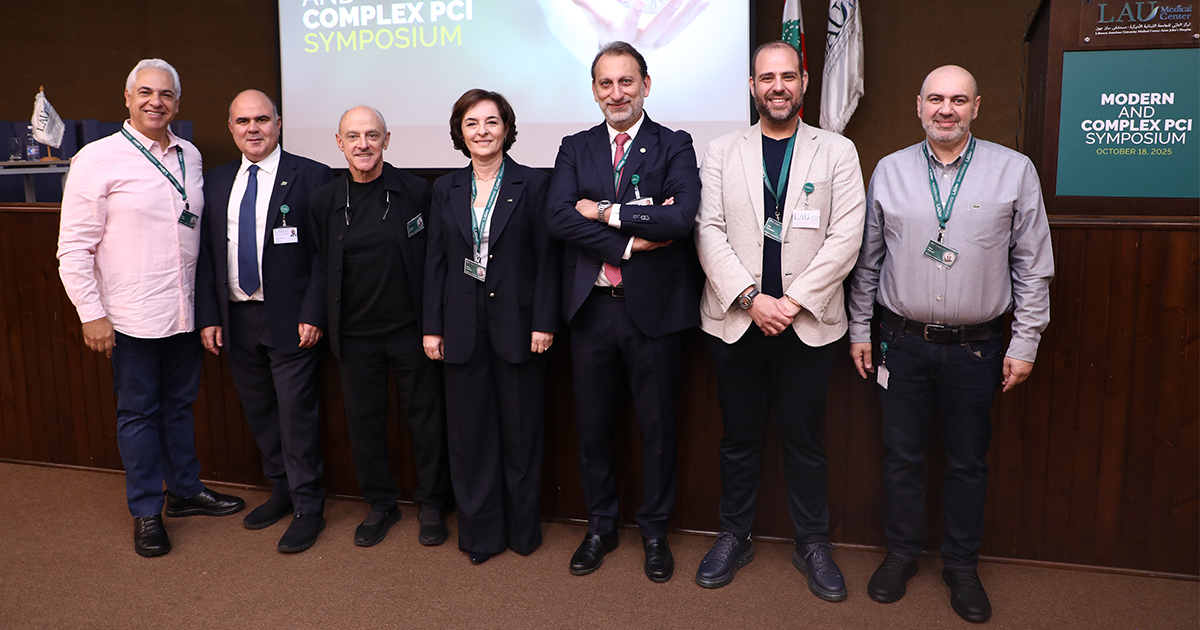
Cardiovascular disease remains the leading cause of death worldwide, claiming nearly 18 million lives each year. Among the most effective treatments to combat this epidemic is Percutaneous Coronary Intervention (PCI)—a minimally invasive procedure that has revolutionized heart care and continues to evolve through innovation and collaboration.
In line with these advancements, the Division of Cardiology in the Department of Internal Medicine at the LAU Gilbert and Rose-Marie Chagoury School of Medicine organized a one-day scientific symposium titled Modern and Complex PCI: Advances, Challenges and Practice on October 18, 2025, at the LAU Medical Center–Saint John’s Hospital.
This Continuing Medical Education (CME) symposium not only showcased LAU’s leadership in interventional cardiology but also underscored its dedication to continuous learning and innovation.
“Through such initiatives, we aim to inspire and equip the next generation of cardiovascular specialists to advance patient care across Lebanon and the region,” said Associate Dean for Faculty Affairs and Development at the LAU Gilbert and Rose-Marie Chagoury School of Medicine Vanda Abi Raad.
The event brought together national experts to exchange knowledge, present clinical cases, and discuss the latest advancements and challenges in cardiac interventions and imaging.
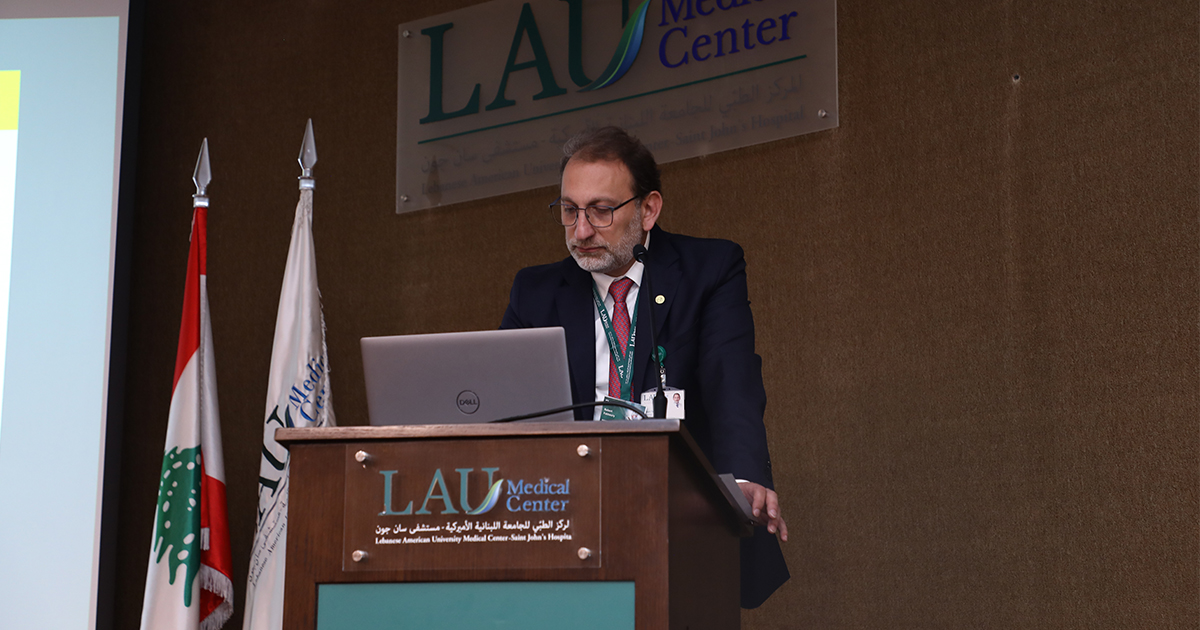
It opened with welcoming remarks from activity director and Clinical Assistant Professor Robert Fakhoury, who emphasized how such symposiums translate knowledge into practice. “Continuous education is the foundation of excellence in medicine,” he noted. “By sharing our expertise and the latest techniques, we empower residents, fellows, and specialists to deliver safer, more effective interventions and better outcomes.”
Building on this vision of collaboration, Clinical Associate Professor at the LAU school of medicine and Chief Medical Officer at LAU Medical Center–Saint John’s Hospital Wadih Ghaname, highlighted the shared mission to advance cardiovascular care. “We gather as professionals united by purpose,” he said, “to improve patients’ lives through knowledge, innovation, and teamwork.”
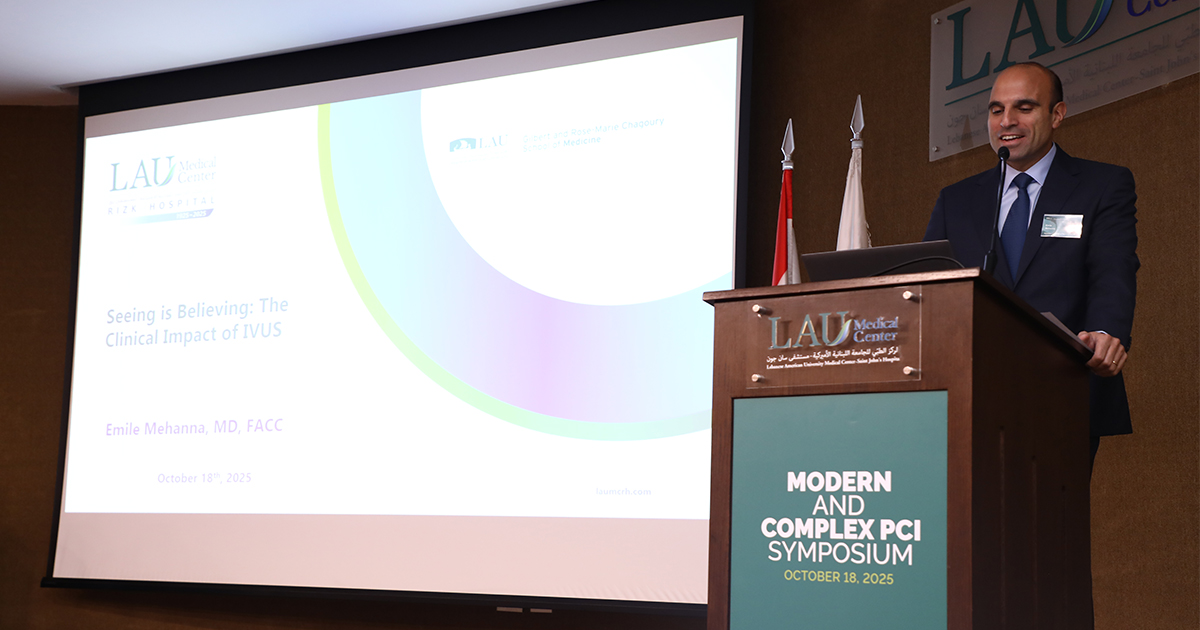
The program featured a full day of sessions moderated by leading interventional cardiologists from across Lebanon, starting with a series of presentations on cutting-edge imaging.
Clinical Assistant Professor Emile Mehanna kicked off with a lecture on the impact of Intravascular Ultrasound (IVUS), and how it has transformed coronary intervention: “We don’t need to guess anymore,” he said. “With IVUS, we see from the inside, prepare the lesion properly, and treat it accurately. Imaging improves outcomes not just in the short term but for years after the procedure.”
Dr. Mehanna’s insights naturally led to Assistant Professor Charbel Naim’s presentation on Optical Coherence Tomography (OCT), an advanced imaging technique that uses light waves to create ultra-high-resolution, cross-sectional images of blood vessels, which offers an even higher-resolution view of the coronary arteries. “OCT is the 4K of interventional imaging,” Dr. Naim explained. “It allows us to move beyond angiographic assumptions and truly understand what’s happening inside the vessel. In complex anatomy, that level of precision is indispensable.”
Next in the program, Dr. Fakhoury tackled one of interventional cardiology’s toughest challenges: Coronary calcification in PCI. Highlighting the complexity of modern interventions, he noted, “Up to one third of PCI cases are complicated by moderate to severe calcification, and it’s increasing over time.” He emphasized the importance of precise lesion preparation and plaque modification using rotational and orbital atherectomy, cutting balloons, and shockwave lithotripsy. “By seeing the lesion clearly with OCT and IVUS, we can ensure optimal stent expansion and reduce complications, ultimately improving patient outcomes,” he said.
The remaining sessions explored advanced techniques in complex PCI, covering the treatment of Chronic Total Occlusion (CTO), left main coronary artery disease, bifurcation lesions, and strategies involving drug-coated balloons (DCBs).
The symposium’s closing session was led by Clinical Professor George Ghanem, who presented on Transcatheter Aortic Valve Implantation (TAVI), a minimally invasive medical procedure to replace a diseased aortic heart valve. Dr. Ghanem pioneered the TAVI program in Lebanon in 2012 and is the first cardiologist in the country to perform a MitraClip procedure without resorting to open-heart surgery.
“Transcatheter valve replacement has transformed from a novel procedure to a cornerstone therapy,” Dr. Ghanem said. “What began as an option for high-risk patients is now the preferred treatment for many. The data show improved survival and quality of life—TAVI is no longer the future; it’s the present.”
He discussed the growing evidence supporting early intervention and expanded indications, including asymptomatic severe aortic stenosis. “We must not wait for the heart to fail before we act,” he added. “Today’s technology and expertise allow us to treat earlier, safer, and smarter.”


