Pharmacy Forward: LAU Conference Redefines Pharmacists for a New Era
The School of Pharmacy holds a landmark conference to explore innovations, challenges, and the evolving role of pharmacists in enhancing healthcare.
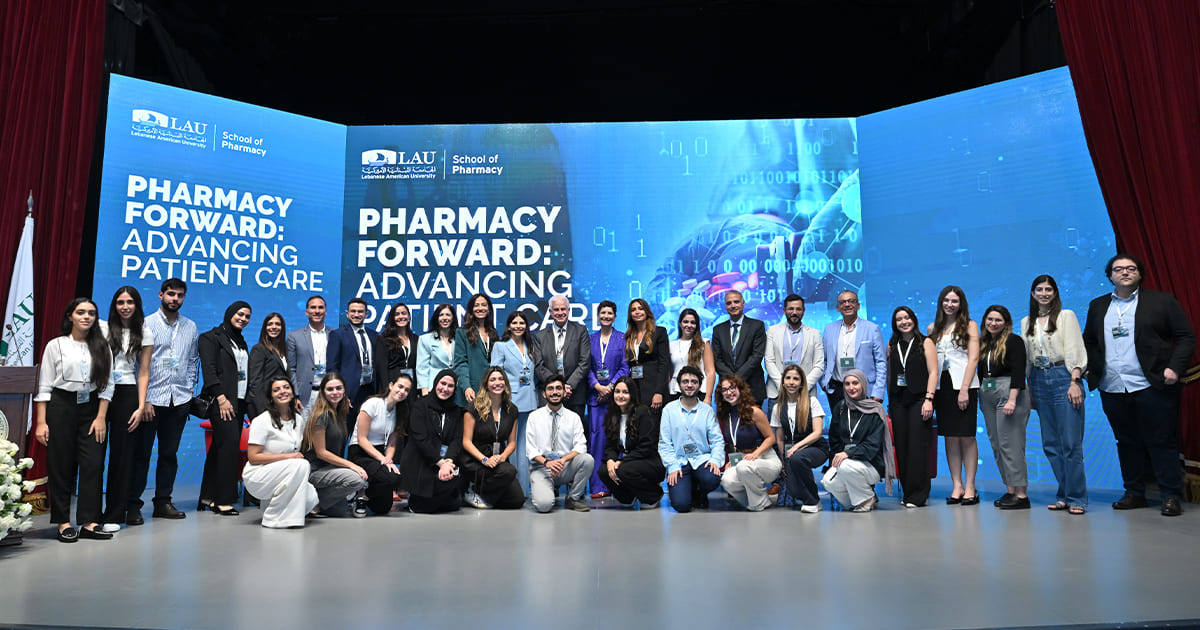
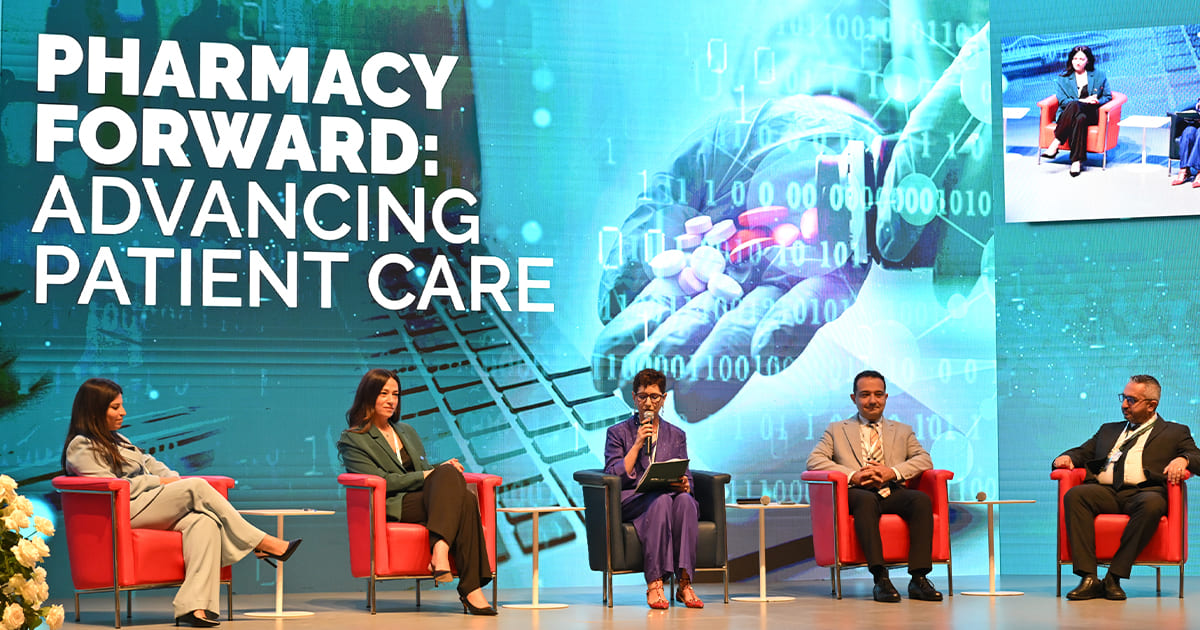
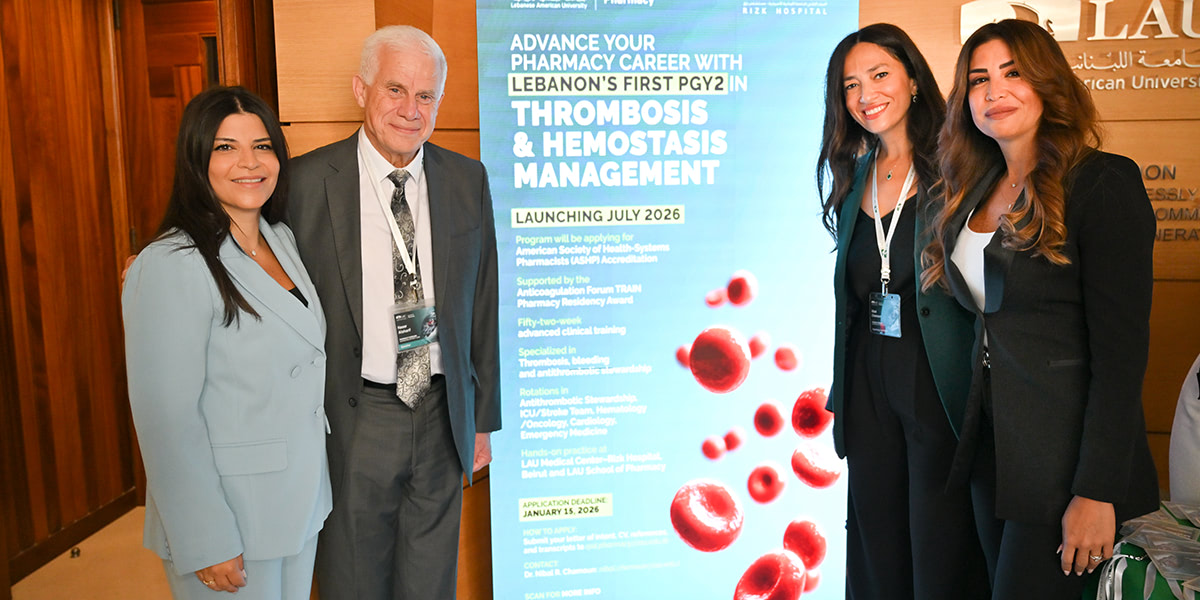
On October 4, 2025, the LAU School of Pharmacy brought together pharmacists, student pharmacists, alumni, healthcare professionals and international experts at the Beirut campus for Pharmacy Forward: Advancing Patient Care, a full-day conference exploring the innovations and challenges in modern pharmacy practice by defining the professional identity of the pharmacist, collaboration, and digital transformation.
The event featured a distinguished lineup of speakers and panelists from leading institutions, including the LAU School of Pharmacy, the LAU Medical Center–Rizk Hospital, and the American University of Beirut Medical Center, as well as from Houston Methodist St. Jude Children’s Research Hospital and Palm Beach Atlantic School of Pharmacy in the US.
The diverse roster of professionals at the forefront of innovation and patient care underscored the conference’s commitment to fostering cross-institutional dialogue and advancing best practices in pharmaceutical care.
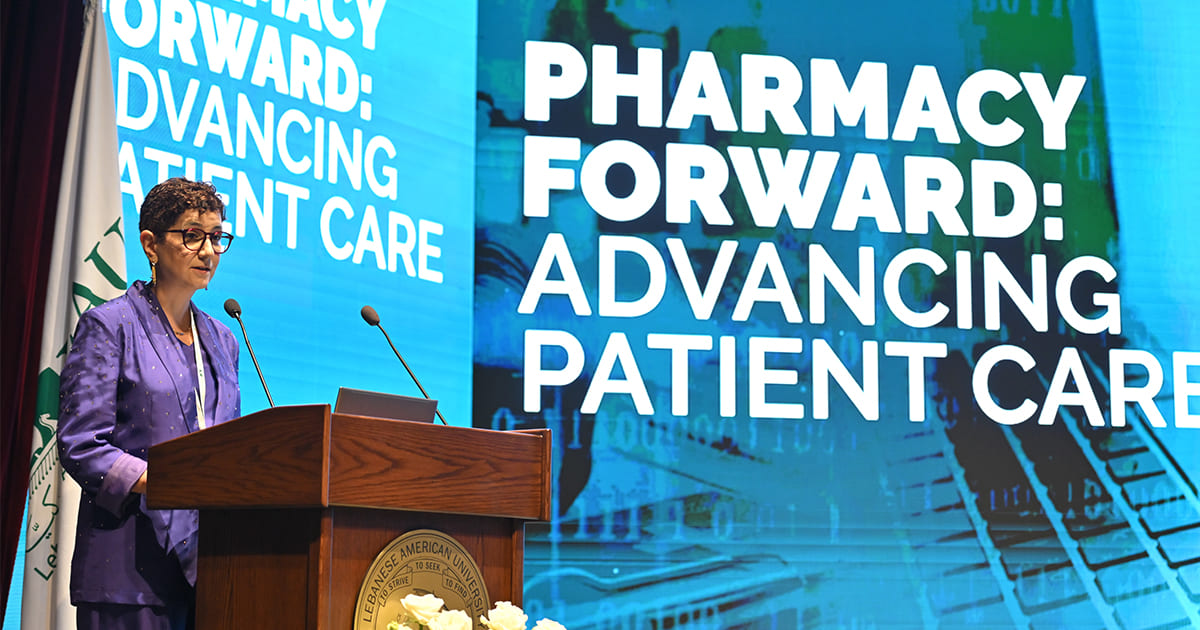
Opening the conference, Dr. Lamis Karaoui (PharmD ’05), clinical associate professor, assistant dean for student affairs and chair of the organizing committee, reflected on attending the first LAU pharmacy practice conference as a student in 2003, which put into perspective “the growth of our school, our profession, and our community,” she said.
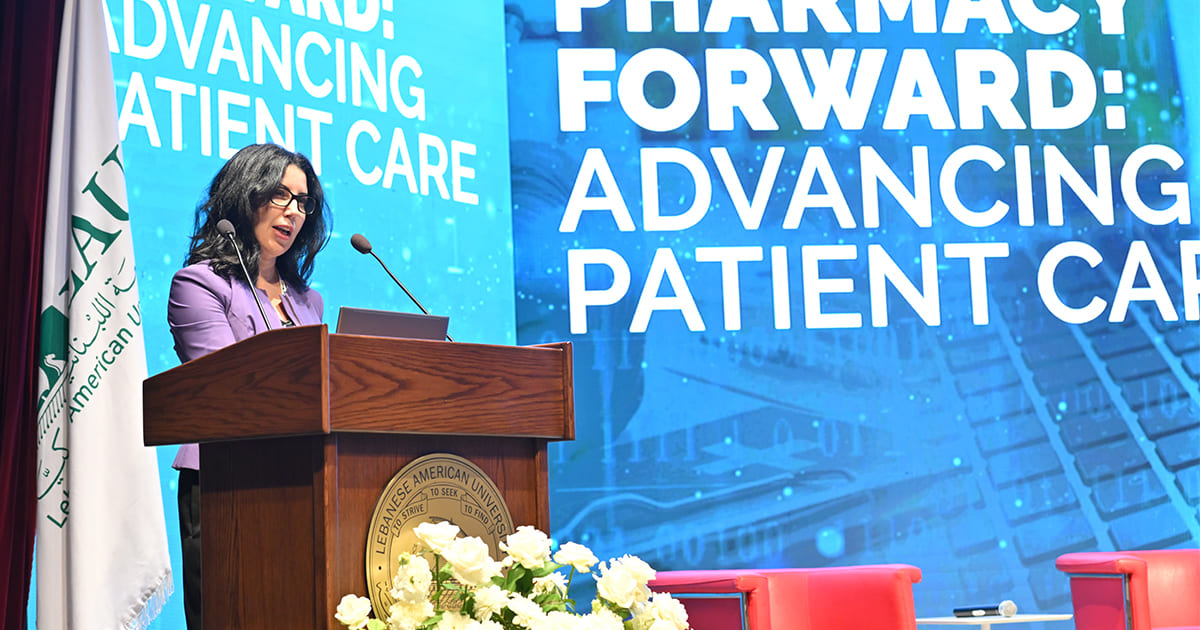
That spirit of progress and renewal was echoed by Assistant Provost for Accreditation and Academic Operations Rula Diab, who described the event as a testament to LAU’s enduring pursuit of excellence “at a time of rapid transformation in healthcare, when the role of the pharmacist is expanding.”
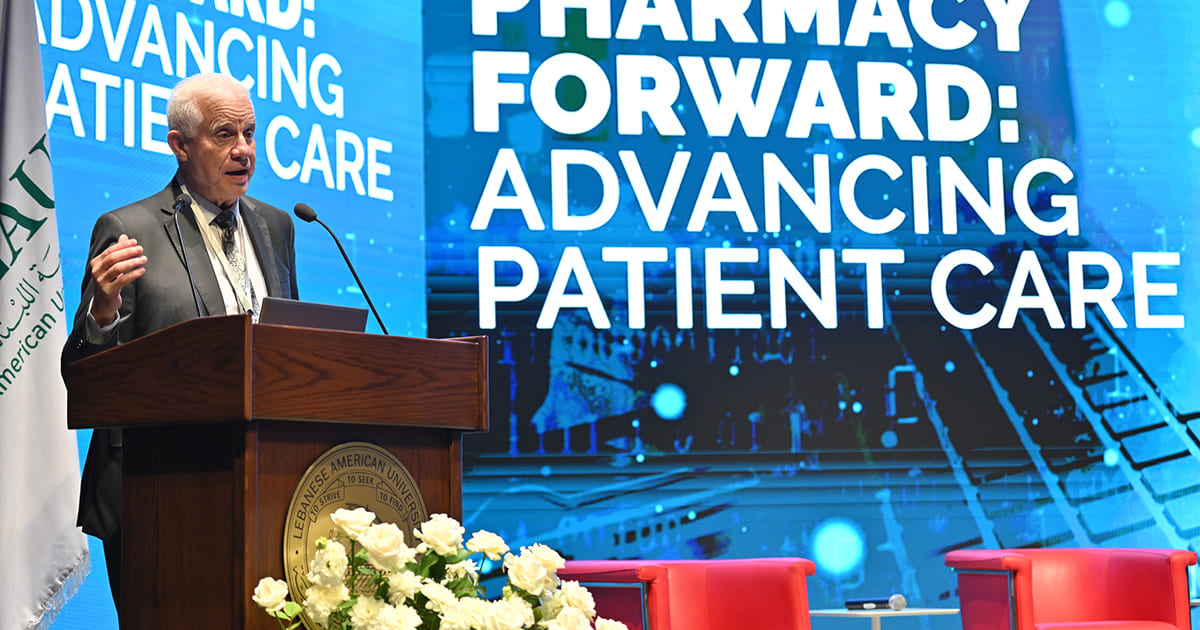
In his welcome remarks, Dean Naser Alsharif urged participants to approach the profession with curiosity and courage. “We must be disruptive innovators,” he said. “We want to embrace change, create new opportunities for our graduates, and work with compassion, humility and vision alongside nurses, physicians, and other professionals to optimize patient care.” This call to action resonated throughout the event, with Dr. Hanine Mansour, clinical associate professor and chairperson of the Department of Pharmacy Practice, amplifying the message in her opening speech.
In designing the day-long program, Dr. Karaoui explained that the conference organizing committee “prioritized themes that bridge practice advancement with clinical relevance, underscoring how pharmacists continue to transform patient care, optimize outcomes, and shape the future of healthcare delivery.” Each session intentionally addressed pressing topics shaping the profession’s present and future and was followed by an interactive Q&A to encourage dialogue between speakers, panelists and participants. The Order of Pharmacists in Lebanon granted 4.5 continuing education credits for this program.
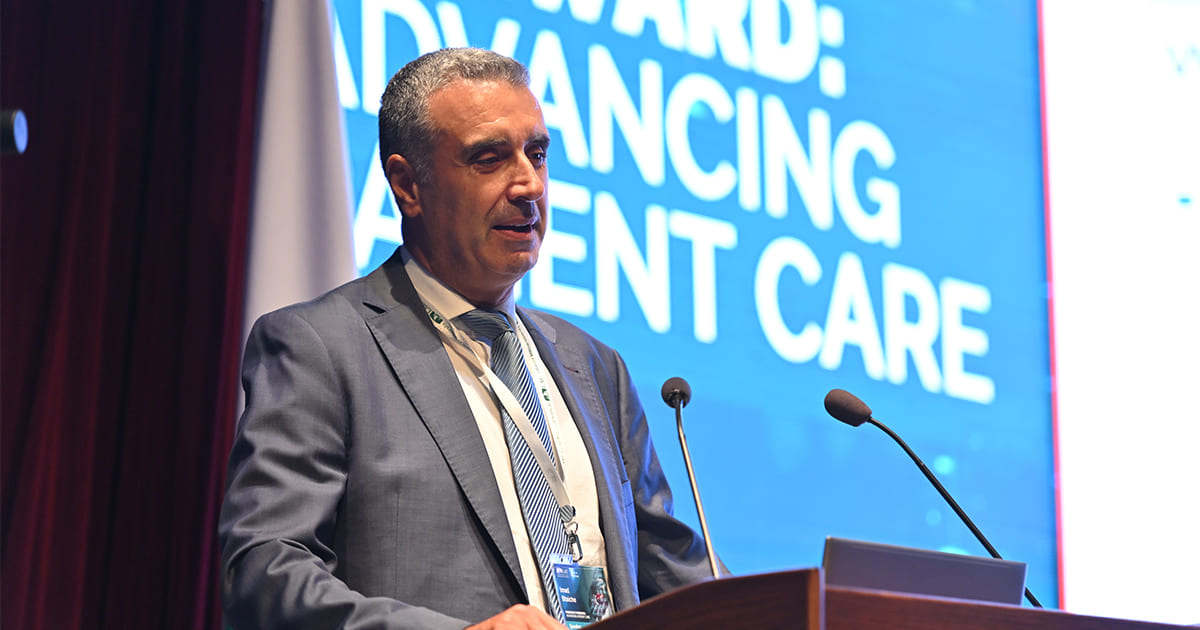
The scientific program opened with a compelling presentation by Dr. Imad Btaiche, professor and former dean of the LAU School of Pharmacy, tackling professional identity formation. Dr. Btaiche traced the evolution of pharmacists’ roles “from a primary focus on the product to a patient-centered mission,” warning that this shift sometimes created ambiguity about the pharmacist’s identity.
“Without our clear understanding of who pharmacists are and what we can do,” he said, “it is no wonder that others do not know exactly what our role is and what we can deliver.” To strengthen professional identity, he emphasized the importance of socializing, role modeling, and experiential learning.
The first panel discussion was multidisciplinary and addressed the integration of collaborative practice models within pharmacy and healthcare services, the emerging role of pharmacists in diagnosis and prescribing, and the need for specialized pharmacy training to reshape patient care.
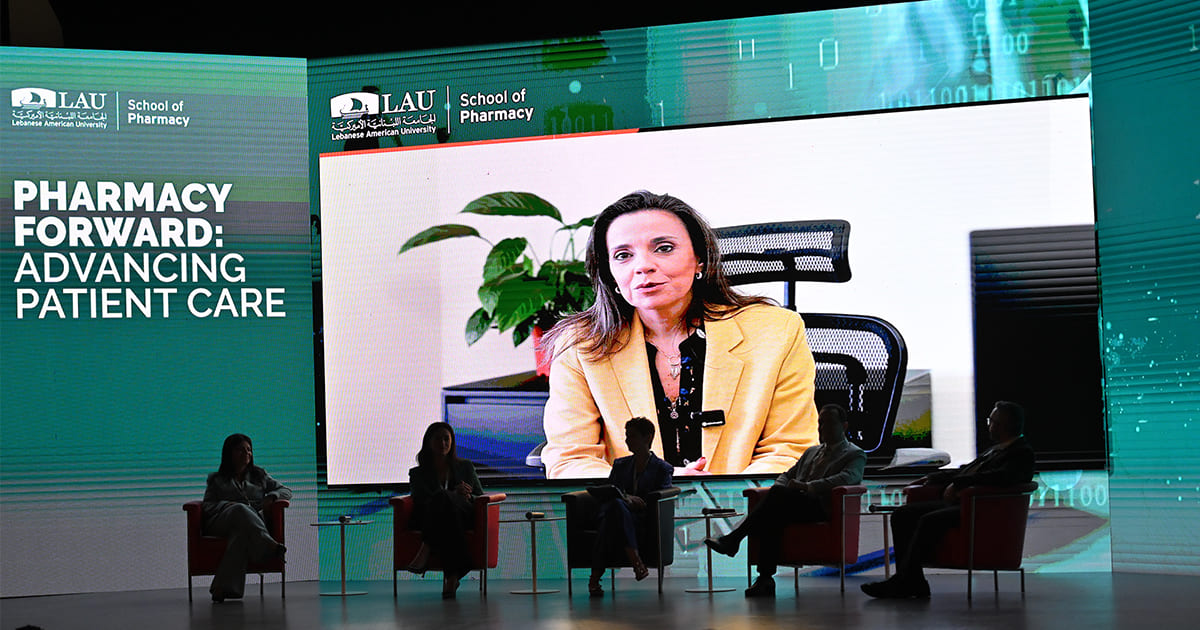
In fact, collaborative practice and interprofessional education fall under the LAU Health strategic plan, remarked Executive Vice President for Health Services Zeina Khouri-Stevens. “Our vision is to function as a unified academic health system, integrating education, clinical practice, and community engagement through shared standards that enhance care quality, patient safety, and collaborative excellence,” she said.
The remainder of the program showcased the status of local generics, with a focus on neurology drugs presented by Dr. Maya Zeineddine, clinical associate professor at the LAU School of Pharmacy, as well as advances in sterile compounding, the latest developments in obesity and depression management, and the impact of pharmacogenomics on patient care.
Sessions on antimicrobial and antithrombotic stewardships further highlighted LAU’s leadership in clinical advancement, with Dr. Nibal Chamoun, clinical associate professor and assistant dean for experiential education and residency program, announcing the launch of a new Thrombosis and Hemostasis Management postgraduate pharmacy residency program scheduled for July 2026.
The final session, titled Digital Health in Pharmacy and moderated by Dr. Elsy Ramia, clinical associate professor, clinical coordinator and digital health course instructor at the LAU School of Pharmacy, offered a fresh perspective on pharmacy robotics and human factor engineering through insights from leading experts.
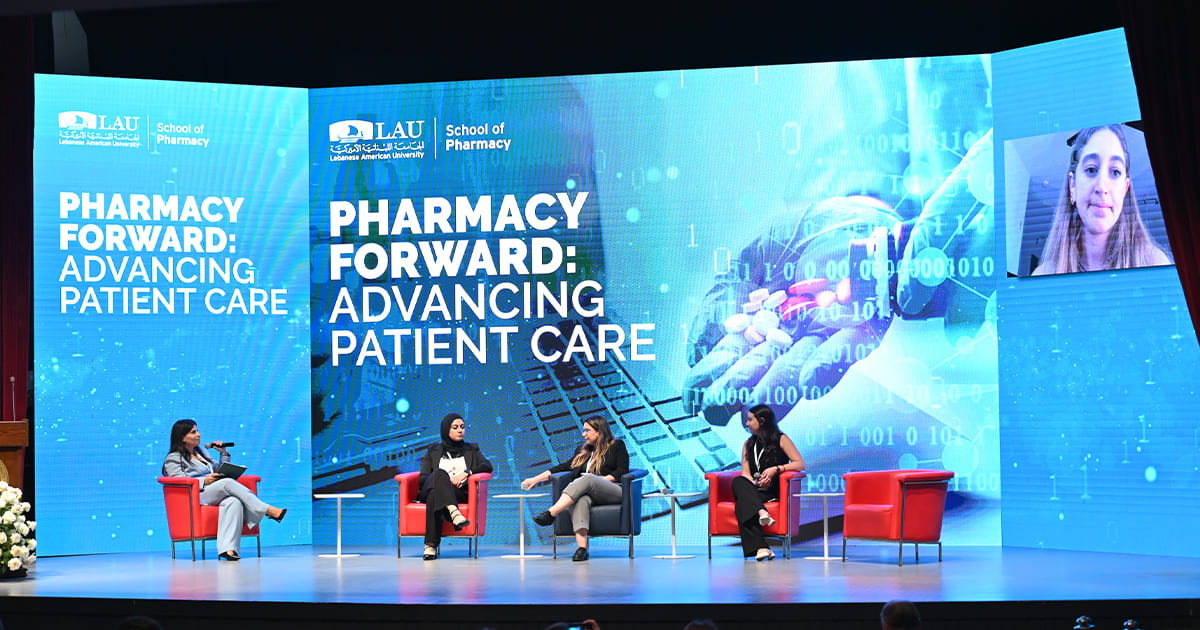
Additionally, the panel discussion provided a unique twist; it was led not by seasoned professionals but by LAU’s own students, residents, and recent graduates. Professional Year 3 (P3) student Ayah El Kurdy, P4 student Paola Ingea—who joined remotely from Houston Methodist, along with Post-Graduate Year 1 (PGY1) Pharmacy Resident Anna-Christina Sadaka (BS ’20; PharmD ’21) and Dr. Fatima Baalbaki (BS ’22; PharmD ‘23) formed a discussion panel on how the next generation of pharmacists is already living the digital transformation discussed throughout the day.
The panel explored how students and residents use AI to simplify complex pharmacy concepts, summarize lengthy articles, organize study schedules, and even generate practice questions, while also acknowledging the risks of overreliance on technology, such as diminished critical thinking and occasional inaccuracies requiring human oversight.
Looking ahead, panelists reflected on how AI could streamline routine tasks, enabling pharmacists to devote more time to patient-centered care and broaden their scope into new fields such as digital health and telepharmacy. As recent alumna Dr. Baalbaki summarized: “We can use AI as a support tool, but it will never replace the role of the pharmacist.”


