Regional and International Experts Gather at LAU to Explore Advances in Intensive Care
The LAU Gilbert and Rose-Marie Chagoury School of Medicine convened healthcare professionals to explore the latest innovations in patient monitoring, ICU nutrition, and antimicrobial therapy.
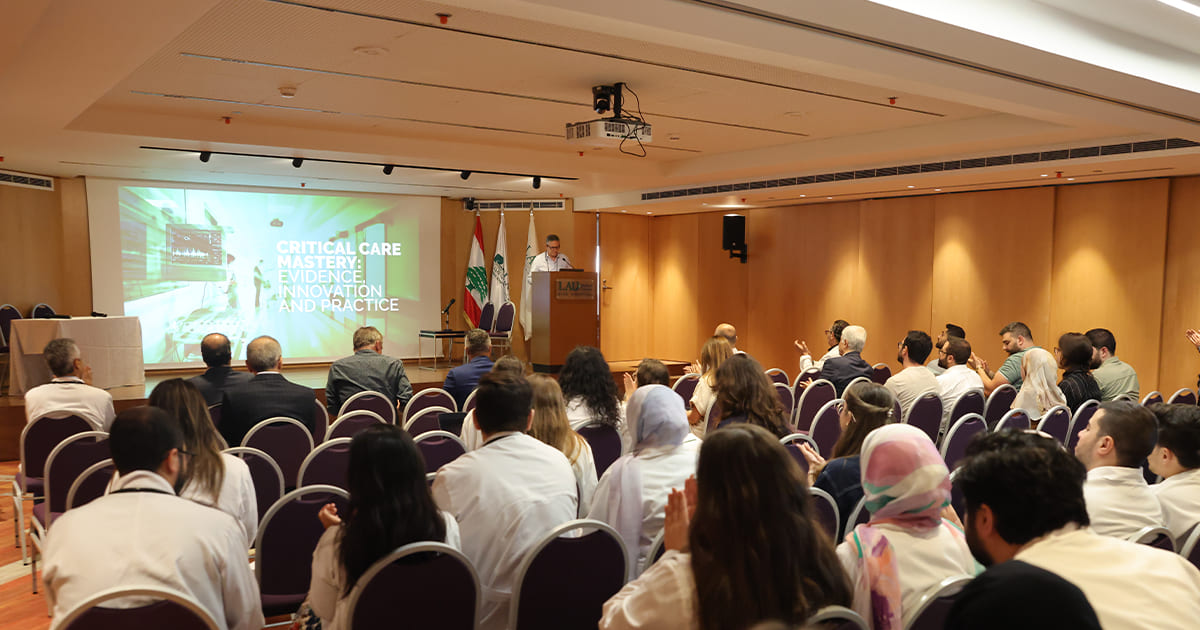
In an Intensive Care Unit (ICU), physicians often have mere minutes to intervene in life-threatening situations patients may face, such as sepsis, organ failure, or shock. Beyond survival, the care provided can preserve quality of life, reduce complications, and support life-long recovery.
At the rate that critical care medicine is evolving—testing the limits of science while shaping the future of patient outcomes—ongoing education and advancement are non-negotiable.
Against this backdrop, the Gilbert and Rose-Marie Chagoury School of Medicine organized a symposium titled Critical Care Mastery: Evidence, Innovation and Practice on October 3 and 4, 2025, at the LAU Medical Center–Rizk Hospital, to advance dialogue on hemodynamics, liver and pancreatic diseases, ICU nutrition, antimicrobial therapy, and ultrasound applications.
The two-day event, hosted by the Division of Critical Care Medicine as part of LAU’s Continuing Medical Education (CME) program, gathered intensivists, subspecialists, nurses, pharmacists, and dietitians from Lebanon, the region, and Europe.
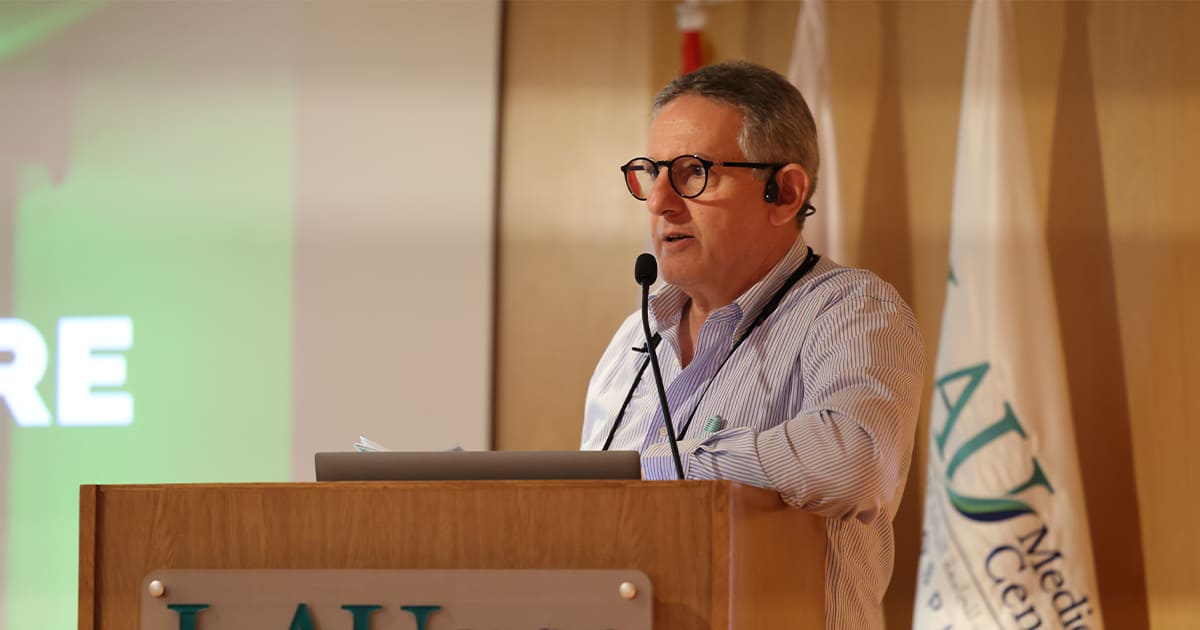
The goal of this symposium, said Dr. Fayez Abillama, clinical assistant professor and head of the Division of Critical Care Medicine at the school, was to “provide a platform for knowledge exchange and interactive discussion,” combining lectures, roundtables, and workshops to foster state-of-the-art practices nationwide.
Sessions on acute liver failure addressed the shifting causes of liver failure, from viral hepatitis to paracetamol toxicity and ischemic hepatitis, while outlining the complications that follow, including encephalopathy, brain edema, infections, shock, and renal failure.
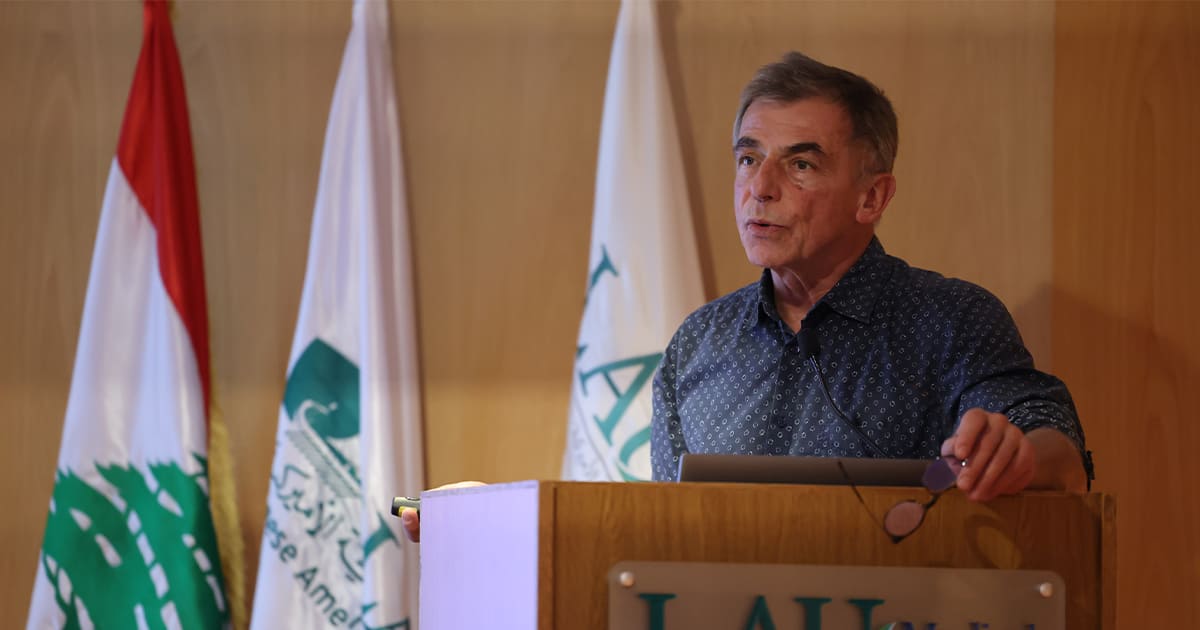
Acute liver failure, according to Dr. Pierre-Francois Laterre, head of the ICU at Saint-Luc University Hospital in Brussels, unfolds rapidly and triggers a cascade “of multiple organ dysfunction,” making it one of the most critical conditions seen in intensive care.
Nutrition was highlighted as central to critical care, with discussions on the high prevalence of malnutrition in ICU patients and its direct link to mortality, infections, delayed healing, muscle loss, and prolonged ICU stays. Considerable attention was paid to the timing of initiating feeding, the use of calorimetry to accurately measure energy needs, and the risk of both overfeeding and underfeeding.
“When you’re sick, you’re not hungry. The question is always when to start [feeding] and how much,” noted Dr. Laterre. “It is difficult as a physician to see your patient’s muscles waste away and think you can feed them out of it. You [have to] control the disease first—not through overfeeding.”
The consensus was that the adequacy of treatment is as vital as speed when discussing enteral and parenteral nutrition. “If the gut works, we have to use it,” asserted Dr. Abillama. This is because enteral nutrition “prevents mucosal atrophy, supports the immune system, stimulates peristalsis, reduces colonization by microorganisms, and comes at lower cost.”
Hemodynamics—the physical factors that govern blood flow—and antimicrobial stewardship were also central themes. Discussions emphasized dynamic monitoring methods such as venous oxygen saturation and CO₂ gaps to guide fluid and vasopressor therapy, as well as the importance of balancing prompt antibiotic use with responsible stewardship to prevent resistance.
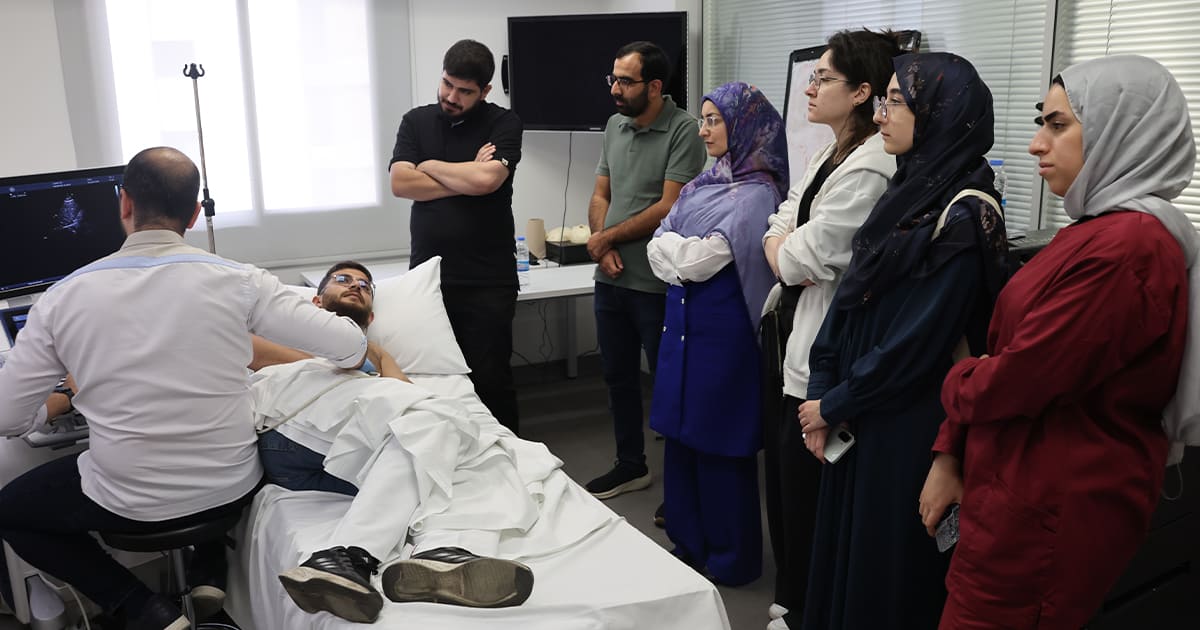
The program also distinguished itself through its interactive workshops, which bridged the gap between theory and practice. Hands-on sessions trained participants in the use of ultrasound technology, particularly cardiac and point-of-care ultrasounds, and the transcranial doppler ultrasound test to assess the flow of fluid and blood in the brain and detect early signs of impaired circulation.
“The transcranial doppler is a very important non-invasive method to assess pressure inside the brain,” said Dr. Dany Gaspard, clinical assistant professor and head of the Division of Pulmonary Diseases at LAU. “Until now, there hasn’t been a lot of expertise about this in Lebanon. We are trying to build that expertise.”
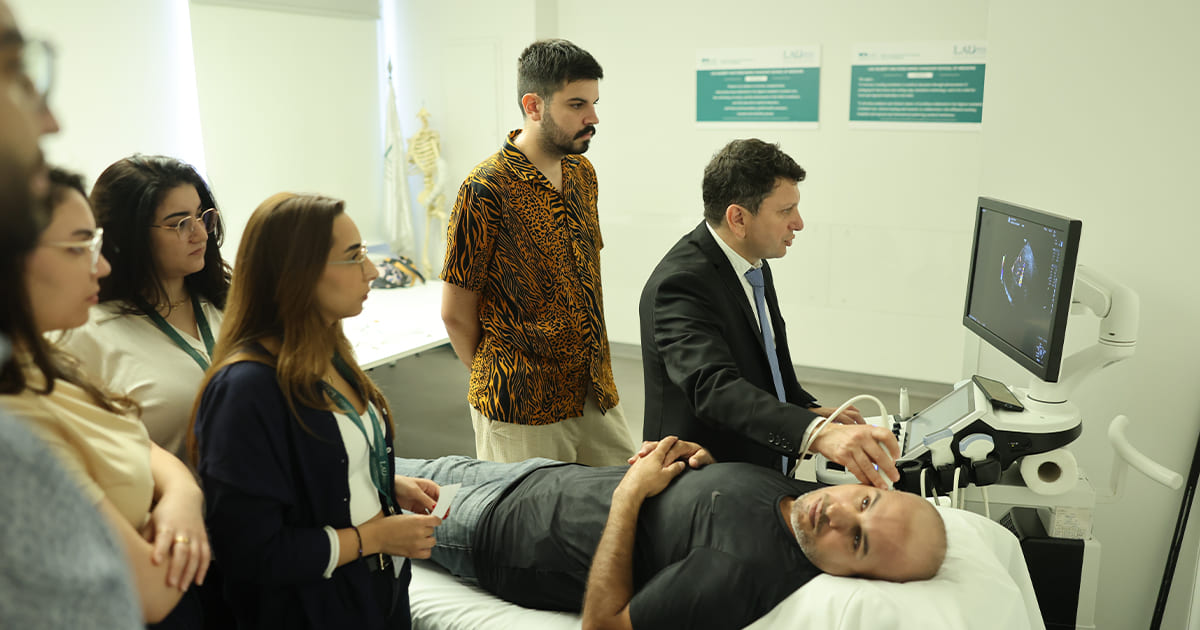
Another session guided participants through the setup and use of bedside hemodynamic monitoring systems, such as PICCO (Pulse Contour Cardiac Output) monitoring system.
“What we cannot measure, we cannot manage,” noted Mr. Badih Geha, senior clinical nurse educator at the LAU Medical Center–Rizk Hospital. “PICCO can provide us with measurable data that can be translated into life-saving decisions.”
By blending cutting-edge science, multidisciplinary collaboration, and practical training, the symposium reaffirmed LAU’s commitment to advancing critical care practice in Lebanon and the region, equipping healthcare professionals with the knowledge and tools to deliver better patient outcomes.
Reflecting on this mission, Dr. Gaspard concluded, “Medicine is going to get ahead of us unless we stay up to date. In medicine, we have to be continuous learners. This conference is part of that.”


