Reimagining Lebanon’s Industrial Future
Leaders from government, international organizations and the private sector explored how innovation, sustainability and human capital can reshape Lebanon’s industrial future.
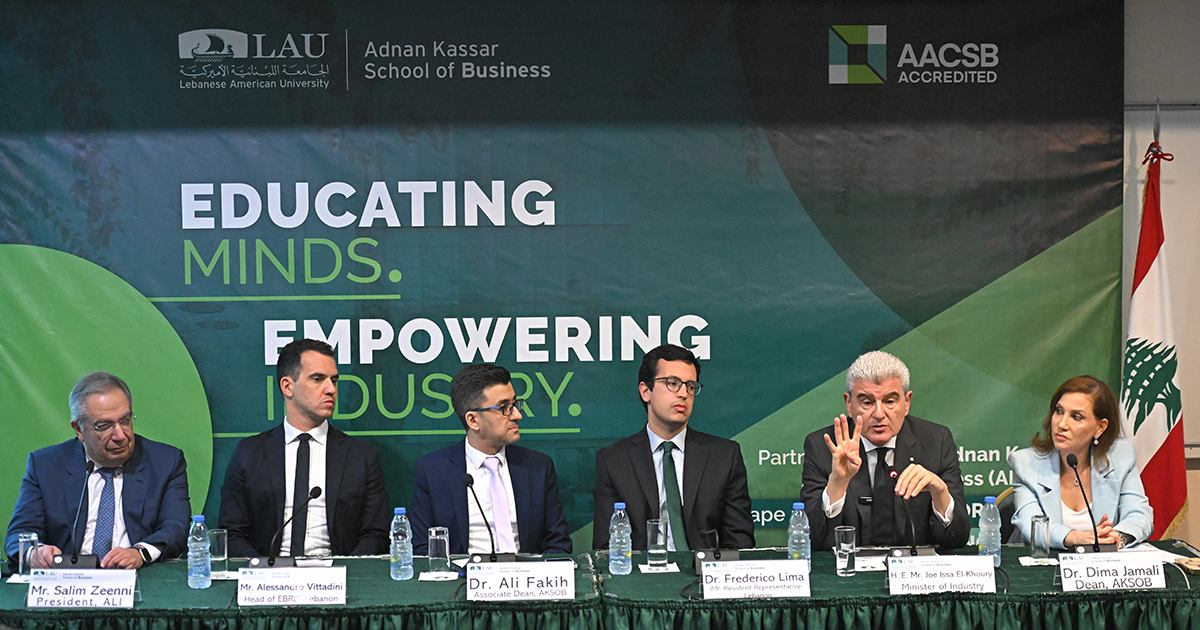
A packed panel discussion on November 12, 2025, brought together national and international leaders to examine the opportunities and challenges shaping Lebanon’s industrial landscape and explore how innovation, sustainability and institutional reform intersect in the country’s path toward industrial renewal.
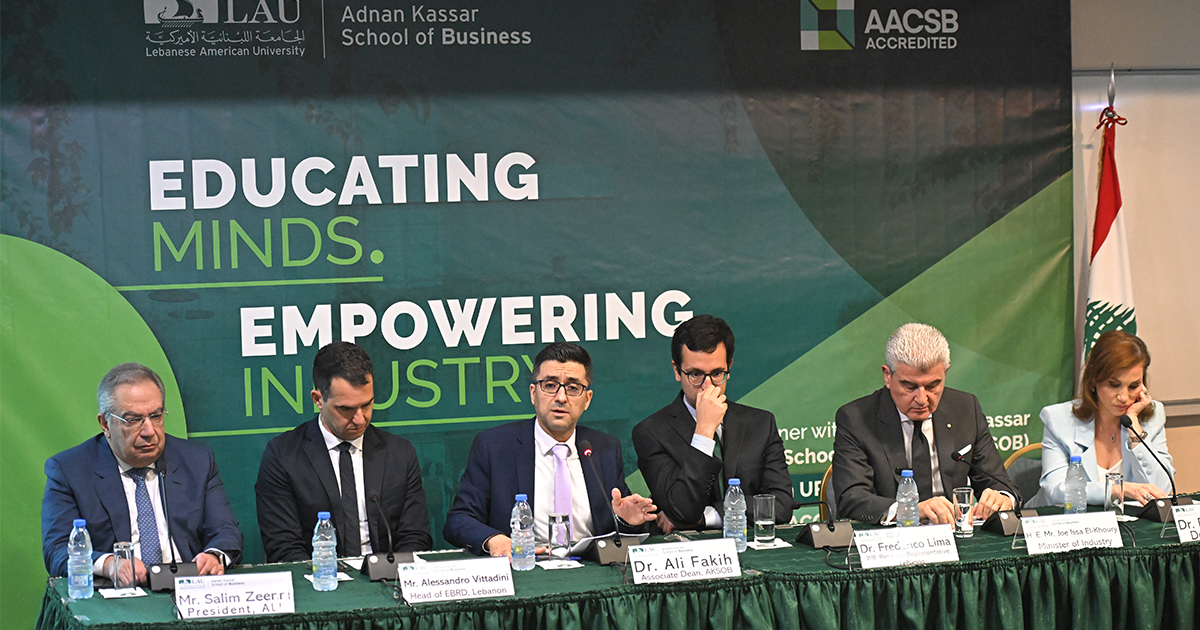
Organized by the Adnan Kassar School of Business (AKSOB), the event engaged Minister of Industry Joe Issa-El-Khoury, Resident Representative of the International Monetary Fund (IMF) in Lebanon Frederico Lima, Head of the European Bank for Reconstruction and Development (EBRD) in Lebanon Alessandro Vittadini, and President of the Association of Lebanese Industrialists (ALI) Salim Zeenni in a panel moderated by AKSOB Dean Dima Jamali and Associate Dean Ali Fakih.
Dean Jamali opened the discussion by asking Minister Issa-El-Khoury how he envisioned “the next phase of industrial evolution and recovery” in a sector that has remained resilient despite immense pressure, setting the tone for a candid reflection on the long-standing neglect of Lebanese industry. The minister noted that over two decades, “only $4 million was allocated to the Ministry of Industry out of a $12 billion annual budget,” even though the sector employs more than 250,000 people and contributes significantly to the gross domestic product (GDP).
His priority, he said, has been to “reposition the industrial sector so that the Lebanese people, before anyone else, would understand its importance,” emphasizing that the country’s industrial capabilities extend far beyond traditional food products to advanced technologies. “We produce semiconductor equipment, and we design and manufacture robots” for some of the world’s leading companies, he added.
In response to Dean Jamali’s question about the role of innovation and sustainability, he said that global shifts toward digitalization, circularity and near-shoring present real opportunities for Lebanon. He outlined a plan that includes digitalizing the ministry, modernizing its structure and developing new industrial zones and technology parks intended “to attract companies that are reshoring or near-shoring,” ultimately aiming to create thousands of jobs by 2030.
Human capital was central to shaping Lebanon’s industrial future, he remarked, impressing on the students the need for their talent in the country.
Picking up on this theme, Dr. Fakih asked Dr. Lima to shed light on Lebanon’s reform trajectory and the potential role of the IMF in supporting the industrial sector.
Dr. Lima began by commending the government’s digital transformation efforts, which were “not a luxury, but a necessity,” adding that deeper macroeconomic reforms were required. For Lebanon’s industry to thrive, he explained, bank restructuring is indispensable because “you cannot grow a company without credit,” as is modernizing public financial management frameworks to enhance transparency and efficiency, noting that many governing laws date back to the 1950s. “The past is the past,” he said, “but we can take lessons for the future.” Ultimately, in his view, sustainable industrial growth depends on restoring stability and credibility, thereby allowing private firms to integrate more effectively into global value chains.
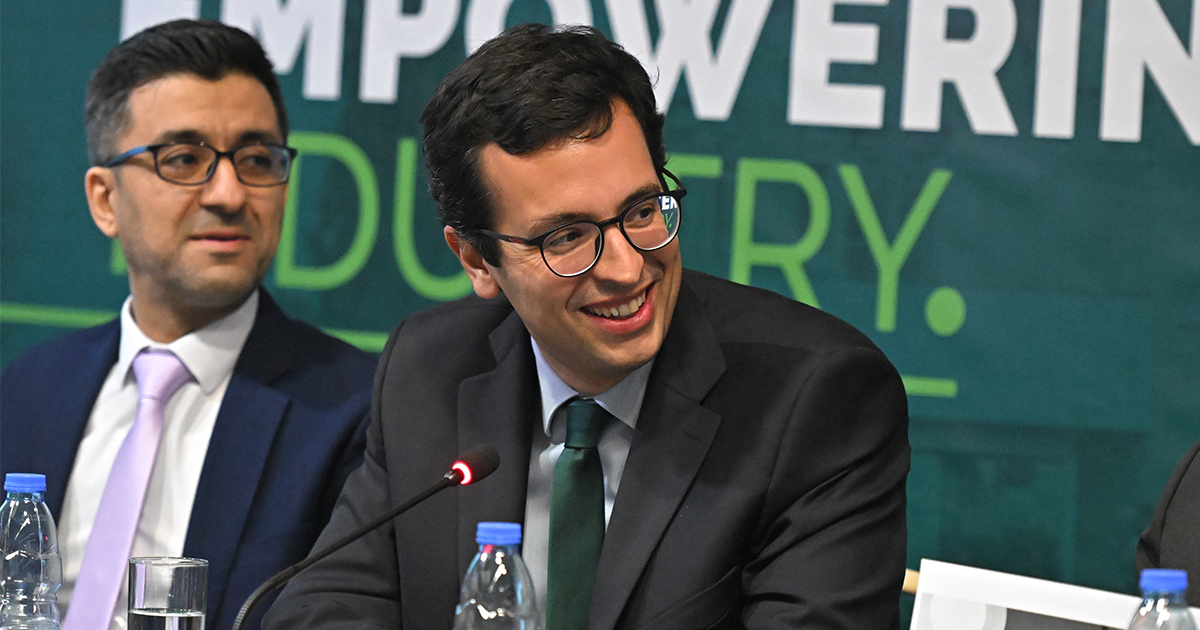
Shifting the conversation toward environmental sustainability, Dean Jamali invited Vittadini to expound on the opportunities and challenges of transitioning to a greener economy.
Vittadini explained that for the EBRD, supporting the private sector in adopting renewable energy and resource-efficient processes is central to its mission. “We try to steer investment toward greener technologies,” he said, highlighting the bank’s programs that help Lebanese small and medium-sized enterprises (SMEs) adopt solar solutions, heat pumps, improved irrigation systems and circular-economy practices.
To incentivize innovation, grants and innovation vouchers are available to help companies “test the idea” and develop prototypes before bringing new products to market. Although the bank remains cautious about resuming large-scale lending until reforms advance, “we have not given up on Lebanon,” he said, reaffirming the institution’s long-standing commitment to the private sector.
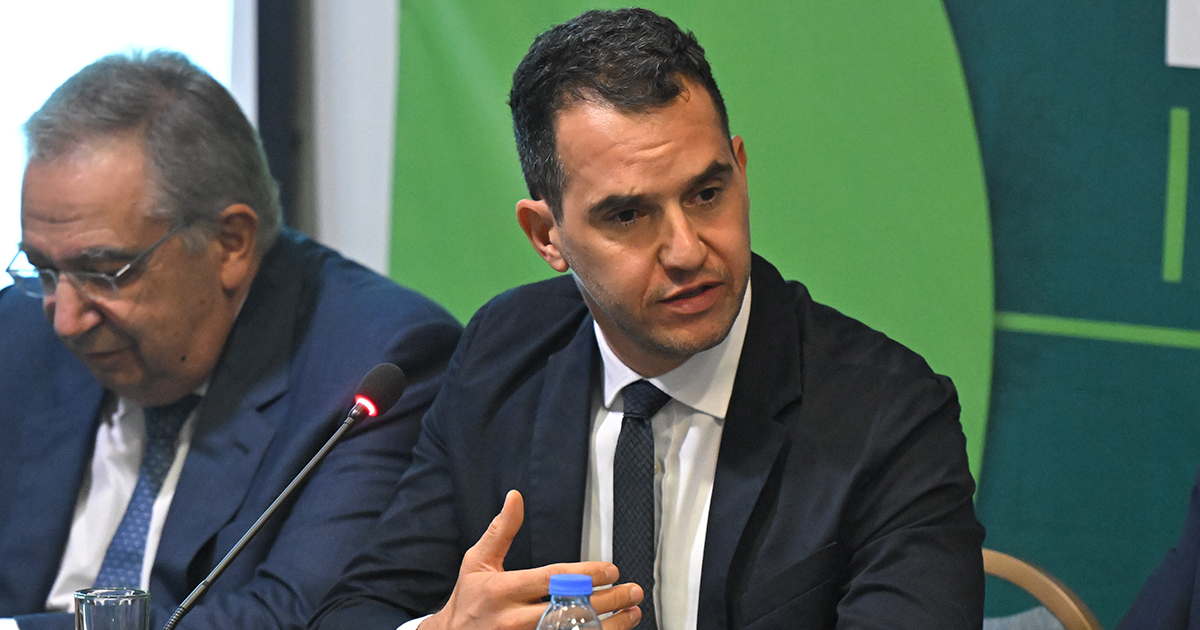
Asked how manufacturers had managed to keep going through decades of instability, Zeenni pointed out that their persistence was rooted in conviction rather than favorable conditions. “It was not a miracle; it was a belief,” he said, explaining that many companies chose to remain in Lebanon even when moving abroad would have been easier.
He spoke of an industry that now accounts for more than 20 percent of the GDP and continues to evolve by adopting renewable energy, entering new export markets and investing in sustainable models. “The sector’s endurance highlights a defining characteristic of Lebanese industry,” Zeenni said, “a steadfast commitment to staying rooted in the country while continuously innovating.”
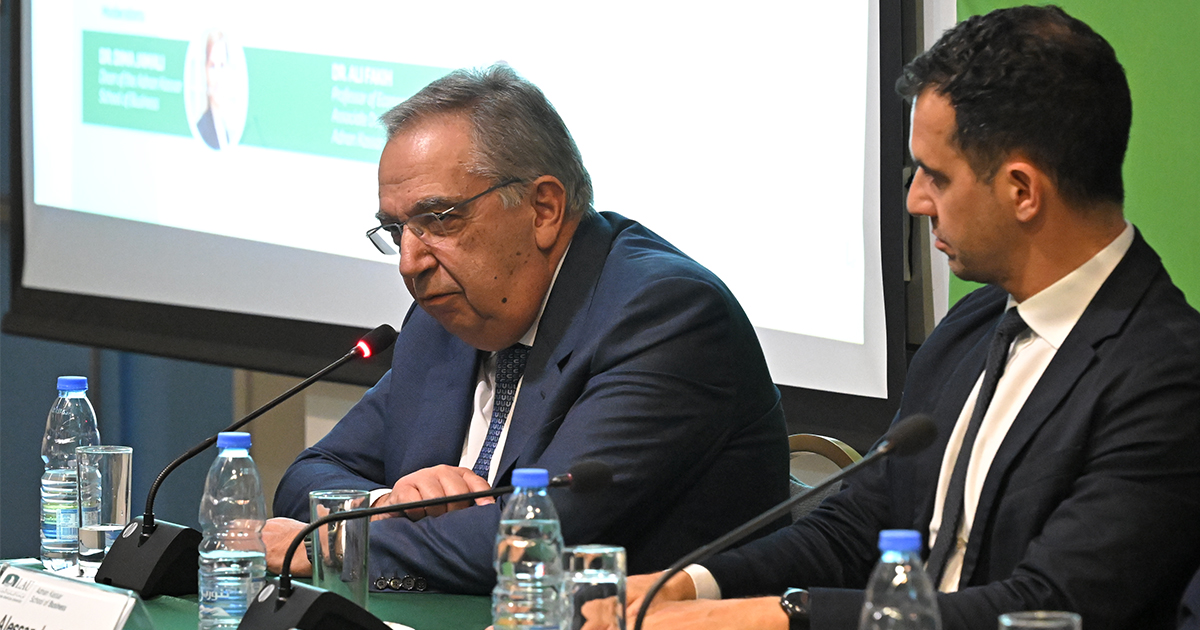
The discussion underscored a shared conviction that Lebanon has the talent and positioning to build a more competitive and sustainable industrial future, provided reforms, investment and youth engagement move in tandem. By convening such conversations, AKSOB contributes to this effort, equipping future leaders to engage with the challenges and opportunities ahead.


