Research Highlight: Lebanese Wild Carrot Yields Hope in Breast Cancer Prevention and Therapy
Research findings by LAU scholars identify anticancer agents in a Lebanon-based plant, potentially paving the way for non-toxic treatments.
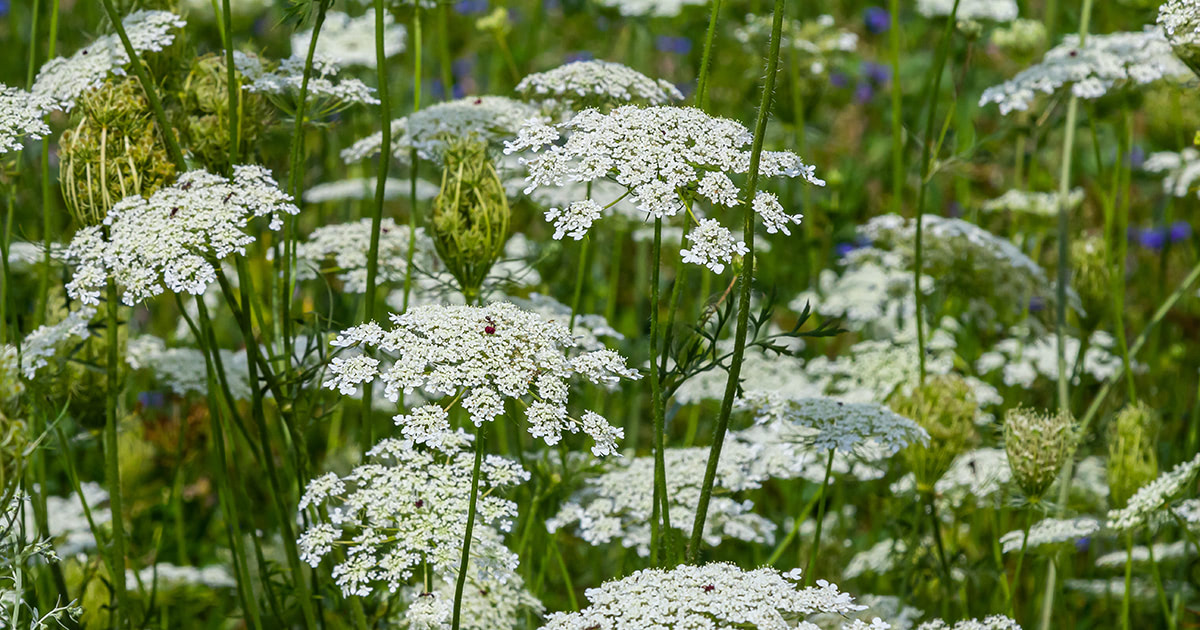
A multidisciplinary study authored by LAU faculty has identified a preventive and therapeutic non-chemical treatment for breast cancer using extracts from the Lebanese wild carrot (Daucus carota L. ssp. carota). The findings suggest promising new avenues for plant-based cancer therapy using Lebanon’s rich biodiversity as a source for natural medicine.
Found along the Lebanese coast, local communities have long used the essential oil of the wild carrot—a close relative of the common carrot—to protect against ailments such as diabetes mellitus, gastric ulcer, muscle pain, back pain, and urinary tract infections, among others.
Building on this heritage, Dr. Costantine Daher, professor of biology and dean of LAU’s Alice Ramez Chagoury School of Nursing, led a multidisciplinary investigation into the scientific basis for the plant’s potential anticancer effects, with faculty from the Department of Biological Sciences at the School of Arts and Sciences, the School of Pharmacy and the Gilbert and Rose-Marie Chagoury School of Medicine.
Breast cancer remains among the most prevalent cancers globally. According to the study, breast cancer was responsible for 15.1 percent of all cancer deaths in 2020, with around 83 percent of all patients surviving a minimum of 10 years after their diagnosis.
The study, “Wild Daucus Carota Oil Extract: An Innocuous Preventative and Chemotherapeutic Agent Against Chemically Induced Breast Cancer,” was published in the Journal of Food Science & Technology.
It was co-authored with LAU’s Professor of Pharmacy Mohammad Mroueh, Associate Professor of Chemistry Robin I. Taleb, former LAU faculty Dr. Carole Dagher, then LAU research assistants Dr. Maria George Elias (MS ’21) and Dr. Yves Najm Mrad (BS’19; MD’23), and Organic Chemistry Lecturer at LAU Bilal Nehmeh.
“It all started 17 years ago,” Dr. Daher said, “when Dr. Mroueh happened to meet an old shepherd in the southern Lebanese village of Zrarieh.”
During a casual conversation about life and nature, the shepherd suddenly pointed toward a nearby plant and asked, “Do you know that this plant can cure cancer?”
Intrigued by the man’s words, Dr. Mroueh—ever the scientist and researcher—decided to investigate further. He collected a sample and brought it back to the research group at LAU to conduct preliminary cytotoxicity experiments on different cancer cell lines, Dr. Daher said.
“At the time, there was no scientific evidence in the literature supporting any anticancer properties of this plant,” he explained.
However, one simple encounter marked the beginning of a remarkable scientific journey.
“Over the years, our team has published more than 15 research articles in top-tier scientific journals, each one unveiling new insights into the plant’s biological potential against various types of cancer such as skin, colon, lung, brain and leukemia,” he said.
The study about breast cancer marked the latest milestone in the researchers’ ongoing exploration—one that began with a chance conversation between a scientist and a shepherd in the open fields of southern Lebanon.
The findings showed that the essential oil extracted from Daucus carota L. ssp. carota effectively inhibited breast cancer cell proliferation and reduced tumor growth in laboratory models. The researchers observed that the oil triggered apoptosis—the natural process of cell death—while reducing cell viability and migration, two key factors in tumor progression.
“The extract exerted a dose-dependent inhibition of cancer cell proliferation,” the authors wrote. “It induced significant apoptosis and cell cycle arrest, indicating its potential as an anticancer agent.”
Further analysis identified β-2-himachalen-6-ol, a major compound in the essential oil, as a possible bioactive component. According to the paper, this compound “mainly contributes to the observed cytotoxic and apoptotic effects,” as this was proven in the team’s previous studies on various types of cancer in vitro and in vivo.
The study reinforces the vital role of natural compounds in modern drug discovery.
“Lebanon’s biodiversity holds immense potential,” Dr. Daher noted. “Many of our native plants have never been systematically studied, yet they could hold the key to future medical breakthroughs.”
The researchers emphasized that the results are very encouraging, particularly due to the demonstrated safety and low toxicity of the plant extract, as evidenced by their multiple published studies.
“Further investigation using combination therapy with currently existing chemotherapeutic drugs could establish it as a complementary agent in cancer prevention and treatment,” the authors wrote. “The use of combination therapy may permit dose reduction of chemotherapeutic agents, thereby mitigating their associated toxicities.”
For the researchers, the ultimate goal is to bridge traditional knowledge and modern biomedical science, said Daher. “Natural products have always inspired new therapies—and the wild carrot is a reminder that valuable discoveries can emerge from our own environment,” he added.


