Research Highlight: New Study Uncovers Promising Leads for Innovative Alzheimer’s Therapies
LAU-led research identifies key structural patterns and early aggregation intermediates in the Tau protein that could guide new therapeutic strategies to prevent or slow down the progression of Alzheimer’s disease.
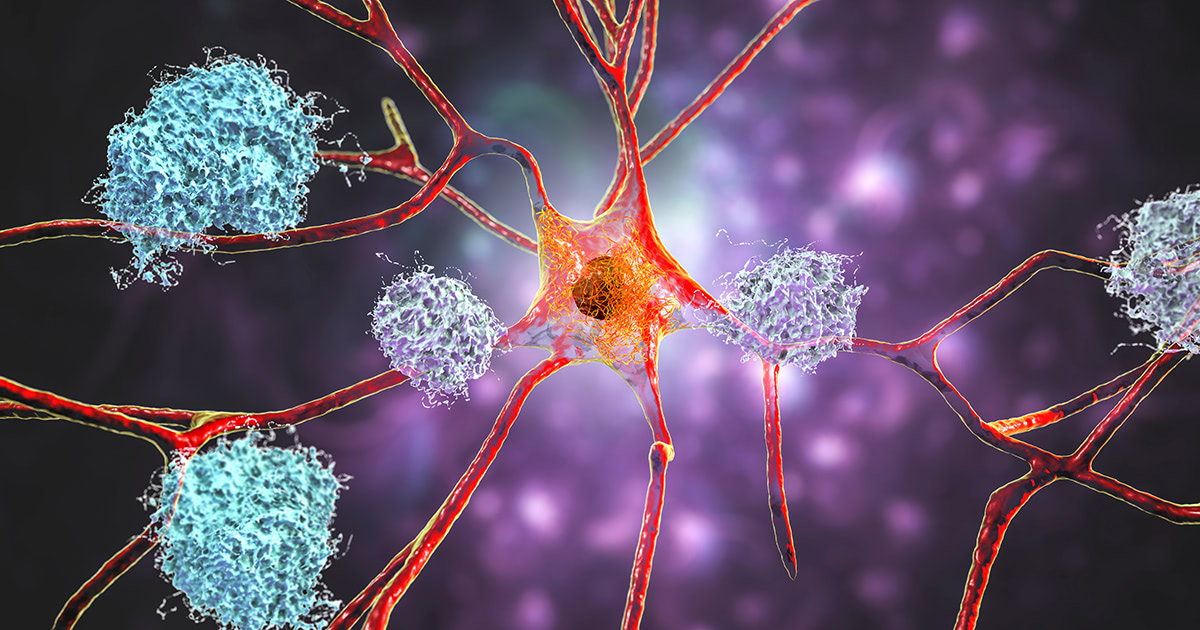
A new study led by LAU scholars has identified two compounds that can block the formation of Tau protein fibers and reduce inflammation in immune cells—both major drivers of neurodegeneration in Alzheimer’s disease (AD).
The findings represent a significant step toward developing next-generation, disease-modifying therapeutics and informing the broader challenging field of Alzheimer’s drug development.
“The research focused on understanding the structural and dynamic properties of the Tau protein, a hallmark of neurodegeneration in Alzheimer’s disease,” explained lead author Dr. Elias Akoury, associate professor of chemistry at LAU.
“These results highlight drug discovery approaches as promising leads for developing new therapeutic strategies against Alzheimer’s disease,” he said.
He added that the study places LAU at the forefront of efforts to develop structure-guided, molecularly targeted therapies for AD, reinforcing the university’s growing leadership in molecular biophysics and neurodegeneration research.
The study, “Aggregation inhibitors of tau protein with anti-inflammatory potential against neurodegeneration,” was recently published in Bioorganic Chemistry. The research was conducted in collaboration between the Department of Physical Sciences at the School of Arts and Sciences and the Gilbert and Rose-Marie Chagoury School of Medicine. The team includes Dr. Wissam H. Faour, professor of pharmacology, Dr. Bilal Nehmeh, post-doctoral research fellow, Dr. Alia Khalil, also a post-doctoral research fellow at the time, and a chemistry major graduate Jana Tfaili (BS ’24; TD ’25), then research assistant.
The team investigated how Tau, an intrinsically disordered protein, transitions from its physiological role into toxic aggregates that damage neuronal function. By integrating chemical spectroscopy, protein biophysics, medicinal chemistry and molecular design, the team identified two key inhibitory compounds—PhNH2 and PTH—that prevented Tau from forming neurotoxic fibers, with one also reducing inflammation.
“Our work revealed dual-action inhibitors capable of both disrupting Tau aggregation and reducing inflammatory markers; an important advance, as neuroinflammation significantly amplifies Tau-driven neurotoxicity,” Dr. Akoury said.
PhNH2 or phenylaminopyrimidine is a synthesized molecule that directly adheres to Tau in key locations where it normally accumulates, which prevents it from forming toxic fibers in addition to reducing inflammation. PTH or phenylthiazolyl-hydrazide, another specifically designed molecule, effectively inhibits Tau clumping, but does not show anti-inflammatory characteristics.
Furthermore, natural products, such as rosmarinic acid—a compound found in rosemary—were also shown to possess strong anti-aggregation properties, underscoring their potential as a promising therapeutic lead, according to a previous study by Dr. Akoury’s lab.
Dr. Akoury emphasized that these discoveries represent a shift toward therapies that target early, toxic Tau intermediates rather than late-stage aggregates, when neuronal damage is often irreversible.
“The detailed molecular insights from our work show that structure-guided drug design is now feasible for Tau. This enables systematic medicinal chemistry optimization—improving potency, selectivity, and drug-like properties, thus accelerating progress toward preclinical candidates,” he said.
Among the study’s key recommendations is the prioritization of early-stage Tau species in drug discovery pipelines. The scholars also recommended the development of multifunctional therapeutic leads, or combination therapies, that integrate anti-aggregation, anti-inflammatory and antioxidant mechanisms.
“We further recommend establishing robust translational pipelines incorporating animal models, pharmacokinetic and toxicological profiling, and biomarker-based evaluation,” Dr. Akoury said.
The researchers will now focus on lead optimization, designing and synthesizing molecular analogues with improved affinity for pathological Tau conformations, enhanced ability to penetrate the blood–brain barrier, and improved selectivity and potency.
Dr. Akoury stressed that continued progress in the research would require multidisciplinary collaboration across structural biology, medicinal chemistry, pharmacology and clinical science.
To browse more scholarly output by the LAU community, visit our open-access digital archive, the Lebanese American University Repository (LAUR).


