The Alhambra Comes to Life at LAU
LAU hosts a roundtable discussion on how a cinematic journey into the Alhambra illuminates the human stories, artistry, and cultural memory embedded in its architecture.
Cultural exchange is more than an enrichment; it is a bridge across time, geography, and identity. LAU has long served as a hub for such exchanges, bringing together students, scholars, and international partners to explore art, history, and the human experience.
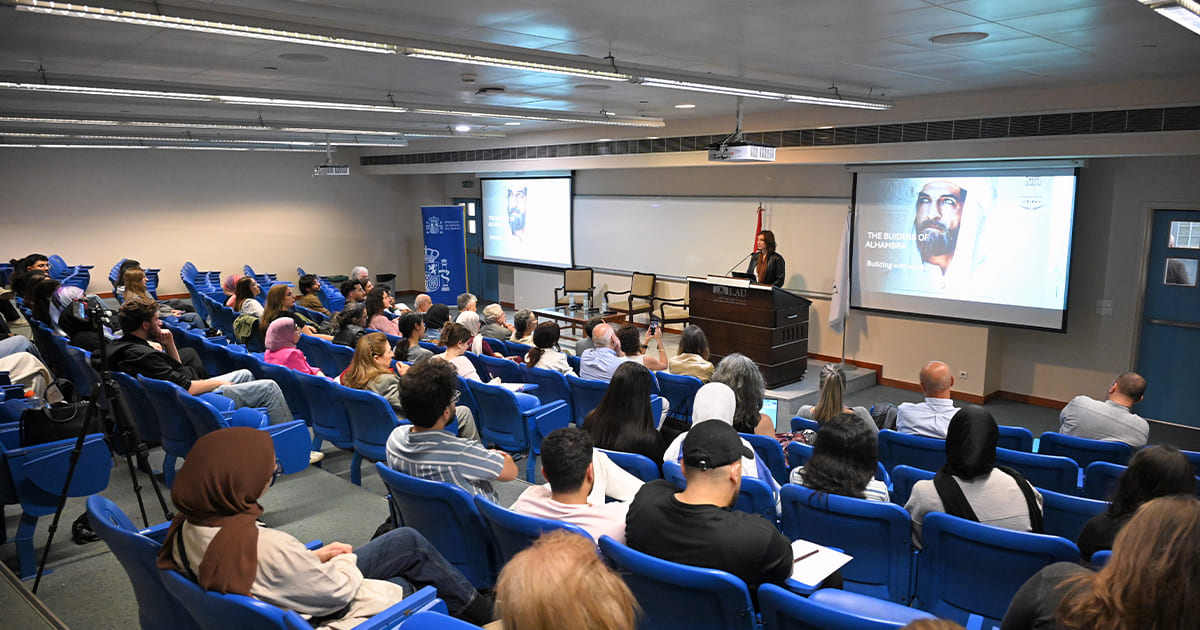
On November 28, LAU continued this tradition by hosting a roundtable discussion, Building with Words: The Alhambra and the Cultural Memory of the Nasrids, which spotlighted the intersection of architecture, storytelling, and historical memory through the lens of the acclaimed documentary The Builders of the Alhambra (Los Constructores de la Alhambra), by Barcelona-based filmmaker and director Isabel Fernández.
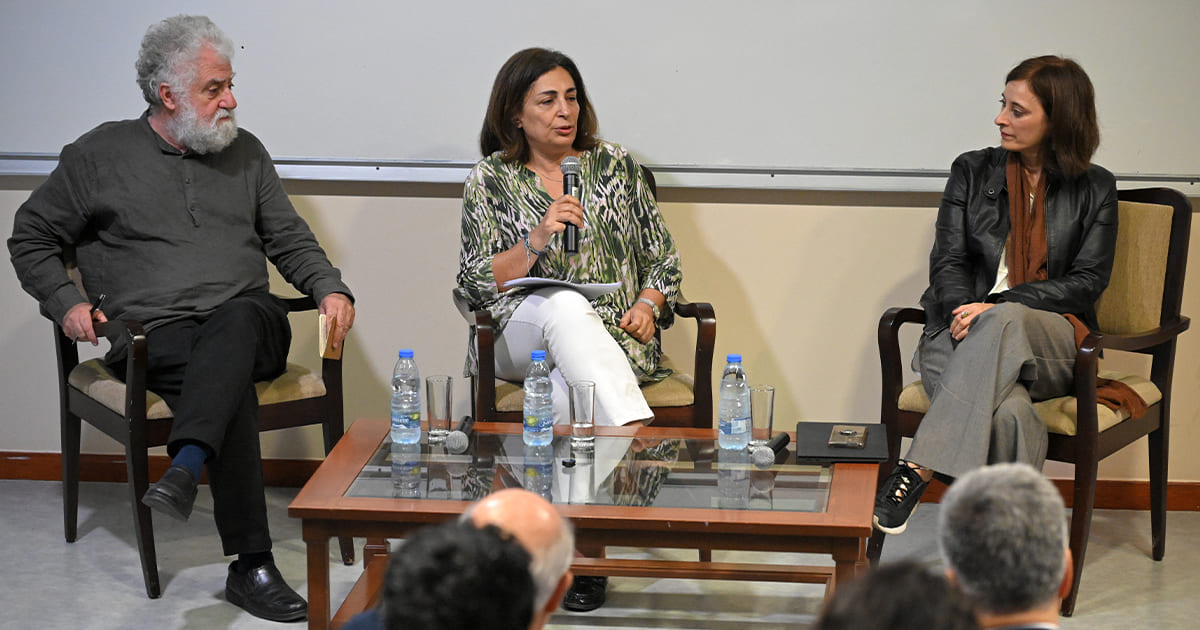
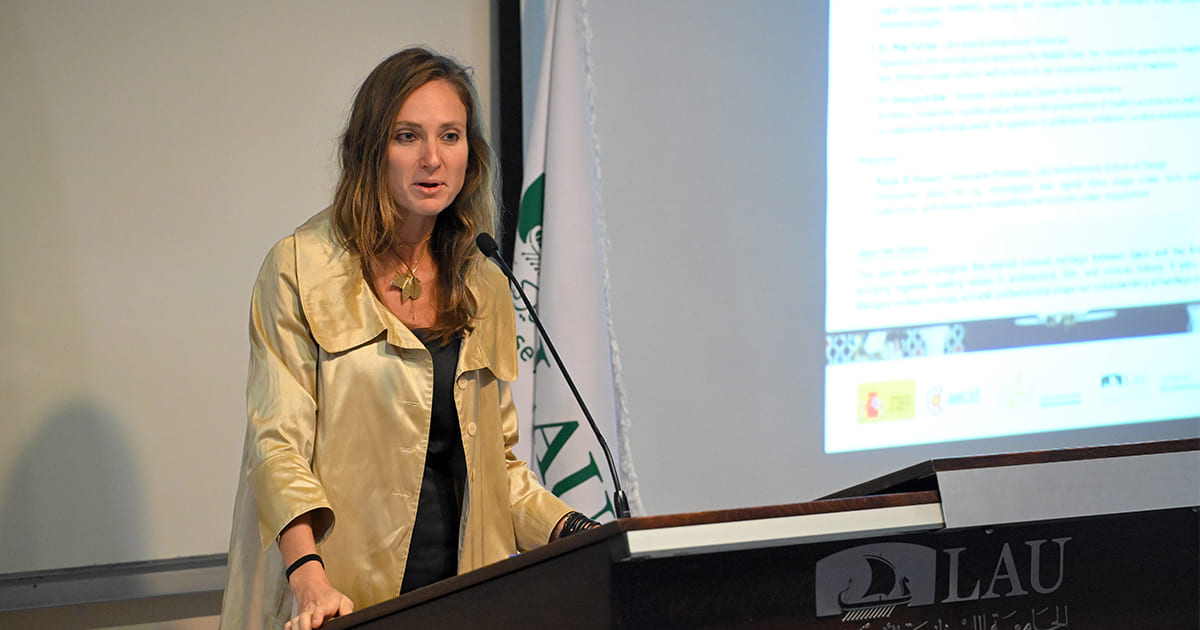
The two-day cultural program, organized in collaboration with the Embassy of Spain in Lebanon, the Académie Libanaise des Beaux-Arts (ALBA)–University of Balamand, and LAU’s School of Architecture and Design, brought together a distinguished panel composed of Fernández, LAU Associate Professor May Farhat, and Director of the Arab Center for Architecture George Arbid. The discussion, moderated by LAU Associate Professor Roula El Khoury, followed the November 27 screening of Fernández’s documentary at ALBA.
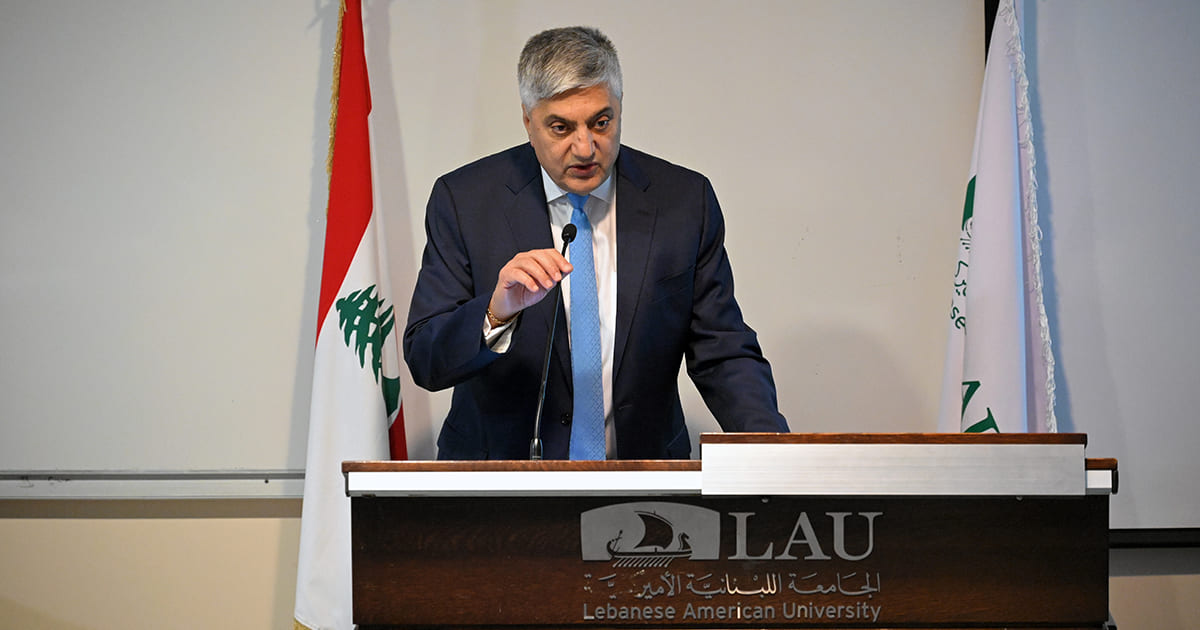
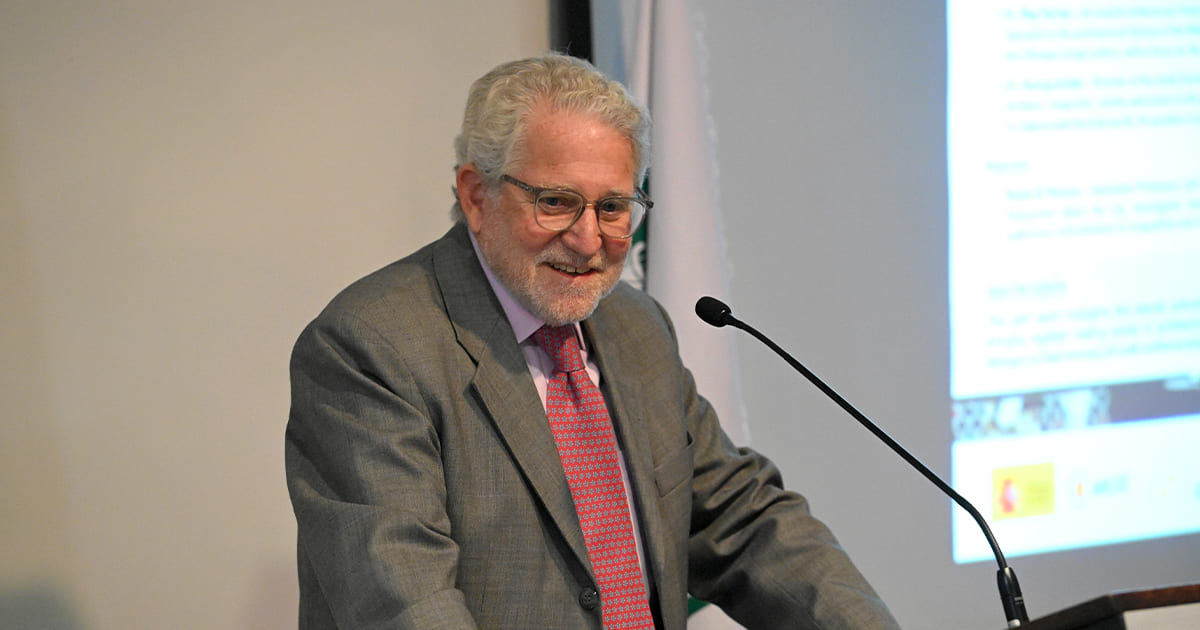
Welcoming the attendees, LAU President Chaouki T. Abdallah spoke about the power of shared cultural heritage. “I visited Alhambra, and it was almost a religious experience, to see what people were doing back then, the love they had for art, and for creating something enduring,” he said. His remarks set the stage for a conversation that would weave together art, architecture, and history, and reinforce the enduring connections between Spain and the Levant.
What prompted Fernández to produce the documentary, she said, was the surprising lack of knowledge in Spain about the Alhambra and its history.
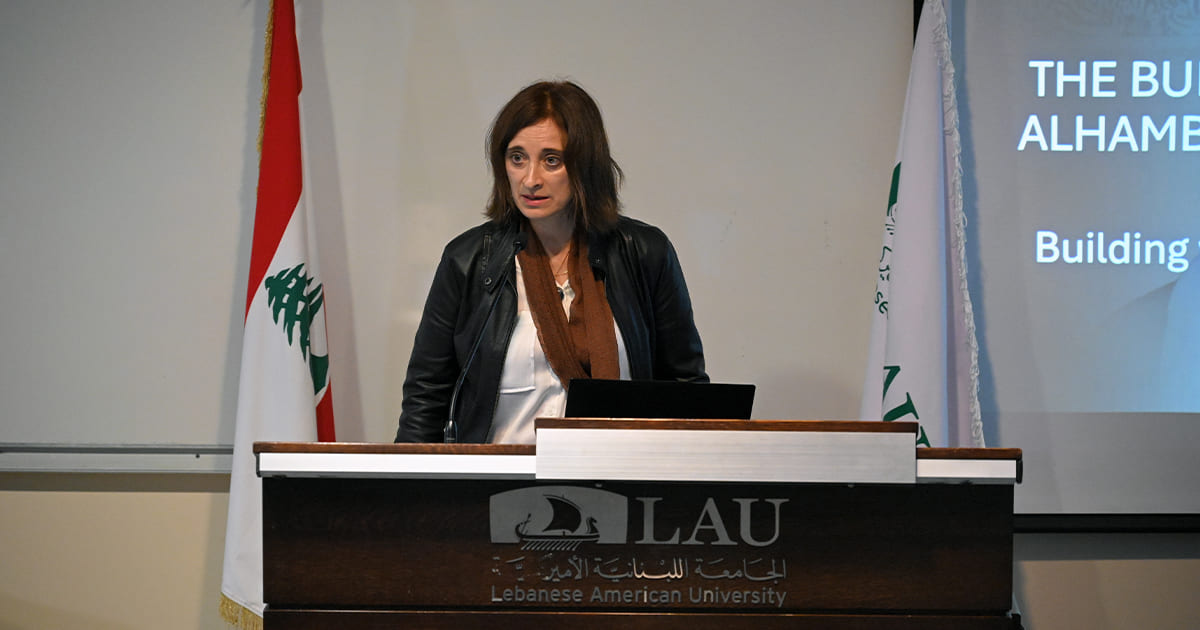
“The Alhambra is so close, yet alien to many Spaniards,” she noted, revealing that this gap inspired her to explore the lives of the craftsmen, architects and visionaries who created the palaces. Her method, she added, blends meticulous research with cinematic storytelling: “We wanted to discover who built the Alhambra, what their world was like, and how they managed to construct such an extraordinary monument.”
The documentary, she explained, aimed to connect with the human side of history. By centering the narrative on the chronicles of historian Ibn al-Khatib, it brought historical figures to life through scholarly rigor and cinematic accessibility.
The collaborative process with historians, architects, and art experts, which she said was unprecedented, ensured scientific accuracy and the freedom to craft a compelling visual narrative. “When a work of art moves us, it’s because there’s a human being, a soul, behind it,” she said.
Dr. Farhat complemented Fernández’s perspective by highlighting the role of architectural evidence in understanding history and how buildings like the Alhambra carry layers of meaning that textual sources alone cannot convey.
“The documentary consolidates a tremendous amount of scholarship built over decades,” while presenting a fluid narrative that helps audiences appreciate the palace not just as an artifact but as a cultural and intellectual achievement, said Dr. Farhat. Together, oral histories and material evidence convey experiences of past societies.
Drawing parallels between historical preservation and contemporary architectural research, Dr. Arbid shared examples from his work in Lebanon to illustrate how uncovering hidden details—whether in archival drawings or anecdotal accounts—can reveal the intentions behind design choices and the stories of those who created them.
“Even in academia, subjectivity helps you understand the facts,” he observed. Hence, the importance of combining careful documentation with imaginative reconstruction to engage modern audiences.
The discussion explored the film’s broader significance. Fernández presented the Alhambra as a symbol of Andalusian innovation and intellectual achievement, bridging cultures and laying the groundwork for the European Renaissance.
“Many people claiming this big part of history have ignored the roots of Islam in Europe, yet they were crucial in transmitting classical knowledge,” she said. Drs. Farhat and Arbid agreed, noting that the documentary promotes a humanist perspective, countering simplified narratives and emphasizing the shared legacies of civilizations.
Throughout the roundtable, the speakers repeatedly returned to the theme of storytelling as a form of cultural preservation.
Fernández described the Alhambra as “a building that is written with words,” pointing to the inscriptions, designs, and spatial logic that encode history in stone and stucco. Dr. Arbid echoed this insight in a broader architectural context, remarking that “Knowledge is an edifice we understand together.”
Films like The Builders of the Alhambra, in their shared view, allow audiences to engage with history in ways that traditional scholarship alone cannot achieve.


