The Feast of Waste and the Famine of Need
LAU and AUB focus on turning food waste into opportunity and building a more sustainable food system for Lebanon.
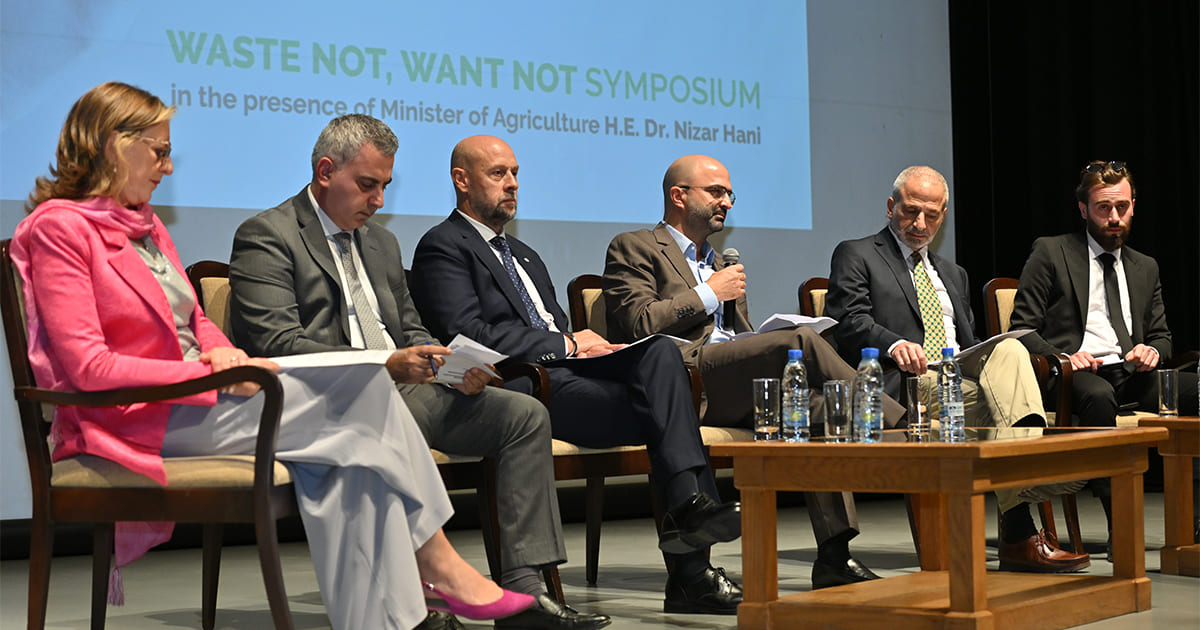
On September 22, 2025, experts, policymakers, students, faculty and community leaders and members gathered at the Irwin Hall Auditorium, LAU Beirut Campus, for a critical dialogue on the economic, environmental and social costs of food loss in Lebanon.
Titled Waste Not, Want Not, the panel discussion, held by LAU’s Department of Nutrition and Food Science in collaboration with the Department of Nutrition and Food Sciences at the American University of Beirut (AUB), under the patronage of the Minister of Agriculture Nizar Hani, explored innovative solutions to promote sustainable consumption, more equitable distribution, and the reduction of food loss and waste from farm to table.
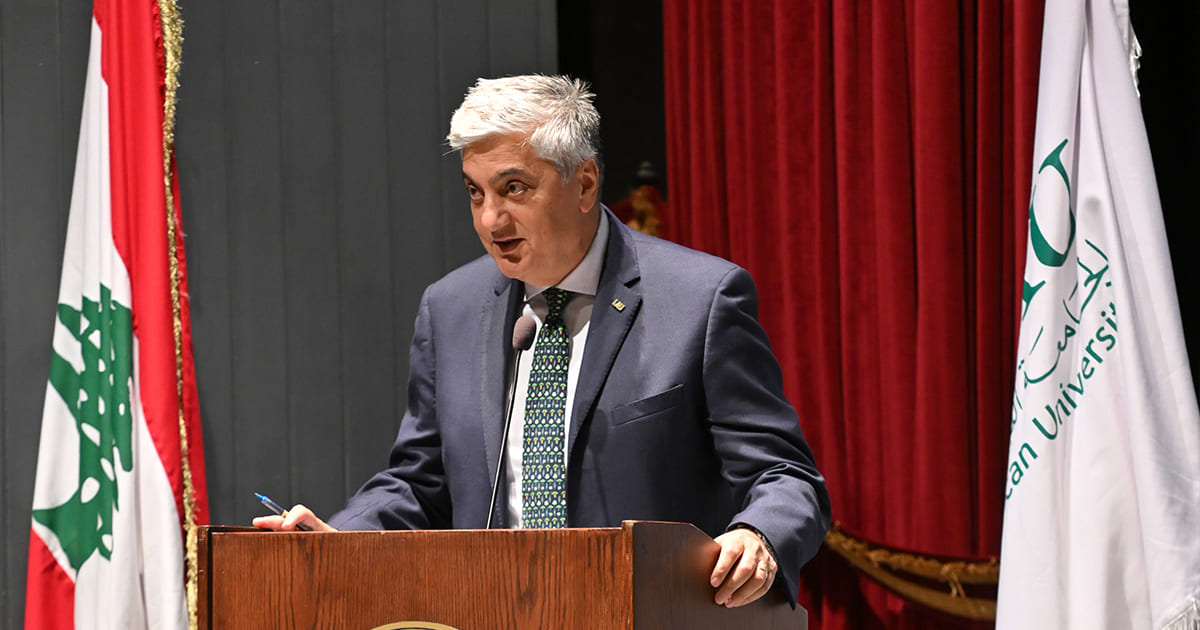
In his welcoming address, Professor of Food Science and Technology at the School of Arts and Sciences and Director of Academic Compliance Hussein F. Hassan—who moderated the event—noted that Lebanon finds itself in a precarious position and in dire need of “a concerted call to action to transform a glaring problem into a catalyst for systemic change.”
The event demonstrated the important role that academic institutions play in reducing food waste and loss by addressing societal challenges, conducting research to diagnose issues and identify leverage points, as well as “empowering students by implementing internal policies that serve as models for the wider community,” he added.
LAU President Chaouki T. Abdallah also framed food waste as a moral failure and a significant drain on finite resources, be that energy, water or capital, in his opening remarks. Crucially, he said, “there is a necessity for a philosophy of ‘research that matters,’ where academic inquiry is intrinsically linked to implementation and community impact.”
This rhetoric was exemplified by LAU’s own Zero Food Waste Policy, a commitment that was activated not just to embody the United Nations Sustainable Development Goals (SDGs) in ensuring zero hunger, good health and wellbeing, but also to turn the campus into a laboratory for sustainable practices.
Such an initiative, added Dr. Abdallah, requires “a cultural shift that our universities are well-equipped to lead by educating students to become agents of change and by modeling responsibility in their own operations.”
The panel discussion delved into matters concerning the severe strains on Lebanon’s agricultural sector, compounded by political instability, financial collapse and a recent conflict that had somewhat incapacitated the country. These factors have, without a doubt, disrupted supply chains and deprived farmers of their livelihoods.
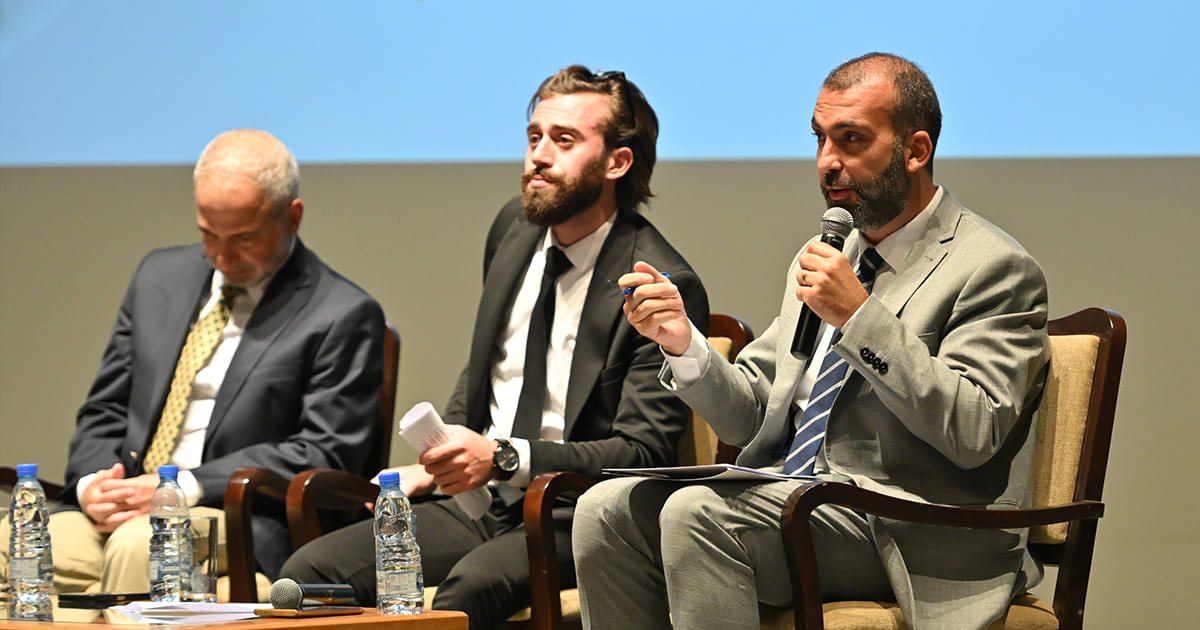
Among the speakers were Director of the Animal Resources Department at the Ministry of Agriculture Elias Ibrahim representing Dr. Hani, LAU Associate Professor of Hydrology and Water Resources and Chief Sustainability Officer Nadim Farajalla, AUB Professor of Applied Economics and Director of the Graduate Food Security Program Ali Chalak, Professor and Vice-Rector for Research at the Saint Joseph University of Beirut (USJ) Richard Maroun, Food and Agriculture Organization of the United Nations Representative Nora Ourabah, and Founder of Dr. Feed—a producer of animal feed from waste—Ali Sarakeb.
The conversations noted that, globally, more than 1.3 billion tons of food are lost or wasted annually. In Lebanon, the pattern is mirrored with an estimated 30 to 40 percent of fresh produce being lost as a result of supply chain disruptions, damage to agricultural areas due to bombings, and insufficient refrigeration and storage facilities, thereby leading to high food spoilage and waste rates.
The talk stressed that the ministry, however, aims to tackle this predicament, with a strategy implemented and structured around three pillars: Prevention at the source, recovery and redistribution, and fortifying public awareness. To ensure their success, these efforts are underpinned by data, policy alignment and public-private partnerships.
Against this backdrop, the speakers underscored the importance of universities and students as vital sources for the innovation and evidence needed to drive this strategy forward.
“The engagement of students through clubs and campaigns, among other measures, is essential to cultivating a generation of consumers and leaders who carry these principles into their professional and personal lives,” said Dr. Ibrahim.
The role of international support was also foregrounded in shaping strong, data-driven policies, with a focus on strengthening specific value chains—namely the apple and wine industries—to identify where most losses tend to occur and reducing them by repurposing unsold fruits and vegetables into animal feed, for example.
This institutional strengthening is fundamental to creating an environment conducive to long-term, systemic reduction in food loss and waste, said Dr. Hassan.
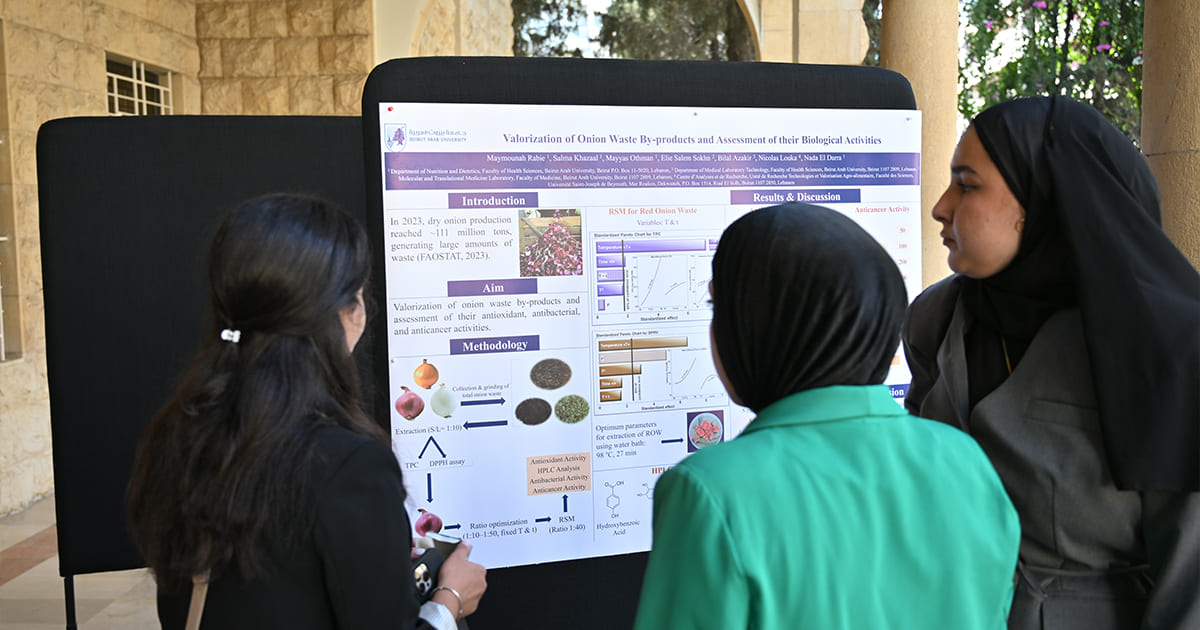
Following the panel, students from different academic institutions in Lebanon delivered poster presentations on their food loss and waste projects. The projects confronted challenges from farm-level practices to consumer engagement and demonstrated how evidence-based solutions can be translated into practical, scalable interventions.


