The Power of Philanthropy in Family Business
The Adnan Kassar School of Business welcomed the President of the Makhzoumi Foundation and LAU trustee, Mrs. May Makhzoumi, for a talk on the transformative power of philanthropy in family enterprises and society.
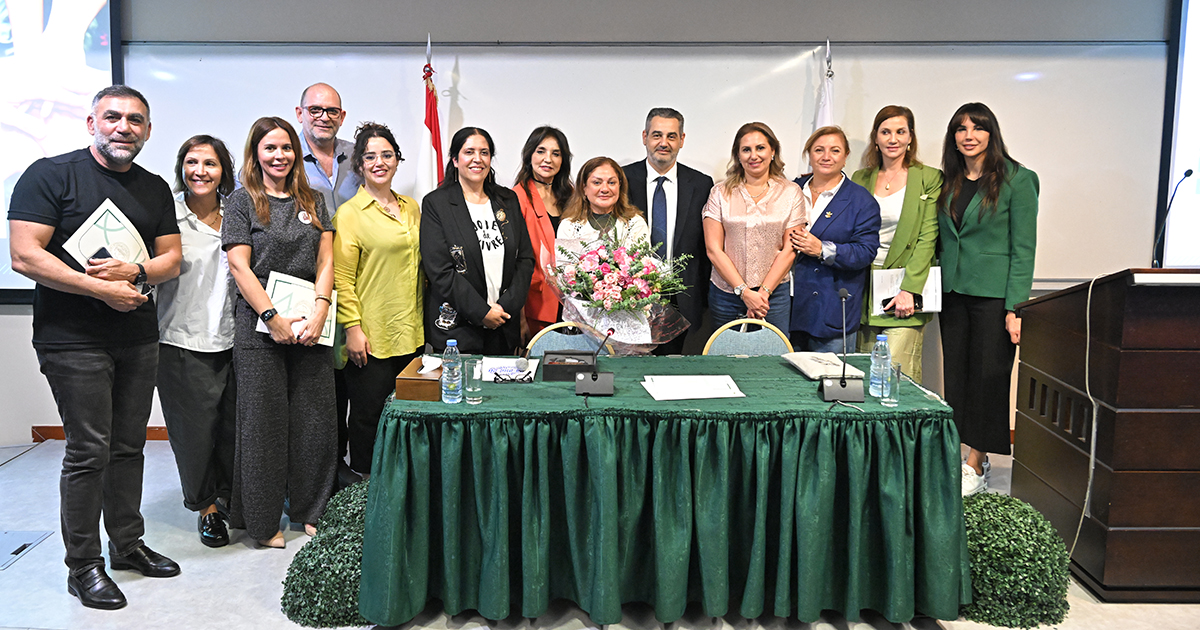
The Office of the Dean and the Department of Information Technology and Operations Management (ITOM) at the Adnan Kassar School of Business (AKSOB) hosted the President of the Makhzoumi Foundation and LAU trustee, Mrs. May Makhzoumi, for a thought-provoking session on The Power of Philanthropy in Family Business: Making a Difference.
The event, organized by Dr. Manal Yunis, associate professor and chair of ITOM, on November 6 at the LAU Beirut campus drew students, faculty and staff eager to engage with the NGO’s president on how purposeful giving can strengthen communities, expand access to opportunity and anchor family businesses in values that transcend generations.
The afternoon opened with a student-produced video capturing candid campus perspectives on what philanthropy means today. This set the stage for a series of personal testimonies, including a heartfelt reflection by first-year business student Leen Karakeh, who shared how scholarship support opened the doors to LAU for her at a moment when her educational aspirations seemed out of reach.
Her story resonated with LAU President Chaouki T. Abdallah’s message that philanthropy is, at its core, “the love of humanity,” and that LAU’s mission is sustained by individuals who believe deeply in the transformative power of education, especially during difficult economic times.
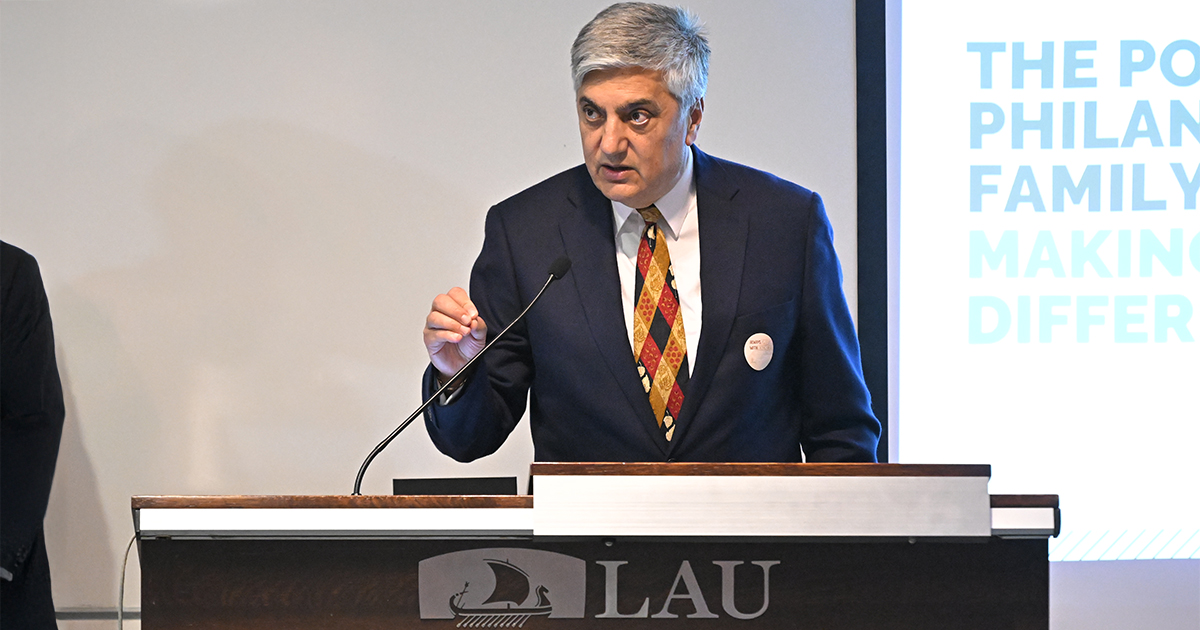
Expanding on this idea, AKSOB Dean Dima Jamali emphasized that modern philanthropy is not limited to acts of charity; it is about legacy building, ethical leadership and empowering communities to flourish over time. She reminded students that the school is dedicated to academic excellence and to shaping leaders who innovate with purpose, uplift those around them and contribute to rebuilding Lebanon with integrity and vision.
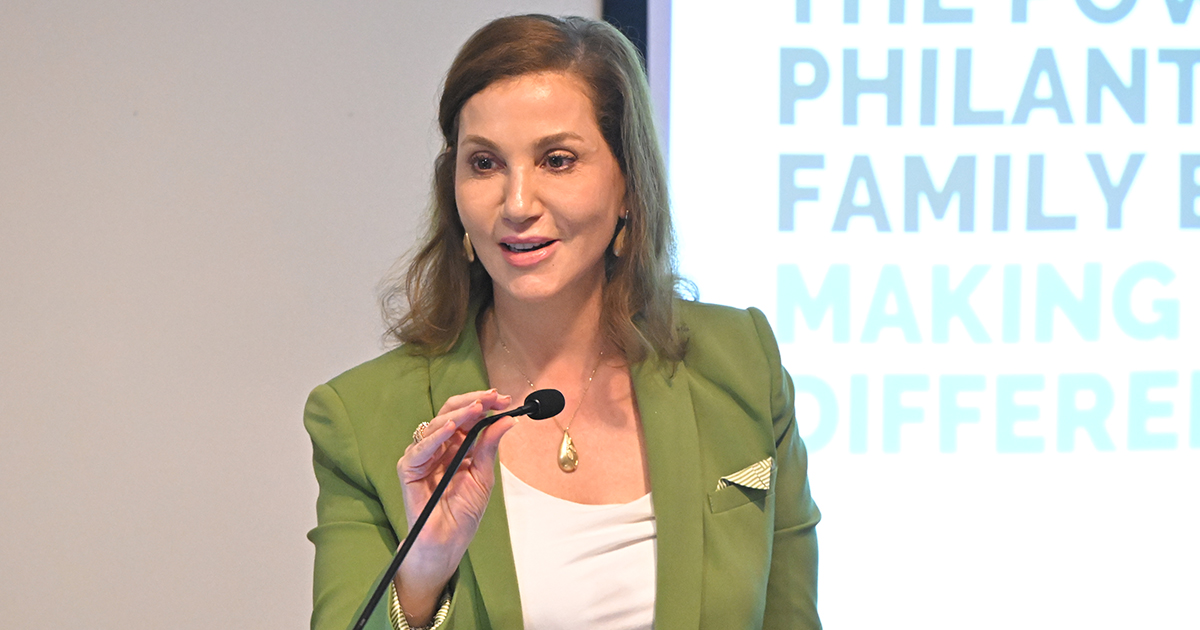
In her keynote speech, Mrs. Makhzoumi deepened the discussion by tracing both her personal journey and the broader evolution of philanthropy in Lebanese family businesses. Speaking with warmth and sincerity, she began by reflecting on how giving was woven into the fabric of Lebanese households. “We all grew up knowing it was our duty to help those in need,” she said. “But with time, I realized that charity alone was not enough; philanthropy needed to be organized and guided by a long-term strategy and mission.”
Strategic philanthropy, she explained, begins with clarity of mission and vision, supported by governance, procedures and measurable objectives. Rather than simply responding to need, philanthropic organizations must understand the impact of their choices, track outcomes and align efforts with broader frameworks such as the UN Sustainable Development Goals (SDGs).
“The Sustainable Development Goals are all interconnected,” she said. “If you want to address poverty, you must also ensure access to education, healthcare, decent work and dignity. One goal supports the next.”
To that end, the Makhzoumi Foundation’s programs, which span vocational training, entrepreneurship, microcredit, healthcare and civic engagement, are designed to reinforce one another and broaden opportunities for individuals and families. Furthermore, remarked Mrs. Makhzoumi, the foundation was among the first in Lebanon to adopt the international ISO standards set by experts, a move that strengthened transparency and organizational effectiveness.
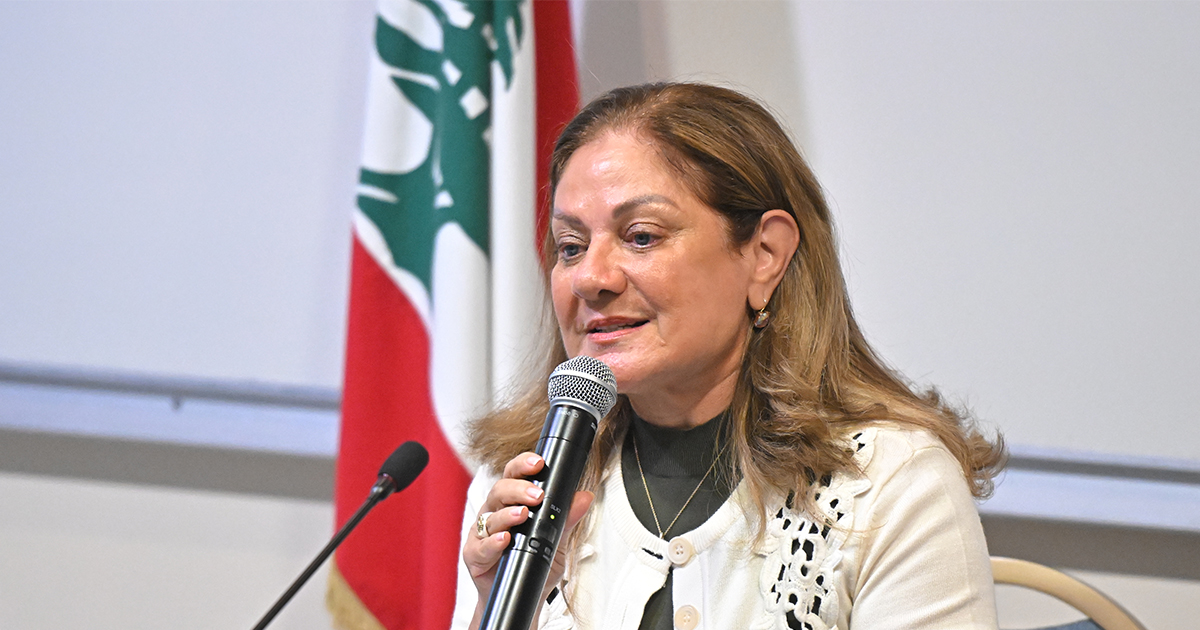
Drawing connections between global best practices and the Lebanese context, Mrs. Makhzoumi underscored how philanthropic initiatives across sectors contribute to broader social resilience. She also emphasized the vital role of the Lebanese diaspora, whose support has become an essential pillar in sustaining families, schools, and national institutions during prolonged economic hardship. Reflecting on her family’s own initiatives, including the LAU Fouad Makhzoumi Innovation Center and the endowed chair in corporate governance, she reaffirmed her unwavering belief in the talent, creativity and promise of Lebanon’s youth.
This connection was brought to life through the testimony of business student Kareem Bilani, who recounted his experience volunteering with the Makhzoumi Foundation during the war. His involvement in organizing relief lines, distributing essential goods and supporting affected families illuminated how service cultivates responsibility, empathy and a sense of shared humanity—qualities at the heart of impactful leadership.
Following the keynote, the event transitioned to a lively student engagement segment. Through an interactive quiz titled Philanthropy in Action, students demonstrated their understanding of socially responsible leadership. The top participants received prizes from LAU’s Academy of Continuing Education (LAU ACE), represented by its Lead Director, George Obeid, reinforcing the importance of nurturing initiative and rewarding purposeful thinking among emerging leaders.As the ceremony concluded, Dr. Yunis emphasized the importance of philanthropy, highlighting that meaningful change begins with intentional action and even the smallest gestures can make a difference.
In this spirit, The Power of Philanthropy in Family Business: Making a Difference emerged as both an academic dialogue and a powerful reminder of LAU’s enduring culture of compassion, responsibility and shared purpose—values that will continue to shape the leaders of tomorrow.


